• TalkBass has been independent since 1998. Add your voice.
    Create a free account to reply to discussions, view embedded media, and browse with fewer display ads.
    Join freeLog in
    Want zero display ads or expanded classifieds tools? Compare plans.

Can small scale basses compete with the normal basses?

Basses aren't like screwdrivers, precisely engineered for only one use. They're more like butter knives - they'll all do the job, you just might like one better than another for some reason.

Sure, a short scale might not have as much high end content as a long scale, they're still generally great basses, though.
 
  • Like
Reactions: Iristone
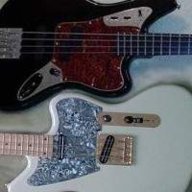
I've been eyeing some short scale basses, especially this one,

Because It's in my budget, and I think it sounds good for its money, but I'm wondering, can it compete against a normal bass? I'm thinking of mainly using it for live performances, because I'm not the biggest guy, and I think I would look way cooler with a smaller bass, but are they made for such purpose, or It's just for kids trying to learn how to play?
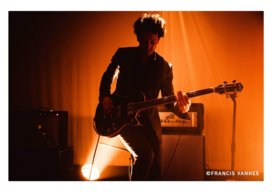
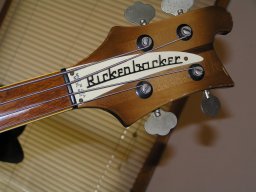
Why not. You may not get certain definitive sounds, but you can still get acceptable art from it.
 
To me, it depends a lot on how your basses are set up and - not to forget - the way you pluck or hit the strings. A short scale can have as much sparkle, brightness as a long scale. It's about how you set the action, type of strings, pickup height etc... I own a Gretsch Thunder Jet (it's in my pic) currently stringed with D'Addario Chromes and use it mainly in studio. Live, I mostly play my PJ (TI Flats) or '59 P (dr Lo-riders), both normal scale Fender basses. But I could use the Gretsch for any of my bands. If it feels right... It all depends on you, your playing style and the gig your playing.
 
  • Like
Reactions: Mike Whitfield
The scale length does not determine the quality level of a bass. There are student models made for younger players with small hands, but even they aren't toys. Play whatever instrument you feel comfortable with. Electronics and bridges can be swapped out regardless of the size of an instrument, so getting a budget student model to sound good isn't a problem.
 
I started on a short scale flying V, and didn't realize there were different scale lengths so I thought it was full scale for a few months. I used that bass for about 5 years with no issues, playing punk rock and metal. I'm currently in a metal band, where we tune to drop Db, and my short scale gibson tends to be my go to bass. They have a thicker tone than full scale basses. Try a few different basses and you will see. The short neck also seems to make a lot of people play busier lines, since the frets are closer. It's like anything else, if you like the way it feels and sounds, it's good.
Screenshot_20191101-083358_Gallery.jpg
 
I've been eyeing some short scale basses, especially this one,

Because It's in my budget, and I think it sounds good for its money, but I'm wondering, can it compete against a normal bass? I'm thinking of mainly using it for live performances, because I'm not the biggest guy, and I think I would look way cooler with a smaller bass, but are they made for such purpose, or It's just for kids trying to learn how to play?

short scales are different not inferior. Less overtones more fundamental. I have a 29 1/4 and a few 30 1/2” - as well as long scales - and I used to think they were inferior till I got one and realized they have a different tonality / not a child’s bass at all
 
That TV Jones pickup in the sweet spot is to die for too. Beautiful tone. And when you consider a TV Jones bass pup will set you back around $150, that model Junior Jet becomes an even sweeter deal. That alone makes the G2202 Junior Jet worth hunting down on the used market even though the newer two pickup models are also equally great basses.

Highly recommended. :thumbsup:

The 70’s TK300’s have the filtertron in the sweet spot- highly underrated basses.
 
I have 3 shortscale basses: an Eastwood Airline Map bass, an Epiphone Viola and a Fender Mustang JMJ. I have many other full scale basses and I'd take any of the shorscale ones to most gigs that I play.
In fact, I have a gig on sunday and I'll use the JMJ for sure.
Shortscale basses are fun to play, are confortable and mostly look nice. And the sound good and are gigable without any doubts.
 
I haven't purchased a long-scale instrument in 13 years. I'm waiting on my 5th Birdsong. When I'm looking at cheaper instruments, it's likely to be a Talman. For hollow-bodies, it's the Guild Starfire.

I know folks who don't like to play my basses - but it's always about how the scale length feels to them, never the sound.
 
  • Like
Reactions: Mike Whitfield
I started on a short scale flying V, and didn't realize there were different scale lengths so I thought it was full scale for a few months. I used that bass for about 5 years with no issues, playing punk rock and metal. I'm currently in a metal band, where we tune to drop Db, and my short scale gibson tends to be my go to bass. They have a thicker tone than full scale basses. Try a few different basses and you will see. The short neck also seems to make a lot of people play busier lines, since the frets are closer. It's like anything else, if you like the way it feels and sounds, it's good.View attachment 3581116

Those Gibson Les Pauls are great. The bassist from the Marcus King trio had one and he cut through really well. That's no small feat since Marcus absolutely shreds all the time live.