• TalkBass has been independent since 1998. Add your voice.
    Create a free account to reply to discussions, view embedded media, and browse with fewer display ads.
    Join freeLog in
    Want zero display ads or expanded classifieds tools? Compare plans.

Capacitor lifespan

agedhorse

Supporting Member
Commercial User
Feb 12, 2006
61,031
5
220,920
Davis, CA (USA)
Disclosures
Development Engineer-Mesa Boogie, Development Engineer-Genzler (pedals), Product Support-Genz Benz
I keep hearing the "all electrolytic capacitors" go bad preaching, the pundits stating that this varies from 10 years to 30 years yet in my experience on quality products 50+ years is a fairly easy metric to achieve. I have been accused of being ignorant, a dummy, and a moron because I don't agree with the mythology of old wive's tales.

I have provided some example calculations taking the data right off of capacitor data sheets and have arrived at calculated lifespans well in excess of 50 years, but these numbers simply aren't understood by the superstitious among us.

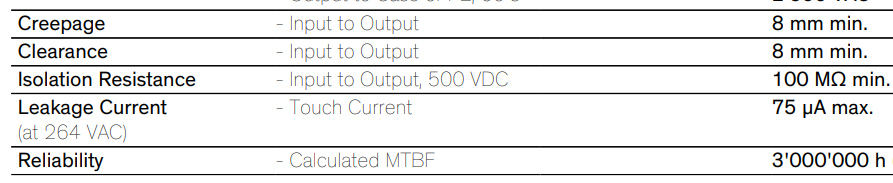
Here's the reliability numbers for a small power supply I was looking at, the mean time before failure is 3 million hours. There are several electrolytic caps in this power supply and 3 million hours is well beyond 200 years of continuous operation.

In general, probably 95% of all electrolytic caps replaced are perfectly good and will continue to be good for decades.
upload_2024-1-22_14-50-45.png
 
Last edited:
I keep hearing the "all electrolytic capacitors" go bad preaching, the pundits stating that this varies from 10 years to 30 years yet in my experience on quality products 50+ years is a fairly easy metric to achieve. I have been accused of being ignorant, a dummy, and a moron because I don't agree with the mythology of old wive's tales.

I have provided some example calculations taking the data right off of capacitor data sheets and have arrived at calculated lifespans well in excess of 50 years, but these numbers simply aren't understood by the superstitious among us.

Here's the reliability numbers for a small power supply I was looking at, the mean time before failure is 3 million hours. There are several electrolytic caps in this power supply and 3 million hours is well beyond 200 years of continuous operation.

In general, probably 95% of all electrolytic caps replaced are perfectly good and will continue to be good for decades.

View attachment 5326378


When I saw the thread title, I thought you were going to be asking us the answer :eek:
 
Here's the reliability numbers for a small power supply I was looking at, the mean time before failure is 3 million hours. There are several electrolytic caps in this power supply and 3 million hours is well beyond 200 years of continuous operation.

So cool.

That settles it: I am replacing all my internal organs, joints and brain with electrolytic capacitors. :ninja:
 
I am no expert by any means, but I've fixed quite a few old pedals of my friends and in most cases the electrolytic caps were the culprit. I'd take anything you say seriously though!
If they were the actual problem, it was because of either really poor caps or really poor design.
 
If they were the actual problem, it was because of either really poor caps or really poor design.
....and you've hit on what I call the typical common cause of internet folklore, people knowing that something was done to fix a problem, but not knowing/understanding anything more than "the parts list" for the "repair".

As an engineer I frequently see people doing poor troubleshooting/fault isolation work and replacing things that were never a problem in the first place. Then the more times that story gets told, the more everyone feels they need to erroneously replace that part(s) either whenever they have any kind of a problem that even sounds similar or worse yet, preemptively.

And please do not get me started on maintenance induced failures/problems...it is much more common than you might think.
 
what about the idea of long-unused equipment maybe being more prone to the caps going bad once it is fired up again?

In general, I haven’t seen this in new old stock PCBs and entire amps over a period of say 15 years. I haven’t seen it I. Old stock caps that I have tested either.
 
At one point I used to repair arcade machines. The switching power supplies that they used at the time did frequently have issues with caps going bad. The main cause seemed to be that they were bunched together next to some heatsinks that put off allot of heat. They would fail with high ESR. Replacing them would get the supply back up and running.

We also used to be able to buy "cap kits" for several of the popular CRT monitors that were used at the time. These also seemed to fix various issues. But again, it was high ESR failure of devices placed near heat sources.

Probably all due to under-spec'd caps or poor design choice.

I say all this because I have a feeling that there are instances like this in other areas that cause techs to make broad generalizations that "caps have a high failure rate". These are probably the same techs that complain about engineers all the time. ;)
 
what about the idea of long-unused equipment maybe being more prone to the caps going bad once it is fired up again?

I remember an ad Peavey ran when Lynyrd Skynyrd reunited after their long hiatus. It said they were taking all the Peavey gear that had been sitting in storage all those years back out on tour.

Were the electrolytics in Peavey extra special?

Or were their amps just robustly designed?
 
Sounds reasonable and factual.

I own two tube amps that belonged to my Grandfather. One is an early ‘70s Ampeg VT-22, the other is an early ‘60s Airline guitar/bass/accordion amplifier. To my knowledge and after discussing it with my Grandma she said he never got them serviced or even replaced tubes and they still fire up and sound like they always have. I checked the tubes and they appear to be era correct, so my Grandma remembered correctly and most likely have the original caps as well. Although the speakers in the VT-22 had at some point been removed and replaced with a “15 JBL 140F.

Now, he never pushed any of his equipment or abused them, but did let them sit a lot without powering them up, however, that didn’t seem to be too detrimental as far as I can tell.

Anyway, I completely agree with the point about longevity of caps in tube amps, especially based on my experience with these amps.
 
I think people have a hard time understanding tolerances. Typical example is someone measuring a 250K pot, and complaining it's only 240K--but it's a 10% tolerance part.

Long ago I worked for a company that put out some hardware that had a 475V CRT circuit. This circuit had a 500V cap in it, and every single unit failed in that cap--testing discovered that the cap failed at anything over 450V, but the cap manufacturer claimed it was within tolerance. Yep, 10% again.
 
At one point I used to repair arcade machines. The switching power supplies that they used at the time did frequently have issues with caps going bad. The main cause seemed to be that they were bunched together next to some heatsinks that put off allot of heat. They would fail with high ESR. Replacing them would get the supply back up and running.

We also used to be able to buy "cap kits" for several of the popular CRT monitors that were used at the time. These also seemed to fix various issues. But again, it was high ESR failure of devices placed near heat sources.

Probably all due to under-spec'd caps or poor design choice.

I say all this because I have a feeling that there are instances like this in other areas that cause techs to make broad generalizations that "caps have a high failure rate". These are probably the same techs that complain about engineers all the time. ;)

Heat management, as well as ripple current management and proper design/derating techniques go a long way to minimize these issues.

I think people have a hard time understanding tolerances. Typical example is someone measuring a 250K pot, and complaining it's only 240K--but it's a 10% tolerance part.

Long ago I worked for a company that put out some hardware that had a 475V CRT circuit. This circuit had a 500V cap in it, and every single unit failed in that cap--testing discovered that the cap failed at anything over 450V, but the cap manufacturer claimed it was within tolerance. Yep, 10% again.

Yes, choosing a quality manufacturer that doesn't play games is part of the design process. Understanding the parameters surrounding the parts is a big part of this. Not sourcing the lowest bid, shady off shore vendors is another part. Then, there's designing the part so that you know exactly how it's going to behave in that application. (I had some Sony CRT CAD monitors that were on 24/7 for about 10 years, never had any issues with them other than the white plastic housing yellowing some.

And we all know manufacturers never, EVER juice MTBF numbers. Especially for systems where they don't really expect to still exist as a company 3 million hours from now.

Actually, for products that conform to any of the mil specs have to show test data and calculations. They can't pull these numbers out of their rear ends because the penalties are generally a disqualification as a supplier for a significant period of time. This power supply is a qualified assembly, so I expect the numbers to be a reasonably accurate predictor.

As a data point, I have a test amp in the shop that has been running for 14 years non-stop, that's ~125k hours on the original caps and the amp is perfectly fine. This test amp is to validate MY aging calculations where I intend for ~50k minimum lifespan on caps, I expect the test to end up somewhere around 200k hours or 4 times my target goal. That gives me good confidence that my math model is conservative.