• TalkBass has been independent since 1998. Add your voice.
    Create a free account to reply to discussions, view embedded media, and browse with fewer display ads.
    Join freeLog in
    Want zero display ads or expanded classifieds tools? Compare plans.

Change in tone with ageing?

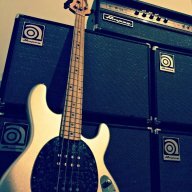
I also feel my basses changing as the years progress. Especially the more they're played. My Stingray, which I purchased new in '20 and has been my main axe since, has gotten lots of use. And sometime last year it changed subtly. It's a little warmer, softer, certainly easier to play. After changing strings and whatnot, I can say with confidence it's the instrument.

But, I'm in the minority here on TalkBass. I think wood matters. I think instruments break in and change with time. That's been my experience at least. It sounds like it's been yours too. That's okay.

Don't mind the naysayers. They spend more time on the forum than in the practice room anyway.

The use thing is real. Its like a car.
The wood aging is suspicious.
 
  • Like
Reactions: Guitalia
That's funny because every tele player out there swears the opposite. They all say brighter and twangier. There are certainly material changes over time, but I'm gonna take your anecdotal evidence with a salt mine.

This is due to the Conservation of Tone principle. Warmth and twanginess cannot be created or destroyed, but over time it can shift from one instrument to another. I suspect the person who had the jazz bass in the intervening years kept it near an old Telecaster, which absorbed some of the twang from the jazz bass. It's very simple physics.
 
This is due to the Conservation of Tone principle. Warmth and twanginess cannot be created or destroyed, but over time it can shift from one instrument to another. I suspect the person who had the jazz bass in the intervening years kept it near an old Telecaster, which absorbed some of the twang from the jazz bass. It's very simple physics.
Age only draws out the most positive attributes. That and theft from proximity to other instruments made of magic nitrocellulose.
 
My experience is based on owning the same P bass (59) from around 1969 until recently. No difference that I would ever attribute to the bass itself. Different strings as better quality strings became available, certainly better amplification, change in my playing and (perhaps) a difference in how it feels, particularly along the back of the neck as the finish was burnished after 50 yrs of play. But honestly, I've had new P basses that could achieve the same neck feel with some work with a 3m pad and a few years of play.

I'm also a woodworker and quite familiar with the drying and aging properties of wood. Unsealed wood (no finish) will dry out in a few months if kept in reasonable conditions. Once wood is finished, I doubt that much change occurs, other than appearance as it darkens with age (depending on wood type) and patina from use.
 
If you believe, as I do, that tone is in your hands, the thing that changed is you are a better player, capable of making a better sound. Seven years does not change the resonance of the wood in any meaningful way.

As much as I wish that was true, I very seriously doubt that I advanced my playing in the last 7 years. Played bass since 87, and didn't even play that much recently.
If something, I was probably a better player back 2017 when I sold the bass (was gigging regularly), than I'm now, when I got it back.
 
Last edited:
I didn't present any evidence. Just shared impressions, that's not evidence.

However, I may be able to do something a bit more objective if/when time permits.
I recorded a couple of tracks for an album in 2016 using this bass and new Fender flats. We did it in the studio of our drummer (who's a professional sound engineer), with whom I work to this day. I just asked him, and he confirmed that he still keeps the isolated tracks for the whole album. We use different converters nowadays, but the ones we used back in 2016 are still available as spares in the studio.
One of the bass tracks is a pure DI, and I happen to still have the DI box I used in 2016.
In short, we may be able to recreate the same signal chain and track part of the bass line of one of the songs. Then we can compare on high quality monitors/headphones and do some FFT analysis.
Again, not a 100 % scientific experiment, but way better than a sonic memory.
It's because of global warming....
 
As much as I wish that was true, I very seriously doubt that I advanced my playing in the last 7 years. Played bass since 87, and didn't even play that much recently.
If something, I was probably a better player back 2017 when I sold the bass (was gigging regularly), than I'm now, when I got it back.

Which magnets are in the pickups?
Alnico tend to lose their strength over time. That would create a more mellow tone, deeper maybe, a bit less agressive
 
Same rig, yes.
While I had the bass I used it with different strings, but one of them (Fender 7250's) is the same, yes. Brand new set BTW.
I don't thing I changed technique in the last 7 years. I play mostly finger style since the 80's.

Also, nothing changed in the setup of the bass (didn't need any adjustment). The only thing I did was polish the frets lightly with 2500 grit sandpaper, oil the fretboard and change strings.

There you go. Brand new strings never sound the same as strings that have been installed for a while.
 
Just don't get it on your fretboard, especially open pore woods like Rosewood, Wenge, et.
I guess if you were trying to use a Dremel and a buffing wheel, that could be an issue. But doing it the old fashioned way, I've never had an issue.
IMG_3458.JPG
 
I think a 7 years span is not enough to get a noticiable change in tone by wood aging.
Probably you'll spect that in a bass made in the 80/90s and older...
My number one is an RSB Special II. When I got it I quickly swapped out the pickups for EMGs. I loved that and played it for years. I eventually had Rautia wind me some hotter pickups. For me that was the final piece of the puzzle. Years of play but the new pickups really gave a more full experience. I can't really remember the original tone. I recall I called it thin and lacking, but the new pickups gave it a more prominent voice.
 
I think usage may improve the sound and sustain.

I heard the anecdote that violinists would leave their fiddles on top of a radio to keep it vibrating. After I changed something on my DB I lay it on top of a cab and, using a tone generator, fed the frequency of the wolf note through it.. and went out for several hours. Not long enough to produce any discernable result.

I've also seen repairers give an instrument a light spanking to settle the tension throughout. I'll give my BG a good shaking and a thump after eg a string change and it quickly settles to what as it was. Everyday jolting and constant playing may improve things but I only ever returned to the same plateau.

For those interested in testing their own hearing:

Online Tone Generator - generate pure tones of any frequency
 
This is due to the Conservation of Tone principle. Warmth and twanginess cannot be created or destroyed, but over time it can shift from one instrument to another. I suspect the person who had the jazz bass in the intervening years kept it near an old Telecaster, which absorbed some of the twang from the jazz bass. It's very simple physics.


Totally makes sense. :roflmao: