
I love so many tones, I can't settle for just one one or two amps!

Enjoy the benefits of a premium membership!
Upgrade Account
-
TalkBass has been independent since 1998. Add your voice.
Create a free account to reply to discussions, view embedded media, and browse with fewer display ads.
Join free Log in
Want zero display ads or expanded classifieds tools? Compare plans.
You are using an out of date browser. It may not display this or other websites correctly.
You should upgrade or use an alternative browser.
You should upgrade or use an alternative browser.
Chasing "That" Tone - Are You Happy Once You Catch It?
- Thread starter HamOnTheCob
- Start date
-
- Tags
- tone
More options
Who Replied?

Have any of you guys or gals ever chased a player's tone only to realize once you have it I havthat it's not for you? On a related note, have you ever bought a bass or piece of gear because someone you idolized used it, but you found that it doesn't sound anything like what you hoped? On the flip side, have you ever bought a bass because one of your idols plays it and it was absolutely everything you hoped it could be?
Yes, yes and yes.
Then after several more years of playing, I no longer had a tone. Far more importantly, I had a style. I now sound like me no matter what instrument or amp I play through.
Gear is meaningless.

For me, small hands guy, I've found very easy to play and responsive the Rotosound Funkmaster 66 strings which I now install on all my basses.
I've tried flatwoundsbut their tension. Is generally high I tend to stick to them because of sweating...difficult for me but maybe it's just a matter of getting bisex to them
I've tried flatwoundsbut their tension. Is generally high I tend to stick to them because of sweating...difficult for me but maybe it's just a matter of getting bisex to them
Sorry writing with hand phone not bisex but used ehm...
I mix it up all the time. My bass has two dual-coil pick-ups each selectable for parallel, series and single coil. I have four amps and four cabinets all of which I use regularly. That said, I do have a consistent base tone, regardless: technique and dial-in.
I've been influenced and inspired by many players tones and ended up sounding like me (which was the plan all along). I used my favorite players tones as a guide to find the sound I had in my head. I own a Chris Squire signature and learned a lot from him and others. I never wanted to sound like him, though. I want to sound like me. And I do. Squire/Glover/Rutherford/Wetton/Levin/Entwistle and the rest did help point me in the right direction. My sound is definitely mine, though. Also, I finally got closer to it than ever, tonight. Surprising and astounding.
There has always been a tone that I wanted to emulate, and it was very easy to figure out how to get. I love the sound of a P-bass through a SVT. The other iconic tone to me is that of a Rickenbacker through a SVT. I own five P-basses, two Rickenbackers and a SVT Classic. I'm set. I don't generally care for effects, and don't currently use any. I keep it simple. For the past two years or so since I got this equipment in place I've been able to focus just on my playing, to me that is very liberating.
Admittedly, I'm not a super technical bassist. My playing style is basic, simple blues, rock and old school country. My playing involves lots of roots and fairly simple walks, just what is needed to support the song, nothing more. If a song has a signature lick, no problem, but I'm not looking to reinvent the wheel as a bassist, or as a drummer for that matter.
Admittedly, I'm not a super technical bassist. My playing style is basic, simple blues, rock and old school country. My playing involves lots of roots and fairly simple walks, just what is needed to support the song, nothing more. If a song has a signature lick, no problem, but I'm not looking to reinvent the wheel as a bassist, or as a drummer for that matter.
I'm not good enough to play like somebody else so I have to work on sounding like me. I am only partially content with that tone though and am always making progress, sometimes negative progress, towards a tone that I can proudly say is "mine".
Α good p or j and a decent amp are usually enough to get close to most tones we hear on recordings. Time and feel are more crucial IMHO.
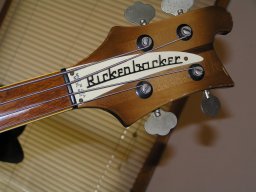
I like playing many different basses, yet I always ending up sounding the same. Is this my tone? Guess so. Whatever gear my bass heroes choose may be fine for them, but do they stick with it for long? Maybe they're not happy with the sound they're getting and are still searching, and you love what they're not happy with. When they get close to their sound, you may hate it. Much of your tone is created by you, so your gear is important (Roundabout on an EB-0?), but within reason you can coax your tone out of almost anything. I'm much more concerned with good arrangements, tight vocals, and a happy audience.I have done the same thing, bought an expensive Smith, do like my tone BUT it sounds like a Smth, kind of a 1 trick pony, BUT, when you think about it, every bass is a 1 trick pony, to a certain extent, a Ric, sounds like a Ric, a Fender P sounds like a fender P, so forth and so on, glad you are happy, I finally like what I have, for now, I am tired of chasing that elusive tone, you came close to saying, TONE, comes from your hands, Jaco, even said that in an interview,way back when, glad you found your dream bass, it is a great instrument.

i tried to play licks and progressions and runs like my influences but Incouldnt afford a bunch of equipment until about 6 years ago so my emphasis has been on choosing the style and rhythm more than the actual tone.

Nope.. I have already found it.. no chasing here!
That's because you're rocking a Spector, and there is no better tone!
All I've ever tried to do is sound like me.
A guitarist friend put me straight years ago when I was asking him what he thought about my new bass. He just said, "It sounds good, but you sound like you. You always do".
A guitarist friend put me straight years ago when I was asking him what he thought about my new bass. He just said, "It sounds good, but you sound like you. You always do".

There are so many influential bassists, many of whom I admire, but I never tried to imitate their tone. I have spent many hours, years of practicing and money finding the gear to produce the tone I wanted...deep and ballsy enough to be felt and punchy enough to be heard. I have found what I like and am completely content.
- Jul 3, 2004
- 1,300
- 641
- Disclosures
- Endorsing Artist: Ernie Ball MusicMan Guitars
After I realized and discovered the tone I liked in recordings was very different from the sound of the actual bass solo'd - the chasing stopped - bedroom tone rarely if ever was usable - so I got used to good recording tone
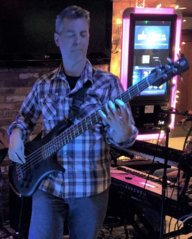
In my teenage years I chased the 'Ric' tone, I was into Geddy and Squire. In the early '90's, I had Spector NS-2 going through a GK head, and got the perfect tone. I then tried many different brands, got into 5 strings, and had a long stint with Lakland. I now play a Spector NS5CR through a GK head, and have the perfect tone again.

My ideal tone varies from space to space. You can't get any more than the room allows.
IBTTIIYF Lock! ( In before The Tone is In Your Fingers Lock)
Im only responding here because I play Swiss Army Basses: For me, its not about a single good tone of one bass, but just how many various good tones I can get out of one bass.....Can I chameleon one bass into sounding like a both-PUs-dimed Jazz, a soloed bridge "Jaco" Jazz, a Precision when needed, Stingray-ish Qualities when needed, and anything else I may be able to get out of it...Id rather do this all off of one instrument in live settings than have to bring four + basses to every gig
and I still sound like me on almost whatever bass I play
Im only responding here because I play Swiss Army Basses: For me, its not about a single good tone of one bass, but just how many various good tones I can get out of one bass.....Can I chameleon one bass into sounding like a both-PUs-dimed Jazz, a soloed bridge "Jaco" Jazz, a Precision when needed, Stingray-ish Qualities when needed, and anything else I may be able to get out of it...Id rather do this all off of one instrument in live settings than have to bring four + basses to every gig
and I still sound like me on almost whatever bass I play
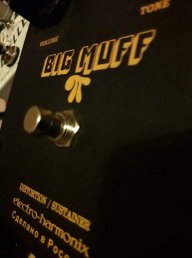
Once I put EMGs in my Jazz, it had the sound I wanted. Add a bit of distortion and it's just an absolute beast, it sounds exactly like what I was after. I also bought a Bass Whammy pedal to try and cop some Lightning Bolt sounds. Given enough distortion (I'm talking running overdrive>distortion>fuzz) I get what I'm after.
Trying to nail other people's tones is a good way of understanding how certain tones are created. If you know how different bits of gear affect tone, you'll find it much easier to create your own tones. As someone with a fair few pedals, I find it pretty ridiculous when people claim that gear is superfluous. If you can get delay, reverb, bit crusher, ring modulator etc. tones from your fingers, you're a wizard.
Yes, you'll still sound like you because your playing style will be the same. Style and tone are not the same thing though.
Trying to nail other people's tones is a good way of understanding how certain tones are created. If you know how different bits of gear affect tone, you'll find it much easier to create your own tones. As someone with a fair few pedals, I find it pretty ridiculous when people claim that gear is superfluous. If you can get delay, reverb, bit crusher, ring modulator etc. tones from your fingers, you're a wizard.
Yes, you'll still sound like you because your playing style will be the same. Style and tone are not the same thing though.
Last edited:

BassHappy
Supporting Member
I lived in Europe for a couple of years during an influential musical period for me. Very influenced by the jazz bass of John Wetton and the Rickenbacker of Chris Squire. Bought a Hiwatt stack in London and definitely emulated their sounds for a couple of years. When we got signed to our deal I got a big education on bass tone from Ken Scott.
We had recorded a few tunes and I was using the bright roundwound sound of my peers along with some round and deep mellow tones as well. Ken called a break and took me into the control room. Our band had a dense orchestral sound, with lots of very busy virtuoso playing all around. Ken took the time to walk me though a little lesson in bass tones. He soloed the kick and the bass and spent some time blending them. He also pointed out the magic that can happen when the kick and the bass stop fighting each other and begin to work together as one. The music and the pulse suddenly came alive! Breathing together, as he called it. Of course with his experience, and a discography like Ken's in front of you - you listen and you learn, it's that simple:

He did this with the use of some EQ but his motto was always - "EQ is a last resort. If you have to use more than 2-3db, something else is wrong." He explained to me that he goes to great lengths while recording to shape and blend the bass guitar and the kick drum so that they work together as one. It's the basic foundation of the music he records. Ken took me though that process and it really turned my head. I realized that my tone should always rightfully be a product of how it's blending with the kick. If the kick is bright and toppy, the bass can afford to have less edge. If the bass is bright and more contagious on a certain song, maybe the top of the kick gets rolled back a pinch. Of course, if you are in a three piece power trio the rules change - or if Ken was producing a Stanley Clark album, he would approach it differently. But my band was a full, lush progressive rock orchestra - so it was up to me to play it smart and adapt to the words and wisdom of a legendary pro. We ended up dialing in tones specific to each song as far as the kick and the bass were concerned - but always referencing one against the other before we did a "take". After the records were finished and mixed - I emulated the tones on the record for live use too, and basically abandoned that bright roundwound tone I cut my teeth on.
We had recorded a few tunes and I was using the bright roundwound sound of my peers along with some round and deep mellow tones as well. Ken called a break and took me into the control room. Our band had a dense orchestral sound, with lots of very busy virtuoso playing all around. Ken took the time to walk me though a little lesson in bass tones. He soloed the kick and the bass and spent some time blending them. He also pointed out the magic that can happen when the kick and the bass stop fighting each other and begin to work together as one. The music and the pulse suddenly came alive! Breathing together, as he called it. Of course with his experience, and a discography like Ken's in front of you - you listen and you learn, it's that simple:
He did this with the use of some EQ but his motto was always - "EQ is a last resort. If you have to use more than 2-3db, something else is wrong." He explained to me that he goes to great lengths while recording to shape and blend the bass guitar and the kick drum so that they work together as one. It's the basic foundation of the music he records. Ken took me though that process and it really turned my head. I realized that my tone should always rightfully be a product of how it's blending with the kick. If the kick is bright and toppy, the bass can afford to have less edge. If the bass is bright and more contagious on a certain song, maybe the top of the kick gets rolled back a pinch. Of course, if you are in a three piece power trio the rules change - or if Ken was producing a Stanley Clark album, he would approach it differently. But my band was a full, lush progressive rock orchestra - so it was up to me to play it smart and adapt to the words and wisdom of a legendary pro. We ended up dialing in tones specific to each song as far as the kick and the bass were concerned - but always referencing one against the other before we did a "take". After the records were finished and mixed - I emulated the tones on the record for live use too, and basically abandoned that bright roundwound tone I cut my teeth on.
Last edited:


