• TalkBass has been independent since 1998. Add your voice.
    Create a free account to reply to discussions, view embedded media, and browse with fewer display ads.
    Join freeLog in
    Want zero display ads or expanded classifieds tools? Compare plans.

Chris Squire on NPR rant

Jon wasn't in yes at all before 90125. Drama was released and toured with Trevor Horn on vocals. A good portion of Drama is original Horn/Downe compositions given the Yes Treatment. In that respect there is a good deal of similarity between between the creation of Drama and 90125
Indeed, I stand corrected. The year minus Jon. -- I really enjoyed Drama, though it too often slips my mind. My listening kept in touch with Anderson through that period, not really acknowledging the disassociation - ha, maybe I was in denial - plus my gf at the time was a huge Jon fan, so I think I coasted through his departure in that season. I also really liked Vangelis - which further filled the gap. - The one album seemed so brief a non-Jon period. Ha - where is my head :-p
 
I could be wrong,:cool:,but,I don't really think it's the j bass,(which i thought only showed up on Going for the One album),and i really don't think he was using (or even had) the mutron before Tormato.....
What info are you basing your statement on...?
I saw Yes in '74,when they did the entire TFTO album with Wakeman,and again in 75/76 when they were still playing Ritual with Patrick Moraz,and the Rickenbacker was used every time.....like i said earlier,Chris usually would switch to whatever instrument was used for the record when playing that somg live.....

I have no proof to counter your statement but, with all due respect, where did you get your info from? I'm curious.

Sorry, my bad, he did use the RM on Ritual, I was thinking about The Ancient. I still think of Tales as Sides 1,2,3,4 instead of their proper titles.

The Mutron-III came out in '72. I saw Yes in March of '74 and I remember being surprised to see Chris use a Jazz bass on The Ancient. I saw them in Dec of '74 and I was able to get on stage and look at Chris' rig and I remember seeing the Mutron, the BrassMaster and the tremolo on top of his Sunn amp and the Wha pedal and a Eventide echo pedal with the bass pedals on the stage. He also had the Marshall amp there, though I don't remember it having it's own cabinet.

It sounds to me like he used the Mutron on "Wonderous Stories", though it is subtle.

Bassically, Michael
 
  • Like
Reactions: woodyng
Maybe. But that's not what I understood from reading a mag article back at the time. -- I just did a little wiki research to cross-check my feebler memory - To paraphrase the wiki page on "Owner of a Lonely Heart", Trevor Ravin had 4 track demo'd - and very well - Owner, amongst others used on the album - in 1980 - 2 years before joining Yes. His demo material was later released on his album "90214" in 2003.

Trevor Rabin clears the air on Yes' 'Owner of a Lonely Heart': 'I've bitten my lip for a long time' | Something Else!

this link is worth the read and listen (to the youtube video of the original 1980 demo)


Rabin had been shopping his own music, some of which became 90125, for some time prior to getting involved with the YES camp. -- This is why I view the album as "kinda sorta" YES.

At the time he joined, they were in need of a jolt in the current 80s music scene, considering where the mainstream had gone, leaving many '70s acts in conflict as seeming retro dinosaurs. The new "digital" technology (for better and worse) was changing the way music sounded and was performed, recorded and "assembled" (sequencers, midi, digital synthesis and sampling, electronic drums, synth bass, etc.). Rabin was a little younger and a little more current and mod, plus he had a very marketable "look".

My issue, sort of, is that, he was the new guy, a relative unknown, who walked in off Music Biz St. and affected so much power and influence in a beloved and stalwart band of already very creative and experienced people. -- And indeed, Rabin was brought in as a new front guy (apparently not for YES, but a new offshoot called Cinema), as Jon Anderson had been exploring and executing solo work, alone and in tandem with Vangelis. While Jon wasn't (to my understanding) "out' of YES, Rabin coming in with so much of his music and ideological ways, quite different from the ethereal musings of Anderson, as well as Rabin handling all the lead vocals on his own pre-written songs, it very much seemed like an honorary position - since it was YES - to give Jon some leeway for additional ideas after the fact.

Check out the youtube video of the "Owner of" demo, even Squire's bass lines came from it. YES typically created material from Anderson, Howe and Squire. This was Rabin, almost seemingly letting those guys have some freedom on his material in context of them becoming his back up band.

I know that's over-stated and an exaggeration - sort of - but in some 90125 instances, it's not that far from true. As a pre-80s YES fan, it kinda was ahead scratcher to me. Yet, all of this said - IT'S STILL GOOD MUSIC well written, well arranged and well played - and heck, who among us wouldn't have loved to hear YES give their treatment to a song that we wrote?

In the end, it was a mutually beneficial thing for both Rabin and YES across the board.


That was an interesting listen, thank you. Actually, the interview with Rabin and the demo confirms what I was saying - yes, Rabin wrote a lot of material, some of it before the project became a Yes project and maybe even earlier. But the album didn't become what it became until it was Yes. Rabin says in the interview that Squire and Anderson added to and changed what he had created and deserved the credits they got, he was mostly reacting against Trevor Horn claiming to have also co-written it. If you listen to the demo compared to the final, you can completely hear why. The lyrics are the demo are very "tangible," a song about an introverted guy who doesn't want to go clubbing. Sounds like something Foreigner would have done. The final lyrics still have that underlying theme but are much more abstract - "The eagle in the sky, how he dances one and only." That's pure Anderson, not Rabin. And the demo does NOT have Squire's bass line, if you listen - only the basic riff which Squire joins in, but none of the fills, and the rolling chorus bass line is completely absent. You can see how this demo is the seed of the final song but it wouldn't have been the same if it had remained a Trevor Rabin tune.

My understanding is that Trevor Rabin had been a pop star in South Africa and had gone to London hoping to break into the international music scene. Yes was at a watershed - Anderson had left, and then the Buggles had too (Horn and Downes), and Steve Howe went to join Asia. All that was left were Squire and White. Apparently there's been some contradiction in the interviews; White said that as far as he ever thought, they were just at a point where they had to rebuild Yes, and getting Tony Kaye back and bringing Rabin on were part of that plan from the beginning. Seems to me he must have just been oblivious and out of the loop. Squire and Horn say that Yes was done and they were looking to create a new project. They did demos with Jimmy Page for a project called XYZ (Ex-Yes and -Zeppelin) where Chris was going to sing lead as well, but the chemistry wasn't there and it didn't move forward (the demos are around, and they're not great). Then Horn hooked them up with Rabin for the "Cinema" project, which morphed back into Yes only when they called Anderson in. Howe was ticked when he heard about it because he had gone to Asia on the understanding that Yes was disbanded and now here they were putting an album out without him.
 
  • Like
Reactions: fretter
(Since we're fluctuating on and off topic at every post...)
IMO The Police (especially their later output - GITM, Synchronicity) influenced older prog band albums of that era significantly (Yes, Rush, Belew-Crimson), so these got some suggestions from not just any 80's music but a specific band of inventive, educated, less post-punk or post-disco -leaning younger peers. But it may be just me.
 
  • Like
Reactions: Bob_Ross
This kinda goes back to (forgive me for taking your thunder) someone's "Hall of Fame" post. Who's going to represent this man on "the tribute to Mr. Squire's passing?" Heh.... IF there is one. They're never going to get it right.

But for NPR, it's like any other gig: you play to your audience. Maybe not YOUR choice, cause you have a dog in that race. They're going with the ordinary, average people. You know, the people who've bought records.

What was your reaction when NPR did a tribute to Louis Johnson's death? Yeah, you're right. We all missed that one on NPR.
 
The old folks that listen to NPR would say "Yes?, never heard of them." The Boomers would recognize the opening harmonics to Roundabout and
the segment talked about his Ric.

Thanks for the correction on Owner-- my old memories go back to Fragile.......

End of my rant.

Sorry, but your logic is flawed. Boomers are the old folks that listen to NPR. I know, because I am a Boomer, I listen to NPR, and I am old folks. :cool:
 
  • Like
Reactions: Watchootognbout
You and I agree, but an NPR person or group producing that segment of NPR news you heard would find "Owner" as the only Yes #1 song. There's a better than average chance the producer(s) of the segment have never heard Roundabout, of if they have, didn't know what it was. Also likely that Roundabout pre-dates the birth of the segment producer(s).

I didn't hear the segment, but it sounds like from your description that NPR producers went to Wikipedia to prepare the segment....

I agree 100%, that's why my OP called it this a rant. I probably should have called it a "Bass player's rant".
The segment did talk about Chris's Ric---- I would have loved to hear the Ric-o-sound in the segment, but the reporter did their job.
 
... an NPR person or group producing that segment of NPR news you heard would find "Owner" as the only Yes #1 song. There's a better than average chance the producer(s) of the segment have never heard Roundabout, or if they have, didn't know what it was. Also likely that Roundabout pre-dates the birth of the segment producer(s).

I didn't hear the segment, but it sounds like from your description that NPR producers went to Wikipedia to prepare the segment....

As I mentioned earlier, "Roundabout" is more often heard on my local "classic rock" station than "Owner of a Lonely Heart". In fact it has seemed to be in somewhat heavy rotation for a while (prior to Squire's passing). It's a pretty well known song, and as I recall is listed on Wikipedia along with OoaLH as the group's two most well known songs. We can speculate about the NPR producers' reasons for choosing one over the other, but objectively I think the case for using "Roundabout", as a well known example of Squire's great bass playing (and singing) is pretty strong. So, I can understand why a producer might quickly decide to go with Yes' biggest hit, but just a moment of reflection or research would reveal "Roundabout" as the best choice to feature Chris Squire's musical contributions - which was presumably the point of the feature.

Admittedly, this is not the most earth shaking issue in the world. And it's good that NPR did the piece to begin with. It would have been nice if they'd used a more representative and iconic song from the Yes catalog, to feature Chris Squire, but so it goes.
 
Last edited:
  • Like
Reactions: Watchootognbout
I may be wrong about this, but I'm pretty sure "Ritual (Nous Sommes Du Soleil)" is one of those aberrations in Squire's repertoire where he didn't play the Rickenbacker.
Now I can't remember where I heard this -- possibly an older TB thread where a lot of his non-Ric tunes were cited -- but my knee-jerk response is that he played a Fender Jazz Bass on that cut, same instrument he used on "Parallels" and "To Be Over".

Well, I spent a (wonderfully enjoyable, btw) few hours perusing all the old TB threads about Chris Squire and couldn't find anything to support that contention, so I hearby redact it. Far too many undocumented assertions on the internet for me to be contributing to the rumor mill. :) For the record: I have no idea what bass Chris used on "Ritual", but there seems to be consensus it was the Ric. Mea culpa.
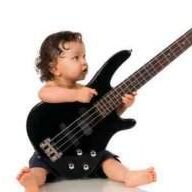
I did read that he used a fretless Guild B-301 on "The Remembering" (side 2 of TFTO) ...but again, that's another poorly documented assertion. Too bad Chris was never as anal as Steve Howe in listing what instruments he used on what recordings.
 
Last edited:
Admittedly, this is not the most earth shaking issue in the world. And it's good that NPR did the piece to begin with. It would have been nice if they'd used a more representative and iconic song from the Yes catalog, to feature Chris Squire, but so it goes.

That gets me to wonder, how did Fox News cover Squire's passing? Or any of the other news channels for that matter ....
 
Because it's jusk OK as an example of his playing. That he co-wrote the song is beside the point.

I don't know if I completely agree with this statement. It may not be as technically dexterous as much of his earlier work but I still think his bass playing serves the song well and there are, albeit not bass playing wizardry, still some well thought out moments.
 
Last edited by a moderator:
I don't know if I completely agree with this statement. It may not be as technically dexterous as much of his earlier work but I still think his bass playing serves the song well and there are, albeit not bass playing wizardry, still some well thought out moments.

It's not like he mailed it in. He was still Chris Squire. But it was clearly not his element.

A proper analogy is that Jamerson himself was grossly overqualified for a lot of the music he ended up playing, but there are signature songs that define his greatness.

Such is the case with Chris Squire and Yes' biggest chart success.
 
It's not like he mailed it in. He was still Chris Squire. But it was clearly not his element.

A proper analogy is that Jamerson himself was grossly overqualified for a lot of the music he ended up playing, but there are signature songs that define his greatness.

Such is the case with Chris Squire and Yes' biggest chart success.

I get what you're saying... When comparing to his earlier work, even much of what was done on their first two albums, there is quite a difference in his playing.