• TalkBass has been independent since 1998. Add your voice.
    Create a free account to reply to discussions, view embedded media, and browse with fewer display ads.
    Join freeLog in
    Want zero display ads or expanded classifieds tools? Compare plans.

CITES - What every bass player should know

I've ordered a bass, which needs a CITE permit before shipment.

Once I have the instrument, do I need a new permit to travel internationally with it? Or will the permit from the seller cover it?
You need to check with the CITES authorities in the US and in the destination country. There is no universal CITES permit.
 
  • Like
Reactions: Passinwind
Given that this is a worldwide "problem", perhaps an instrument should have an international permit that is always part of the instrument's documentation, so there would be only a ONE TIME (small) fee for each instrument, said fee going to one's personal choice of charity/environmental organization, or some such, not to some (not allowed word's) coffers.
 
Given that this is a worldwide "problem", perhaps an instrument should have an international permit that is always part of the instrument's documentation, so there would be only a ONE TIME (small) fee for each instrument, said fee going to one's personal choice of charity/environmental organization, or some such, not to some (not allowed word's) coffers.

LOL you're making sense. No one is going to go for that. Good luck getting almost 200 countries around the world to agree on anything. It's a PITA for a reason and the reason is that's the way they want it to be.
 
Here is how my first sale in 2017 from Canada to the USA went , step by step for a Canadian seller:
a) Seller emails CITES ([email protected]) and has a permit emailed to the seller.
b) CITES emails you the blank permit, you fill in the blanks ...except for the buyer details. My sample permit attached is the exact style of words I used for my sale.... feel free to use those words
c) You email the permit back to CITES and tell CITES to place the permit on hold until you find a buyer.
d) About 2 weeks pass and CITES emails you back a permit number for your submission.
e) Seller places the bass for sale on talkbass....wait until you have that six digit permit number then list your bass.
f) Seller and the buyer reach an agreement ,buyer provides their name and address for the CITES permit (see all details needed for the permit from the attached sample permit)
g) Seller emails CITES the permit with the buyer information ....and pictures of the bass meaning at least three pictures 1) full front of bass 2) full back of bass and 3) a really clear picture of the serial number on the bass. Send these pictures along with the completed permit telling CITES you have a buyer and to take the permit off hold and process that permit.
h) Seller and buyer wait 5 weeks for CITES to mail the seller all the paper permit. The permit received contains all the details of the permit and clearly tells the seller what to. The permit is actually two pieces of paper, those two pieces of paper are already nicely stamped and signed off and will accompany the bass when shipped.
I) Once the seller has the permit then buyer and seller transact financially, seller wraps up the bass and on the outside of the shipping package the seller attached a plastic folder/packing list enclosed type of folder on the outside of the package. That package contains two pieces of paper which are CITES permits... one permit is kept by Canada customs and one permit is kept by USA customs. One that package around that plastic folder write CITES and make is real obvious to the customs people that the CITES permit is right here on the package
J) Ship the bass as usual, at Canada customs one piece of CITES permit paper is kept by Canada customs and after leaving Canada for the USA one piece of CITES permit paper is kept by USA customs.

That is how my first sale went, really easy. Issue is CITES added about seven full weeks to the sale before the buyer has the bass in hand.
Bentley


This is a 9 step process that takes nearly 2 months, many email transactions and paperwork. I would hardly categorize this as easy!

The entire CITES law really irritates me. Border security for most countries can basically do whatever they want and operate above the usual laws of the country. For example, coming into the US does not grant you the right to the 3rd and 4th amendments, even as a US citizen - they can search and seize at their discretion at the border. What burns everybody is the fact that older instruments are retroactively affected under the law. In essence, an orchestra can't travel to a different country. Those old, beautiful instruments were often crafted at times when those woods were plentiful. What's done in the past is already done, so what the law needed to focus on is preventing new instruments in modern times from being created from those woods.

This international law is ******** and somehow I can't help feel like some governments aren't making money from this.

I'm getting a custom build done now with a macassar ebony fingerboard. One day, that'll be on the CITES list too. So if I travel anywhere, I guess it's with the maple and alder jazz bass, because it's not worth the hassle.
 
Given that this is a worldwide "problem", perhaps an instrument should have an international permit that is always part of the instrument's documentation, so there would be only a ONE TIME (small) fee for each instrument, said fee going to one's personal choice of charity/environmental organization, or some such, not to some (not allowed word's) coffers.
Nice idea. Go ahead and create it, you have my support.
 
  • Like
Reactions: my man pookie
Hello, sorry this has most likely been covered but I'm at work and can't look through 25 pages!!
Just quickly, I'm from New Zealand, if i order a rosewood bass from a Canadian member on the classifieds, is CITES going to be an issue? Or is it just commercial/dealers etc.
Thanks
 
Hello, sorry this has most likely been covered but I'm at work and can't look through 25 pages!!
Just quickly, I'm from New Zealand, if i order a rosewood bass from a Canadian member on the classifieds, is CITES going to be an issue? Or is it just commercial/dealers etc.
Thanks

In short, as far as I can tell - yes, it will be an issue. The dealer/not status does not matter, except to the extent that a dealer/builder who is aware of CITES may already have the necessary documentation.
 
  • Like
Reactions: BroBro
Not true. Fender has stopped using rosewood on everything except their US-made instruments. In other words, they've stopped using rosewood on most of the instruments they make.
Fender Issues Statement On Use of Rosewood | Premier Guitar

+1

Correct, that is if they want to sell anything other than maple fretboards outside the CONUS border, which I'm pretty sure they'll want to keep doing.

Don't know if this blurb from the Fender website has appeared in this thread, but here's another confirmation of Fender's rosewood replacement preference: Invalid Link Removed
 
As an importer, distributor and retailer of musical instruments, I tried to contact CITES offices here in Canada at least 20-30 times. I emailed, called, left voice mails.. never got a response or a reply .. my suppliers in Japan and Korea always send the certificate with the shipment that apparently nobody looks at.. i keep shipping like before without any problem.. so not sure what to do..
The whole problem started with overuse of rosewood by the Chinese furniture manufacturers.. Musical instruments manufacturers use just a tiny fraction of the rosewood used by furniture manufacturers and should had been exempt to begin with.. and restrictions should had been made to the logging companies that export raw wood, not everybody across the line.. but leave it to the overpaid bureaucrats to come up with rules that make no sense to begin with
 
...The whole problem started with overuse of rosewood by the Chinese furniture manufacturers.. Musical instruments manufacturers use just a tiny fraction of the rosewood used by furniture manufacturers and should had been exempt to begin with.. and restrictions should had been made to the logging companies that export raw wood, not everybody across the line.. but leave it to the overpaid bureaucrats to come up with rules that make no sense to begin with
You are right on target here. Musicians are easy targets to make news of, so we get the shaft.
 
Last edited:
  • Like
Reactions: ajkula66
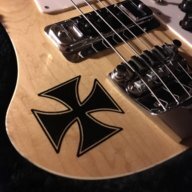
bass cocobolo.jpg
As a bass player from the last century I have a number of basses in my collection that do contain rosewood, mahogany and even one with a layer of cocobolo (The one in the top pic) and I suspect also that one bass may have an ivory nut and I have a guitar that could contain turtle shell. What can I say about that except I bought them because I liked them and being on sale in a high street shop the last thing on my mind was is this and endangered species? None of these things were a factor in my purchasing the instrument. Yes I thought they looked good, but I bought them because they played and sounded good.

This issue sounds like a minefield to me because it sounds like governments that allowed the sale and import of these instruments in the past are now prepared to seize them from their owners regardless of their history and when they were bought.

Now Ivory and turtle shell were not an issue when some of my instruments were purchased but clearly are now. I would need an expert to tell me if the basses did have these items as I wouldn't know how to confirm that and there is very little information like this, available on older individual instruments. I would hope they are not but I wouldn't want to lose them because they could be.

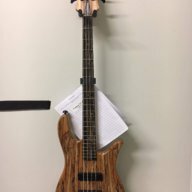
I'm fairly certain one of my oldest basses (a yam SB55 - see pic below, its not mine but same model) which is an astonishingly good instrument, may be mahogany (maybe not) with (i think) a rosewood neck. It could even contain turtle shell for all I know. perhaps with a serial number Yamaha could verify that. Other than that how could I know where the rosewood came from? This instrument (like all my instruments) is a part of me and I would be devastated to lose this to some customs official.

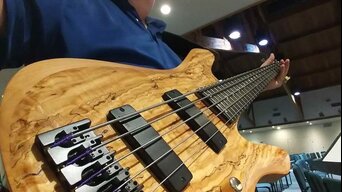
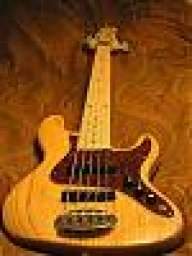
My gorgeous Sandberg 5 string bass (see pic above, that's it) is layered with a few woods including cocobolo. its a one off, worth a bit and I now wonder if its safe to leave the house with it. I have no idea if the cocobolo is Mexican or Panamanian or where the other woods came from and only a vague idea of how many different woods are in the bass.

Its a worrying story, and while I get that these woods need to be protected for us all, it feels like we could be one step away from confiscation at the front door. Even more of a concern is the apparent seize first policy then its up to the owner to prove them wrong with few sources of information available.

I recently posted questions relating to the use of reclaimed woods and what difference woods make to the sound and there was a ton of great advice and opinion from the members here. I will be watching this thread with great interest.

It sounds like it could be safer just to buy & sell/rent or borrow a bass when crossing a border

yam sb55.jpg
 
Mahagony is not covered by CITES. Rosewood, cocobolo and bubinga are covered, but instruments with those wood can be sold internationally with the proper permits - unless it's Brazilian rosewood, in which case you are screwed. And any of us can travel with our instruments with complete safety by going through the one-time hassle of acquiring a CITES instrument passport, as described above in this thread.

CITES is here to say, and (like taxes) we have to learn how to comply with it. That's the gig. That's what this thread is designed to do.
 
Last edited:
a good friend of mine was purchasing/materials manager at an instrument co. Even back 15 yrs ago, they were "audited" and once got into a tiff with the Feds over sourcing. I know of no more details, but this is nothing new, only more pervasive and inclusive than before. No doubt in my military mind he is an expert in CITES compliance as it likely became a HUGE part of his role in finding good wood. SS = serious scheiss.
 

Latest posts