

Enjoy the benefits of a premium membership!
Upgrade Account
-
TalkBass has been independent since 1998. Add your voice.
Create a free account to reply to discussions, view embedded media, and browse with fewer display ads.
Join free Log in
Want zero display ads or expanded classifieds tools? Compare plans.
You are using an out of date browser. It may not display this or other websites correctly.
You should upgrade or use an alternative browser.
You should upgrade or use an alternative browser.
Class D Amps
- Thread starter jazztonebass
- Start date
More options
Who Replied?
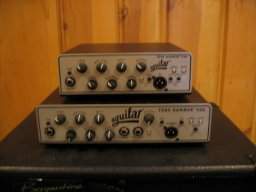
Really? They sure seem different to me! I believe it's because of the lack of power available past the RMS wattage in micros that causes it. With a trad SS or tube amp, you get a 2-1 ratio of peak wattage to RMS or thereabouts. But if you look at some of the tests Tom Lees has run for BGM on micros, you see the amount available past RMS is not nearly as high on most micros. Some micros hit their RMS rating and come to a dead stop. Trad SS amps don't deal with peaks quite as gracefully as tube amps, so folks gradually learned to overbuy wattage with them to get the best out of them. Same thing with micros, I believe. I find they run best when you don't come anywhere near pushing them hard, whereas a trad SS amp gives you at least some leeway to push them hard.
I have never noticed this at all as a general finding. I again agree with you about pushing a tube amp. A pushed/distorted tube amp, to some, sounds very good. Very natural limiting/compression..... +1
Again, every solid state amp that I've owned behaved differently when pushed. The Thunderfunk compressed in a big way when pushed, the class A/B LMII has a hard limiting circuit in the power section and compresses before it distorts. The Genz amps have hard 'hi passing' set rather high, so that don't do a huge low end, but sound magnificent when pushed like crazy due to the power management circuit. The 650 watt Glockenklang class D/SMPS has so much power reserve at VERY low distortion levels, that I can't see ever hitting the limit of that amp. The SWR 750 (one of the heaviest amps out there) clamps like CRAZY when pushed, etc., etc., etc.
Much better (and this is my main reason for posting) to evaluate each amp on its merits, not lumping an amp into some sort of preconceived category. There is HUGE variance in executions, both across topologies and within. For example, many feel that the rather unique overdriven tone of the old GK400/800RB is due to the class H power amp topology. And yet, EBS uses the same class of amp, and those amps exhibit NONE of that behavior when pushed. LOTS of stuff combines to result in the tonality of a given all in one bass amp.

Undeniably, they make a lot of sense for the gigging bassist. The portability is very attractive.
Question is... is there a sacrifice tonally for the convenience of the package. Do they lack girth and fullness? What, if any, are the sacrifices here?
The sacrifice is that most of them are chip amps and there is a thermal limit to chip amps.
and a many use the same power section which has been developed by the same company and then the advertised company has used their own preamp design in front of it.
The actual power of a single section is only 180 watts, then 2 power modules are ran in a bridged configuration for 360 watts.
making most of the "400"to "500" watt market
out of the 180 watts just about 120 of it is useful, the other part is cracking distortion that sounds horrible,
So because of thermal limits minimum load for most class D is only 4ohms and even at 4ohms depending on the design of the chassis. Even a 4ohm load will run them close to overheating.
so if you like running multiple cabinets, or plan on adding more in the future you have to be aware of this and buy higher ohm cabinets. if unaware of this when adding more speakers you have to buy and spend more money on completely different cabinets. Majority of use full cabinets being 4ohms, pairing 2 of them for a 2ohm load is impossible
Because of the built in protection devices built into the chip, if they overheat the signal will just be shut down. usually in the middle of a show.
with ratty light power supplys, depending on the player if your use to digging in they are rather lacking in tone.
Shut down often in the middle of shows, and modern PCB construction makes them impossible to repair, other than replacing the whole board that has failed and continues to fill land fills with toxic trash.
but hey most players only really need 180 of that 400 watts they think they are using, and most use single cab applications.
most the problems are not found, aside from overheating and a few models that constantly fail and have to be repaired.
Just do a search for the most failed/cracking class d's out there and dont buy them.
Tone aside I've never understood the fascination with size/weight. I take my amp from the car to the stage, five hours later I put it back in my car. Personally, I have no trouble carrying a 25lb SS amp twice a night. Unless you take the subway or bus to gigs I fail to see the advantage. Tone is much, much more important to me.
The sacrifice is that most of them are chip amps and there is a thermal limit to chip amps.
and a many use the same power section which has been developed by the same company and then the advertised company has used their own preamp design in front of it.
The actual power of a single section is only 180 watts, then 2 power modules are ran in a bridged configuration for 360 watts.
making most of the "400"to "500" watt market
out of the 180 watts just about 120 of it is useful, the other part is cracking distortion that sounds horrible,
So because of thermal limits minimum load for most class D is only 4ohms and even at 4ohms depending on the design of the chassis. Even a 4ohm load will run them close to overheating.
so if you like running multiple cabinets, or plan on adding more in the future you have to be aware of this and buy higher ohm cabinets. if unaware of this when adding more speakers you have to buy and spend more money on completely different cabinets. Majority of use full cabinets being 4ohms, pairing 2 of them for a 2ohm load is impossible
Because of the built in protection devices built into the chip, if they overheat the signal will just be shut down. usually in the middle of a show.
with ratty light power supplys, depending on the player if your use to digging in they are rather lacking in tone.
Shut down often in the middle of shows, and modern PCB construction makes them impossible to repair, other than replacing the whole board that has failed and continues to fill land fills with toxic trash.
but hey most players only really need 180 of that 400 watts they think they are using, and most use single cab applications.
most the problems are not found, aside from overheating and a few models that constantly fail and have to be repaired.
Just do a search for the most failed/cracking class d's out there and dont buy them.
god help us


Tone aside I've never understood the fascination with size/weight. I take my amp from the car to the stage, five hours later I put it back in my car. Personally, I have no trouble carrying a 25lb SS amp twice a night. Unless you take the subway or bus to gigs I fail to see the advantage. Tone is much, much more important to me.
+1 I don't either. I just found my 3 pound amp sounds (for me) a LOT better than the 25 pound amp it replaced. Others, of course, happily carry an 80 pound tube amp because that sounds better to them than a 25 pound amp.
That being said, a 25 pound amp usually requires a 10 pound lightweight rack, etc., and the weight starts to add up. And again, depends how you gig. If you are a freelancer that works in large cities, for example, the size and weight is a nice bonus.
Again, all should use the amp they like. I hauled around a 50 pound in a rack Glock Heart Rock somewhat recently because I liked the tone. I would never, ever, ever use an amp that I didn't totally dig... period. Thank goodness most of the amps I really like are quite small!

Tone aside I've never understood the fascination with size/weight
4th floor apartment with no elevator and getting less and less young. Less weight and no tonal compromise sounds like a win to me.
4th floor apartment with no elevator and getting less and less young. Less weight and no tonal compromise sounds like a win to me.
Also, to be fair to many above, I got into the class D/SMPS thing VERY early on, with my Walter Woods, the GK 1200 (yes, I actually owned one... maybe the first 'production' class D amp in the 80's), etc. Early on, I was fascinated by the technology, and amazed at the size/volume/weight ratio's, and also at that time, the clean, immediate tone of those amps. HOWEVER, I always had a more traditional, lead sled amp for the big gigs (same thing with the early neo cabs... I believe I had one of the first Epi UL's ever made... the first production neo cabs).
A LOT has changed in the 30 years or so that these classes of product have been out, and about 6-7 years ago, things started to RAPIDLY improve in low end slam. Remember, that the early second generation 'transition' class D designs like the Epi502, the iAmp800 and the Aguilar AG500 from 10-15 years ago were class D, but still used a traditional toroidal power supply because the SMPS designs available back then were not quite up to snuff for pounding out deep low end. All those companies have now moved to SMPS for most of their amps.
So, again, all stereotypes have some truth to them, and I am the first one to admit that even 10 years ago, an SMPS driven amp could sound great, but there were none (edit: none at least available to the bass player in a bass head) that really hammered at 40hz.
This is no longer the case IMO and IME

4th floor apartment with no elevator and getting less and less young. Less weight and no tonal compromise sounds like a win to me.
Sounds like a micro would be perfect for you! Tonal compromise? Maybe not but definitely tonal varieties. I looooove GB and GK amps, and I much prefer the tone of their traditional amps over their micro models. Make a 3lb amp that hits as hard and fast as a 1001RB and I'd gladly trade in my 18lb "lead sled"!
I've owned 3 different Class D amps, along with plenty of "lead sleds" and vintage and modern tube amps. There's no sacrifice to tone, it's just a different type of technology. If you compare completely different amps to each other, no surprise that they will be different. So it's not very useful to judge any Class D amp against a different style of amp from a different era, you might just prefer either amp over the other. Better to judge an amp by its own merit and decide whether you like it on its own first. Then you can compare to the sound of another amp and determine if the power and/or weight differences might sway your decision between one and another. A lot of the agitation about comparing amp technologies, just in my opinion, is really wrapped up in "apples to oranges" comparisons that really aren't that objective or useful. You could have 10 different Class D amps and some might sound great to you, some might be garbage. There's a lot that goes into the design and execution beyond just what type of power amp technology is used, even if you're just comparing power sections.
Also, hopefully it goes without saying, there's no reason you can't have at least one of every type of amp. Assuming you can afford it
Also, hopefully it goes without saying, there's no reason you can't have at least one of every type of amp. Assuming you can afford it
For what it's worth in my experience I've owned both a Markbass combo amp and an Aguilar Tone Hammer 500 and I've tried about 1/2 dozen other Class-D amps and have found a few issues that become noticeable over time (at least to me).
For whatever reason, it seems that the low note articulation gets sluggish where I notice a loss in punch and clarity when playing low notes (<A). The lower the frequency, the more noticeable the loss of articulation becomes.
Also, there I've found a certain hump in the high side of the mid-range that is difficult to eq out. It gives my bass (any of my basses) a sort of harshness that can sometimes stick out in the mix.
Now, that said, I still use my Markbass as my main rig because the benefits of the Class-D amp is still worth the offset in subtle sonic drawbacks. The fact that I can carry my 2x10 combo in one hand, my 1x15 extension cab in the other while my bass is strapped across my back - - - - priceless.
When I'm in a situation where I really need the tone to be there, I use my Thunderfunk and SVT cab. Not a two hand/one trip proposition but, it gets the sound I want it and am willing to schlep a ton of gear.
For whatever reason, it seems that the low note articulation gets sluggish where I notice a loss in punch and clarity when playing low notes (<A). The lower the frequency, the more noticeable the loss of articulation becomes.
Also, there I've found a certain hump in the high side of the mid-range that is difficult to eq out. It gives my bass (any of my basses) a sort of harshness that can sometimes stick out in the mix.
Now, that said, I still use my Markbass as my main rig because the benefits of the Class-D amp is still worth the offset in subtle sonic drawbacks. The fact that I can carry my 2x10 combo in one hand, my 1x15 extension cab in the other while my bass is strapped across my back - - - - priceless.
When I'm in a situation where I really need the tone to be there, I use my Thunderfunk and SVT cab. Not a two hand/one trip proposition but, it gets the sound I want it and am willing to schlep a ton of gear.

I know
Best post of the decade !

Tube amps do behave a bit different when pushed. Heavy, traditional power supplies versus SMPS (regardless of the class of power amp)... not so much...
Now, I'm not trying to stir the pot here, but as I understand it, there is a difference in the way a SMPS and a heavy transformer supply power to the amplifier section, what ever the topology may be. A SMPS is constantly switching back and forth between on and off and tends to behave in a very linear manner as the volume goes up. A heavy transformer is always on and will exhibit different behavior depending on the demand that is being place upon it, so there really is a difference in the way these power supplies do their job. I'm not debating any pro or cons of either power supply, but I've had the opportunity to design an amplifier from the ground up and compare that amp with both types of power sections and it's my experience that there is a slight difference in the way the amp behaves depending on the power supply design.

+1 I don't either. I just found my 3 pound amp sounds (for me) a LOT better than the 25 pound amp it replaced. Others, of course, happily carry an 80 pound tube amp because that sounds better to them than a 25 pound amp.
That being said, a 25 pound amp usually requires a 10 pound lightweight rack, etc., and the weight starts to add up. And again, depends how you gig. If you are a freelancer that works in large cities, for example, the size and weight is a nice bonus.
Again, all should use the amp they like. I hauled around a 50 pound in a rack Glock Heart Rock somewhat recently because I liked the tone. I would never, ever, ever use an amp that I didn't totally dig... period. That goodness most of the amps I really like are quite small!
Same for me-though I admit when the micro's hit the market and with my gear addiction I did jump on the wagon and went through a good many of them. But even since then, Ive gigged the Aggie DB750,751 and the Mesa M9 and found the Genz Streamliner 900 works best for me tone wise-the fact that its lightweight is a bonus.
imo a traditional transformed/rectified/filtered power supply has inherent transient reserves due to the topology (and size) of the reservoir & filter. A smps topology is not so resilient..howover a higher switching speed can significantly overcome this limitation...that in itself does cause other issues.. but generally speaking, smps frequencies have risen over the last 20years
this is all good stuff, but not related specifically to class D (an amp topology) per se, as you could use smps with a valve amp or ss ab1 amp also.
this is all good stuff, but not related specifically to class D (an amp topology) per se, as you could use smps with a valve amp or ss ab1 amp also.
Now, I'm not trying to stir the pot here, but as I understand it, there is a difference in the way a SMPS and a heavy transformer supply power to the amplifier section, what ever the topology may be. A SMPS is constantly switching back and forth between on and off and tends to behave in a very linear manner as the volume goes up. A heavy transformer is always on and will exhibit different behavior depending on the demand that is being place upon it, so there really is a difference in the way these power supplies do their job. I'm not debating any pro or cons of either power supply, but I've had the opportunity to design an amplifier from the ground up and compare that amp with both types of power sections and it's my experience that there is a slight difference in the way the amp behaves depending on the power supply design.
Enlighten us,Roger, on how that translates into performance,if you would please.Now, I'm not trying to stir the pot here, but as I understand it, there is a difference in the way a SMPS and a heavy transformer supply power to the amplifier section, what ever the topology may be. A SMPS is constantly switching back and forth between on and off and tends to behave in a very linear manner as the volume goes up. A heavy transformer is always on and will exhibit different behavior depending on the demand that is being place upon it, so there really is a difference in the way these power supplies do their job. I'm not debating any pro or cons of either power supply, but I've had the opportunity to design an amplifier from the ground up and compare that amp with both types of power sections and it's my experience that there is a slight difference in the way the amp behaves depending on the power supply design.
"Sacrifice" is perhaps the wrong word to describe it, but I'm going to take the contrary POV and say yes, just like all-tube vs. regular SS with the big iron power transformers, there definitely are differences with the micro technology.
Of course, that doesn't necessarily mean "inferior," but someone who is used to the razor sharp tightness of a big iron SS or hybrid will often think of micros as not being as tight, and someone used to tube amps will think of micros as missing the great dynamic response and the 3-dimensionality of an all-tube amp. But the funny thing is that a lot of us who prefer tube amps give a thumbs up to micros for their ability to sound somewhat like a tube amp running clean but slightly pushed into the red. I have two micros my own self and I really dig them, though not as much as my tube amps.
But when I hear people saying that there's absolutely no difference in the sound of power amp topology and that it's all in the preamp, I have to laugh. I was around in the days when big iron SS started to get better, and I heard a whole lot of people tell me the same thing about big iron SS power amps vs. tube...there's no difference. HAH! To this day I've yet to play a big iron SS or hybrid amp that sounds like a tube amp and vice versa. Same with the micros.
And I've had many a conversation with soundmen who view the class D technology in pro-level power amps the same way I do...much lighter and making a lot more sense than having a 500 lb rack with a bunch of heavy power amps, but not having the tightness of sound of the big iron.
Again, it's not a question of better or worse, really...just a question of being different. And they certainly are different, just like all-tube and trad SS. Some will favor all-tube as I do, some will favor big iron SS, some will favor micro. But they're definitely different, and it ain't the preamp.
This may be the general consensus but I sold my Big iron SS amps about a month after I bought a GK MB800. Its lightning quick, has a very tight bottom and I would bet that in a blindfold test most ppl could never tell the difference.
Latest posts
-

-

-
Bleeding/Crosstalk of a Soundcraft UI24r digital mixing console?
- Latest: Mike Caldwell
-

-
