• TalkBass has been independent since 1998. Add your voice.
    Create a free account to reply to discussions, view embedded media, and browse with fewer display ads.
    Join freeLog in
    Want zero display ads or expanded classifieds tools? Compare plans.

Double Bass Clip on tuner ?

I find the Snark models work best ... I have tried several and found only the Snark tuners can read the E string everytime !
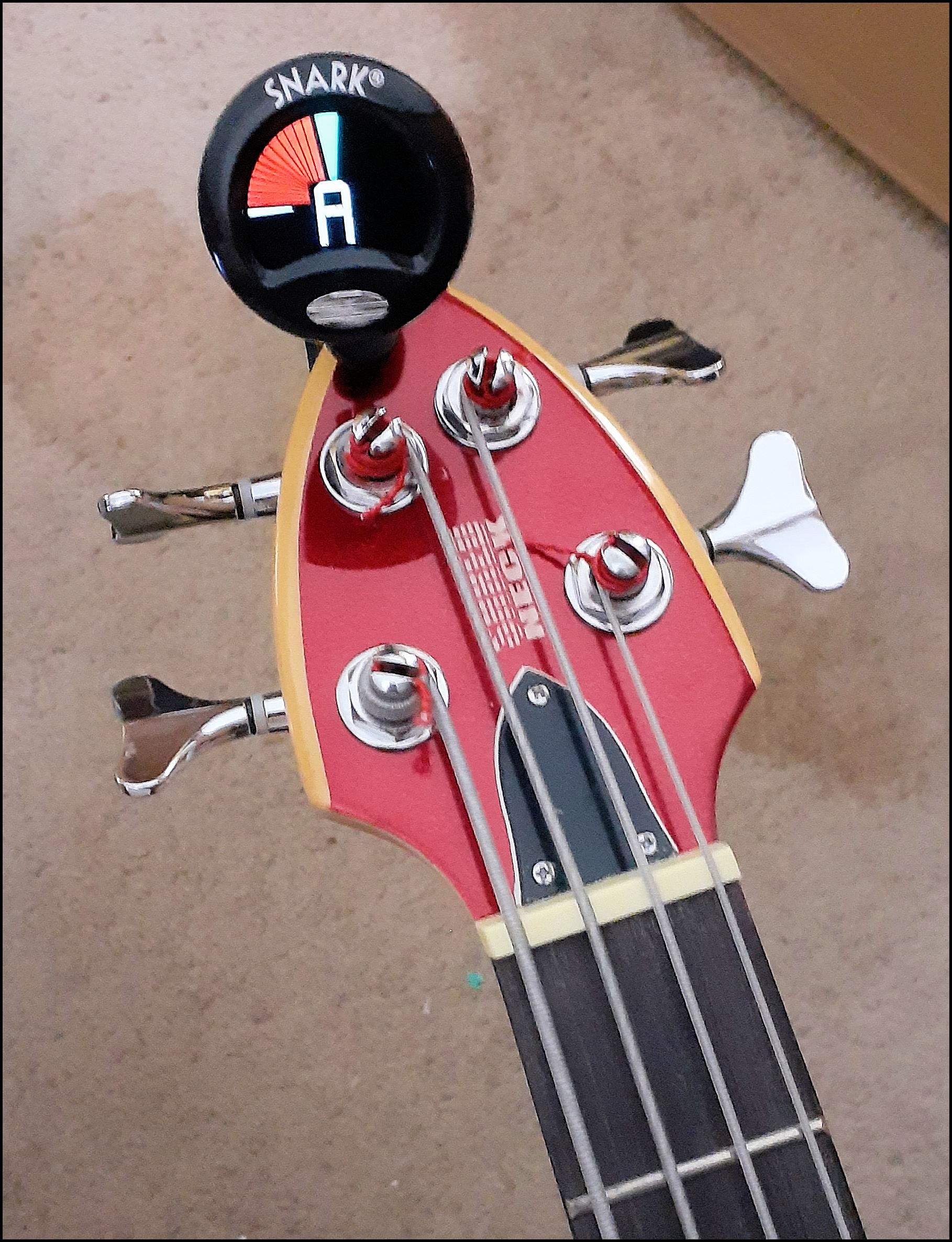
shrednecktunninga.jpg
 
I use a daddario micro headstock tuner clipped to the foot of my bridge. It doesn't pickup the E well but it's tiny size is worth it to me. I just tune the E by ear or with harmonics if I can hear well enough. I've always hated the look of a clip on tuner and often have problems with them rattling. The little micro tune stays hidden and clips on tight
 
  • Like
Reactions: james condino
I'm thinking about using a tuning fork.

Old Guys Rule!
Srsly - I have an analog (Needle and VU Meter-style) Korg tuner that sits behind me, on the top of my amp, OUT OF SIGHT and Turned OFF, while I play. The last thing I need is more visual distraction while playing/listening.
I will have a peek in between tunes, if I suspect some pitch movement.
Explain to the kidz what a tuning fork is, and how to use one, Bob!
Thanks.
 
I use a daddario micro headstock tuner clipped to the foot of my bridge. It doesn't pickup the E well but it's tiny size is worth it to me. I just tune the E by ear or with harmonics if I can hear well enough. I've always hated the look of a clip on tuner and often have problems with them rattling. The little micro tune stays hidden and clips on tight

For the E string, use the 12th fret harmonic. As long as your profession intonation is set, that will be fine for the clip on tuner
 
+1 for the Intellitouch PT10

I buy tuners here and there just to try them out if they are not too expensive. I keep coming back to the Intellitouch PT10. They are out of business unfortunately, but was able to pick up a couple more used for a reasonable price. As long as the batteries are good the PT10 always picks up every string fast. The other versions of the PT10 are not as good as the plain old PT10.

I recently bought a Flanger FMT-209 which has a built in metronome for under $15. Its big and is powered by two AAAs. The metronome is good with a lot of features, the tuner is not bad either, and like I said it is big but easy to see...
 
Old Guys Rule!
Srsly - I have an analog (Needle and VU Meter-style) Korg tuner that sits behind me, on the top of my amp, OUT OF SIGHT and Turned OFF, while I play. The last thing I need is more visual distraction while playing/listening.
I will have a peek in between tunes, if I suspect some pitch movement.
Explain to the kidz what a tuning fork is, and how to use one, Bob!
Thanks.

I guess I Boomered myself on that one, right, Don?

Hey Kidz, I believe the tuning fork is a product of the Pleistocene Era. It was forged out of metal -- by ancient blacksmiths -- back in the day when musicians valued and trusted ears more than eyes.

Ye olde bassists like @Don Kasper and me would pinch the stem of a tuning fork (pitched in E,A,D, or G) between index finger and thumb, strike the tines of the fork against their knee or other appropriate body part to make them vibrate, then hold the fork up to their ear or against the body of their double bass to internalize the pitch it produced. They would then use that "perfect pitch" to tune the appropriate open string of their bass, and then use harmonics to tune the other strings.

Archaic? Absolutely. But the tuning fork held numerous advantages. It was small and light. It required neither battery nor digital screen (generally unreadable in daylight), and, most important, it forced ye olde bassists to tune their ears to actually hear the pitch and match it to the string.

If you own any Yamaha products, from guitars to watercraft to motorcycles, you've probably seen three tuning forks, crisscrossed, in their logo (below).

How did I do, @Don Kasper?

logo_yamaha_corp.gif
 
I guess I Boomered myself on that one, right, Don?

Hey Kidz, I believe the tuning fork is a product of the Pleistocene Era. It was forged out of metal -- by ancient blacksmiths -- back in the day when musicians valued and trusted ears more than eyes.

Ye olde bassists like @Don Kasper and me would pinch the stem of a tuning fork (pitched in E,A,D, or G) between index finger and thumb, strike the tines of the fork against their knee or other appropriate body part to make them vibrate, then hold the fork up to their ear or against the body of their double bass to internalize the pitch it produced. They would then use that "perfect pitch" to tune the appropriate open string of their bass, and then use harmonics to tune the other strings.

Archaic? Absolutely. But the tuning fork held numerous advantages. It was small and light. It required neither battery nor digital screen (generally unreadable in daylight), and, most important, it forced ye olde bassists to tune their ears to actually hear the pitch and match it to the string.

If you own any Yamaha products, from guitars to watercraft to motorcycles, you've probably seen three tuning forks, crisscrossed, in their logo (below).

How did I do, @Don Kasper?

View attachment 4024815
OLD GUYS RULE!!!!
Nicely done, Bob.
 
I've used a lot of the tuners mentioned here, but still haven't found one you can see in daylight. This has been a real pain with so many outdoor gigs. I'm thinking about using a tuning fork.

An easy fix with the Snark tuners and a toilet paper roll tube. Tape about an inch or two to the tuner and the shadow with darken the inside of the tube....

upload_2020-10-20_21-47-14.png
 
Tuners may have trouble "hearing" accurately very low pitches (just as we do!). For this reason, I frequently use the octave harmonic (played with the bow) for tuning.

Most frequently however, I use the tuner only to tune the D string, and then tune the other strings relative to each other by using the harmonics at "frets" 5 and 7. The "error" with respect to equal temperament for the open G (2 cents flat), A (2 cents sharp) and E (4 cents sharp) is minimal, and for the fingered notes, it is irrelevant.
 
For people using a Snark tuner I recommend switching to the mic setting. It seems to respond to the low notes (Open A and E) a little better than through contact on the bridge. I'll even hold it up to the f-hole like a stethoscope sometimes. Just make sure you switch it back vibration mode when your guitarist forgets their tuner!