• TalkBass has been independent since 1998. Add your voice.
    Create a free account to reply to discussions, view embedded media, and browse with fewer display ads.
    Join freeLog in
    Want zero display ads or expanded classifieds tools? Compare plans.

Club Clement: Part 2 (post your basses here)

Status
Not open for further replies.
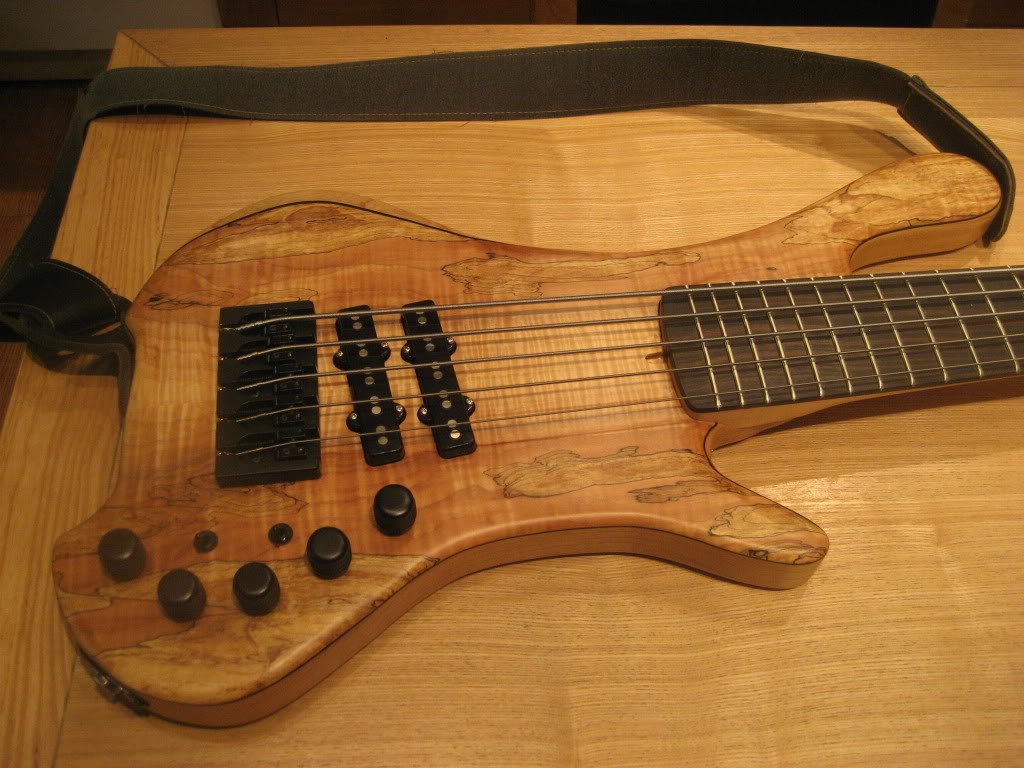
And any excuse to post a pic of my baby!!
IMG_0754.jpg

Davey- Wowsers! That spalt top is a beauty- looks very similar to the top of my 07 ESP. I'll post a pic when I get home for comparison purposes.
 
Will be interested in the report on the port orford cedar and how tom thinks of it for a neck. Wenge for a FB still intrigues me.?. These 2 together may just be the combo.
**Phoenix body is in the contention for this list. Wenge/spanish cedar/wenge body, port orford cedar neck sporting a wenge fret board, Bart xxM56c p/up direct to jack? Hmmmm.
Thanks again guys for the input on this subject.
Aren't these Clements beautiful? YES.

 
Will be interested in the report on the port orford cedar and how tom thinks of it for a neck. Wenge for a FB still intrigues me.?. These 2 together may just be the combo.
**Phoenix body is in the contention for this list. Wenge/spanish cedar/wenge body, port orford cedar neck sporting a wenge fret board, Bart xxM56c p/up direct to jack? Hmmmm.
Thanks again guys for the input on this subject.
Aren't these Clements beautiful? YES.

wenge as a fretboard for a fretless would sound great. EXCELLENT Growl and you don't need a solid ebony neck to do it...

I'd consider a spanish cedar body with a maple top and a 5 piece laminate neck that has ash and wenge stringers with that wenge fingerboard...on a Phoenix body....

Lightweight, round and warm bottom end, top end zing, with the good mid range growl. Tom, what do you think? ( No, I can't afford this for myself— I love my wife too much to jeopardize her patience that much, for a while anyways...)
 
Ash Stringers? I have heard of hard Ash being used in necks but I haven't done it And don't have any in stock. Wenge stringers, fingerboards and fretboards I like and do......t

I've heard of a few basses doing it, but it seems more like wenge, purpleheart or something else is the stringer, while ash takes on the "maple or mahogany" role of being the chief neck component. I'm wondering what ( if any ) properties hard ash offers over maple...
 
Lightweight, round and warm bottom end, top end zing, with the good mid range growl.
Lincoln,
All the above EXCEPT zing - want "woody", dull, round, even. My #122 mahogany / redwood body and blood wood neck is bright and zingy all I want; dial in some OBP-1 bass and can get all the bottom I need. A great all around, lively bass. This next build is going towards the more acoustic (not upright) sound. I have a very nice Heartfield fretless 6 string for that unfretted sound. This next one will have mandolin size frets to minimize but not be completely lacking "zing". Direct p/up to jack also will keep some top end in the mix naturally. The wenge I am counting on to tame the high C treble - sonically more dry and even timbre. Port orford neck keeping the weight down up there.
Are my component choices getting me into that direction?... is the question I am really asking.
What do you think?
 
Frankly, I think the only way to tame C string zinginess is to have a thicker gauge string— just be careful not to get it too thick that it breaks while you're tuning up...

wenge fretboard and a mahogany neck, spruce over a semi-hollow spanish cedar body....

No Maple, No Ash....

Warm and mid, without the highend. ( though it's much easier to dial in bottom with EQ than to dial in high when you have to cut through a mix...)
 
Lightweight, round and warm bottom end, top end zing, with the good mid range growl.
Lincoln,
All the above EXCEPT zing - want "woody", dull, round, even. My #122 mahogany / redwood body and blood wood neck is bright and zingy all I want; dial in some OBP-1 bass and can get all the bottom I need. A great all around, lively bass. This next build is going towards the more acoustic (not upright) sound. I have a very nice Heartfield fretless 6 string for that unfretted sound. This next one will have mandolin size frets to minimize but not be completely lacking "zing". Direct p/up to jack also will keep some top end in the mix naturally. The wenge I am counting on to tame the high C treble - sonically more dry and even timbre. Port orford neck keeping the weight down up there.
Are my component choices getting me into that direction?... is the question I am really asking.
What do you think?

I think that this should be a direct conversation with the builder. His extensive experience with wood and the different combinations there of can help direct you to just what you're looking for. The best lesson I've learned over the years is trust your luthier. It's their job to build you a bass that best represents all that you're looking for out of the instrument in the end.
 
Frankly, I think the only way to tame C string zinginess is to have a thicker gauge string— just be careful not to get it too thick that it breaks while you're tuning up...

As someone who has played 6 strings for years I can tell you that this isn't true. It's a factor, but if you're starting from the ground up than there are a lot of other things that you can do to tame a high C string.
 
I think that this should be a direct conversation with the builder. His extensive experience with wood and the different combinations there of can help direct you to just what you're looking for. The best lesson I've learned over the years is trust your luthier. It's their job to build you a bass that best represents all that you're looking for out of the instrument in the end.

+1

Though, Tom's usually told me that pickup placement has more to do with sound than the woods—you'll note he's stayed safely away from this conversation. It's not his favorite ( and I don't blame him ). ;)
 
+1

Though, Tom's usually told me that pickup placement has more to do with sound than the woods—you'll note he's stayed safely away from this conversation. It's not his favorite ( and I don't blame him ). ;)

First of all, I love the look of your bass. One of my favorites.

Gotcha. Yeah, I've met a lot of luthiers all with different opinions about the effect of wood choices. I know that in the end the audible difference is small, but as a player it's huge. The bass plays differently with different woods, they feel different under your arm, behind the neck, they resonate differently, the inherent tonal qualities are all a bit different. I've certainly played basses that have suprised me but it's rare. Pickup placement, neck wood, body wood, fingerboard, number of laminates, the bridge material/design, type of pickups, elctronics, no electronics....it all makes a difference. Again, it may be a small difference to the listener but to the player it's huge. How the bass plays/sounds/resonates/reacts to your striking the string...this all effects how you play that particular instrument. If you have an instrument long enough than you begin to tune into it's subtleties. Why does this matter? Because it effects the way that you play, therefore in the end, it does effect the listener.
 
+1

Though, Tom's usually told me that pickup placement has more to do with sound than the woods—you'll note he's stayed safely away from this conversation. It's not his favorite ( and I don't blame him ). ;)

I agree as y'all have stated and am trying (in the public eye for the education and/or entertainment of all interested) to get the woods and electronics right from the ground up. OK, I like my wood choices. Is the Bart xxM56c @ 95mm from bridge the right pup choice and position? Or should I shut up and build this bass and see what happens? All points and comments are deeply enjoyed and appreciated!!! PS: I am solely responsible for the total outcome and am loving this journey. :D
 
First of all, I love the look of your bass. One of my favorites.

Gotcha. Yeah, I've met a lot of luthiers all with different opinions about the effect of wood choices. I know that in the end the audible difference is small, but as a player it's huge. The bass plays differently with different woods, they feel different under your arm, behind the neck, they resonate differently, the inherent tonal qualities are all a bit different. I've certainly played basses that have suprised me but it's rare. Pickup placement, neck wood, body wood, fingerboard, number of laminates, the bridge material/design, type of pickups, elctronics, no electronics....it all makes a difference. Again, it may be a small difference to the listener but to the player it's huge. How the bass plays/sounds/resonates/reacts to your striking the string...this all effects how you play that particular instrument. If you have an instrument long enough than you begin to tune into it's subtleties. Why does this matter? Because it effects the way that you play, therefore in the end, it does effect the listener.

It's a hard place to be in when there is such a huge number of variables that could lead to a near infinite number of permutations. And then have to answer with very specific answers....Tom you are the man! You handle all of this with grace and integrity. Many thanks! You're not just a builder, but a trusted partner and unsung hero to all of us!
 
It's a hard place to be in when there is such a huge number of variables that could lead to a near infinite number of permutations. And then have to answer with very specific answers

Yes, but most builders will recommend known combinations to give the customer the desired outcome...in other words builders tend to gravitate towards woods, electronics, etc. that are known and well tested to give the customer what they are asking for.

....Tom you are the man! You handle all of this with grace and integrity. Many thanks! You're not just a builder, but a trusted partner and unsung hero to all of us!

...and this is how every customer should end up feeling about their relationship to their chosen builder. :bassist:
 
Status
Not open for further replies.