
It is your first?I am thankful this thread is active; my P-IV is under construction [hopeful July arrival] and it helps me stay juiced.

Enjoy the benefits of a premium membership!
Upgrade Account
-
TalkBass has been independent since 1998. Add your voice.
Create a free account to reply to discussions, view embedded media, and browse with fewer display ads.
Join free Log in
Want zero display ads or expanded classifieds tools? Compare plans.
You are using an out of date browser. It may not display this or other websites correctly.
You should upgrade or use an alternative browser.
You should upgrade or use an alternative browser.
More options
Who Replied?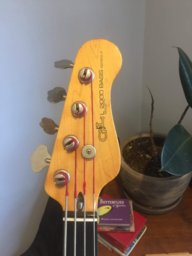
yes it is, I currently play one with a similar vibe, a 61 P body, with Dimarzios [circa 1970],who knows bridge, and a Warmoth neck.It is your first?


out of curiosity where are you located?You'll dig it. I bought my first one cause I had just sold an expensive bass and wanted to see what the fuss was about. I thought it would be "fine". Expected to move it right away. Instead, I bought two.
West coast—sorry—a bit far!out of curiosity where are you located?

I bought a fretless Classic JB in Fiesta Red once owned by Ian Allison. Kept it for a month and sold it like the previous 4 owners.
Nice bass with a great neck profile but zero vibe.
Overall build quality was a 7 out of 10 and not from wear and tear.
I love Jazz Basses but I'm falling in love with P's all over again. Maybe a Moollon P would suit me better these days. If I find one with character I might be swayed but as I sit here, Its all hype.
Nice bass with a great neck profile but zero vibe.
Overall build quality was a 7 out of 10 and not from wear and tear.
I love Jazz Basses but I'm falling in love with P's all over again. Maybe a Moollon P would suit me better these days. If I find one with character I might be swayed but as I sit here, Its all hype.
I find I like an old P [60-68] like nothing else, but I can't justify the spend for an everyday player. A Moollon for $2500, I'll take my chances. If you don't like the bass you can sell it in a heartbeat. If I could find a used Classic P IV I would have bought one on the spot, but there were virtually none to be had. Plus with the super thin nitro I prefer to make my own dents and scratches.I bought a fretless Classic JB in Fiesta Red once owned by Ian Allison. Kept it for a month and sold it like the previous 4 owners.
Nice bass with a great neck profile but zero vibe.
Overall build quality was a 7 out of 10 and not from wear and tear.
I love Jazz Basses but I'm falling in love with P's all over again. Maybe a Moollon P would suit me better these days. If I find one with character I might be swayed but as I sit here, Its all hype.

I am thankful this thread is active; my P-IV is under construction [hopeful July arrival] and it helps me stay juiced.
So worth the wait. The second you get the notification that it's done and ready to be shipped is when the truly longest few days of your life begin! LOL You've made a solid choice with the P-IV. Better than a Fender Custom Shop not to mention cheaper and MUCH less expensive then a vintage 63' that you're afraid to take out of the house.
After I got my P Classic IV I loved it so much that I was ready to order up a J. Was warned by the same people that turned me on to the Moollon and the P classic that it's good but doesn't have the same magic as the P for whatever reason. I'm sure they're good and I know a lot of people like them but I do see a lot of the J's for sale and more specifically fretless J's.... and almost never a P. I can speak personally for the P's and it's certainly not hype. Sticking with my Sadowsky MV4 for my J for now...but honestly it's been collecting dust mostly since the Moollon arrived in September.
Last edited by a moderator:

So worth the wait. The second you get the notification that it's done and ready to be shipped is when the truly longest few days of your life begin! LOL You've made a solid choice with the P-IV. Better than a Fender Custom Shop not to mention cheaper and MUCH less expensive then a vintage 63' that you're afraid to take out of the house.
After I got my P Classic IV I loved it so much that I was ready to order up a J. Was warned by the same people that turned me on to the Moollon and the P classic that it's good but doesn't have the same magic as the P for whatever reason. I'm sure they're good and I know a lot of people like them but I do see a lot of the J's for sale and more specifically fretless J's.... and almost never a P. I can speak personally for the P's and it's certainly not hype. Sticking with my Sadowsky MV4 for my J for now...but honestly it's been collecting dust mostly since the Moollon arrived in September.
The J’s are just as good.


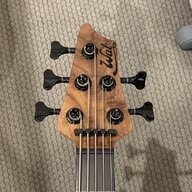
Nice bass with a great neck profile but zero vibe.
Interesting. I had the complete opposite experience. Moollons have been the only P/J style instrument I felt DID have any vibe.

Love the binding on the neck of that J
Agreed. Very '66 with the dots and binding. Love it!
After I got my P Classic IV I loved it so much that I was ready to order up a J. Was warned by the same people that turned me on to the Moollon and the P classic that it's good but doesn't have the same magic as the P for whatever reason.
Don't know who told you that but they're wrong lol. The J is every bit as magical. Especially the J IV.

MOOLLON FAQ’S
(3rd revision from Andi Roselund)
Greetings Moollon Basses friends and family, in an effort to be a bit more informative from an in-shop perspective, I present an incomplete Moollon FAQ post for your consideration.
We’ve been getting a great deal of inquiries regarding options that also happened to include some incorrect assumptions regarding available specs. There's also been a lot of ongoing interest regarding why YJ was so obsessed with recreating early production builds of the 1950s and 1960s, so while I was at it I decided to compile a casual FAQ and FYI list for prospective customers to firstly read up on before pursuing an order, and provide additional info for those who already have a Moollon at home, especially since folks will eventually ask you the "Why Moollon?" question. If you’ve ordered a Moollon before, much of the following may already be familiar, whereas other points may not. Note that I will likely amend certain portions of the following or post below, as needed.
Q: Does YJ really work solo as an unassisted luthier?
A: Yes.
Q: What is the starting price of a Moollon bass?
A: The J-Classic IV and P-Classic IV start at US$2299, the B524 starts at US$2599, and the P-Classic V and J-Classic V start at US$2699.
Q: What do you mean by "starting price"?
A: For most customers, price differences are due to the type of finish. That is to say, Moollon instruments are finished by YJ in 20 layers of nitrocellulose lacquer, but there are surcharges that may apply to one's order. For example, metallic finishes (Lake Placid blue, Charcoal Frost, Burgundy Mist, Shoreline Gold, etc.) cost +$100 more, and sparkle finishes (see below) cost +$200 more. Most other specs are standardized, more on that below.
Q: What do the above prices include?
A: Hardshell case and shipping. And a few goodies in the case.
Q: What’s the easiest way to order a Moollon?
A: Shoot a message out to moollonguitars (at) gmail (dot) com or message me here on FB or on IG @mihran_72 . Mention your preferred (1) model, and (2) 1960s Fender finish and pickguard color, and it’ll makes things all the easier for me to reply with the final price.
Q: How long does it take for a Moollon order to be completed?
A: Currently the wait is about 10 months. The clock starts after confirmation of all specs and receiving of the US$449 deposit.
Q: Does YJ do lefties?
A: Due to having to build multiple bodies and necks even for a single customer order, YJ has limited LH options to J-Classics, and if one decides to pursue a purchase, in limited finishes of the season (inquire for details). It's the best compromise option he can offer, and if the order is a J-Classic IV, then the customer can send us a Fender reissue Jazz Bass pickguard to be applied. The bass will otherwise be shipped "Jaco style" without a pickguard.
Q: Are all 1960s Fender finishes available on alder bodies?
A: No, but most are available. YJ can do nearly all 1960s finishes, save Firemist Silver, Firemist Gold, Teal Green Metallic, and any other obscure finishes. Inquire for details.
Q Are there any variations on the original finishes or any contemporary additions?
A: Copper Gold, Light Charcoal Frost (often called Charcoal Pearl or “The Scott Devine finish”), and NOS Faded Burgundy Mist (Burgundy Mist + Inca Silver mix) were all “accidental” finishes that became customer favorites and are available.
Q: Moollon’s Fiesta Red looks more orange-red than what I see on mass-produced Fenders and vintage pieces.
A: As with most Moollon finishes, YJ uses a vintage-correct hue nitrocellulose lacquer, which are “un-aged”. Many recent Fenders’ modern take on Fiesta Red (I call it “Campbell’s Tomato Soup”) give the appearance of the oxidized and slightly faded hue of 50+ year old vintage pieces straight out of the shop. We suggest giving our nitrocellulose lacquer Fiesta Red some time... we intend to fool no one: it's the real deal that will age in due time, not a permanent shade sealed in a polyurethane coffin.
Q Are custom finishes, components, or dimension options available?
A: No. Moollon is primarily about reproductions of vintage designs of the 1950s and 1960s, which is why most options are intentionally standardized. What’s more is that YJ does no less than 3 bodies with each finish request, so that the best can be selected for the order at hand, to be mated to the best fitting neck. Add custom colors to the equation and there invariably will be unused bodies lying around…and a longer build line for everyone to wait behind. Narrowing down available options keeps the Moollon brand's vintage-minded niche and resulting tone much more focused, and YJ has no intention to do what others are already doing just fine.
Q: What are some of the the standardized (not customizable) features on all Moollon bass builds?
A: Off the top my my head…. 20 frets, 34" scale, 19mm string spacing, passive circuit with Moollon pickups (inquire for specs), pre-CBS-sepc custom alloy Moollon hardware (all the way down to the pickguard screws...I'm being 100% serious), makassar ebony fretboard on maple neck or 1-piece maple board/maple neck(+$100), 7.25” fretboard radius (4-stringed Moollon basses) and 12” radius (5-stringed basses), all basses finished in 20 very thin layers of nitrocellulose lacquer.
Q: So are you saying that YJ is not a custom luthier?
A: Yes, I'm emphatically saying that YJ is not a custom luthier. Many customer requests start with "I want a such-and-such bass, with a such-and-such circuit, wood and the like", and oft times I reply with a respectful "Roger Sadowsky makes some of the finest basses in the world, and you just described an excellent NYC Sadowsky bass with such options available", in all sincerity and as a recommendation to not pursue a Moollon purchase. In sum, I cannot overstate that YJ (as a solo luthier) has intentionally limited available options accordingly to standardized specs as predominantly found on Fenders of the 1950s and 1960s, and in cases when something beyod what YJ can do is requested, we wholeheartedly recommend that folks buy a more-than-sufficient Lull, Lakland, Sadowsky, or Alleva-Coppolo etc. if they can match one's request. Once again, YJ's builds intentionally cover a much narrower range of specifications.
Q: Wait...Don't you guys want more people to buy a Moollon bass?
A: Heavens, no. Although we do hope that every serious bassist could experience what a vintage-correct piece can do, most they're certainly not for everyone. On the flip side, no less than one in three serious inquires we receive seem to be from people who either have an lovely vintage Fender and feel the need to keep it safe (but want all the tone and feel) or used to have a vintage piece and want to re-experience the glory days without taking out a second mortgage. They certainly are the ones that "get it" and not surprisingly don't ask many questions prior to finalizing the order, in addition to the many customers who have tried a Moollon first hand and have sensed firsthand that the difference is significant enough to warrant an inquiry for purchase.
Q: How about on the other end of the spectrum? Who tend to ask the most questions prior to purchase?
A: I have to be careful here, since many wonderful customers we've coordinated orders with over the years are simply warm and personable folks who are very engaging...and we love that, since asking questions pertinent to one's needs are so important when deciding if to order a Moollon or not...And I consider them dear members of the Moollon family. That said, about twice a year we have prospective customers who are of a very unique sort and ask the most questions by far, with lengthy lists about specs and dimensions that invariably as for features that YJ simply cannot accommodate. Common points are that they (1) have never tried a Moollon before and a very curious about what the hubbub is all about, (2) are remarkably particular with their desired specs (understandably so), and strangely enough, (3) by the 20th to 30th email message or so they either start asking the same questions that I had already answered if not reminding me what they feel are unacceptable in a bass. In each case by that time I respectfully present our view that he/she really would probably be very dissatisfied with a Moollon purchase.
Q: The what advice would you like to offer those who are genuinely interested in a Moollon bass purchase?
A: If ever possible, find a Moollon player via the slowly growing online community and give one a spin: For our North American friends (for example) this means Vancouver, Toronto, Atlanta, Nashville, SoCal, SF Bay and Monterey Bay Area, NYC, and NOLA, which are home to the majority of Moollon Basses. Honestly, 100% vintage-spec quirks like the easily-marred nitro finish, shoulder balance, clunky tuners that are free of nylon bushings, lack of truss rod access will likely turn a lot of folks off, and that's better than they ordering a Moollon and expressing remorse for doing so. And for those who have Pre-CBS Fenders and have the opportunity to do a side-by-side at the home or studio of another Moollon owner, we feel it's just as important a trial.
Q: Changing subject, I'm getting the impression that YJ doesn't fancy active electronics. Is it safe to assume so?
A: One of my favorite quotes from YJ was uttered many years ago at NAMM to some visitors who asked about why he didn't offer onboard preamps, and his reply didn't necessarily have everything to do with being just a vintage-correct purist. My paraphrase is as follows: "Many people aren't aware that if you have all of the structural components in place on a vintage-spec build (original alloy hardware, thin lacquer finish, vintage wound pickups, etc.), it has the potential to put out a tonal sum that is so much greater than your average disappointing-sounding passive J or P-style knock-off... In fact, on true vintage-spec basses, I'm convinced you can get 90% of the usable flexibility of an active circuit just with a hot amp and knowing how to dial in your preferred tone with just the bass' volume and tone pots. That why so many vintage Fenders sound absolutely huge without any onboard help: You're hearing the bass as it was intended to sound."
Q: So what does YJ say when someone nonetheless expresses their need for active circuit flexibility if they get a Moollon?
A: He understands the need, and simply recommends investing in a top-quality parametric EQ pedal. Non-invasive, easy-peasy.
Q: I heard that sparkle finishes were discontinued for a while. Are they available again?
A: Starting in the new year, Red Sparkle, Root Beer Sparkle, Gold Sparkle, and Purple Sparkle will be available again, each carrying a +$200 surcharge. Silver Sparkle has been permanently discontinued. Also note that 20 layers of very thin clearcoat lacquer cannot completely cover up the texture of large flake sparkles underneath, and every single sparkle finish done invariably has a degree of “feel” under the clear coat…YJ does not use thick and goopy polyurethane on any of his builds, and would rather that every Moollon breathes and ages in due time under a thin blanket of nitrocellulose lacquer.
Q Is Vintage White available?
A: Vintage White has been discontinued. When it comes to “whitish” finishes on alder bodies, Olympic White and Desert Sand are the only two available.
Q: What finishes are available on Swamp Ash body orders?
A: 2TS, 3TS, Transparent Blonde (appears translucent white, and fades to cream), Tinted Transparent (amber clear coat), and Butterscotch Blonde (primarily limited to 1951 P-Classic IV). Opaque finishes cannot be ordered on swamp ash bodies.
Q: Are matching headstocks available on all orders?
A: No, and by the looks of people contacting us as of late, this needs clarification. Matching headstocks are only available on orders with solid (opaque) finishes on a 2-piece alder body + makassar ebony fretboard, a la 1960s vintage Fenders. Contrary to rumor as hinted in some inquiries, YJ has never made available a matching headstock option on an official maple board/neck customer order.
Q: Can opaque 1960s finishes be ordered on a 1956 P-Classic IV?
A: Yes, although note that a 2-piece alder body will be used in place of swamp ash.
Q: You knew I was going to ask this...Why no Moollon PJ models?
A: The short answer is that YJ wants to keep things in their place (J's are J's, and P's are P's), and having a whole another rack for keeping PJ bodies in a variety of finishes is another thing to effectively slow down progress of other builds, whether we like it or no. But the tone-related reasons are three fold: (1) YJ is sensitive to the change in timbre of an otherwise fat and punchy split-coil P when wired in series with a single coil, (2) to the Boss, a vintage wound J pickup in the bridge at optimal height sounds RIGHT... to balance with an overwhelmingly hotter split coil P, you'd have to either overwind it slightly and/or raise the height of the pickup to keep up, resulting in a change of timbre of the J pickup as well, and (3) noise issues in the parallel circuit.
Q: Is YJ’s reason for not using Indian Rosewood because of CITES restrictions imposed in the past few years?
A: No. His choice for not selecting Indian Rosewood as fretboard material for all Moollon builds predates CITES implication by over a decade. YJ simply feels that present sustainability and the lively, punchy timbre of makassar ebony makes it the best (albeit not perfect) replacement for Brazilian rosewood. On the contrary, YJ has described Indian rosewood sounding overall "flat" and "uninteresting" when paired with the suite of components that make up a Moollon guitar or bass. In other words, it doesn't compliment the collective in the way that makassar ebony does, hence his choice to not use rosewood on the first J-Classic IVs and P-Classic IVs, all the way up to the present.
Q: So, there isn’t a single Moollon bass made with Indian rosewood?
A: The first J-Classic V prototype had a Indian rosewood fretboard. In fact, it (Surf Green) actually made it out of the shop and over to North America, and was gifted at Winter NAMM 2010. It appears to be still out there somewhere, as we last saw it traded online about 2 years ago. The Moollon waterslide decal + ”J-5” penned in on the headstock in place of a "J-Classic V" should give it away. No one we know considers it an especially valuable piece worth tracking down, but it is admittedly very unique!
Q: Does makassar ebony require special care?
A: Being naturally less oily than rosewood, it is more sensitive to changes in humidity. Care for it like any vintage piece (room humidity upon arrival and for the first few months around 40% ~ 45% is strongly recommended), and all will be well. Even those who live in more arid regions can coax their Moollon into getting used to a drier climate over a long period of time. But just the same, needing a setup not long after arrival and twice a year is not only normal, but also recommended.
Q: What about neck material? Does YJ use flatsawn maple like on Pre-CBS Fenders?
A: YJ likes flatsawn cuts very much as found on his vintage Fenders, but from his experience, necks made from quartersawn cuts seem on the average to "reset flatter" his during bi-annual setups than flatsawn, making it all the more suitable in the long run for both customers abroad as well as for us here (SK's climate is not too unlike the Mid-Atlantic Coast of the USA).
Q: Some older 5-stringed Moollon basses seem to have a wider nut, whereas others do not. What’s going on?
A: The first few years of J-Classic Vs had a 47mm nut width. The present nut width for all 5-stringed basses is 45mm.
Q: What are 4-stringed Moollon bass neck profiles based on? Are they also reproductions?
A: The P-Classic IV is based on YJ’s own vintage 1959 and 1960 Precision Basses’ neck shape (42.5-43mm nut width), and the J-Classic IV on that of a 1962 and a 1964 Jazz Bass (38mm nut width).
Q: Can you add ashtray covers and/or tug bars?
A: We can’t get them over here, but if you send them to us, and they can be applied to an order in vintage positions.
Q: How about a late 1950s gold anodized Precision Bass guard instead of white/mint/tortoise/black?
A: Too pricey for us to fabricate, but you can purchase and send one to us as with the above.
Q: What is the pickup on the 1956 P-Classic IV?
A: It’s a staggered pole single-coil based on the one found in YJ’s own 1955 Precision Bass.
Q: Does YJ make a vintage-correct flatpole version of it for the 1951?
A: Yes, but will only have it added to 1951 orders upon request…better radius matching is not a bad thing, and so YJ has the staggered-pole version included on both the 1951 as well as the 1956, by default.
Q: Can I order a P-Classic IV with a 38mm nut width J neck?
A: Yes.
Q: Does YJ feel that the lack of wood mass of having a J neck on a P-Classic IV affects tone?
A: Not to a noticeable extent.
Q: What is the typical weight of a Moollon 4-stringed bass?
A: J-Classic IVs and P-Classic IVs average around 3.9kg - 4.0kg, with occasional builds slightly outside of that figure.
Q: What’s up with the controls on the Chambered P-Classic IV?
A: In addition to the 1V/1T setup, there’s an Esquire circuit, so you can fully bypass the tone pot altogether…The result is the option of having really open, woody tones on tap.
Q: Why no 2+3 split coil P-Classic V?
A: After many years of pickup design and testing, YJ finalized things with a soapbar humbucking design as the best compromise when considering the options he could effectively pull off and still feel confident to put the Moollon label on the headstock. This is the issue: Even if a similar output can be produced on a 2+3/3+2 pairing (many pickup manufacturers make excellent versions of the 5-stringed P), unequal winds around the poles invariably equals different timbre between the string sets. YJ would prefer to have consistency in overall tone with his underwound soapbar, which became the final production piece currently used in the P-V and B524.
Q So the P-Classic V isn’t meant to be a virtual reproduction of a nonexistent vintage 5-Stringed Precision Bass?
A: Nope. Loads of dynamics and thumpy mids are on tap that recalls a lot of the feel of a vintage Precision, but it rather has a sound of its own. We are very open about this point, and have never asserted that it is exactly in the same tonal ballpark as the P-Classic IV.
Q: I saw some strange bridges on 5-stringed Moollon basses w/soapbar pickups at NAMM many years ago. What were they?
A: YJ did make a duralumin bridge for the predecessor to the present B524 and P-Classic V, but was just a prototype piece. Despite its high density, it had a softer, a less-vintage sounding dynamic to it, and so it was never officially implemented on a production piece. To echo the aforementioned comment about passive electronics on a proper vintage-spec reproduction, 1960s-spec alloy spiral steel saddles on the classic bridgeplate has way more punch than people give it credit.
Q: Why did YJ discontinue the B524’s luxurious older brother, the through-neck NY524? And are there ever any unsold pieces left in the shop?
A: The sheer amount of labor involved in making each one determined them to be counterproductive to the flow of keeping up with customer builds in demand. Last I checked, there were a few a solidbody NY524s (priced $4000 and up), but we are not promoting their availability at present.
Q: I have a bad back. Can YJ do lightweight builds?
A: The inherent weight of original-spec vintage alloy hardware significantly limits how light a Moollon build can be, except in very rare cases in which a super-light alder or swamp ash blank is found, and happens to be used for ones build of choice. Note that they are not recommended unless one has a neoprene or wide suede strap, as the neck will invariably dive much more than usual. Find a vintage Fender and note the strap pin on the back of the headstock…lightweight hardware and resulting featherweight headstock feel is not a part of the old stuff, and isn’t part of the average Moollon bass.
Q: So are you saying that Moollon Basses are neck heavy?
A: Let's just say that they will certainly feel comparatively heavier on the neck side than contemporary mass-produced builds, and the lighter the overall weight of the bass, the more noticeable it will be. Vintage-spec components means that Moollons by default have the all quirks of vintage (pre-CBS-era) Fenders.
Q: And backward tuners on all Moollon builds are confusing, dude. What's up with them?
A: Um…1950s Fenders, man.
Q: I want lightweight tuners on my Moollon. Can you install them in-shop?
A: This surprisingly common question tends to come from folks who have no idea what Moollon basses are, and out of all the things that one could do to a Moollon to absolutely defeat the purpose of someone specifically needing to buy a Moollon, YJ considers this one to be at the top of the list.
Q. Well then, how about an Xtender?
A: If you don't mind having your E (or B) string produce an entirely different timbre from the other strings, then knock yourself out. Truth be told (and related to the previous answer above), the density of pre-CBS-spec alloy Moollon tuning cogs, post, and the machinehead mounting plate is about as far as you can get from an Xtender piece...and having both a remarkably tight low end as well as strong upper register tones being the charm that folks always rave about the hardware contributing so much to, adding an Xtender to a Moollon is yet another way to sabotage the philosophy behind the original design. Keep them on your other builds (heck, they're very functional and a lot of fun!) since difference in resulting tone will be less noticeable on them than on a Moollon.
Q: The denser vintage-spec alloys seem to be a big part of the Moollon magic. Can I buy them separately?
A: Unfortunately, no. The tonal result of YJ’s extensive metallurgical R&D is meant to be experienced within the context of a completed instrument.
Q: Are any Moollon bass components available separately?
A: Yes. YJ’s VJ-60 (Jazz Bass) and VP-60 (Precision Bass) pickup sets are both available for order, and we regularly get requests for them.
Q: How about J-Classic V and P-Classic V/B524 pickups? Can we also purchase them?
A: The custom dimensions of Moollon 5-stringed bass pickup covers (both J-V single coils as well as YJ's P-V/B254 humbucking design) means that they are not made to be drop-ins for any existing model, and accordingly they are not made available separately.
Q: And what’s up with the 2V/2T Les Paul circuit on the B524 and Double P-Classic IV? What’s so good about it that the inability to blend the pickups cannot be done on this circuit?
A: Clarity at any volume. Having two in-series (humbucking) pickups wired in parallel presents the invariable propensity to sound muddy when volume is cut. The 1960s LP circuit ensures that you can maintain loads of clarity of the signal even when lowering the volume of the pickups. To YJ, this is more important than having 100% independent control but sacrificing signal integrity, ensuring that you can have a loud amp running and maintain more transparent dynamic control.
Q: I need to tighten the truss rod but it’s all the way in and stopped cold.
A: No need to fret (ugh, that was bad). The good news is that all Moollon basses are set up by YJ prior to shipping with the neck set flat and the truss screw without an sort of lubrication. Just remove the screw, add a tiny dab of all-purpose grease, and watch how much farther it’ll actually go. We also recommend regularly using a t-bar flathead screwdriver for easier adjusting, but suffice to say, a greased screw can go much farther than when it left the shop and is not a sign of trussrod failure.
Q: Speaking of which, why no 1970s-style headstock-side “bullet” truss rod access?
A: By principle, YJ primarily makes 1950s/1960s-spec builds. Besides (as a Moollon and proper vintage-weight balance issue), does anyone really want a headstock that is even heavier than it is now?
Q: Does the 1966-spec bound neck for J-Classic IVs have a different shape than the standard 1960s J-Classic IV?
A: Yes...note that the original 1966s were not simply early 1960s J-neck shapes with binding. Unlike the contour of a standard vintage 1960s Jazz Bass neck in that the neck immediately curves from the fretboard toward the back, the binding strip in its entirely sits at a 90˚ angle to the fretboard, and is not tapered. It only starts to curve to the back where the binding meets the maple neck. Some say if feels a little like a Hofner 500/1, although that’s a bit extreme and overall the neck is not that narrow. Also, it’s very important to note that the string spacing at the nut is narrower on the 1966 than on the early 1960s Jazz Bass. True-to-vintage is not for everyone, and we hope folks order with proper vintage dimensions in mind.
Q: Speaking of 1966, why no lollipops?
A: Operating a company at an ongoing deficit means that not all aesthetic variations can be accommodated. Vintage-correct materials and design win out over admittedly pleasant-looking vanities. Sorry, all Moollon basses until the last one made will have clovers
Q: Does YJ do 1970s J-IV and P-IV reproductions?
A: Not in a strict sense. At the Moollon shop, the original c.1960 pickup designs are considered to be the “historic standard” to cover the history of soul, pop, rock, and everything else, that YJ has chosen to not make available his 1970s pickup designs. However, YJ has recreated the original alloy and design of single-groove steel saddles as found on 1970s Fenders, and occasionally we receive specific customer requests for them…that said: as hinted above, YJ swears by the vintage (late 1950s up to all pre-CBS) spiral saddle design and original alloys, and does not recommend the 1970s single-groove saddles, unless the customer really wants them.
Q: Some Moollon basses sold online are advertised as “relics” in the product description. Are they done in-house?
A: Most used Moollon builds I have seen advertised online purposely as “relic” are just worn from time and use, not factory aged by YJ (an option that carries a +$150 surcharge), and if the bass is more than 4 years old, you can pretty much assume it’s probably not a factory-aged job and someone might be pulling your leg for extra $$$ (or not). Very thin nitrocellulose lacquer coats as applied to every Moollon instrument will admittedly wear very easily, but extensive weather checking as done on factory aged Moollon orders usually takes more than a few years to produce. But more than that, in-shop-aged Moollon basses are extremely rare and have only been made available in the past few years as a customer option. In fact, as of me writing this post (December 2019) I know for certain that there are less than 20 “relic” Moollon builds that have ever been done, Moollon S-Classic and T-Classic guitars included. Feel free to check with us if a suspected build has been ordered as such or not…all we need is a picture of the back of the headstock that shows the serial number.
Q: Speaking of serial numbers, how do they work?
A: There is usually a 4-digit number, usually preceded by "SN" and followed by the customer’s initials and/or a personal dedication. The serial numbering being sequential and cataloged in our books when each one is packed for shipping, there is no way to tell when a bass was made by just the number alone. Contact us if you have a question about when a build was made.
Q: Can hardware pieces, plastic, and the neck be aged as well?
A: No, the $150 surcharge for weather checking and light wear only applies to bodies.
Q: Will YJ do medium or heavy relic work?
A: No. But keep in mind how thin a Moollon’s nitro finish is, and find pics of Moollon basses that are more than a few years old and have seen some action…it’s not that hard to naturally let things take their course if you have a Moollon not permanently entombed its case all the time.
Q: Some tortoise pick guards appear brown, and others red. Why are they different?
A: The first several years of builds had brown tortoise pickguards as an option. When brown tort stock ran out, YJ sourced a redder tort guard material with a much more vintage-correct texture. To my memory, they began to be applied around 2013 / 2014 or so, and are the current standard. The older brown material is no available.
Q: What are my string choices on a Moollon order?
A: DR Pure Blues Medium (45-105 or 45-125) roundwounds are the default set unless otherwise specified. Dunlop Flatwound Mediums are also available.
Q: What if I have another string set in mind?
A: In most cases, just like the aforementioned ashtrays, they can be sent to us for application. However (very important) kindly note that 1-piece maple board/necks do not have the added rigidity of a makassar ebony + maple neck combo, and so heavier string sets (such as the LaBella 0760M Jamerson 52-110 set) should not be used on 4-stringed Moollon basses with a 1-piece maple neck.
Q: Well then, why doesn't YJ use a two-way / fatter diameter trussrod in the first place like modern basses to help keep things permanently rigid under all circumstances?
A: YJ did a lot of testing of materials and thicker truss rod gauge when developing the J-Classic V, but found that they seemed to detract all the more from what gives basses that vintage resonance: the translation of warm sustain and lively ringing through the wood of the neck. The fatter the trussrod, things actually sounded duller (despite having excellent sustain).
Q: I need a Moollon bass, like yesterday. Are there ever any completed basses in stock?
A: Not usually. Reserve builds only suddenly appear in the very rare case in which an order is cancelled after an instrument has already been completed. In some cases, specs match an existing order and the bass is simply passed on to the next customer ahead of schedule, although we may advertise them separately for sale if specs do not 100% match a current order. But don’t hold your breath.
Q: If current wait is about 10 months for a Moollon bass build of any model, then won’t picking a finish from an in-stock body make completion any sooner?
A: No. Admittedly, actual completion of lacquer work of a given finish on any body can be completed in roughly 2 months (depending on season/humidity), but the issue rather is that YJ simply completes orders in sequence of when they were placed. And despite there being special cases along the way, the overwhelming majority of orders are done with no one “cutting in line”.
Q: How do I pay for a Moollon?
A: Every order starts with a US$449 deposit paid via PayPal or bank wire transfer, AFTER confirmation of specs. Payment will not not be received until all specs are set and agreed upon. Remaining payment can be made after the bass is completed, prior to shipping out.
Q: If an order is going to take so long, why can’t I pay the deposit now and decide my specs of choice later?
A: Maybe if Moollon was a factory or had a separate finishing facility with loads of read-to-assemble stock that option would be feasible. However, every order in motion is part of a greater roadmap of body and neck finishing, and YJ has to plan things out well in advance, in order to make sure the builds can be completed on time and with enough reserved to ensure that every body has a 1:1 matching neck in his stock when it comes time to do the final assembly. In the past, belated customer decisions invariably slowed down everyone else’s orders, so a decision was made that customers had to finalize things from the start. Think of it this way: It’s like placing an order via a handwritten order sheet, you’d write it up and send it in.
Q: Speaking of deposits, just a year ago or so in 2018 there was no non-refundable US$449 deposit requirement in order to start things. What happened?
A: After a good decade+ of going on good faith with each order placed, we suddenly had an unusually high number of order cancellations in 2018 (those that stopped replying to our emails notifying them of bass completion included) that led to the decision. Note that opportunity cost issue aside, each cancelled order makes the next customer’s order longer than it needs to be, and we’d hope to deter sudden cancellations for the sake of everyone waiting in line.
Q: What do you think about the used Moollon bass market?
A: If someone doesn’t like their Moollon, we enthusiastically hope it will eventually get sold to someone who needs it… and if possible, as close to market value as possible. Along the same lines, we’ve always somewhat romantically felt that an unwanted Moollon bass will find its eventual owner after changing many hands, and by all means a Moollon bass that has had loads of wear and player’s mileage will start to open up and sound older by the year…so in effect, a used Moollon often may provide an even better playing experience (early on) than buying new. And yes, recently seeing brand new Moollon basses being advertised at dealers and on Reverb for hundreds more than what they cost as-new are an interesting development amidst the increasing demand... Truth be told, the philosophical purpose of YJ building and then selling each Moollon build at about 50% of what we'd need to sell them for in order to make a profit has always been so that folks who understand vintage tone and feel could finally afford to get a true vintage reproduction build at a reasonable cost (instead of forking over $20,000 for an early production piece), but to quote "Parasite" movie director Bong Joon-ho, "... we all live in the same country, it's called capitalism", and we get it
Q: Some guy has been selling loads of Moollon basses on TB. What’s going on?
A: From what we can tell, one fellow has been swift to find pre-owned Moollon basses as put up for sale here in Korea by random owners trying to sell them via [mule.co.kr](중고악기 | 뮬) and offering to consign them, they somehow working out an arrangement to have the basses shipped to new owners abroad. This is why a lot of older J-Classic IV builds in particular are now finding their way to North America and beyond.
Q: How do you feel about that?
A: Like I hinted above, a used Moollon that’s already broken-in may be a better choice than buying new, and we’d rather that folks who aren’t using their Moollons pass them on to those who need them.

Thanks so much. It has been very helpful.
I'm ready to start the journey this January 20 for a Moollon P-Classic IV. Now what color to choose; that's my dilemma...

Just sent in a deposit for a J-Classic IV in Copper Gold. Apparently this will be the first Moollon J build in that finish, though Andi was able to show me some photos of P-Basses in that finish. Needless to say, now the wait begins...
Is this the color with an extra string?Just sent in a deposit for a J-Classic IV in Copper Gold. Apparently this will be the first Moollon J build in that finish, though Andi was able to show me some photos of P-Basses in that finish. Needless to say, now the wait begins...

Is this the color with an extra string?
View attachment 3644022
Maybe. I only know what Andi told me. That might be Shoreline Gold (they've done 2 metallic gold finishes in the past, Copper Gold and Shoreline Gold).
Just wondering how many TB members have a Moollon on order and if so what is your expected born on date. I have one expected in July.Just sent in a deposit for a J-Classic IV in Copper Gold. Apparently this will be the first Moollon J build in that finish, though Andi was able to show me some photos of P-Basses in that finish. Needless to say, now the wait begins...
Latest posts
-

-

-
 Questions about added costs on selling used goods to Canada
- Latest: beaglesandbass
-

-
