

Enjoy the benefits of a premium membership!
Upgrade Account
-
TalkBass has been independent since 1998. Add your voice.
Create a free account to reply to discussions, view embedded media, and browse with fewer display ads.
Join free Log in
Want zero display ads or expanded classifieds tools? Compare plans.
You are using an out of date browser. It may not display this or other websites correctly.
You should upgrade or use an alternative browser.
You should upgrade or use an alternative browser.
More options
Who Replied?

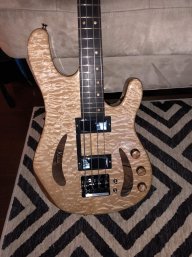
Yes. Although since you like the sadowsky modern, you might actually prefer the opposite.
I'm not sure exactly what you mean by that. I actually am looking for a more vintage tone from this axe. I love Jamerson's sound, and Willie Weeks (he uses a reverse PJ Sadowsky but also a standard Fender P). Rocco Prestia's sound is great too--but he uses a reverse P. It looks like his new ESP signature model has the J closer to the bridge and the P closer to the neck than in normal positions.
The Sadowsky Modern has a very defined, clear bottom. I kind of like that. But it lacks some warmth. That being said the low B is better on that bass than on my other 5-string. This makes me interested in the reverse PJ. But I don't want to lose the warmth that most P pups give, and I don't want to compromise popping room on the treble side when slapping (the 24-fret model means the treble coil would be pretty close to the fingerboard if we reverse the P). Anyway, that's why I feel like this has been a tough call. I was originally going to do a JJ setup, but I just love the P sound so much I think I'd still be missing that, even if I had added series switch. A P pickup is very different from anything else, the only way to get that sound is with a P.
With regards to your comment on the 70s J location I think I probably agree with you on that, and think the 60s location is preferable if I can make it work. One thing that will help is the use of active blending, which this bass will have via the East preamp. I'm still not sure what to do with the placement. Reverse P would be an easy choice if this weren't 24 frets, but I gotta have that too. So maybe I'll just stick with a standard P and cross my fingers.
I just meant that the modern has kindof nasal mids, and you dont mind that, so reverse PJ may not bother you on the low strings.
My Modern has Big Splits, not the normal soaps. I really only hear nasal mids on the bridge pup, probably more of a placement issue and I think the 60s J may help. I have a reverse PJ Ibanez coming into my school where I teach in a few days. I might compare it with my Lakland PJ. That might help me to decide.I just meant that the modern has kindof nasal mids, and you dont mind that, so reverse PJ may not bother you on the low strings.
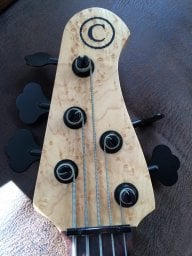
I'm not sure exactly what you mean by that. I actually am looking for a more vintage tone from this axe. I love Jamerson's sound, and Willie Weeks (he uses a reverse PJ Sadowsky but also a standard Fender P). Rocco Prestia's sound is great too--but he uses a reverse P. It looks like his new ESP signature model has the J closer to the bridge and the P closer to the neck than in normal positions.
The Sadowsky Modern has a very defined, clear bottom. I kind of like that. But it lacks some warmth. That being said the low B is better on that bass than on my other 5-string. This makes me interested in the reverse PJ. But I don't want to lose the warmth that most P pups give, and I don't want to compromise popping room on the treble side when slapping (the 24-fret model means the treble coil would be pretty close to the fingerboard if we reverse the P). Anyway, that's why I feel like this has been a tough call. I was originally going to do a JJ setup, but I just love the P sound so much I think I'd still be missing that, even if I had added series switch. A P pickup is very different from anything else, the only way to get that sound is with a P.
With regards to your comment on the 70s J location I think I probably agree with you on that, and think the 60s location is preferable if I can make it work. One thing that will help is the use of active blending, which this bass will have via the East preamp. I'm still not sure what to do with the placement. Reverse P would be an easy choice if this weren't 24 frets, but I gotta have that too. So maybe I'll just stick with a standard P and cross my fingers.
I fear you are trapped in the same vortex that consumes me - the notion of one bass that can do it all!
I'm increasingly convinced that old-school tones and killer b-strings (defined attack, good pitch into the upper frets, timbre/volume not too dissimilar from the other 4 strings,) are mutually exclusive.
I had a great Sadowsky NYC P/J 5-24, but gave it up. P orientation was standard, J looked to be in 60's position. Ultimately decided to go with my 5-24 Modern because the B-string was so much better, which seems to be a function of pickup placement - I also had a superb B on a 5-24 Modern Metro, using either the soapbars or big singles. Frankly, I also would have liked being able to pull more snotty attitude from the J, and I preferred the very centered pitch of the NYC Modern - probably a function of the pickup placement, a great ebony board, and the soaps. Of course, the P soloed, or with some J blended in (I had a V/V setup) sounded great for old school P sounds. But I just don't think you can get that amazing B-string from a standard P/J configuration.
I've never played a reverse-P 5-string, but have no doubt that it would tighten up the bass. I've been around reverse-P on old Yamaha 4-strings, and think it smokes.
Lots of slappers think the standard P/J setup (J in '60's position) sounds honky. I don't slap enough to have an opinion, but wanna point out that the Pedulla MVP/Buzz basses seem to have the P a bit closer to the neck, and the J closer to the bridge, and based on some time with a defretted 5-string example, that is one useful approach - I'd still have that axe, but for my not having good results with the body shape.
Given all of the parameters you're looking to balance, including room to slap, you might want to consider two soapbars in '60's position. I had brief exposure to a Fodera Emperor 5 Standard and was very impressed by the range of tones available from that set-up. By being able to toggle between series and single-coil, and active/passive, you have a wide range of tones. I was also intrigued by the Duncan-sourced pickups, as I tend to find that pickups with alnico magnets have a certain something that works well with old-school (not as impressed with the electronics, including a passive tone control that did not have a lot of range).
Speaking of soapbars in '60's position, that configuration has been showing up on some Sadowsky Will Lee basses - I'd love to see a comprehensive report on how well that works, especially on a five-string, from someone out in the field.
Good luck in your search.

Speaking of soapbars in '60's position, that configuration has been showing up on some Sadowsky Will Lee basses - I'd love to see a comprehensive report on how well that works, especially on a five-string, from someone out in the field.
My NYC WL5 arrived yesterday. Chambered ash body, rosewood board, soaps in '60s position. [Invalid or Expired Link Removed], if the pic hasn't been taken down yet:
[Invalid or Expired Link Removed]
Haven't had a lot of time yet to play it, but very happy it's mine. Here are some quick first impressions.
1. Amazing clarity (pitch definition) on the B string. (Blue Label SS standard gauge on it.)
2. A nice heft to all notes on all strings in all registers.
3. Not even a hint of a dead spot, anywhere.
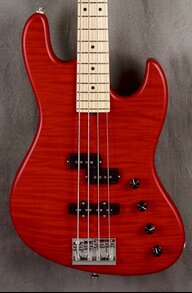
Congrats Ewo!
Killer!
Thanks, bud! Still getting it sorted out (haven't touched the action or the mid-boost trim pots yet), but I count myself fortunate it came my way. I like the action a bit lower, and the mid-boost is a touch too much of a good thing at the moment.
It's interesting to play the NYC and the Metro* back-to-back. Both WL models, both 5ers, both strung with Blue Label SS standard gauge. Build quality impeccable on both. 60s position for both: soapbars on the NYC and SCs on the Metro. Same electronics, AFAIK. Chambered ash body on the NYC, solid alder body on the Metro.
Unamplified, there's a liveliness to the sound of the NYC. The chambering, maybe?
Love 'em both. Using the Metro on my $75 bar gigs. Gonna keep the NYC at home, as a special treat for practice time. Well...maybe gig it later, after the newness wears off, or the first ding happens...
* Guess the Metro WL5s were discontinued..? Or not sold in the US? Bought this one (in post #1078, above) from a TBer in Hong Kong.
Last edited:

Unamplified, there's a liveliness to the sound of the NYC. The chambering, maybe?
I went to Station Music here in Germany. Played about half a dozen of each, NYC and Metros. Although there was variance across the board, the NYCs definitely had more of that "liveliness" to them that the Metros didn't, a singing airy-ness in the high end. However, I have played at least 2 other Metros elsewhere that had that similar quality. In all cases, I believe it was more relative to the weight of the bass, not the chambered vs. non-chambered.
I fear you are trapped in the same vortex that consumes me - the notion of one bass that can do it all!
I'm increasingly convinced that old-school tones and killer b-strings (defined attack, good pitch into the upper frets, timbre/volume not too dissimilar from the other 4 strings,) are mutually exclusive.
I had a great Sadowsky NYC P/J 5-24, but gave it up. P orientation was standard, J looked to be in 60's position. Ultimately decided to go with my 5-24 Modern because the B-string was so much better, which seems to be a function of pickup placement - I also had a superb B on a 5-24 Modern Metro, using either the soapbars or big singles. Frankly, I also would have liked being able to pull more snotty attitude from the J, and I preferred the very centered pitch of the NYC Modern - probably a function of the pickup placement, a great ebony board, and the soaps. Of course, the P soloed, or with some J blended in (I had a V/V setup) sounded great for old school P sounds. But I just don't think you can get that amazing B-string from a standard P/J configuration.
I've never played a reverse-P 5-string, but have no doubt that it would tighten up the bass. I've been around reverse-P on old Yamaha 4-strings, and think it smokes.
Lots of slappers think the standard P/J setup (J in '60's position) sounds honky. I don't slap enough to have an opinion, but wanna point out that the Pedulla MVP/Buzz basses seem to have the P a bit closer to the neck, and the J closer to the bridge, and based on some time with a defretted 5-string example, that is one useful approach - I'd still have that axe, but for my not having good results with the body shape.
Given all of the parameters you're looking to balance, including room to slap, you might want to consider two soapbars in '60's position. I had brief exposure to a Fodera Emperor 5 Standard and was very impressed by the range of tones available from that set-up. By being able to toggle between series and single-coil, and active/passive, you have a wide range of tones. I was also intrigued by the Duncan-sourced pickups, as I tend to find that pickups with alnico magnets have a certain something that works well with old-school (not as impressed with the electronics, including a passive tone control that did not have a lot of range).
Speaking of soapbars in '60's position, that configuration has been showing up on some Sadowsky Will Lee basses - I'd love to see a comprehensive report on how well that works, especially on a five-string, from someone out in the field.
Good luck in your search.
Yes, I think the reverse P might be better for me. However, with the 24-fret neck (sigh)...
As for the soaps in 60s positions, that's an option but probably not the direction I'd want to go. I actually just heard a clip of Elmon's new bass. Just not the sound I'm looking for...my Modern gets close to that. I really like that fat vintage P sound. Reverse PJ may be it...there's still time to decide.
Thanks, bud! Still getting it sorted out (haven't touched the action or the mid-boost trim pots yet), but I count myself fortunate it came my way. I like the action a bit lower, and the mid-boost is a touch too much of a good thing at the moment.
It's interesting to play the NYC and the Metro* back-to-back. Both WL models, both 5ers, both strung with Blue Label SS standard gauge. Build quality impeccable on both. 60s position for both: soapbars on the NYC and SCs on the Metro. Same electronics, AFAIK. Chambered ash body on the NYC, solid alder body on the Metro.
Unamplified, there's a liveliness to the sound of the NYC. The chambering, maybe?
Love 'em both. Using the Metro on my $75 bar gigs. Gonna keep the NYC at home, as a special treat for practice time. Well...maybe gig it later, after the newness wears off, or the first ding happens...
* Guess the Metro WL5s were discontinued..? Or not sold in the US? Bought this one (in post #1078, above) from a TBer in Hong Kong.
I bought a new metro WL5 in the USA a few months ago. Really awesome bass. I suggest subtle boost on "narrow 800" for the mids.
I bought a new metro WL5 in the USA a few months ago. Really awesome bass. I suggest subtle boost on "narrow 800" for the mids.
Thanks for the suggestion! I'll try that. It's great to be able to choose both the center freq and the Q of the mid boost.
The WL5 doesn't show up in the Metro models on the Sadowsky website. So I guess it's been discontinued.

Don't think so. One of the Japanese retailers has been listing them on eBay and you can find them on the Aussie sites as well. There are several US shops with them in stock. Great configuration. I've been considering one for quite a while now. Problem for me is my RV4 with HipShot has been getting the job done just fine. If it ain't broke don't fix it.Thanks for the suggestion! I'll try that. It's great to be able to choose both the center freq and the Q of the mid boost.
The WL5 doesn't show up in the Metro models on the Sadowsky website. So I guess it's been discontinued.
Pursuant to the "No Pix, No Bass" rule, here's a beauty shot of both the WL5s:
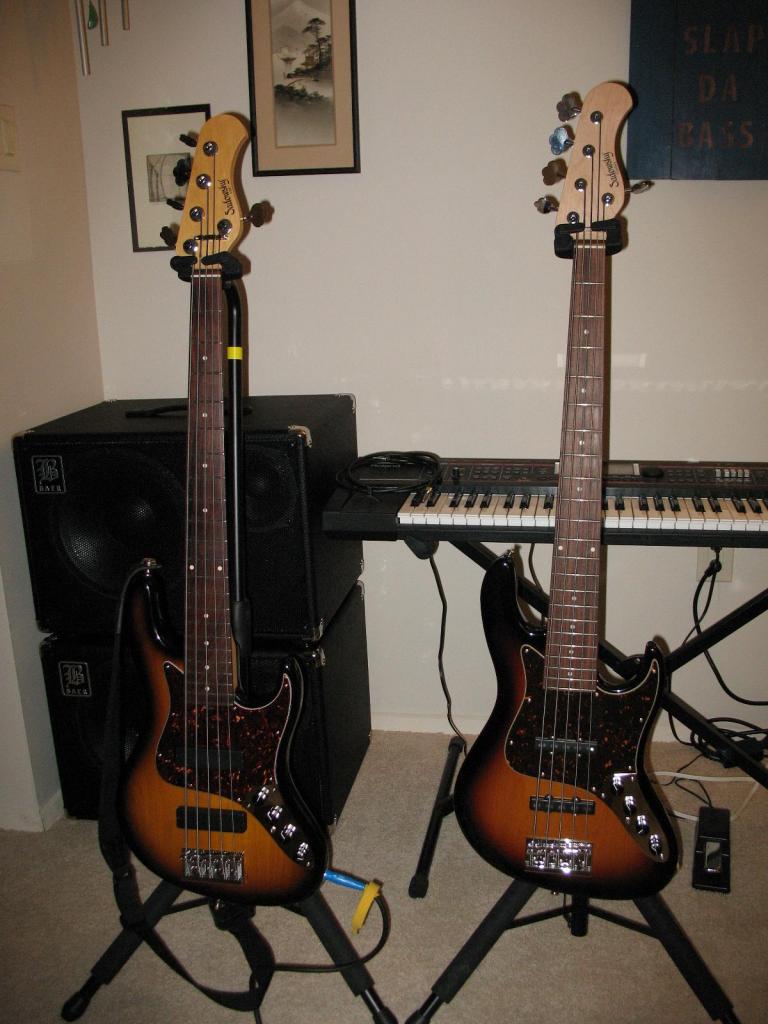
Apart from the fretboard wood, the body wood, chambering, and the p'ups, the small differences are interesting, I figure. Dunno if it's a deliberate differentiation between the NYCs and Metros, or just changes over time; the NYC is new and the Metro (guessing) a couple years old.
Output jack is a small flush mount plate on the Metro (right), and a recessed cup on the NYC. Barrels on the Metro's tuning pegs are small, on the NYC they're big. Different string trees.
Added: Hadn't noticed it before, but the headstock looks a wee bit larger on the NYC.
Apart from the fretboard wood, the body wood, chambering, and the p'ups, the small differences are interesting, I figure. Dunno if it's a deliberate differentiation between the NYCs and Metros, or just changes over time; the NYC is new and the Metro (guessing) a couple years old.
Output jack is a small flush mount plate on the Metro (right), and a recessed cup on the NYC. Barrels on the Metro's tuning pegs are small, on the NYC they're big. Different string trees.
Added: Hadn't noticed it before, but the headstock looks a wee bit larger on the NYC.
Last edited:
Don't think so. One of the Japanese retailers has been listing them on eBay and you can find them on the Aussie sites as well. There are several US shops with them in stock.
Yeah. The thing that puzzled me, though, is that the Sadowsky site doesn't list the Metro WL5 as an available model (lookee [Invalid or Expired Link Removed]). Maybe the ones in the US are inventory still in the distribution chain..?
That would be my guess.Yeah. The thing that puzzled me, though, is that the Sadowsky site doesn't list the Metro WL5 as an available model (lookee [Invalid or Expired Link Removed]). Maybe the ones in the US are inventory still in the distribution chain..?

Did you file a police report at the time? If you did and your pictures match up then I don't see why the police would not be following up on this. I really feel for you - this kind of situation has to be one of the most frustrating. I would call the Sadowsky shop instead of emailing. They will be able to either give you an answer directly or connect you with the Tokyo shop.
Best of luck.
Well I got my bass back!!! 4 years later
 Few little dings on it but otherwise still in good shape. Police were able to recover it using the woodgrain in my pictures as a reference.
And to answer my own question, no these Metro's (2008) do not have any other serial number anywhere other than the headstock (which mine does not anymore)

Amazing! Congratulations on getting your bass back!Well I got my bass back!!! 4 years later
And to answer my own question, no these Metro's (2008) do not have any other serial number anywhere other than the headstock (which mine does not anymore)


