• TalkBass has been independent since 1998. Add your voice.
    Create a free account to reply to discussions, view embedded media, and browse with fewer display ads.
    Join freeLog in
    Want zero display ads or expanded classifieds tools? Compare plans.

Club Sadowsky!!!

Just roll with what you are used to. :cool:
Thanks man but I'm far too curious to do that!!! The passion for playing bass runs way deep, & asking questions & growing the passion is a HUGE part of the process for me. I really enjoy the company that is kept here because I think we share something that is quite unique with any group of musicians. We are fortunate to have a forum to further that.
B.
 
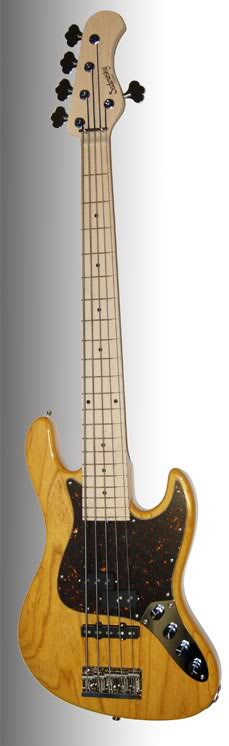
Finally, a lightweight Metro P/J 5 appeared and I snapped it up. 8.9lbs..should be here by Friday. Swap the pickguard for black and we are good to go! :hyper:
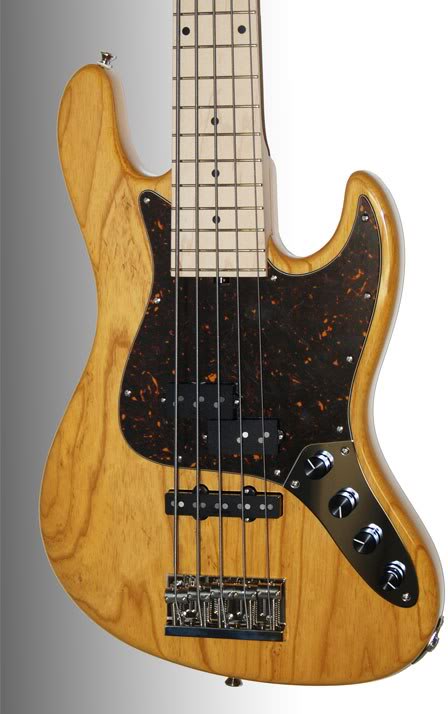
pj5body.jpg


pj5full.jpg

Wow! congrats!

I love PJs and you sure know by now that I love vint. tint ash/maple and that's a sweet piece of ash :cool:

post a review and some more photos when you get it, please.
 
By the way, some heavy posting about blend pots in the last few hours!

What about another burst about one piece vs. two piece bodies? I just saw this new bass on the In Stock section and the spec reads:

BODY | Ultralight Solid One-Piece Swamp Ash


I understand the beauty of a one piece body with a transparent finish, provided it also has nice grain, but this bass is painted solid so...any sonic advantages also?

All I can say in this regard is that my one piece body solid ash PJ is the most resonant bass I have ever played or owned. I can feel it vibrating against my body the same way I can feel it on my upright. (and I mean unplugged)

[Invalid or Expired Link Removed]
 
Tombolus - you're right about the standard blend pot not delivering 100% at the centre detent. I was investigating the vol/vol v blend debate acouple of years ago, and googled up many electronics sites, and a couple of apparent experts did have a very comlex explanation of why you can't duplicate v/v with a blend, BUT that's not my point - in my reading I discovered that typical blend pot tapers only deliver about 80% - 80% at the detent. That expained the large volume drop on my 6 with the blend pot centered - much too much for loading explanations to be relevant, as I'd always felt. Stewart Macdaonald make a pot which delivers 100%-100% at the detent, so I changed mine out and it made a very noticable difference at the centre position.
Now it's quite possible that Roger already uses such a pot in his pre, so this is all irrelevant, but it would be good to know - anybody? If the standard pot is NOT of the second type, I can tell you from experience you get quite a volume increase by changing it out (at the detent only of course, and possibly just on either side)
 
...
Now it's quite possible that Roger already uses such a pot in his pre, so this is all irrelevant, but it would be good to know - anybody? If the standard pot is NOT of the second type, I can tell you from experience you get quite a volume increase by changing it out (at the detent only of course, and possibly just on either side)

I don't know what Roger uses, but I have never experienced volume lose at the center detent in any of my Sadowskys. I have measured this with VU meters, as I like to make sure that the volume balance betweeen pickups is perfect.
 
I've looked it up again, and the types are -
100% - 100% at detent are MN taper
85%-85% at detent are C-A taper
These nos appear on the pots usually.
This is all old news (my bass is old!), and some say that C-A pots are fine in preamp control circuits, but I know for sure that changing over made a difference in my Bart system - the centre position was noticably quieter than just either side of the detent, and I know some of that can be accounted for by pickup loading, the effect is much smaller with the MN taper blend pot. It's quite possible (maybe probable by now) that most pre's use these pots for blend, or that the amp characteristics somehow account for the taper, but I just thought it was worth mentioning, as if the pots ARE C-A's, then surely you can't duplicate v/v settings, as you can't get say neck 100% and bridge 95%. BUT perhaps this is only relevant in passive mode or something. I'm no expert.
 
Tombolus - you're right about the standard blend pot not delivering 100% at the centre detent. I was investigating the vol/vol v blend debate acouple of years ago, and googled up many electronics sites, and a couple of apparent experts did have a very comlex explanation of why you can't duplicate v/v with a blend, BUT that's not my point - in my reading I discovered that typical blend pot tapers only deliver about 80% - 80% at the detent. That expained the large volume drop on my 6 with the blend pot centered - much too much for loading explanations to be relevant, as I'd always felt. Stewart Macdaonald make a pot which delivers 100%-100% at the detent, so I changed mine out and it made a very noticable difference at the centre position.
Now it's quite possible that Roger already uses such a pot in his pre, so this is all irrelevant, but it would be good to know - anybody? If the standard pot is NOT of the second type, I can tell you from experience you get quite a volume increase by changing it out (at the detent only of course, and possibly just on either side)

+1 No volume loss at center detent any more (if there is, I sure can't hear it with these newer circuits). Those 'bad old days' are long gone with blend controls, but again, you get this '90% of impact in 5% of taper' with both systems unless they are the relatively rare 'active' type. Some luthiers (like Fodera) used to market their blend control as 'no volume loss at center position', but that has now become an industry standard and non-issue.

Again, the primary point of our discussion was based on using single coil pickups (based on a poster talking about the hum he experienced with a Will Lee bass). You can again, with either vol/vol or blend, get a very nice bridge or neck pickup 'solo' tone by just blending (or cutting one vol control slightly on a vol/vol) within a few % of full on and still stay reasonably hum cancelled. There is virtually no downside to single coil pickups versus HC's regarding hum and tonal variation if you know what you are doing:)
 
That's cleared that up then!
Totally agree with the hum thing - non-problem in the useful part of the mix (on my passive s/c Lakie, and my active 6) I think you only get hum in a problematic way if you go past the "useful" part of the mix. In a band situation it's usually not noticable unless you're unlucky enough to be under the lights or whatever in my experience.
The debate is still open with regard to v/v versus blend for me, as I know I've seen (but can't reference) a detailed and learned explanation, so no points for me there.
Are C-A taper blend pots really no longer used? I've bought C-A taper pots advertised in the last year or so advertised as blend pots, so I wonder if they are still around in sufficient nos for some manufacturers to still be using them (they are cheaper, apparently)
 
That's cleared that up then!
Totally agree with the hum thing - non-problem in the useful part of the mix (on my passive s/c Lakie, and my active 6) I think you only get hum in a problematic way if you go past the "useful" part of the mix. In a band situation it's usually not noticable unless you're unlucky enough to be under the lights or whatever in my experience.
The debate is still open with regard to v/v versus blend for me, as I know I've seen (but can't reference) a detailed and learned explanation, so no points for me there.
Are C-A taper blend pots really no longer used? I've bought C-A taper pots advertised in the last year or so advertised as blend pots, so I wonder if they are still around in sufficient nos for some manufacturers to still be using them (they are cheaper, apparently)

Not sure about pot types, just know that, at least on the basses I've owned with blend controls (MTD, Fodera, Sadowsky, Lakland, etc.), there is no noticable volume drop at center position like the early (i.e., decades ago) blend controls. Absolutely zero issue IMO and IME.

The active blend, vol/vol controls like the Celinder Greengrove circuit are a revelation though, since you truly do get what Tom is talking about (either with blend or vol/vol), that ability to truly, infinitely blend various volume ratio's of each pickup over the entire, even run of the taper. However, that improvement is not a big enough benefit for me to give up a preamp bypass switch.
 
Never tried active vol/vol, but I too could not give up the passive option! What's your opinion on the Sad p/ups passive? I know a lot don't like them much, but I can't see why they wouldn't be good.
Thanks for the various clips by the way - very useful
cheers
Mark
 
Never tried active vol/vol, but I too could not give up the passive option! What's your opinion on the Sad p/ups passive? I know a lot don't like them much, but I can't see why they wouldn't be good.
Thanks for the various clips by the way - very useful
cheers
Mark

Thanks! I enjoy posting up the clips! Speaking of those clips, you can hear pretty clearly that there is no volume drop/bump when I go from 'full blend' to favoring the bridge pickup and back... very even.

I REALLY don't dig the Sadowsky HC's in passive mode at all. I assume Roger has those wound to really take advantage of his wonderful preamp. The HC's sound thin and 'sterile' to me without the buffering of the preamp. IMO there.

The singles sound better in passive mode to me, and actually sound quite nice. However, to me, personally, the 'Sadowsky sound' really is the more wide, buffered tone of those basses with the preamp 'flat but engaged'. If I want a more raw, vintage, Fendery tone, I have other basses that get me that vibe in passive mode a bit better. IMO there. I could actually be quite happy running the Sadowsky singles in passive mode with a bit of EQ and gain boost on my amp.
 
By the way, some heavy posting about blend pots in the last few hours!

What about another burst about one piece vs. two piece bodies? I just saw this new bass on the In Stock section and the spec reads:

BODY | Ultralight Solid One-Piece Swamp Ash


I understand the beauty of a one piece body with a transparent finish, provided it also has nice grain, but this bass is painted solid so...any sonic advantages also?

All I can say in this regard is that my one piece body solid ash PJ is the most resonant bass I have ever played or owned. I can feel it vibrating against my body the same way I can feel it on my upright. (and I mean unplugged)

[Invalid or Expired Link Removed]
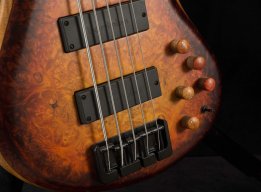
There were a bunch of 'naval gazing' posts (by me and others!) about one versus two piece bodies a while back in this thread. IMO, absolutely zero issue sonically. Put another way, there would be just as much variation in response between two 'book matched' bodies as there would be between a book matched body and a one piece body. The idea of a single glue seam impacting the resonance or response of a bass when combined with the hundreds of other 'tone generating' features of a bass doesn't really make much sense to me.

I agree though, that a single piece of wood with nice grain can really look cool with a trans finish!

I love the bass you posted... love the color. The flame on the fretboard is a bit of a mismatch to me combined with that very classic, vintage color, but that's pure IMO there. With a plain maple board, that bass would be perfect IMO!
 
Wow! congrats!

I love PJs and you sure know by now that I love vint. tint ash/maple and that's a sweet piece of ash :cool:

post a review and some more photos when you get it, please.

I will definitely post some more photos...It should arrive on the big brown truck tomorrow. I will be waiting with baited breathe!

I had an older NYC alder/morado P/J 5 a couple of years ago. It was a great bass but it just never quite did it for me. So, I've played a couple of ash/maple P/J5's since then and been blown away. And, now that they offer vintage tint on the Metro...I just could not pass this one up..especially at just under 9lbs!
 
I will definitely post some more photos...It should arrive on the big brown truck tomorrow. I will be waiting with baited breathe!

I had an older NYC alder/morado P/J 5 a couple of years ago. It was a great bass but it just never quite did it for me. So, I've played a couple of ash/maple P/J5's since then and been blown away. And, now that they offer vintage tint on the Metro...I just could not pass this one up..especially at just under 9lbs!

It is a beauty!
 
There were a bunch of 'naval gazing' posts (by me and others!) about one versus two piece bodies a while back in this thread. IMO, absolutely zero issue sonically. Put another way, there would be just as much variation in response between two 'book matched' bodies as there would be between a book matched body and a one piece body. The idea of a single glue seam impacting the resonance or response of a bass when combined with the hundreds of other 'tone generating' features of a bass doesn't really make much sense to me.

I agree though, that a single piece of wood with nice grain can really look cool with a trans finish!

I love the bass you posted... love the color. The flame on the fretboard is a bit of a mismatch to me combined with that very classic, vintage color, but that's pure IMO there. With a plain maple board, that bass would be perfect IMO!

Totally agree...I have done the A/B test myself and could not really hear a difference..at least that could be easily associated with a 2 piece vs 1 piece body. Even on trans finishes, if they are done well, it can be hard to tell if it is one or two pieces. That said, I think the description of the bass hits where some people may be coming from...weight. A glue joint, even a small one like this, is going to add weight. For me, personally, the additional weight on a small joint like that is not an issue. Any NYC Sadowsky has always been well under what I feel is my weight limit...I don't get too caught up in this "It's gotta be less than 8lbs stuff" When you start making a hippie sandwich...it does make a bass pretty heavy. And does change the sound.

 
Totally agree...I have done the A/B test myself and could not really hear a difference..at least that could be easily associated with a 2 piece vs 1 piece body. Even on trans finishes, if they are done well, it can be hard to tell if it is one or two pieces. That said, I think the description of the bass hits where some people may be coming from...weight. A glue joint, even a small one like this, is going to add weight. For me, personally, the additional weight on a small joint like that is not an issue. Any NYC Sadowsky has always been well under what I feel is my weight limit...I don't get too caught up in this "It's gotta be less than 8lbs stuff" When you start making a hippie sandwich...it does make a bass pretty heavy. And does change the sound.



+1 Roger's general weight spec target of mid 8 pounds or so (between 8 and 9 anyway) is just the perfect weight for me... enough 'mass' for balls and attack, but light enough (along with the dinky body design) to feel REALLY comfortable on a long gig.

Except for that wonderful Mouse that you sold me (thanks again!), all my basses are within this weight range.