• TalkBass has been independent since 1998. Add your voice.
    Create a free account to reply to discussions, view embedded media, and browse with fewer display ads.
    Join freeLog in
    Want zero display ads or expanded classifieds tools? Compare plans.

Club Sadowsky!!!

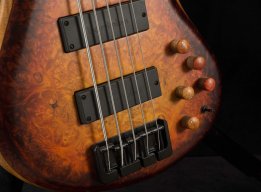
On a side note, last night just for giggles, I popped my bass into passive mode, tweaked the input gain slightly and added just a "bump" of bass on the F1 and got a KILLER, KILLER tone going. I jammed for an hour sans preamp. It made me very happy!!!
Yeah, there are definitely those who feel passive mode on these is strictly just for getting through a set where the battery dies, and not for general use. I'm NOT one of them. Just recently, I played an entire church service in passive mode on my older vintage J5 and it was a GOOD thing! :)

P.S. This is not meant to be a jab at anyone... heck, I don't even remember who they are, and it doesn't matter anyway. I just remember reading the comments in the past, and just MHO as usual anyway. :)
 
Yeah, there are definitely those who feel passive mode on these is strictly just for getting through a set where the battery dies, and not for general use. I'm NOT one of them. Just recently, I played an entire church service in passive mode on my older vintage J5 and it was a GOOD thing! :)

I like doing this, as well. It is nice just to have a different flavor in your sound. I use a Aguilar ToneHammer as my DI. Sometimes, I just go passive on the Sadowsky and activate the Preamp on the Aguilar...and VIOLA I have a Sadowsky with an Aguilar OBP-3 in it. ;)
 
Can someone explain to me why a blend pot isn't completely variable. Thanks.
It is completely variable, but the "problem" with any passive blend control (like most are, and have to be if you're gonna' have a true passive bypass) is that most of the adjustment is pretty tight around the center point, and then the remainder is spread out for the majority of the stroke in either direction beyond that. It's just the way it works between the pickups and a passive blend control for the many of the pickup sets out there (maybe most of them). I'm surprised you haven't noticed this.
 
It is completely variable, but the "problem" with any passive blend control (like most are, and have to be if you're gonna' have a true passive bypass) is that most of the adjustment is pretty tight around the center point, and then the remainder is spread out for the majority of the stroke in either direction beyond that. It's just the way it works between the pickups and a passive blend control for the many of the pickup sets out there (maybe most of them). I'm surprised you haven't noticed this.

I'm still not convinced that a blend pot gets you 100% of the relative volume combinations available with vol/vol (100%/90%, 100%/75%, 50%/100%, etc.). Or, if those ratios do exist somewhere on that blend pot, then as you say, they must happen over an extremely small range of the pot.

Either way, I'm just so much more comfortable dialing in tone using a vol/vol setup (and I like the idea of having one less potentiometer in my passive signal chain). But I know that other folks prefer their vol/blend, and if that works for them, then it's all good, I suppose. :cool:

Tom.
 
It is completely variable, but the "problem" with any passive blend control (like most are, and have to be if you're gonna' have a true passive bypass) is that most of the adjustment is pretty tight around the center point, and then the remainder is spread out for the majority of the stroke in either direction beyond that. It's just the way it works between the pickups and a passive blend control for the many of the pickup sets out there (maybe most of them). I'm surprised you haven't noticed this.

Thanks Vic. I guess what I'm really asking is -why can't this function be improved upon? My "electronics" knowledge is lacking here. I have indeed noticed what you have mentioned & I have always wondered about it.
 
Thanks Vic. I guess what I'm really asking is -why can't this function be improved upon? My "electronics" knowledge is lacking here. I have indeed noticed what you have mentioned & I have always wondered about it.
I'd have to re-research this, but I think by the time you get a blend pot with a resistance value that would spread out the adjustment, you'd also introduce pickup loading issues that would result in undesirable tone.

Just the nature of the beast. The "good news" is, we've all become very used to this at this point, so really, it's not that big of a deal.
 
gimmee the blend pot plz!
much easier for me to make that adjustment on the fly with one knob vs two...

ymmv, clearly;)

I'm still not convinced that a blend pot gets you 100% of the relative volume combinations available with vol/vol (100%/90%, 100%/75%, 50%/100%, etc.). Or, if those ratios do exist somewhere on that blend pot, then as you say, they must happen over an extremely small range of the pot.

Either way, I'm just so much more comfortable dialing in tone using a vol/vol setup (and I like the idea of having one less potentiometer in my passive signal chain). But I know that other folks prefer their vol/blend, and if that works for them, then it's all good, I suppose. :cool:

Tom.
 
I'm still not convinced that a blend pot gets you 100% of the relative volume combinations available with vol/vol (100%/90%, 100%/75%, 50%/100%, etc.). Or, if those ratios do exist somewhere on that blend pot, then as you say, they must happen over an extremely small range of the pot.
Well, your first comment isn't really what the question was about, but...

This has been MUCH debated, but I still disagree with you on the variation adjustment diffs. You can't just compare a blend to a vol/vol. You have to compare the combination of the vol/blend with vol/vol, and there is simply no final ratio you can't achieve with both configs... and like I mentioned above, we've all become used to the "sensitivity" of the blend at this point, so I don't think that's a real issue either... at least not for me. :)

HOWEVER, to give you your due, there IS a difference. As I've agreed many times before, there is a tonal disadvantage to vol/blend because you have essentially three pots instead of two, and the way it's all hooked together, you do introduce a little bit of pickup loading with vol/blend that you don't with vol/vol.

How noticeable that is is probably the most debatable point, but IME, it's not enough to override the convenience of a master volume control, which I personally use a lot. For someone who doesn't, I'd probably typically recommend vol/vol just because, to whatever extent it's significant, it is tonally better.

IME/IMHO of course. :)
 
You can't just compare a blend to a vol/vol. You have to compare the combination of the vol/blend with vol/vol, and there is simply no final ratio you can't achieve with both configs...

Ah, but now I have to resort to the gain knob on my amp (or some other volume control) if I have a vol/blend and the only way to get my desired ratio is to reduce the volume on the bass. :smug:
 
You have to compare the combination of the vol/blend with vol/vol, and there is simply no final ratio you can't achieve with both configs...
I'm gonna' post a correction to this. There is a potential technical difference I forgot about, but I still think it's highly debatable how significant it is, and it depends on the type of blend pot...

With vol/blend, depending on the nature of the blend pot, it may be impossible to get the true 100%/0% or 0%/100% combos. The reason is, unless you have a blend pot with a landing zone that literally disconnects "the other side" when fully turned one direction, you don't have an open circuit to the other pickup... you still have a resistive connection. That said, the resistance is typically about a 25-50x greater than that of the pickups, so it should be "practically" 0... especially for a live mix... but, to be totally accurate... it would be different.
 
Ah, but now I have to resort to the gain knob on my amp (or some other volume control) if I have a vol/blend and the only way to get my desired ratio is to reduce the volume on the bass. :smug:
No, I was just talking about cases where you wanted, for example, 70/90. You'd have to use both the vol and the blend to get that ratio, not just the blend. This is a case where in both cases, you'd have two knobs to twist.

In both cases, you should be able to get anything you want with one or two knobs. Just in the case with the blend control, you can most typically set that once and then adjust overall output "only", without having to upset and then have to reset the blend, which I find very useful. :)
 
I guess what I'm really asking is -why can't this function be improved upon?
I'd have to re-research this, but I think by the time you get a blend pot with a resistance value that would spread out the adjustment, you'd also introduce pickup loading issues that would result in undesirable tone.

Just the nature of the beast. The "good news" is, we've all become very used to this at this point, so really, it's not that big of a deal.
I should note that this response is based on the assumption we're talking only about passive blend controls (which is what's used on a Sadowsky). If you don't care about the ability to bypass the preamp, there is a way to greatly improve upon this and make it as linear as you'd like... incorporate the blend function into the preamp itself. This is known as "active blending"... just like a mixer board.
 
I should note that this response is based on the assumption we're talking only about passive blend controls (which is what's used on a Sadowsky). If you don't care about the ability to bypass the preamp, there is a way to greatly improve upon this and make it as linear as you'd like... incorporate the blend function into the preamp itself. This is known as "active blending"... just like a mixer board.

Would it be possible to incorporate the blend into the preamp as you said & have it switchable to passive blend as it is now on the Sadowsky for use in the passive set on the bass?
 
I should note that this response is based on the assumption we're talking only about passive blend controls (which is what's used on a Sadowsky). If you don't care about the ability to bypass the preamp, there is a way to greatly improve upon this and make it as linear as you'd like... incorporate the blend function into the preamp itself. This is known as "active blending"... just like a mixer board.

The problem with this kind of system is that when you go passive (if available) you loose blend options. It's either one or both pickups full on.

Great explanation Vic !!
 
Would it be possible to incorporate the blend into the preamp as you said & have it switchable to passive blend as it is now on the Sadowsky for use in the passive set on the bass?
Anything is possible with the right switches and such, but it might add significant cost to build, which adds an even more significant cost to the final price, and at least IMHO, it wouldn't be worth it. :)

EDIT: HAH! nenor beats me again!!! I was about to post earlier about losing the blend in passive mode with an active blend, as well, but he was too fast. :D
 
Everything is possible but you'll end up with a total mess in the cavity + tons of knobs, and who wants that!?

Point taken. I'm just trying to arrive at an understanding as to the feasability of improving the blend function. The Sadowsky preamp is so exemplary that it seems to me that some of it's potential is being lost without being able to dial in ANY ratio that will enhance the "Sadowsky Tone".
 
IMO:
You can; but, the blend knob "does most of it's mojo in about 20% of it's travel."
This is not just "a sadowsky thing" but rather "a blend knob thing."

It's never been a big deal to me; and I adjusted to it some many years ago;)