NickBassCentral
Commercial User
Thanks for the shout out!Bass Central if you are in the US.

TalkBass has been independent since 1998. Add your voice.
Create a free account to reply to discussions, view embedded media, and browse with fewer display ads.
Join free Log in
Want zero display ads or expanded classifieds tools? Compare plans.
Thanks for the shout out!Bass Central if you are in the US.
Might be worth emailing some European dealers like Thomann for quotes too - the quote they provided me for a medium scaled alder bodied VS4 passive back in December seemed a good bit lower than the quotes I got from US dealers, but not sure about duties etc.

The California Central is now on their configurator with limited options compared to other Californias, but there's a 5 string 35" option. The string spacing adjustment will be there too; it's the standard Sandberg bridge.Same pickup and position as the demonstrated instrument, only this one is available in both 4 or 5 string and 34" or 35" scale and it has 18 to 19.5 mm string spacing (adjustable)
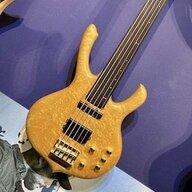
The California Central is now on their configurator with limited options compared to other Californias, but there's a 5 string 35" option. The string spacing adjustment will be there too; it's the standard Sandberg bridge.
People like those Fender type designs. I bet they sell way more Californias than BasicsCool, but then the only difference between this and the basic would be the body and headstock shape? What’s the point in that? Or am I missing something?

Cool, but then the only difference between this and the basic would be the body and headstock shape? What’s the point in that? Or am I missing something?
I think they’re simply more attractivePeople like those Fender type designs. I bet they sell way more Californias than Basics

Is the five string option only available with 35 scale?The California Central is now on their configurator with limited options compared to other Californias, but there's a 5 string 35" option. The string spacing adjustment will be there too; it's the standard Sandberg bridge.

Might be worth emailing some European dealers like Thomann for quotes too - the quote they provided me for a medium scaled alder bodied VS4 passive back in December seemed a good bit lower than the quotes I got from US dealers, but not sure about duties etc.

Very disappointing. I was really hoping the Central would be offered with the full range of options. It's like they're only catering for metalheads.The California Central is now on their configurator with limited options compared to other Californias, but there's a 5 string 35" option. The string spacing adjustment will be there too; it's the standard Sandberg bridge.

Very disappointing. I was really hoping the Central would be offered with the full range of options. It's like they're only catering for metalheads.

... and while I'm on here, just a general question on active Sandbergs for any current owners who know...
Does the battery still run down if the active circuit is disengaged with the knob, or do you need to pull the cable out (like I have to with my Fender)?
Cheers,
A
I think the idea is to separate the string spacing and string height adjustment. The height can be set more precisely (or perhaps more quickly!) when the luthier doesn't have to worry about the string's lateral position, or the break angle of the nut slotI understand Sandberg file the zero fret. While I can't say I have an issue with that per se, can anyone say what the advantage of doing that has over just using a nut that's the same material?
I think the idea is to separate the string spacing and string height adjustment. The height can be set more precisely (or perhaps more quickly!) when the luthier doesn't have to worry about the string's lateral position, or the break angle of the nut slot
Yes, I thought that would be the case for a non filed zero fret, and one of its main advantages. If the zero fret is filed though, then is the string's lateral position and height not determined by the fret alone, because that that's the last contact point before the rest of the fingerboard?
I can't really get my head around why a filed zero fret is functionally any different to a nut made of the same material as the frets, and why Sandberg do it the way they do.
I'm sure they have a good reason, just can't figure it out!


