• TalkBass has been independent since 1998. Add your voice.
    Create a free account to reply to discussions, view embedded media, and browse with fewer display ads.
    Join freeLog in
    Want zero display ads or expanded classifieds tools? Compare plans.

Complex bass and too many tones!

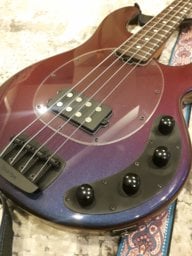
OK, I see this pretty often here that people don't want a bass with too many controls and/or pickups because its too complicated to use live. Most recently with the Bongo vs Big Al thread but it comes up a lot in many other comparisons.

My perspective is that with a bass with lots of controls and pickups (such as my Bongo HH) is that I can simply find a great unique sound, adjust my eq to my liking and have it set and forget it. Same with my SR HH. There's no rule that you have to constantly adjust the EQ and pickup settings to try to cover all of the different standard bass sounds. I just don't see how someone can say having too many tonal options is a negative. It's only a negative if you can't settle on it and are constantly changing. I have multiple stingrays so I can have 1 setup just on the bridge pickup, and then use my HH with both pickups and eqed just how I like it and it is a completely different flavour.

Anyone else feel this way? Why the hate for having options?

I hear you. It's counterintuitive, isn't it? For years I wanted all the tonal options possible, switches, the lot. However I found I could not stop fiddling with controls just to modify a bit the sound... completely my own fault/doing, not a reflection on having too many controls as being a negative aspect. In the end, I found that I prefer instruments that have a basic sound that's already pretty much what I want, and then I need very little extra. I still go for 3-band onboard EQ etc, but because the 'default' basic tone is already there, I don't find myself tempted to tweak and tweak and tweak.
I guess I hated having too many options when I had to work hard at getting the sound I wanted. When the sound is nearly there, then give me options, and I'll quickly find that one little tweak to whatever controls I've got to get there. Then it's pretty much set and forget, with very minimal changes.
 
If you're happy, never let the opinions of others bother you.
So many bassists are passive aggressive approval junkies who already have a chip on their shoulder just from playing bass, and the way they deal with it is to try to get everyone in the world to like the exact same things they like. If they don't, then they get insulting. Like what you just did. There is a big difference between not knowing how to deal with an EQ and not WANTING to deal with an EQ. It doesn't take a brain surgeon to figure out how to twist a few knobs. But I will agree that some folks can get real pompous about their likes and dislikes. Like what you just did.

What other people like and don't like affects my life in zero ways. You should all be more like me.

:D
It was mostly a humorous rant, with my true feelings in it.
Purely aggressive, not passive.

And no, I don't think it is that big a difference between "I don't know" and "I don't want to know".
Basically, a Paint artist knows the difference between a brush and a paint knife.
If he does not want to know, well he'll paint crap.

Tiny example: We moved our rehearsal to a new place. I had to change my EQ curve to keep my tone fitting in the band tone.
If i did not know or did not wanted to know, i would have crapped on my sound and then the band sound.

DUDE. How far do you wanna stray from the original post to further some odd personal vendetta? Pickguards and spiral cords, really? You must be an unstoppably progressive wizard with your spalted tropical burlywood and a 27 string bass.

It's was a odd loop yeah, but it is related in a larger span.
In France at least, people hating more than 2 knobs basses are the same that hates "modern" basses, nice woods and finishes and so on.
Remember, it just words on a forum, not a life threatening disease.

To get back on the subject, Basses with less knobs or electronics demands more work in my opinion.
If you don't like a particular frequency in the sound, you have to adjust your playing style.

With an active 3 band eq, you get rid of it with the mid pot. Easy.
 
These threads are funny to me.

Most basses, in the mix, sound very similar.

^This.

Especially when playing live. Thanks to the current obsession with putting the kick in the subs and cranking it, 99.9.% of the time it comes down to nothing more than you either can or can’t hear the bass at all.

An uncomfortable truth if there ever was one. :laugh::thumbsup:
 
^This.

Especially when playing live. Thanks to the current obsession with putting the kick in the subs and cranking it, 99.9.% of the time it comes down to nothing more than you either can or can’t hear the bass at all.

An uncomfortable truth if there ever was one. :laugh::thumbsup:

Haha yeah I don't disagree really, but if we all come to that same conclusion we might not being seeing as many NBD threads here. I was just curious about people's feelings here and like a good discussion. Seems most people are favouring the simple passive bass.
 
I just don't see how someone can say having too many tonal options is a negative.

It’s a mindset that some of us have when it comes to gear. I definitely go through phases where, especially if I’m on a gig that calls for a lot of different types of tones for multiple songs, I will tweak my sounds away like crazy trying to nail that sound for each song. It can get tiring, and frustrating, as even with a really versatile bass I feel like a lot of the tones are compromises.

On the same token - and it doesn’t make sense - if I just bring a P Bass with flats to the gig, I stop worrying about it and just play the bass. So I guess there can be a third way, where one doesn’t necessarily have to strive to be a chameleon, but aim to be oneself through the songs (maybe)?

Another point for me with this is with multi effects. I am not a fan of menu diving and I find it tiring when I feel like I’m playing a computer. It’s just not ‘musical’ to me. I like all my controls on the surface . I briefly had an HX stomp and while it was extremely impressive, the UI was not for me. Maybe I would like the HX Effects a little better. For now, though, it’s still stompboxes for me, and if I ever were to go ampless I’d likely pick up a preamp pedal and and cabsim with analog-type controls.

You might be interested in this book, The Paradox of Choice: The Paradox of Choice - Wikipedia
 
Last edited:
I can understand both schools of thought and am glad there are options out there for everyone.
IMHO, two of the finest preamps out there are those from John East and Roger Sadowsky, they represent (not exclusively), again, in my opinion, both ends of the spectrum of this debate (taking a passive P with a Vol and Tone knob out of the discussion).
Mr. East was/is a sound engineer by training. He effectively is trying to give you as much of a studio soundboard as possible in his preamp offering (especially the Uni-Pre set flat, with boost & cut controls). He even discusses in one of his interviews how you should never “dime” any of the controls, to include the volume, on his pre-amps as that is not what they are designed for. He says to think of the controls on his pre-amps as replications of the “sliders” on a soundboard and that you don’t set soundboard sliders at “10”, at least not often. With his sweepable mid control, high-treble boost switch, etc. his pre-amp gives you every tool possible to find “your” tone in every situation. In the hands of a capable bassist, it’s an awesome tool. See here:


Mr. Sadowsky on the other hand has designed his pre-amp to give the user some control, but essentially within the boundaries of what he believes (and he’ll get NO argument from me) his bass should sound like. As a builder who focuses on “the working musician” the Sadowsky pre-amp in his basses (treble and bass boost only) allows the user to “work” the “Sadowsky Sound” for the situation at hand, but it is fundamentally going to sound like a Sadowsky bass (a very good thing, to my ear).

Which is “better?” It depends on what you want. I have an MTD Kingston Heir that I bought specifically to drop an East pre-amp in. With the j-pup at the neck and the MM-pup at the bridge I thought it would be a fun bass to play with as a “tone-hunter.” In all honesty, it’ll probably be a mess. The East pre- offers so much tonal variability, I’ll probably never learn how to really dial it in. It’ll be fun to play with (which is what I got it for) but I expect I’ll never really find an exceptional tone, there is just too much variability, at least for me.
The Sadowsky bass/approach is more likely a better option, for me. I expect it would sound awesome “out of the box” and still offer some customization of the sound, within a set boundary, as the situation dictates.
Thanks for reading, hope you enjoy the video. Phil Mann has definitely mastered the use of his John East pre-amp and is exactly the type of bassist that Mr. East had in mind when designing it.
 
Last edited:
OK, I see this pretty often here that people don't want a bass with too many controls and/or pickups because its too complicated to use live. Most recently with the Bongo vs Big Al thread but it comes up a lot in many other comparisons.

My perspective is that with a bass with lots of controls and pickups (such as my Bongo HH) is that I can simply find a great unique sound, adjust my eq to my liking and have it set and forget it. Same with my SR HH. There's no rule that you have to constantly adjust the EQ and pickup settings to try to cover all of the different standard bass sounds. I just don't see how someone can say having too many tonal options is a negative. It's only a negative if you can't settle on it and are constantly changing. I have multiple stingrays so I can have 1 setup just on the bridge pickup, and then use my HH with both pickups and eqed just how I like it and it is a completely different flavour.

Anyone else feel this way? Why the hate for having options?
I admit, I used to be the guy that wanted nothing more than a 4-string P w/flats (and I still love that tone!). But I started playing an active bass a couple years ago, and I really do like having the options. I still use the P w/flats in the appropriate settings, but the active basses get most of the work nowadays.
 
  • Like
Reactions: scuzzy
Hmmm. Most of the responses favor a bass with one signature tone. So I’m assuming that, if you’re playing a song that requires a different tone than the last song, you need to change instruments?

No.

I just play all the songs with my sound. If we have 30 songs in an evening, I'm not trying to sound like 30 different bass players. No if's or but's, I'll sound like me playing 30 different songs.
 
It makes me laugh to think that musicians who plays with "simple" instruments have always the same setup...
Tortoise pickguard, flats, sunburst finish, tone rolled down, tube amps, vintage speaker and cherry on top, fabric or spiral cords....
Same people that thinks "Modern instruments" can not sound vintage or mellow, tube amps are the best, Germanium fuzz.....
I know, it's not always the case, i said it makes me laugh to think that.

I agree 100%... and this made my day. Spiral cords....LMAO! I have both simple (P) and complicated basses (EBMMS5HH). Both have their applications.
 
  • Like
Reactions: BoogieZK
the commonly stated idea that just because you can get a plethora of tones out of a single bass, that they must be mediocre, is laughable. There is no correlation there. A precision can sound great at about 3 different tonal settings (fingers, picks, strings, rig, excluded). A big Al can sound great at about 20 settings. If you only use the 3 sounds the P delivers, great. If you find yourself wanting/needing more and another bass delivers it, great. That doesn't mean the bass with more options sounds "meh".
 
Most basses, in the mix, sound very similar.

This is so not true......Jamerson sounds similar to Chris Squire? This reminds me of the other "is tone important thread". The bass is a color on a palette. I agree that it is very forgiving in many situations - a neutral color in many cases - and, especially in certain genres and styles, the difference between choosing a P and a J for something is negligible. But there are also many cases and a lot of genres where this isnt true. I just recently got schooled with this with a metal project (nu metal), which is a genre I know little about. The difference in the color from using a Jazz bass and the G&L was astounding. The Jazz bass was OK but the G&L, processed through a Sans Amp VST (dual tracked, clean and dirty), won hands down. I now understand why MusicMan Basses are so popular for that genre as they have some of the "klak" for articulation mixed with really smooth bottom end needed to really pull it off. It was eye opening and very humbling
 
  • Like
Reactions: BigAlBass69
Yes, i feel the same way.
The thing i don't understand is why people bother telling others they are doing something wrong by having more than 2 knobs.
What is your problem? You don't know how to deal with an EQ so you blame it on others?

It makes me laugh to think that musicians who plays with "simple" instruments have always the same setup...
Tortoise pickguard, flats, sunburst finish, tone rolled down, tube amps, vintage speaker and cherry on top, fabric or spiral cords....
Same people that thinks "Modern instruments" can not sound vintage or mellow, tube amps are the best, Germanium fuzz.....
I know, it's not always the case, i said it makes me laugh to think that.


Yikes
 
OK, I see this pretty often here that people don't want a bass with too many controls and/or pickups because its too complicated to use live. Most recently with the Bongo vs Big Al thread but it comes up a lot in many other comparisons.

My perspective is that with a bass with lots of controls and pickups (such as my Bongo HH) is that I can simply find a great unique sound, adjust my eq to my liking and have it set and forget it. Same with my SR HH. There's no rule that you have to constantly adjust the EQ and pickup settings to try to cover all of the different standard bass sounds. I just don't see how someone can say having too many tonal options is a negative. It's only a negative if you can't settle on it and are constantly changing. I have multiple stingrays so I can have 1 setup just on the bridge pickup, and then use my HH with both pickups and eqed just how I like it and it is a completely different flavour.

Anyone else feel this way? Why the hate for having options?
The "too many controls" thing makes zero sense to me. We live in an age of smartphones. If you can't figure out a 3 band eq or pickup split switches, I don't know what to tell you. Ask you grandchildren or something.
 
IMHO, controls are there to help a player find the tone/tones they need for a situation. It's up to the player to know how many controls they want and where the knobs need to be. Once they know those settings it's easy to get back to quickly, regardless of how many knobs and switched there are. Not every control needs to be constantly adjusted. All my basses are active, and I know exactly what I need for each song, though the reality is that 98.325% of it comes down to a blend pot. Phil Lesh and Mark Hoppus have both made a fair chunk of money with their respective setups that couldn't be more different so who cares what other folks play?
 
I see both sides of the topic. I have 3 fretted basses. A Fender passive P-bass, a Fender Elite P-Bass (with a Nordstrand V/V, Passive tone, A/P PP and 3 band EQ) and a Roscoe SKB-3005 with the same Nord pre as the Fender.
The passive P-bass is certainly more plug and play (with just a vol and tone Control) but it’s far from not being versatile. There’s some great variations of tone obtainable via the tone control and where and how I pluck the strings (pick verses finger, played at the neck, pu or bridge) creates some awesome sounds. All P-bass sounds but quite different just the same.
With the Fender Elite and Roscoe with the Nord preamps I can make it as simple or complex as I want. With a simple pull up of the A/P pot I can have a simple great sounding passive bass or leaving it in the active mode gives me lots of great tone variations via the 3 band EQ.
Bottom line, play the bass that has the complexity level of controls that you’re comfortable with. Me, I’d rather have it and not need it than need it and not have it.:)
 
  • Like
Reactions: BigAlBass69