• TalkBass has been independent since 1998. Add your voice.
    Create a free account to reply to discussions, view embedded media, and browse with fewer display ads.
    Join freeLog in
    Want zero display ads or expanded classifieds tools? Compare plans.

Complex bass and too many tones!

My main bass is a L2000, my backup is a T40, pretty versatile basses, but I tend to dial in one sound and stick with it.

Now it would be easier to dial in one sound if the bass only had one sound, but I don't mind turning knobs and flipping switches til I like what I hear, then remember it for next time.
 
  • Like
Reactions: dkelley
I will likely laugh like i'm laughing right now.
I dislike people who dislike things i find useful, what can i do ?
Call me racist or nazi if you want, i think i can deal with that
Wut.

it’s funny, your whole post is a weird generalizing strawman for no obvious reason, and yet you’re presenting yourself as such a bizarre Caricature that I’m not certain that you aren’t kidding
 
I played mostly ibbys for the last 25 years. And usually kept the eq/tone in the same spot the entire show. Ive had my ebmm SRS 4HH for about a year now, and I will occasionally make an adjustment, but for the most part, I've found my "sweet spot" and it stays there. :)
 
  • Like
Reactions: N4860 and DonH
It's a personal preference. I may be in the minority of Alembic owners, but I prefer to use a bass without series electronics live while I'll use a series bass any day of the week for recording or home use. The series electronics allow for a practically endless array of tones, but take time to dial in, and I don't have that kind of time live. Again, that's just me.
 
  • Like
Reactions: DonH
Why have something if you aren't going to use it? It's just one more pot or switch that's gonna get corroded and scratchy some day. ...And don't even get me started on batteries in instruments.

Once I have a good sound on a bass I can get all the tonal variation I need from any combination of pick, finger, thumb and muting techniques and playing position.

And I'm talking way more variation between one pickup and many techniques vs many pickups and switches and one technique.
 
  • Like
Reactions: DonH
I prefer simple passive basses. I totally understand the function of the complex active systems but don't find the flexibility to be of value.

I believe part of the reason that the Fender P and J basses have stood the test of time is that they fully solve the need. It's just bass. They sound great. End of story. Having lots of knobs / switches / pickups may give lots of flexibility but it is overkill. Or worse yet, it may alter the tone making the instrument disappear in the mix.

With the simple passive bass you don't have to deal with dead batteries or popping noises in the PA as you plug/unplug. You reduce weight by having fewer knobs, not having the battery and not having the electronics components. Avoiding overkill has benefit.

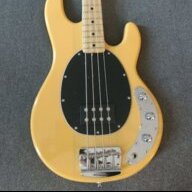
My stingray bass does have a 2-band preamp but that was mostly just to be true to the Stingray sound. I rarely make any changes to it because it doesn't need it.

I've watched players struggle with the knobs. Not knowing what each does, they have no idea how to set their bass and end up with bad tone that doesn't work in the mix. I've been tempted to borrow their bass and just wire the neck pickup to the output jack.

Simple controls is the fastest path to good tone.
 
OK, I see this pretty often here that people don't want a bass with too many controls and/or pickups because its too complicated to use live. Most recently with the Bongo vs Big Al thread but it comes up a lot in many other comparisons.

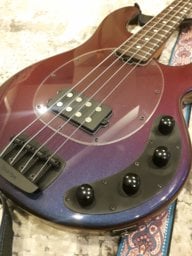
My perspective is that with a bass with lots of controls and pickups (such as my Bongo HH) is that I can simply find a great unique sound, adjust my eq to my liking and have it set and forget it. Same with my SR HH. There's no rule that you have to constantly adjust the EQ and pickup settings to try to cover all of the different standard bass sounds. I just don't see how someone can say having too many tonal options is a negative. It's only a negative if you can't settle on it and are constantly changing. I have multiple stingrays so I can have 1 setup just on the bridge pickup, and then use my HH with both pickups and eqed just how I like it and it is a completely different flavour.

Anyone else feel this way? Why the hate for having options?
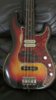
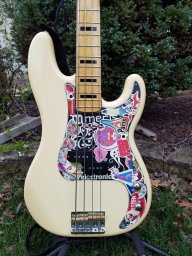
IMG_3009.JPG IMG_3010.JPG
 
I played only 2 pickup active basses for a decade, and one had a decent EQ section... When in use, I either found the tone I wanted and left it there, or went passive on that bass. The other bass is active pickups all the time, no EQ.

These days, I have a good P bass with amazing passive pickups. I can get pretty much any sound I'd want or need.
Two knobs, no batteries, lots of tones.
I still play my active basses sometimes, but for plug and play goodness, simple is sometimes better, imo and ime.

YM, of course, MV. ;)
 
  • Like
Reactions: Pops OB
Personally, I like a bit of onboard flexibility from my basses because I often don't use an amp and I rarely have the opportunity to make adjustments mid-gig. For me, the ideal controls are master volume, pickup switch, tone control and a bypassable 3/4 band active circuit. I'll barely touch the active section unless needed, but it's nice to have the option right at my fingers.

The scariest thing about complexity for its own sake is what happens to a lot of musicians who spend years mostly accumulating gear. One day they sit down to “seriously do some music” surrounded by their rack of instruments, their pedals, their tricked out DAW and huge library of virtual instruments and plugins…

And surrounded by all these “infinite creativity possibilities limited only by your imagination” (as the ads put it) they suddenly realize - they don’t have really have anything worthwhile to say.

Oof. That's a harsh reality for so many hobbyist musicians. I'd like to believe I'm not in the category, but I've seen it way more often that I probably should have to know that it's a real phenomenon.
 
  • Like
Reactions: N4860
I prefer simple passive basses. I totally understand the function of the complex active systems but don't find the flexibility to be of value.

I believe part of the reason that the Fender P and J basses have stood the test of time is that they fully solve the need. It's just bass. They sound great. End of story. Having lots of knobs / switches / pickups may give lots of flexibility but it is overkill. Or worse yet, it may alter the tone making the instrument disappear in the mix.

With the simple passive bass you don't have to deal with dead batteries or popping noises in the PA as you plug/unplug. You reduce weight by having fewer knobs, not having the battery and not having the electronics components. Avoiding overkill has benefit.

My stingray bass does have a 2-band preamp but that was mostly just to be true to the Stingray sound. I rarely make any changes to it because it doesn't need it.

I've watched players struggle with the knobs. Not knowing what each does, they have no idea how to set their bass and end up with bad tone that doesn't work in the mix. I've been tempted to borrow their bass and just wire the neck pickup to the output jack.

Simple controls is the fastest path to good tone.
+1. I think I have 5 basses and only one of them active. That one has a Sadowsky preamp which I run pretty close to flat all the time.

It's not that I don't appreciate or agree with the active concept, it's just that I don't value it much. For me, plenty of opportunity to tone-shape down the signal chain; I just want a good solid tone out of the instrument and for it to be what I expect it to be.

There are a few instruments where the preamp affects the tone identity notably - Stingrays and Alembics are great examples. Never had an Alembic, but I did have a Stingray a while and didn't touch the preamp controls much.

Also, as a final point and as a player much more likely to gig than to be in a recording studio - I'm accustomed to only a few seconds between songs and as a bass player I'm almost always on the downbeat for the next one. So, there really isn't much opportunity to fiddle with settings while I'm playing. I'm lucky if I have time to grab a swallow of water. So all the more reason to have a simple thing going.
 
  • Like
Reactions: DonH
Oh, so you've already been to my Soundcloud page. :D

Your guitarist sounds wise. :)

The scariest thing about complexity for its own sake is what happens to a lot of musicians who spend years mostly accumulating gear. One day they sit down to “seriously do some music” surrounded by their rack of instruments, their pedals, their tricked out DAW and huge library of virtual instruments and plugins…

And surrounded by all these “infinite creativity possibilities limited only by your imagination” (as the ads put it) they suddenly realize - they don’t have really have anything worthwhile to say.

New toys are great for kicking out the cobwebs, inspiration, and keeping things fresh. New gear can open your mind to the possibilities. But it can’t work miracles. And as my guitarist SO put it: I may pray for miracles. But I don’t let myself rely on them. :laugh:
 
I think it's cool to have some tonal reach. Multi band EQ or parametric preamp, position selector, tort, it all contributes to the end product. There's a line, I just don't know where that is. I'd rather have an option than a bass that only has one tone that isn't always right for me. Even my favorite P and J have East preamps with bass, treble with pull bright, volume, blend, parametric mid freq/level, active/passive switch and a selector switch.
If I want the P with flats sound I play the P with flats. If I need something different I grab a different bass. I don't tinker in a performance or recording environment but I will spin the dials at home to find what I am looking for. I'm not looking for complexity but I do like having some options.
 
IMO it's about the right tool(s) for the job. The first 10-15 yrs I played bass was originals mixed with covers on four string basses (mostly passive). Always needed 2 or 3 basses for live shows plus a back up in the car. The last 30 years or so it's been all covers work. Got tired of the hassle of multiple basses so about 25 years ago made the move to active fivers to "simplify" my live shows.

Roughly 18 years ago scaled back to "one bass to rule them all." Active 5er with all the bells & whistles. I use what I like to call tonal-templates to cover a variety the sounds of the music I'm covering with minimal effort. This lets me cover multiple genres and multiple decades with one(1) bass. My main band is 70s - 2000 mainstream hard rock. Got it covered. I also do a lot of fill work for a classic & modern country bands and use the same bass. Couple a quick twists of the on bass eq, roll off some top end on my amp and I'm classic country.

This year i finally got a back up bass. It's a 5 string 2 pup passive bass. It spends most gigs in the trunk. Good peace of mind knowing it's there. By the way' none of the bands I work for/play in care about the looks of my bass. They like the sounds I bring and are more focused on that I dress appropriately for the gig. So for me one bass with multiple options is the right tool.

TLDR: Use the tool(s) that serve your needs and don't concern yourself with what others do or don't do. Just have fun with it.

edit for spelling
 
Last edited: