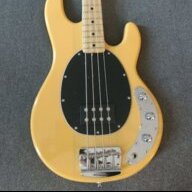
I hear you. Just started recently and my first bass is an active Ibanez and the first thing I did was to turn the controls to hear the difference. I set it to my preference and leave it alone. I don't care for the battery. Soon, my next bass will definitely be passive.I prefer simple passive basses. I totally understand the function of the complex active systems but don't find the flexibility to be of value.
I believe part of the reason that the Fender P and J basses have stood the test of time is that they fully solve the need. It's just bass. They sound great. End of story. Having lots of knobs / switches / pickups may give lots of flexibility but it is overkill. Or worse yet, it may alter the tone making the instrument disappear in the mix.
With the simple passive bass you don't have to deal with dead batteries or popping noises in the PA as you plug/unplug. You reduce weight by having fewer knobs, not having the battery and not having the electronics components. Avoiding overkill has benefit.
My stingray bass does have a 2-band preamp but that was mostly just to be true to the Stingray sound. I rarely make any changes to it because it doesn't need it.
I've watched players struggle with the knobs. Not knowing what each does, they have no idea how to set their bass and end up with bad tone that doesn't work in the mix. I've been tempted to borrow their bass and just wire the neck pickup to the output jack.
Simple controls is the fastest path to good tone.

Enjoy the benefits of a premium membership!
Upgrade Account
-
TalkBass has been independent since 1998. Add your voice.
Create a free account to reply to discussions, view embedded media, and browse with fewer display ads.
Join free Log in
Want zero display ads or expanded classifieds tools? Compare plans.
You are using an out of date browser. It may not display this or other websites correctly.
You should upgrade or use an alternative browser.
You should upgrade or use an alternative browser.
Complex bass and too many tones!
- Thread starter N4860
- Start date
More options
Who Replied?I have seen some of the bass players changing controls on the bass and sometimes on the amp during the live performances.+1. I think I have 5 basses and only one of them active. That one has a Sadowsky preamp which I run pretty close to flat all the time.
It's not that I don't appreciate or agree with the active concept, it's just that I don't value it much. For me, plenty of opportunity to tone-shape down the signal chain; I just want a good solid tone out of the instrument and for it to be what I expect it to be.
There are a few instruments where the preamp affects the tone identity notably - Stingrays and Alembics are great examples. Never had an Alembic, but I did have a Stingray a while and didn't touch the preamp controls much.
Also, as a final point and as a player much more likely to gig than to be in a recording studio - I'm accustomed to only a few seconds between songs and as a bass player I'm almost always on the downbeat for the next one. So, there really isn't much opportunity to fiddle with settings while I'm playing. I'm lucky if I have time to grab a swallow of water. So all the more reason to have a simple thing going.

With great power comes great responsibility. Some of us just can’t be trusted with that responsibility.
A bass that has twenty good sounds also has eighty lousy ones. And I will find them at the worst time.
A bass that has twenty good sounds also has eighty lousy ones. And I will find them at the worst time.

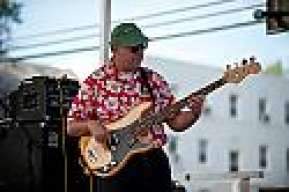
OK, I see this pretty often here that people don't want a bass with too many controls and/or pickups because its too complicated to use live. Most recently with the Bongo vs Big Al thread but it comes up a lot in many other comparisons.
My perspective is that with a bass with lots of controls and pickups (such as my Bongo HH) is that I can simply find a great unique sound, adjust my eq to my liking and have it set and forget it. Same with my SR HH. There's no rule that you have to constantly adjust the EQ and pickup settings to try to cover all of the different standard bass sounds. I just don't see how someone can say having too many tonal options is a negative. It's only a negative if you can't settle on it and are constantly changing. I have multiple stingrays so I can have 1 setup just on the bridge pickup, and then use my HH with both pickups and eqed just how I like it and it is a completely different flavour.
Anyone else feel this way? Why the hate for having options?
Different strokes for different folks. Some people love to tweak, others are plug & play. I've been down both roads and have ultimately chosen plug & play. Back when I was playing music full time in busy touring bands in the late seventies/early eighties, I lived out my Grateful Dead fantasy and got myself an Alembic Series I "Point" model bass. It was a stereo bass with plenty of onboard electronics. I had each pickup going into a channel of an Alembic F-2B stereo tube preamp which fed into a Furman Parametric EQ which fed into an Ashly 2-way active crossover which fed into both channels of a Crown DC-300A stereo poweramp which fed into a 2x15 cab loaded w/JBL K-140s and a 2x10 cab loaded with JBL K-110s. The amount of control was daunting to be sure but playing an average of 250 gigs a year gave me plenty of opportunity to get the hang of the setup. Flash forward 35 years to now with me as an old man and I'm playing P-Basses with the volume and tone controls wide open (mostly) through an Arkham Bullet preamp which was "inspired" by the Ampeg B-15 ... bass & treble Baxandall circuit which is about as simple as it gets. While I wouldn't say that I get a whole lotta tonal variation, I would say that I get just as good a sound as I used to get with that monster tweaker's dream rack setup.

... I just don't see how someone can say having too many tonal options is a negative. It's only a negative if you can't settle on it and are constantly changing...
It's not a negative thing to have many tonal options, but it could be for some if they prefer the tone they get from a passive bass with one vol and one tone knob over all the tones you can get from a bass w/ 10 knobs for instance. More components means more chance for failure.

I personally love basses with lots of options tonally. I built a Wal style bass that has 3 way splits for both pickups and filters for bass on both pickups and a treble filter aswell but honestly once tweaked and dialed in there is only 3 changes or modes that i use based on the song. I do find it fun to have a big mix of songs that i jam to and try to emulate tones with the bass and whilst there is tweaking it is pretty good at it!
I also have a lovely bass with a two band eq that i used to love alot for ease of use but lately i struggle without at least dialing mids as i much prefer mid control over treble contol.
I also have a lovely bass with a two band eq that i used to love alot for ease of use but lately i struggle without at least dialing mids as i much prefer mid control over treble contol.

Different horses for different courses. Lots of guys, a single-pickup PBass with a gain and tone is enough . . . . all the way to a Series Two Alembic, with individual gains, your choice LPF/BP/HPF filters on board, master volume (so you can raise or lower your mix of the two pickups in stereo to two different amps/cabs if run that way), trimmers for each string, etc. It's down to whatever works best FOR YOU, there is no right answer.

I guess I go with the "use what works for you" school. I have a Fender jaguar with pickup switches, roller pots, active and passive tone controls, and I a single coil precision with a passive volume and tone pot. Personally I prefer the simplicity of a precision or a jazz, but I can also understand the desire to truly dial in the sound. Im also the lead singer of my band, and its just much easier for me to dial in a Jazz or Precision on the fly. If you're comfortable with more controls, go for it.

Agreed, I change the batteries in my bass once a year (just to be safe). All of 5 minutes if that.I prefer active basses. 2 pickups,3 band EQ with coil tap and passive option. I usually just play in active mode with a flat EQ.
Changing a 9V battery is not complicated either.

My 2 previous basses (Alembic Persuader and a Dave Pushic custom) had active electronics...the Pushic had several knobs and switches (which I liked). I'm just into a passive Carvin PB4 now... simplicity for me. But, HEY, play what you like!!!

It is indeed only a negative if you can't settle on one setting and keep fiddle-fjorking around trying to tweak it it to be 'better', which is what I personally find myself doing too often with Swiss army basses. Better players probably don't, I can't say, but I find that simpler basses make me concentrate more on my playing, technique, attack, etc.

I use my active bass controls to tweak the sound a little toward the original recording sound for my cover band gigs. Some songs I scoop the mids, others I’m trying to cop a bit of a P bass sound etc... Simplicity is its own beauty too. For the Slayer tribute it’s set and forget all night.

I like a bunch of knobs for tonal options. I can understand that many bassists who play in bands with multiple guitarists, keys, etc. may prefer a P bass because they sound great and can cut through just about any loud, thick mix. Others want a P bass just to groove along to a single acoustic guitar. That's fine too. Some guys also may have little to no interest in endless experiments with tone. No problems there.
I just happen to play in a 3 piece band with a relatively light mix, so I'm lucky to have more freedom to get into funky scooped tones if I feel like it without having to worry too much about getting buried (though I'm not big on super scooped flavors). I'm also head over heels in love with the science behind the sounds and could spend all day playing around with it -- sometimes do. Sure, I could spend every minute of that time wood-shedding and trying to learn Victor Wooten techniques, but after almost 20 years of playing, I'm satisfied with my knowledge of theory and technical abilities. I know I'll never dominate the world of technical chops, but I also have absolutely no interest in doing so. I've never been the overly competitive type and don't feel like I need to prove anything with flashy playing. I log sufficient hours of practice each week for my relatively modest approach to the instrument. So that leaves me with the rest of my free-time to explore tonal possibilities, discovering new tones, and seeing how those fit into the context of my bands' songs.
For example, my 1970 Guild Starfire is my main player. It has an ACG EQ-01 filter preamp onboard. Having a separate low pass filter for both pickups and a blendable high-pass filter (that functions independently of the pickup blend control), this preamp allows me to take the straight tone of my pickups and build upon it, pulling out and emphasizing certain frequencies that can completely shift the voice of the pickup. Having always favored neck pickups in general, a particularly useful thing I've been playing around with is using the bridge pickup's LPF as a super tight, fat low boost, using the neck pickup's full natural signal, and setting the high pass filter to pull and emphasize certain highs from the neck pickup. Pair those settings with the pickup blend control, I get a super unique, yet punchy tone that sounds really excellent in my bands' mix. There's a whole world of sounds there at my fingertips and if a player really gets to know how to use those filters, it's really like opening up a new dimension of your bass.
All that said, in a gig environment, it's probably best to set them where you like them, and keep it to minimal tweaking, but I would think the same way about my amp EQ and that doesn't make it pointless by any means.
I just happen to play in a 3 piece band with a relatively light mix, so I'm lucky to have more freedom to get into funky scooped tones if I feel like it without having to worry too much about getting buried (though I'm not big on super scooped flavors). I'm also head over heels in love with the science behind the sounds and could spend all day playing around with it -- sometimes do. Sure, I could spend every minute of that time wood-shedding and trying to learn Victor Wooten techniques, but after almost 20 years of playing, I'm satisfied with my knowledge of theory and technical abilities. I know I'll never dominate the world of technical chops, but I also have absolutely no interest in doing so. I've never been the overly competitive type and don't feel like I need to prove anything with flashy playing. I log sufficient hours of practice each week for my relatively modest approach to the instrument. So that leaves me with the rest of my free-time to explore tonal possibilities, discovering new tones, and seeing how those fit into the context of my bands' songs.
For example, my 1970 Guild Starfire is my main player. It has an ACG EQ-01 filter preamp onboard. Having a separate low pass filter for both pickups and a blendable high-pass filter (that functions independently of the pickup blend control), this preamp allows me to take the straight tone of my pickups and build upon it, pulling out and emphasizing certain frequencies that can completely shift the voice of the pickup. Having always favored neck pickups in general, a particularly useful thing I've been playing around with is using the bridge pickup's LPF as a super tight, fat low boost, using the neck pickup's full natural signal, and setting the high pass filter to pull and emphasize certain highs from the neck pickup. Pair those settings with the pickup blend control, I get a super unique, yet punchy tone that sounds really excellent in my bands' mix. There's a whole world of sounds there at my fingertips and if a player really gets to know how to use those filters, it's really like opening up a new dimension of your bass.
All that said, in a gig environment, it's probably best to set them where you like them, and keep it to minimal tweaking, but I would think the same way about my amp EQ and that doesn't make it pointless by any means.
Last edited:
This is a given. Having knobs and pickups doesn't mean you need to use them. Just having them there doesn't tempt me or bother me.
The negatives are if you don't need all those tones for what you do. You get increased cost, weight, and possible future maintenance and repairs, just to have options you don't need, and to clutter up your bass with unsightly chaff you never touch.
If you use the same tone almost all the time, and you can get it with a more straightforward control setup, why bother with all the extra stuff? Get the prettier, cheaper, lighter bass that's easier to modify and repair in the long term.
It's a benefit for manufacturers, because a bass with a very wide tonal palette appeals to a wider spectrum of musicians.
And it's a benefit for musicians who utilize a wide spectrum of tones.
But if you don't need all that stuff...why pay extra for it? Why have it cluttering up the look of your bass? Why have it adding even more weight to a type of instrument that already runs heavy?
All that stuff doesn't need to be a bother...but it also doesn't need to exist if you know you don't want it. Those who don't want it shouldn't be too bothered by it if it's there...but those who do want it also shouldn't be bothered by someone else having a narrower need, knowing what they want, and seeking out a bass that does only that.
Bottom line, different tools for different preferences and different people. There's really not much to say about it beyond that.
The negatives are if you don't need all those tones for what you do. You get increased cost, weight, and possible future maintenance and repairs, just to have options you don't need, and to clutter up your bass with unsightly chaff you never touch.
If you use the same tone almost all the time, and you can get it with a more straightforward control setup, why bother with all the extra stuff? Get the prettier, cheaper, lighter bass that's easier to modify and repair in the long term.
It's a benefit for manufacturers, because a bass with a very wide tonal palette appeals to a wider spectrum of musicians.
And it's a benefit for musicians who utilize a wide spectrum of tones.
But if you don't need all that stuff...why pay extra for it? Why have it cluttering up the look of your bass? Why have it adding even more weight to a type of instrument that already runs heavy?
All that stuff doesn't need to be a bother...but it also doesn't need to exist if you know you don't want it. Those who don't want it shouldn't be too bothered by it if it's there...but those who do want it also shouldn't be bothered by someone else having a narrower need, knowing what they want, and seeking out a bass that does only that.
Bottom line, different tools for different preferences and different people. There's really not much to say about it beyond that.

Pickups look cooler than ramps, and knobs look better than pickguards ... so aesthetically, I think the answer is clear ...
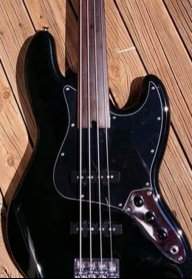
I just recently got an Ibanez SR1200 premium. It has a huge tonal palette using the three band EQ and two pickups. I can get some great sounds from it but the issue I am starting to find is that the three bands of EQ are very "touchy" whereby a small change in the bass band makes a big difference, as do the mids and treble to a slightly lesser extent.
To explain, I can have a sound that is pretty close to what I want but feel it needs a small tweak.... maybe a touch more bass or mids. That small tweak at times can be too much however trying to set it back to the previous position can find you easily going too far the other way with only a small adjustment... it is particularly difficult adjusting mid song.
I can see now how some people decide that a P with one tone control can be easier to deal with.... get the basic sound you want and use the tone for more or less attack. In saying that I am going to stick with it for the time being as it is an absolute joy to play. It would be nice if I could adjust the sweep of the tone pots to have a little less effect on each band.
To explain, I can have a sound that is pretty close to what I want but feel it needs a small tweak.... maybe a touch more bass or mids. That small tweak at times can be too much however trying to set it back to the previous position can find you easily going too far the other way with only a small adjustment... it is particularly difficult adjusting mid song.
I can see now how some people decide that a P with one tone control can be easier to deal with.... get the basic sound you want and use the tone for more or less attack. In saying that I am going to stick with it for the time being as it is an absolute joy to play. It would be nice if I could adjust the sweep of the tone pots to have a little less effect on each band.
Last edited:

I like a bunch of knobs for tonal options. I can understand that many bassists who play in bands with multiple guitarists, keys, etc. may prefer a P bass because they sound great and can cut through just about any loud, thick mix. Others want a P bass just to groove along to a single acoustic guitar. That's fine too. Some guys also may have little to no interest in endless experiments with tone. No problems there.
I just happen to play in a 3 piece band with a relatively light mix, so I'm lucky to have more freedom to get into funky scooped tones if I feel like it without having to worry too much about getting buried (though I'm not big on super scooped flavors). I'm also head over heels in love with the science behind the sounds and could spend all day playing around with it -- sometimes do. Sure, I could spend every minute of that time wood-shedding and trying to learn Victor Wooten techniques, but after almost 20 years of playing, I'm satisfied with my knowledge of theory and technical abilities. I know I'll never dominate the world of technical chops, but I also have absolutely no interest in doing so. I've never been the overly competitive type and don't feel like I need to prove anything with flashy playing. I log sufficient hours of practice each week for my relatively modest approach to the instrument. So that leaves me with the rest of my free-time to explore tonal possibilities, discovering new tones, and seeing how those fit into the context of my bands' songs.
For example, my 1970 Guild Starfire is my main player. It has an ACG EQ-01 filter preamp onboard. Having a separate low pass filter for both pickups and a blendable high-pass filter (that functions independently of the pickup blend control), this preamp allows me to take the straight tone of my pickups and build upon it, pulling out and emphasizing certain frequencies that can completely shift the voice of the pickup. Having always favored neck pickups in general, a particularly useful thing I've been playing around with is using the bridge pickup's LPF as a super tight, fat low boost, using the neck pickup's full natural signal, and setting the high pass filter to pull and emphasize certain highs from the neck pickup. Pair those settings with the pickup blend control, I get a super unique, yet punchy tone that sounds really excellent in my bands' mix. There's a whole world of sounds there at my fingertips and if a player really gets to know how to use those filters, it's really like opening up a new dimension of your bass.
All that said, in a gig environment, it's probably best to set them where you like them, and keep it to minimal tweaking, but I would think the same way about my amp EQ and that doesn't make it pointless by any means.


