Perhaps one reason the 4004 was not widely adopted is the relatively high cost of Rickenbackers in general.
They cost about the same as any good American Fender and Rics are all made in the USA.

TalkBass has been independent since 1998. Add your voice.
Create a free account to reply to discussions, view embedded media, and browse with fewer display ads.
Join free Log in
Want zero display ads or expanded classifieds tools? Compare plans.
Perhaps one reason the 4004 was not widely adopted is the relatively high cost of Rickenbackers in general.

The best of both worlds hey selowitchI find that I like the tone of my 2001 EBMM Sterling 4H with roundwounds a bit better than the Rick anyhow for aggressive rock or jazz tones and it also is much more suited for slap style.
@mapleglo
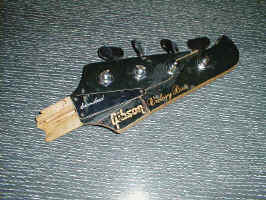
You should know as well as anyone that I LOVE Rics, and pointing out design flaws isn't "bashing", it's pointing out the obvious. I believe you included volutes on your Ric clone builds for the same exact reason, correct? I love how a volute looks, but I didnt do all that work just for aesthetics alone. Here's the problem inherent to Rics and Gibsons:
View attachment 3856185
View attachment 3856186
View attachment 3856187
View attachment 3856188
View attachment 3856189
And here's the soution. If Ric and Gibson were some cheesy Indonesian brand that didn't know any better, I'd cut them some slack, but they arent, and they DO know better:
View attachment 3856190
I'm sorry to hear about your bad experience with having your Ric refretted.
I'd tend to blame the person who worked on it, not the bass. I had my 4001 refretted, you have to put on your glasses and get close to see any traces of the work.
Of course, it wasn't cheap. It was done by the late, great Mike Lull, and he took time to explain in detail what was involved and why it cost what it did. It does take someone of his skill level to do it right, but it can be done.

I'm afraid I'll have to disagree with you relative to the binding on the neck. My early '70s Ric has been refretted twice and one would never know to look at it. It sounds like what you've experienced is work done by someone that either doesn't know how to do it properly, or doesn't care. (In the name of full disclosure, I've been using the same excellent tech to tend to my basses for decades.) The body binding on the forearm is a curiosity to me as well as it never really occurred to me that anyone would have a problem with it; it is constantly reported, so it must be a thing, just not for me.The real problem with the binding though, is at the fretboard. If you ever need to refret the bass there's virtually no way to do it without tearing the hell out of the binding. Typically you'll see the new frets simply smashed in there with the edges covering up the chewed-up binding.L

Ordered from Long & McQuades January 2020 with expected 12 month wait. Four months later this arrives. Sporting the newly redesigned bridge. I’m smitten. Marc
You are lucky man. I ordered a Fireglo 4003 from Long & McQuade in October and I am still waiting for it.
Perhaps one reason the 4004 was not widely adopted is the relatively high cost of Rickenbackers in general.
I have never owned a Rick before, but the price on this one seems attractive at $1,350.00:
View attachment 3854679
The condition seems good, not sure about fretwear. I know I like the sound of Ricks but I am little hesistant about the truss rod system, bridge, and ergonomics.

The best solution seems to be a scarf joint, it's stronger than either a volute or a single-board Fender style continuous grain design. Of course you can break any headstock, by why make it easy with simple bad woodworking? I have yet to try my hand at a scarf joint, might do that next build. Some people don't like how they look, but I suppose it could become a design feature with some exotic woods or dyed veneers. If I come off as a Ric-Basher, you have the wrong impression. I friggin' HATE iTunes, for instance, but othwerwise love my iPhone. Hell, my favorite car of all time is the Jaguar E-Type, perhaps the least reliable, rust-prone disaster of a car ever mass produced, and also IMO the single most beautiful car ever designed. I'd put up with the rust to drive one anyday, go figure. My first bass was a 78' 4001. I used to set it up on its stand at night so it was the first thing I'd see when I woke up. Sick, huh? God, how I loved that bass. The Hossenfeffer was my attempt to re-create it, minus the flaws.I make necks with volutes because I like how they look and feel. Though any neck is subject to breaking if enough force is applied, and a volute adds strength, especially to any neck with a truss rod.
View attachment 3856200 View attachment 3856201

^^^^What he said, I never undestood why the 4004 didn't take off, though I will say I literally NEVER, not EVER saw one for sale in a store ANYWHERE. I have NEVER seen one in person. If you can't play it, you probably arent going to buy it. I think @Ric5 is right, the new 5 string seems to address all the problems noted, except for that pesky extra string!I still don't love the "Dorito" pups aesthetically, but you can't argue with the tone. They sound great. I'm hoping they (or somebody else) comes up with a chrome pup ring for those, that would be more in keeping with the other chrome hardware. I think it's safe to say that the current production Rics are overall better made then their predecessors, now if they could just fix that flaking finish problem......meh. Get a W model.

I am a first time Ric owner. I just got a 2020 4003 Jetglo a few weeks ago. It played great right out of the box. I put some flats on her so the action was even lower again no issues or buzz. I love mine. The only things is that binding issue on the forearm but its not a deal breaker for me. I was a little worried at first I bought it online and never tried a ric before. I loved it so much I just bought a 2020 4003sw. I just had to have a walnut. You may want to be sure it has the newer bridge design. Both of my rics have the new design. Rickenbacker seems to be using the newer design going forward. There are a lot of new rics out there with the older bridge though. My 4003 Jetglo neck is pretty much dead flat with low action and plays like a dream.I have never owned a Rick before, but the price on this one seems attractive at $1,350.00:
View attachment 3854679
The condition seems good, not sure about fretwear. I know I like the sound of Ricks but I am little hesistant about the truss rod system, bridge, and ergonomics.
I'm afraid I'll have to disagree with you relative to the binding on the neck. My early '70s Ric has been refretted twice and one would never know to look at it. It sounds like what you've experienced is work done by someone that either doesn't know how to do it properly, or doesn't care. (In the name of full disclosure, I've been using the same excellent tech to tend to my basses for decades.) The body binding on the forearm is a curiosity to me as well as it never really occurred to me that anyone would have a problem with it; it is constantly reported, so it must be a thing, just not for me.
 .
.Well again I have never heard of a broken off Rickenbacker headstock except from you today so the lack of a volute is not a design flaw if it is not needed and a broken Ric headstock is not at all common.

I’m always up for seeing pictures of 4004s if you wanna post one of yours.If you want a simpler, but less noisy and boomier model, the 4004 is great. Had mine for 10 years, and it will be my wife’s problem when I go.

You're like a Sheik with a lovely Harem!I’m always up for seeing pictures of 4004s if you wanna post one of yours.
I love my quartet!
View attachment 3856432
I'm sorry to hear about your bad experience with having your Ric refretted.
I'd tend to blame the person who worked on it, not the bass. I had my 4001 refretted, you have to put on your glasses and get close to see any traces of the work.
Of course, it wasn't cheap. It was done by the late, great Mike Lull, and he took time to explain in detail what was involved and why it cost what it did. It does take someone of his skill level to do it right, but it can be done.
.
The binding itself isn't the problem for refret, you don't have to touch it on most basses. Rics and Gibson Les Pauls have "nibs" that come up over the fret ends. Gibson does it with a cutter setup, but the average repair person would probably do it by hand. The hacky way to refret a Ric or Les Paul is to just grind the fret end nibs off, so the frets overlay the binding edge. I chose to dispense with the nibs on my builds because Im a Chicken, but If I was a REAL man (or woman) I guess I would have done them. I don't think its possible to save the nibs during refret, but maybe somebody really skilled could pull it off. It's a real issue on Vintage Les Pauls, if its old and crumbly celluloid, it probably wont survive, in which case you have to age the binding to look old. Its not that hard to remove the binding, but scraping each space between frets and flushing up and polishing the Nibs is a lot of work!I've not yet seen a refret done on a bound neck that wasn't a disaster on the binding, but maybe I'm wrong and it can be done. OTOH, the words of Leo Fender echo in my head: "A quality instrument is easy to repair"... and binding on the edges of the fretboard, well....... So I'd still opt for a 4003s if I were to get another rickenbacker. I just think it looks better without the binding anyway.
As for the sharp edge of the binding on the body, when I was gigging I sanded the edge down in that area where my arm usually was. I was able to round it off quite a bit without it hardly even being visible. If you look up close you could see it, of course.
That was when I was gigging though and my 4001 was hanging on my shoulder for long periods of time. I didn't sand my later 4003's I kept after my gigging days began to wind down. And of course I don't recommend that on a current 4003 for sure
L
I honestly don't know how my tech replaces frets without harming the binding, but he does a wonderful job. (I wish the frets on a Ric were either a little harder, a little taller, or both.)I've not yet seen a refret done on a bound neck that wasn't a disaster on the binding, but maybe I'm wrong and it can be done. OTOH, the words of Leo Fender echo in my head: "A quality instrument is easy to repair"... and binding on the edges of the fretboard, well....... So I'd still opt for a 4003s if I were to get another rickenbacker. I just think it looks better without the binding anyway.
As for the sharp edge of the binding on the body, when I was gigging I sanded the edge down in that area where my arm usually was. I was able to round it off quite a bit without it hardly even being visible. If you look up close you could see it, of course.
That was when I was gigging though and my 4001 was hanging on my shoulder for long periods of time. I didn't sand my later 4003's I kept after my gigging days began to wind down. And of course I don't recommend that on a current 4003 for sure
L