I’ve always wondered why lefties don’t just stand on the other side of the bass and play “backwards?” It certainly worked for Jimi Hendrix and Albert King on guitar! Am I missing something?

Enjoy the benefits of a premium membership!
Upgrade Account
-
TalkBass has been independent since 1998. Add your voice.
Create a free account to reply to discussions, view embedded media, and browse with fewer display ads.
Join free Log in
Want zero display ads or expanded classifieds tools? Compare plans.
You are using an out of date browser. It may not display this or other websites correctly.
You should upgrade or use an alternative browser.
You should upgrade or use an alternative browser.
Double Bass Convince me not to try out DB
- Thread starter oomo
- Start date
More options
Who Replied?
Strings are very expensive. This alone has kept me from an EUB. I may defret a Spirit Bass and make some form of stand for it someday.
I have a good buddy who has his Kay strung backwards and plays it lefty. Does a fine job for BG/oldtime. But I don't think he even owns a bow.
Renting is definitely the way to start. It is simply too expensive to buy a bass that will be too difficult to sell if you decide against it.
The EUB option also seems like it would address many of the OP's concerns.
But buying a bass is NOT a decision that should be made rashly.
Renting is definitely the way to start. It is simply too expensive to buy a bass that will be too difficult to sell if you decide against it.
The EUB option also seems like it would address many of the OP's concerns.
But buying a bass is NOT a decision that should be made rashly.
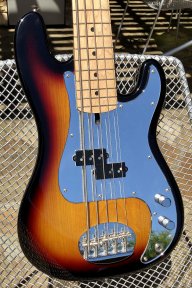
I decided to take on upright bass after many years of bass guitar. For my first time with it, I found a local teacher and used his bass during the lesson to see if I would like it. I did, so I borrowed a cheap upright from a friend. Once I decided that I wanted to go further, I rented an ok plywood for a bit. Eventually, I bought my own plywood bass.
Depending on what you ultimately want to do, you may or may not want a long-term relationship with a teacher. I would recommend one at the very start because there isn't a perfect translation from bass guitar, and you could develop bad habits if you don't start off on the right foot. If you get deeply into it and want to become a complete bassist (especially with a bow), you will need a teacher for a long time. If you (like me) are content to go from being a competent bass guitarist to a reasonably competent upright player (no bow), then there's a lot you can do on your own.
The main thing is that the physical experience of playing an upright is quite different from playing bass guitar - it will either resonate with you or it won't, but you have to try it to find out.
Depending on what you ultimately want to do, you may or may not want a long-term relationship with a teacher. I would recommend one at the very start because there isn't a perfect translation from bass guitar, and you could develop bad habits if you don't start off on the right foot. If you get deeply into it and want to become a complete bassist (especially with a bow), you will need a teacher for a long time. If you (like me) are content to go from being a competent bass guitarist to a reasonably competent upright player (no bow), then there's a lot you can do on your own.
The main thing is that the physical experience of playing an upright is quite different from playing bass guitar - it will either resonate with you or it won't, but you have to try it to find out.

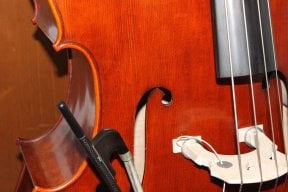
3. I'm a lefty. While it seems there are some lefty DBs out there, the overwhelming majority of things I've read have mostly suggested to suck it up and learn righty. I play guitar, bass and mandolin lefty, I'm not sure I could cope with rewiring my brain completely for just one stringed instrument.
IMO, for you, go with a lefty double bass. They are out there, new and used. Likely on a rent-to-own program as well.
New Basses - Left-Handed Basses - Gollihur Music

I started playing DB around five years ago and am on my second DB. I'm 46 now and have played electric since I was 12. Your being a lefty definitely makes things more difficult. If you weren't already a bassist playing lefty I might suggest you give DB a go right-handed, but as things stand I think that would be a bad idea.
Renting (if you can find a lefty DB to rent) would probably be the best course of action. My first experience on DB was when my friend lent me his. I fiddled around with it and took one lesson before deciding that I wanted a DB of my own.
Cons of DB: I think you're already aware of these, but just to re-iterate,
- They can be expensive to buy (though you can get something decent for less than what a lot of electrics are going for, e.g., the New Standard Cleveland ply currently in the TB classifieds) and they can be expensive to maintain. When something goes wrong with an electric it's one thing; when something goes wrong with a DB it's another. I have made some money gigging on DB but it will take me a long time to make anywhere near what I've spent on DB.
- Yep, transporting a DB is a PITA. I have a car and it's still a PITA. Just finding a place to put the DB during a set break can be a PITA.
- Aches and pains. I suspect that this would not have been such an issue if I'd started younger but it's really been fascinating to discover the pain and discomfort that can result from DB - even when you're careful and have good instruction. PITN, PITT, PITLB...
- DBs do take up quite a bit of space, although how problematic this is will largely be dependent on the layout of your apartment.
- As pointed out, you need to keep your chops up with regular practice. I'm just coming back from a three month break from DB. Not as bad stamina-wise as I would have expected, but intonation-wise? Ouch.
Pros: it's a DB. There's nothing else like it. Even if you can fool some people in the audience with, say, a Rob Allen (wonderful basses), the experience of playing a DB is thoroughly unique. If you enjoy that experience then all (or at least most) of the cons will likely become irrelevant to you in your pursuit of the instrument.
Best of luck!
Renting (if you can find a lefty DB to rent) would probably be the best course of action. My first experience on DB was when my friend lent me his. I fiddled around with it and took one lesson before deciding that I wanted a DB of my own.
Cons of DB: I think you're already aware of these, but just to re-iterate,
- They can be expensive to buy (though you can get something decent for less than what a lot of electrics are going for, e.g., the New Standard Cleveland ply currently in the TB classifieds) and they can be expensive to maintain. When something goes wrong with an electric it's one thing; when something goes wrong with a DB it's another. I have made some money gigging on DB but it will take me a long time to make anywhere near what I've spent on DB.
- Yep, transporting a DB is a PITA. I have a car and it's still a PITA. Just finding a place to put the DB during a set break can be a PITA.
- Aches and pains. I suspect that this would not have been such an issue if I'd started younger but it's really been fascinating to discover the pain and discomfort that can result from DB - even when you're careful and have good instruction. PITN, PITT, PITLB...
- DBs do take up quite a bit of space, although how problematic this is will largely be dependent on the layout of your apartment.
- As pointed out, you need to keep your chops up with regular practice. I'm just coming back from a three month break from DB. Not as bad stamina-wise as I would have expected, but intonation-wise? Ouch.
Pros: it's a DB. There's nothing else like it. Even if you can fool some people in the audience with, say, a Rob Allen (wonderful basses), the experience of playing a DB is thoroughly unique. If you enjoy that experience then all (or at least most) of the cons will likely become irrelevant to you in your pursuit of the instrument.
Best of luck!
Lots of great advice here! I took up double bass in my mid-forties, having played BG since my teens. It’s definitely a different instrument entirely - while the musical concepts will transfer, the physical aspects are completely different. It takes a lot of time and patience, and you will definitely be helped by working with a teacher. I’ve now been working at it for twenty years - most of my gigs and playing situations are primarily on DB now, but I still think I’m more facile on BG, even though I rarely practice it these days.


Well said. I loved playing DB, but for me….Pros: it's a DB. There's nothing else like it. Even if you can fool some people in the audience with, say, a Rob Allen (wonderful basses), the experience of playing a DB is thoroughly unique. If you enjoy that experience then all (or at least most) of the cons will likely become irrelevant to you in your pursuit of the instrument.
previous injuries + very time poor = frustration + physical pain.
I finally swallowed the bitter pill: I went from a frustrated mid-level DB-ist in pain…. to pain-free expert-level on the second-best sounding instrument. That’s all IMHO & YMMV.
I’ve always wondered why lefties don’t just stand on the other side of the bass and play “backwards?” It certainly worked for Jimi Hendrix and Albert King on guitar! Am I missing something?
I forget where I found it, but read about someone trying this, and developing some wrist/arm pains eventually. A luthier told them that the fingerboard wasn't entirely symmetrical, resulting in them having to pluck harder in that particular direction, which contributed to it.
But I'm a bit hazy on the details, but remember it being convincing enough to rule out playing a right handed instrument from the other side.
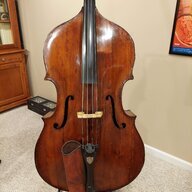
No, you can't just flip the strings. Structural elements (bass bar, sound post) are there for a reason and would have to be changed. That's a major overhaul and very expensive. Not to mention the feet of the bridge are custom fit and wouldn't line up with the top if switched and the curvature of the bridge lines up with the fingerboard...Ditto on the many fine points above: you’re never too old; it takes a commitment; take lessons; careful the DB can hurt you; and it takes a while.
I bought a Chinese 1/2 size to start, graduated to a big boy several months later. I play 90% electric professionally and would play more upright but there are few jazz bands in my small city and the others that might use a DB like bluegrass/string/etc, I’m not interested in.
can’t speak to the lefty except, can’t you just turn the bridge and nut 180 degrees and restring it? Good luck.
As a teacher of DB for 35 years, unfortunately there are no short cuts if you want to do it right and not damage yourself. It's well worth it, but lessons are a must. Good luck!
Well, if you're left handed, then fingering should be easy.
I've never understood left handed string instruments. Each hand has a job, and for right handers playing right handed instruments one could argue they've got the weaker hand doing the hardest jobs. I mean, no one buys pianos with the treble on the left and the bass on the right. Saxophones are all made the same and both lefties and righties seem to manage. Both RH and LH people drive cars in the US with the gear shift on the right, and in the UK with the gear shift on the left. Your typewriter/computer keyboard isn't reversed for LHers.
I think there's a mistaken idea that if you are LH, you've got to flip everything you encounter in life, and I don't believe it's so.
I've never understood left handed string instruments. Each hand has a job, and for right handers playing right handed instruments one could argue they've got the weaker hand doing the hardest jobs. I mean, no one buys pianos with the treble on the left and the bass on the right. Saxophones are all made the same and both lefties and righties seem to manage. Both RH and LH people drive cars in the US with the gear shift on the right, and in the UK with the gear shift on the left. Your typewriter/computer keyboard isn't reversed for LHers.
I think there's a mistaken idea that if you are LH, you've got to flip everything you encounter in life, and I don't believe it's so.

Well, if you're left handed, then fingering should be easy.
I've never understood left handed string instruments. Each hand has a job, and for right handers playing right handed instruments one could argue they've got the weaker hand doing the hardest jobs. I mean, no one buys pianos with the treble on the left and the bass on the right. Saxophones are all made the same and both lefties and righties seem to manage. Both RH and LH people drive cars in the US with the gear shift on the right, and in the UK with the gear shift on the left. Your typewriter/computer keyboard isn't reversed for LHers.
I think there's a mistaken idea that if you are LH, you've got to flip everything you encounter in life, and I don't believe it's so.
This has been discussed in a bunch of other threads, and there are good arguments either way - but for me the issue is that I'm not as young as I used to be and have already put 25+ years put into playing left handed stringed instruments and fretting with my right hand.
So for me it's more a case of whether swapping now is too late, and would make starting on DB so hard that I'd give up, or whether it's so entirely different to BG/etc. that it'd be no different to me taking up piano/flute (i.e. wouldn't use any of the existing plucking/fretting skills I've developed).
Am weighing that up vs. the hassles that go along with trying to find a left handed double bass.
but a big part of me thinks it's a terrible idea:
There is no good reason to play DB until you are in love with the sound. And when that happens it suddenly turns out to be the best idea you ever had. Being in love also helps to overcome or even enjoy the demands to get that sound out of it.
Some of the things we like to do most are not backed up by a list of good arguments and that’s okay.


