• TalkBass has been independent since 1998. Add your voice.
    Create a free account to reply to discussions, view embedded media, and browse with fewer display ads.
    Join freeLog in
    Want zero display ads or expanded classifieds tools? Compare plans.

Could we cool it with the bass jargon?

Shouldn't have to ask. It's up to the communicator to communicate efficiently.

There are such incredibly different backgrounds and lifestyles among the members of talkbass, and the only thing that brings us all together is this amazing instrument we all play!

Many folks here are just hard working people with extremely different skill levels in all aspects of life, not just playing the bass.

I suspect that the communication style and colloquialisms used by many posters here is exactly how they talk with their friends, and it probably comes across very clearly to them.

You probably won't get very far with this, but kudos to you for trying!
 
Got tort?
00100lrPORTRAIT_00100_BURST20200314182754461_COVER.jpg
 
Since we're all in this together, and we do really want to understand and help each other, do you think it might be possible to take a look at your post before sending, just to make sure you're saying what you mean and making your point clearly to a general audience? Assuming that everyone you want to communicate with is familiar with all the bass jargon is usually a mistake.
I think what you're asking for isn't unreasonable, but I also think that one has to do their part in finding out what the jargon means. It doesn't take too long to do a quick Google search on them.
 
Never saw that being an international jargon thing. It must be a very localised thing. "Sting" or "Ray" usually always stands for a Stingray, especially judging by the sales numbers and the number of users.

I've always heard Stringray "jargoned" to 'Ray since the mid '70s. I've never ever heard it referred to as Sting until this thread.
 
Straight outta the website HELP
TalkBass Acronyms | TalkBass.com

210: 2 X 10" speaker configuration
410: 4 X 10" speaker configuration
610, 810, 115, 215, 112, 212: You get the idea
AEB: Acoustic-Electric Bass
AFAIK: As Far As I Know
CAR: Candy Apple Red, a particularly red finish color, made famous by some older Fender basses.
CBS: As in the television network "Columbia Broadcasting System"
CIJ: Crafted in Japan
CJ: Contemporary Jazz
dB: Decibels (Unit of SPL measurement - see SPL)
DB: Double Bass
DI: Direct Input
DR: DR strings (well...)
EBMM: Ernie Ball Music Man
ERB: Extended Range Bass (ie lots of strings)
EUB: Electric Upright Bass
FB: Fingerboard or Fretboard
FL: Fretless
FTW: For the Win
GAS: Gear Acquisition Syndrome
GC: Guitar Center
IMHO: In My Humble Opinion (sometimes used where humility may otherwise be lacking;))
J Pup: Single coil pickup a la Jazz Bass
J-bass/'J': Jazz Bass
JFs: Thomastik-Infeld Jazz Flatwound Strings
MIA: Made In America
MIJ: Made In Japan
MIM: Made In Mexico
MM Pup: Humbucking pickup a la Music Man Stingray
MM: Music Man or Marcus Miller dependant on context ;)
NBD: New Bass Day
P Pup: Split coil pickup a la Precision Bass
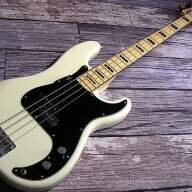
P-Bass (or just 'P'): Precision Bass
Pots: Potentiometers (the knobs that control volume, tone, blend)
PU: Pickup
Pup: Pickup
Ric: Rickenbacker
RMS: Root Means Squared (Standard method of measuring an amplifier's power output)
RW: Rosewood (often in the context of yet another fingerboard wood debate ;))
SPL: Sound Pressure Level (ie Volume or Loudness)
SR: Stringray (or occasionally Soundgear)
SR5: Stingray5
SVT: Super Valve Technology, a line of Ampeg amplifiers.
TI: Thomastik-Infeld (Purveyors of fine quality strings)
TLDR (Tl,DR or TL;DR): Too long, Didn't Read. (TL;DR version = short version)
URB: Upright Bass
YMMV: Your Mileage May Vary

I'd like to add...
DIRMWATBM=Does it really matter what anybody thinks but me?
 
In the interest of efficient communication, would it be possible to use standard language rather than bass jargon in posts?

I can understand "pups" as shorthand for pickups, but I also see some newer members thinking they've stumbled into a dog owners' group. "Tort" means one thing to us, but something completely different to lawyers.

I bring this up because of two recent experiences.

One poster referred to something like his "Fender L." I know Ps and Js and PJs, but couldn't recollect any Fender model that started with an L. Another TB-er thought that it was a reference to Fender's early numbering system, where an L serial number would have indicated a pre-1965 vintage. But even today, neither of us knows for sure.

And just today, a TB-er posted something about his "Sting." Some responders to the post thought he was talking about the P-bass model that Sting uses. As it turns out (I think, anyway), he was referring to a MusicMan StingRay.

Since we're all in this together, and we do really want to understand and help each other, do you think it might be possible to take a look at your post before sending, just to make sure you're saying what you mean and making your point clearly to a general audience? Assuming that everyone you want to communicate with is familiar with all the bass jargon is usually a mistake.

Thanks.
Jargon serves an important purpose in social discourse. If you want to be part of an in-group, learning the lingo is part of making the effort to join. If you don't get hep to the jive, you can't join the hive. So get your glasses on, daddy-o, or go ask Granny Grunt.
 
Supporters of jargon believe such language is necessary for navigating the intricacies of certain professions. In scientific fields, for instance, researchers explore difficult subjects that most laypeople would not be able to understand. The language the researchers use must be precise because they are dealing with complex concepts (molecular biology, for example, or nuclear physics) and simplifying the language might cause confusion or create room for error. In "Taboo Language," Keith Allan and Kate Burridge argue that this is the case:


"Should jargon be censored? Many people think it should. However, close examination of jargon shows that, although some of it is vacuous pretentiousness...its proper use is both necessary and unobjectionable."

Critics of jargon, however, say such language is needlessly complicated and in some cases even deliberately designed to exclude outsiders. American poet David Lehman has described jargon as "the verbal sleight of hand that makes the old hat seem newly fashionable." He says the language "gives an air of novelty and specious profundity to ideas that, if stated directly, would seem superficial, stale, frivolous, or false." In his famous essay "Politics and the English Language," George Orwell argues that obscure and complex language is often used to "make lies sound truthful and murder respectable, and to give an appearance of solidity to pure wind."

You know what I say?
View attachment 3745822

I think Orwell was arguing for clarity in political discourse, rather than against the language of a particular special group.
 

Latest posts