• TalkBass has been independent since 1998. Add your voice.
    Create a free account to reply to discussions, view embedded media, and browse with fewer display ads.
    Join freeLog in
    Want zero display ads or expanded classifieds tools? Compare plans.

Cranking The Bass Knob

First, I like your first statement, and I agree with it. Everyone is entitled to his/her opinion, and all our ears are different.

I can’t say I enjoy those bass heavy cars anymore, either. I turned 50 this last Saturday. However, I have designed, built and installed many such systems, and I would definitely say they give you a “thump in the chest,” but it’s not from 250 Hz area. It’s from 35-80 Hz. In live concerts, most people that like a kick drum in the FOH subs that hits them in the chest have the kick drum tuned around 60-80 Hz. 250 Hz is male voice tenor range around B-C at the top of the bass clef or female voice alto range below the treble clef. Anyway, it’s just below middle C area on the piano, otherwise known as C4. I’ve personally never considered that to be a thump type of sound.

I’m curious what bass heads you refer to when you say, “Usually that Bass EQ is a shelving control centered around 30Hz.” I’ve personally owned 4 bass head, and I’ve played through quite a few more; and I’ve never played through one that had a bass EQ that low unless it had a built in EQ at that frequency. My Aguilar TH500 is at 40 Hz, my GK MB200 is at 60 Hz and my Sansamp RBI is at 80 Hz for the bass EQ. I’m kinda a specs guy so I always look it up. Now the active bass EQ on my bass is at 20 Hz. Maybe that is the EQ you are referring to instead of the amp like JimmyM was talking about.

Finally, I just listened to the YouTube song you posted. I’d never heard it before, but I kinda liked it. I’m curious what audio system or headphones you listen to it on because on my home stereo system, I could make out every bass note distinctly. As I said, I’d never heard it before, but after listening twice through, I had picked out the entire bass line. My home audio system includes a Yamaha receiver, a pair of North American Sound speakers (2-way speaker with 8” Toby woofer and Phillips 1” soft dome tweeter) and my own transmission line subwoofer with a 15” Petras woofer. I could hear the bass plainly and clearly through my system. The lows were in the sub, and the uppers were in the mains.

Please, don’t take any of my statements as critical toward you. I believe you feel and hear exactly what you said just as I do. It gets back to what so many are saying that we all have individual preferences, we hear differently, etc. Basically, it’s just fun to enjoy what we do, discuss what we like and dislike and learn from each other.

Thank you @Rip Van Dan for inspiring me to comment, and thank you @JimmyM for this post. I’m enjoying reading all the comments and offering my own.
Thanks for your comments. Always interesting to get the different takes and also different reactions to what you hear.

I had some nice 3-way KLH speakers with 12" woofers, 8" mids, and compression tweeter. Unfortunately when I moved to Washington the U-haul truck I used leaked after they assured me that crunch in the overhead corner had been fixed and was waterproof. Sure enough, it leaked, warped the cabinets and got onto the woofers. I had insurance with them but never got a dime...don't patronize U-Haul!

I have some very nice Bose headphones that I use to listen to music where I live now because we live on the bottom floor of a house with our landlord living above us. I also have some Sennheiser headphones that I got after my first pair of Bose headphones bit the dust. Both are over-ear design but Sennheiser allows other sounds in and evidently out too. My wife complained about hearing my music with the Sennheiser's, so I contacted Bose about repairing my original. They would no longer repair them but gave me a silly-good price on a new pair that replaced them. So I primarily use the Bose headphones again.

As far as the 30Hz bass EQ shelving pot goes, that's on all the Eden and the DNA amps. There were also a number of other amps that had shelving EQ there for the bass when I went looking for them last year. Didn't realize there were so many others that had it up higher. So, my bad on that. I think having it up at 40 or 60 Hz is a lot more useful. I also have semi-parametric controls on my amp that allow me to adjust EQ anywhere over the 3 octaves I want. Previous amp had one. So, I can adjust anything with it without boosting every frequency below it's center it like a shelving EQ does.

I'm really surprised to hear you say that most of the drummers in your experience tune their bass drum up around 60Hz and 80Hz. I've never played with a drummer who tuned it higher than my low E (41.2Hz). That's even higher than my A string (55 Hz) and my D string is right in the middle of those (73Hz). Drummers always seem to be stuffing pillows and such in them to turn it into more and more of a low thud.

Regarding the low-mid centered at around 250Hz, you have to remember that all of those fundamentals, which bass cabs have a hard time reproducing, also have overtones at 2X the fundamental frequency, as well as 3X, 4X, etc. Even though most cabs can't produce a 30Hz fundamental at anywhere near the level of the rest of the frequencies, your ear can still easily identify it from the overtones it produces. A boost in the low mids at 250Hz to about 300Hz results in a thump in the chest pressure. Try boosting it a bit and then try cutting it out and see what you think

David Nordschow, who founded Eden, very specifically put a low-mid hump in his XLT cabinets for just that reason. Even after he designed the Eden XST cabs, which have a very flat frequency response across the spectrum instead of the low-mid hump, the XLT cabs far outsold the XST's because of that characteristic aggressive sound that sat so well in the mix both live and in recordings. He now designs cabs for his new company DNA and I have his DNS-410, which has a very flat frequency response, more like his XST cabs that he did for Eden. I dial in some boost at ~250 Hz (as close as I can get to it) to get that same definition and thump with it.

Now granted, all the recording classes I have taken were online classes, but invariably after recording the first track the instructions are to boost the low-mids around the 250Hz range if the bass is not present enough in the mix. And, every time I've done that, it has brought clarity and presence to the bass track. That was a further inducement to boost that setting in my own gear - your mileage may vary

I have to tell the truth here now...I have hearing loss from playing loud music for so long. HOWEVER, my hearing loss is at 3KHz and above. So I hear the lower frequencies just fine. I can get clarity in the frequencies above that by just upping the levels (playing the music louder). And yes I do have hearing aids to compensate for "normal" life.

OK, back to the video. Did you notice that when they did a close up of that run that it showed him playing the second part of the run when he was actually playing the first part? You can see him go down to the F at the end the run while the music has him just starting the second part of the octave A to D pattern?

Here's an example of that sound with Debra Killing. She's using an Eden WT800 with an Eden D410XLT cab. That cab has that low-mid hump I mentioned. There's nothing blurred, boomy, or muddy about her sound at all. Granted she's featured in the first section, but even when she is just playing with the band later on, she has a really clear sound.
 
  • Like
Reactions: Roxbororob
I have to be careful with the lows because the snare drum has a tendency to rattle quite noticeably especially on small stages. I set all of my eq knobs on my head (Acoustic B200H) at 12 o’clock as well as the active eq on my bass. I make adjustments as needed on my bass. My gear isn’t high end but I make it work and it sounds good to my ear with everything straight up.
 
Last edited:
OK, back to the video. Did you notice that when they did a close up of that run that it showed him playing the second part of the run when he was actually playing the first part? You can see him go down to the F at the end the run while the music has him just starting the second part of the octave A to D pattern?

Here's an example of that sound with Debra Killing. She's using an Eden WT800 with an Eden D410XLT cab. That cab has that low-mid hump I mentioned. There's nothing blurred, boomy, or muddy about her sound at all. Granted she's featured in the first section, but even when she is just playing with the band later on, she has a really clear sound.


Yeah, I noticed the video/audio being off. That happens on A LOT on videos. Didn't bother me too much.

I'll have to agree that I love that sound of Debra Killing! It's definitely very clean, and you can hear every note. I wonder if they are using a DI though because I didn't notice a mic on the cab. I could have missed it, though. No matter...thanks for sharing! I've enjoyed and learned from the discussion!
 
  • Like
Reactions: Rip Van Dan
Here's an example of that sound with Debra Killing. She's using an Eden WT800 with an Eden D410XLT cab. That cab has that low-mid hump I mentioned. There's nothing blurred, boomy, or muddy about her sound at all. Granted she's featured in the first section, but even when she is just playing with the band later on, she has a really clear sound.


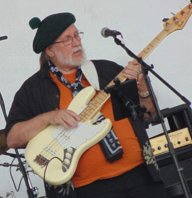

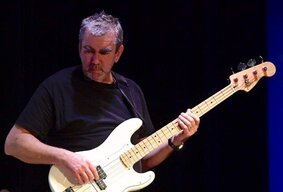

Wow that was great Rip!

That Eden rig is great but I couldnt see the mic either.
 
  • Like
Reactions: Rip Van Dan
As a 5-string bass player (low B), recording engineer and live sound engineer I’d like to offer my 2 cents as i see it. It is with great effort and consideration from all three of these perspectives that I offer this commentary. When you crank that knob you are adding “mud” to the sound. Assuming you are using a PA, the physics of the matter is that your bass amp is creating sound waves at a different location than the PA subwoofer(s). As these waves travel into the room they converge, depending on the size of the room, the ratio of waves created by each source and volume of each, more bass/lows can actually reduce rather than increase the low end. Almost certainly compromizing your beloved low end creating that nondistinct mix compromizing mud. Sorry, it’s just physics. The digital consoles and some digital processors (if your sound guy/company are still rocking an analog mixer) can help with this by delaying the PA to the kik or backine thus aligning the waves being created by the two different sources. This results in much better situation for the sound guy to achieve a better mix for the most important people in this equation: the people paying to see you. Now for the clarifier: if your bass is not routed into the PA by close mic’ing or DI, then this situation cannot occur. Again, due to physics. Careful with that bass knob Eugene.

Yes, thank you.
 
I have to be careful with the lows because the snare drum has a tendency to rattle quite noticeably especially on small stages. I set all of my eq knobs on my head (Acoustic B200H) at 12 o’clock as well as the active eq on my bass. I make adjustments as needed on my bass. My gear isn’t high end but I make it work and it sounds good to my ear with everything straight up.
Rattling snares? no problem. What worked for me was putting two strip pcs of duct tape fwd and aft of the snares underneath, add a strip in the middle if needed. 'Don't tell the drummer. Now get cranking and see what happens.
 
  • Like
Reactions: picker1974
Wow that was great Rip!

That Eden rig is great but I couldnt see the mic either.
Well nuts! I don't see it either. That sucks because that is the sound I was referring to. She's probably running a DI out the of the amp. It has an adjustable level DI on the back. And the recording sounds way too good to be just picked up by a couple of mics out front. So, I guess that wasn't quite the demonstration I thought it was although that is the sound that normally comes through that cab....nuts! I hate it when a plan falls apart!
 
  • Like
Reactions: Roxbororob
Regarding low end mud. It’s important to high pass filter the guitars, singer, some keys, etc. These can all make the mix sound low end muddy. Leave the low end for the kick drum and bass.

If you look with a spectrum analyzer app, you can see where everything lies and predominates. By filtering to carve a niche, you can manage any mud.

Every input into a sound system can benefit from a properly set high pass frequency.
For that matter the over all speaker system/subs should have a high pass filter in place set at a proper frequency for the speakers in use.
 
  • Like
Reactions: beans-on-toast
I understand what the players are doing by boosting mids, to ‘cut through the mix’, but if I’m rearranging your internal organs, then I’m cutting through just fine!

Boost away!
Maby cutting through, but keep in mind depending on what style of music you're playing two much bass/bottom end will cause the notes to sound mushed together.
 
  • Like
Reactions: Stumbo
One thing that will make a big difference that I’m not sure if it’s been mentioned or not is size of your speakers, not to mention speaker efficiency and wattage handling. I have found if I really want to crank some low end you got to have at least a minimum of a 15” speaker and preferably more than 1 driver especially if you want to start cranking some volume. The ultimate combo I run for dark thudding bass music and passages is 4-10’s with a very efficient, high wattage 18” speaker. I use an Ampeg SVT 810 cab with another folded horn cab containing a JBL 2241H 600 watt driver and I can crank some seriously loud deep lows with this speaker combo. Another part of the equation is whether or not your depending on FOH direct connection or miking. It drives most FOH sound guys crazy when you start cranking some really deep bass unless they too are well set up with some good amplification and a plethora of 18” subs, preferably also of folded horn variety. Even then if your running direct it has a tendency to really muddy the mix, but miking tends to be a little better depending on what mike you’re using. If I for instance am playing in my Black Sabbath tribute band I use my stage rig for really cranking the deep dark lows with 2–18” cabs loaded with above mentioned JBL’s and use FOH miking that I EQ out to it more for midrange and highs to give punch to it and drive, with most of the lows scooped out. Not only that, but tends to keep me on more friendly terms with FOH engineer.
 
  • Like
Reactions: tree_trunker
Thanks for your comments. Always interesting to get the different takes and also different reactions to what you hear.

I had some nice 3-way KLH speakers with 12" woofers, 8" mids, and compression tweeter. Unfortunately when I moved to Washington the U-haul truck I used leaked after they assured me that crunch in the overhead corner had been fixed and was waterproof. Sure enough, it leaked, warped the cabinets and got onto the woofers. I had insurance with them but never got a dime...don't patronize U-Haul!

I have some very nice Bose headphones that I use to listen to music where I live now because we live on the bottom floor of a house with our landlord living above us. I also have some Sennheiser headphones that I got after my first pair of Bose headphones bit the dust. Both are over-ear design but Sennheiser allows other sounds in and evidently out too. My wife complained about hearing my music with the Sennheiser's, so I contacted Bose about repairing my original. They would no longer repair them but gave me a silly-good price on a new pair that replaced them. So I primarily use the Bose headphones again.

As far as the 30Hz bass EQ shelving pot goes, that's on all the Eden and the DNA amps. There were also a number of other amps that had shelving EQ there for the bass when I went looking for them last year. Didn't realize there were so many others that had it up higher. So, my bad on that. I think having it up at 40 or 60 Hz is a lot more useful. I also have semi-parametric controls on my amp that allow me to adjust EQ anywhere over the 3 octaves I want. Previous amp had one. So, I can adjust anything with it without boosting every frequency below it's center it like a shelving EQ does.

I'm really surprised to hear you say that most of the drummers in your experience tune their bass drum up around 60Hz and 80Hz. I've never played with a drummer who tuned it higher than my low E (41.2Hz). That's even higher than my A string (55 Hz) and my D string is right in the middle of those (73Hz). Drummers always seem to be stuffing pillows and such in them to turn it into more and more of a low thud.

Regarding the low-mid centered at around 250Hz, you have to remember that all of those fundamentals, which bass cabs have a hard time reproducing, also have overtones at 2X the fundamental frequency, as well as 3X, 4X, etc. Even though most cabs can't produce a 30Hz fundamental at anywhere near the level of the rest of the frequencies, your ear can still easily identify it from the overtones it produces. A boost in the low mids at 250Hz to about 300Hz results in a thump in the chest pressure

First of all, sorry but you cant properly hear 30hz.what you hear is 60hz and 120hz 2nd and 3d harmonics.if it's a shelving type that really cuts off at 30hz it is obsolete.
It doesnt, so you hear the harmonics, usually in a sub w specialized speakers.Most full range speakers drop their lows below 80hz significantly, some more than others.
Below 60hz and it's all gone out of hearing range because it's drowned out by the harmonics.
 
I almost always end up cutting the bass knob, regardless of the amp I use. Usually the mids are where most of my eq adjustment happens. It's weird - over the last few weeks, I have been adjusting my Walkabout mids to sound more honky. I have always avoided that in the past as that has negative connotations to me but I have really been liking the sound I'm getting. So in conclusion, honky mids instead of cranked bass.
 
First of all, sorry but you cant properly hear 30hz.what you hear is 60hz and 120hz 2nd and 3d harmonics.if it's a shelving type that really cuts off at 30hz it is obsolete.
It doesnt, so you hear the harmonics, usually in a sub w specialized speakers.Most full range speakers drop their lows below 80hz significantly, some more than others.

Below 60hz and it's all gone out of hearing range because it's drowned out by the harmonics.
If your ears are good, you can hear down to 20Hz, although that's more of a feel than a "hear" for most people. Below 30Hz, you mostly get rumble. That's why it's usually not a good idea to boost that particular shelf of frequencies unless you are compensating for a room that sucks that frequency out.

A "shelving" EQ boosts or cuts all the frequencies below its set point. It doesn't cut them off there. It uses that frequency to cut or boost everything below it and above the High Pass Filter (HPF) that normally limits the lowest frequency the amp will put out.

Personally I think that if you only have a Bass EQ knob, that 40Hz or 60Hz would be a more usable spot if that's the "only" bass EQ control you have. But since I happen to have 3 semi-parametric controls on my amp (each contolling an octave of frequencies with overlap at each end) that will allow me to boost or cut any frequency from 30Hz up to 12KHz, it just adds more flexibility. I have far more ability to shape my sound in my "obsolete" 1999/2010 amp amplifier than most current amps available and, most importantly, I know how to use that EQ system to get the sound I want. I list the manufacture dates at 1999/2010 because the amp was originally made in 1997 but the power section was upgraded to 800-watts bridged @ 8 ohms in 2010.

You are absolutely right of course about most cabs dropping by about 10db or even more as they get to the low-end, though most decent cabs can replicate 60Hz pretty well and some go down below that. My particular cab (DNS-410) has its flared shelf port tuned at 52Hz and it replicates those low frequencies much better than most cabs. When I use my 5-string bass, that B string sounds much tighter and clearer than any other cab I've used.

And, as I mentioned earlier, I agree that those low notes that can't be reproduced at a decent level by a particular cab are still easily discernible by their harmonics even if the fundamental is lost in the sound waves. Of course the more of the harmonics you hear and the less of the fundamental the more "muddy" those low notes become. To presume that making changes with that 30Hz shelving EQ doesn't make a difference in the sound just implies that you haven't heard a high-fidelity cabinet with a very low distortion amp (less than 0.1% THD) reproduce (or try to reproduce) those frequencies.

Certainly it also changes the amplitude of the harmonics as well, but there is a big difference to the clarity of the system when that is boosted (becomes muddy) or cut (becomes clearer). I personally never boost that 30Hz bass because it just muddies things up. I do however often run it with that 30Hz shelving EQ cut by 2 or 3 clicks. Again, it varies on the room you are playing in, but I've used it long enough to recognize when it needs cutting. If I need to reinforce that 30Hz area because the room is sucking it out, I go the semi-parametric where I can isolate which frequencies are being sucked out and compensate for only those frequencies and not everything below them.

For those not familiar with semi-parametric EQ's they allow you to select a peak point and then the boost/cut effect on adjacent frequencies slopes down on both sides of center. Sort of like this - "^".
 
[QUOTE="Rip Van Dan, post: 21178958, member: 13

Personally I think that if you only have a Bass EQ knob, that 40Hz or 60Hz would be a more usable spot if that's the "only" bass EQ control you have. But since I happen to have 3 semi-parametric controls on my amp (each contolling an octave of frequencies with overlap at each end) that will allow me to boost or cut any frequency from 30Hz up to 12KHz, it just adds more flexibility. I have far more ability to shape my sound in my "obsolete" 1999/2010 amp amplifier than most current amps available and, most importantly, I know how to use that EQ system to get the sound I want. I list the manufacture dates at 1999/2010 because the amp was originally made in 1997 but the power section was upgraded to 800-watts bridged @ 8 ohms in 2010.

You are absolutely right of course about most cabs dropping by about 10db or even more as they get to the low-end, though most decent cabs can replicate 60Hz pretty well and some go down below that. My particular cab (DNS-410) has its flared shelf port tuned at 52Hz and it replicates those low frequencies much better than most cabs. When I use my 5-string bass, that B string sounds much tighter and clearer than any other cab I've used.

And, as I mentioned earlier, I agree that those low notes that can't be reproduced at a decent level by a particular cab are still easily discernible by their harmonics even if the fundamental is lost in the sound waves. Of course the more of the harmonics you hear and the less of the fundamental the more "muddy" those low notes become. To presume that making changes with that 30Hz shelving EQ doesn't make a difference in the sound just implies that you haven't heard a high-fidelity cabinet with a very low distortion amp (less than 0.1% THD) reproduce (or try to repr[/QUOTE]

I never implied it wont make a difference in sound by changing the shelving eq control.i was making a point about the general use of bass controls.like you said, they overlap.and i know exactly what a well tuned cab that retains the low end sounds like.I think you agree w me when you say you still hear the harmonics.in fact, that was the point i was making.i just felt the need to jump in about the assumptions of below 50hz frequencies as there are so many threads/posts that spread inadequacies.. To sum up: the bass line low end frequencies are fr 50 to 100hz (roughly).That is what a standard bass speaker is able to handle.How much depends on the speaker.anything below that is appropriately called a sub and needs copious amounts of power.some 'subs' have controls that can lift the top frequency to 120hz.technically not a sub but ok.
No matter what cab you put the bass speaker in you wont hear anything below 50hz no matter what.no control can change that, shelving or otherwise.the change of sound is perceived in higher frequencies.i keep saying this and maybe i should stop..
What is really important in low end bass speaker response is how much of the 50 to 80hz band the amp puts out will be represented by the speaker.
That's actually where all cabinet makers tune their cabs to as a standard range taking the speaker's specs in consideration.Your 52hz tuned cab included..

Edit:some cabs use Passive Radiators (like Barefaced) to take pressure away from the speaker(s).These PRs CAN transfer more low end coming from the amp because they use just a cone and suspension, no magnet no motor.This is very handy in small cabinets where space is limited for standard ports to do their job.
 
Last edited:
Here's a quick easy test to check the frequency your cabinet is actually tuned to, provided it's a ported cabinet design.

- get a sweepable sine wave generator, if you don't have a physical unit there are lots of apps available to download.
- set your amp's EQ flat, boost switches turned off, ect.
- connect the sine wave source to the amps input, with the amp volume turned down.
- set the sine wave generator to 100hz
- turn up the amp to average level, nothing too crazy though.
- as you start lowering the sine wave frequency you will see the speaker starting to move back and forth, more movement as the frequency gets lower.
- as your lowering the frequency the speaker will start to move more, when you get to the frequency that the cabinet is tuned to the speaker will all but stop moving as it reaches the resonate tuned frequency of the cabinet and the ports are actually producing the sound, think pipe organ.
- as you go lower in sine wave frequency the speaker will start to move again.
- if you have a highpass filter you want to set it just a little below what the tuned frequency was because below that frequency the cabinet is no longer properly loading the speaker.
- it helps to sometimes lightly touch the speaker cone to feel the point of the least cone movement.