
• TalkBass has been independent since 1998. Add your voice.
    Create a free account to reply to discussions, view embedded media, and browse with fewer display ads.
    Join freeLog in
    Want zero display ads or expanded classifieds tools? Compare plans.

Crispy Cherry

Doing good on this weekend's goals thus far!
Making a pickup winder with just stuff from my garage, and plugging the oversized neck pickup rout.
20220507_084353.jpg

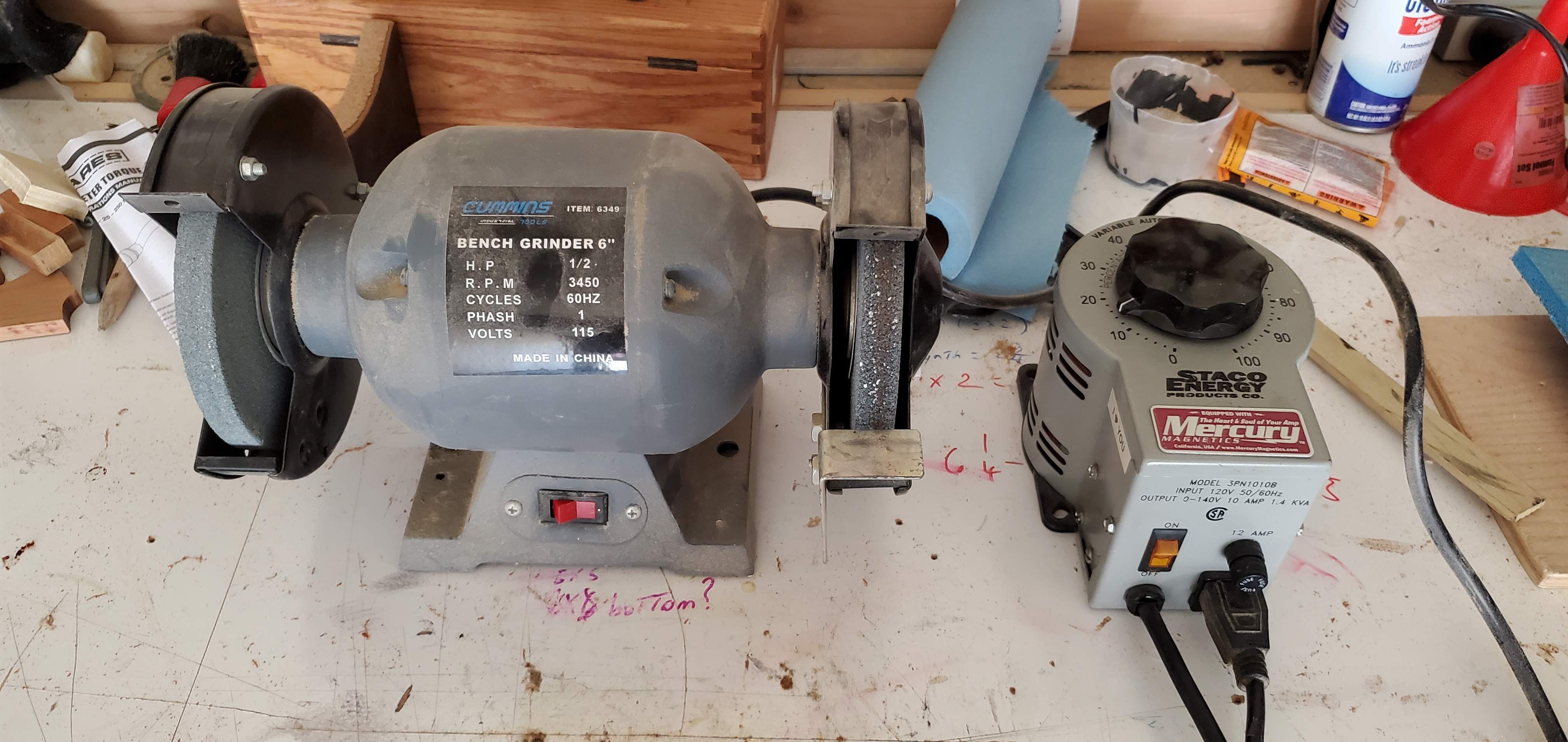
Starting with these two, my Variac, and a lousy 1/2hp bench grinder. This grinder torques out way too easy for it's intended purpose but I think it will do fine (be it oversized) for a pickup winder.

The Variac (variable transformer for those that don't know) will give me a wide range of speed adjustment.

Now to adapt.
20220507_093247.jpg

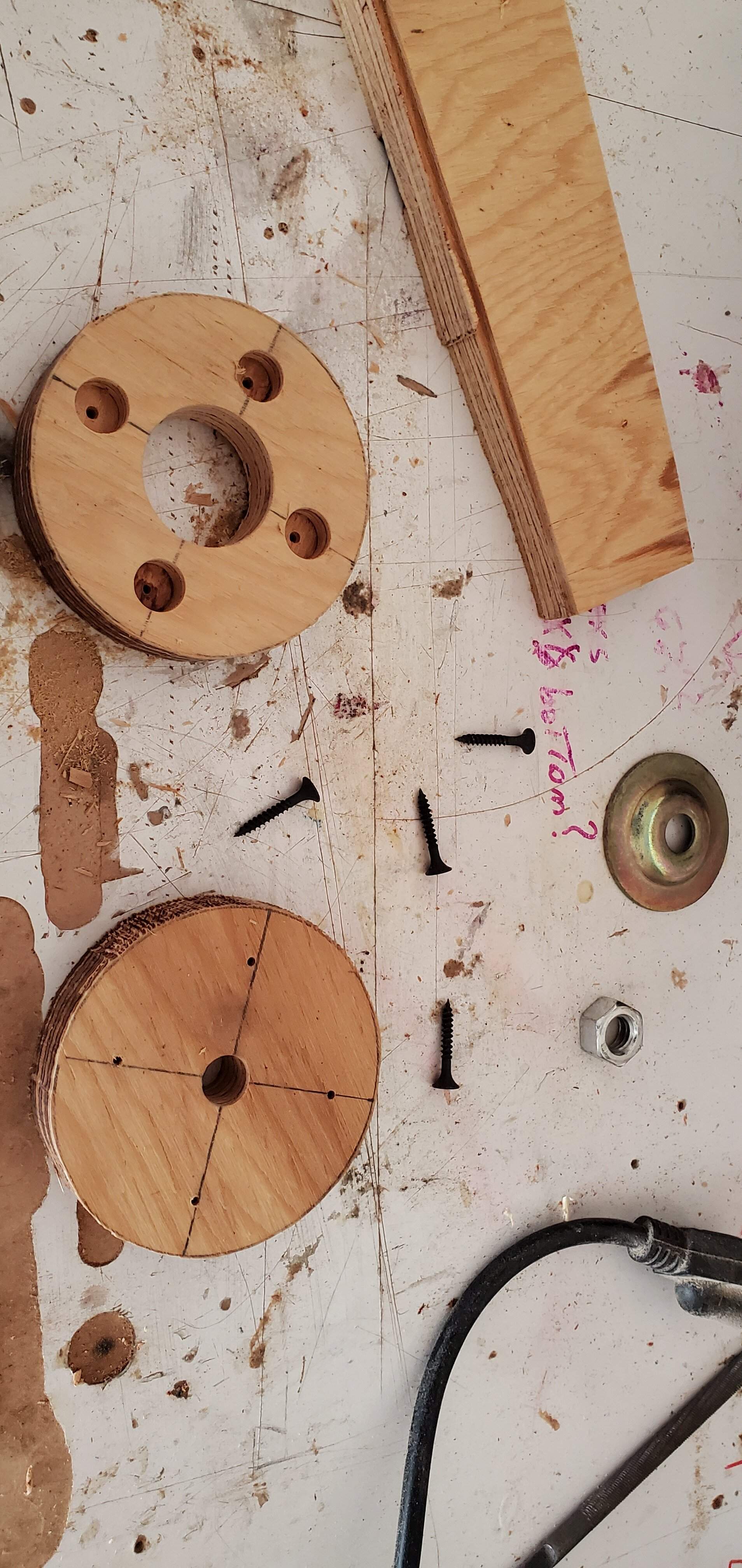
Using some scrap plywood for this project I started with these two. Cut via my bandsaw and drilled on the press. These don't have to be perfect but a reasonable degree of accuracy should make life easier later on.
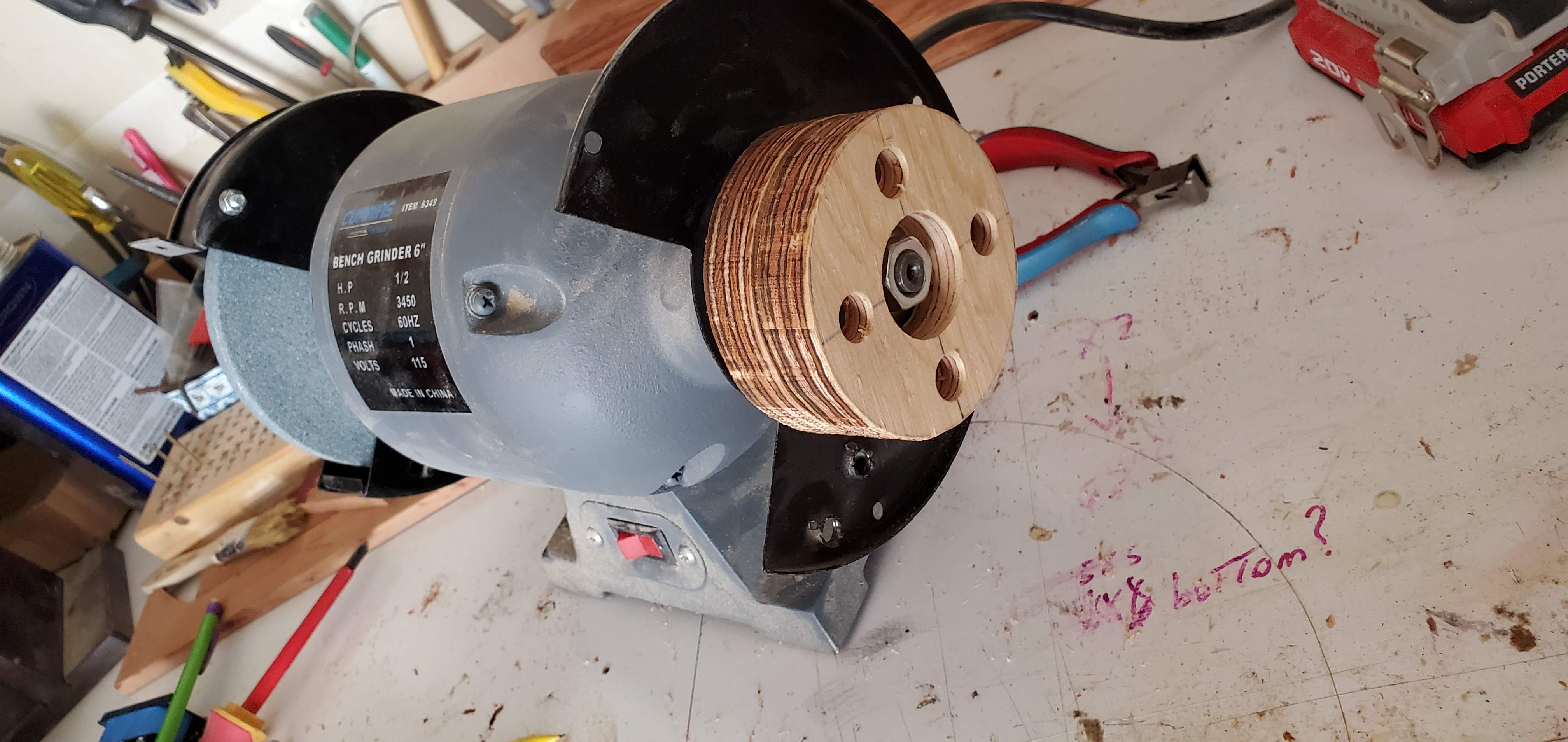
They fit like this,
20220507_094557.jpg

With that I should be able to mount whatever pickup I want to the end.
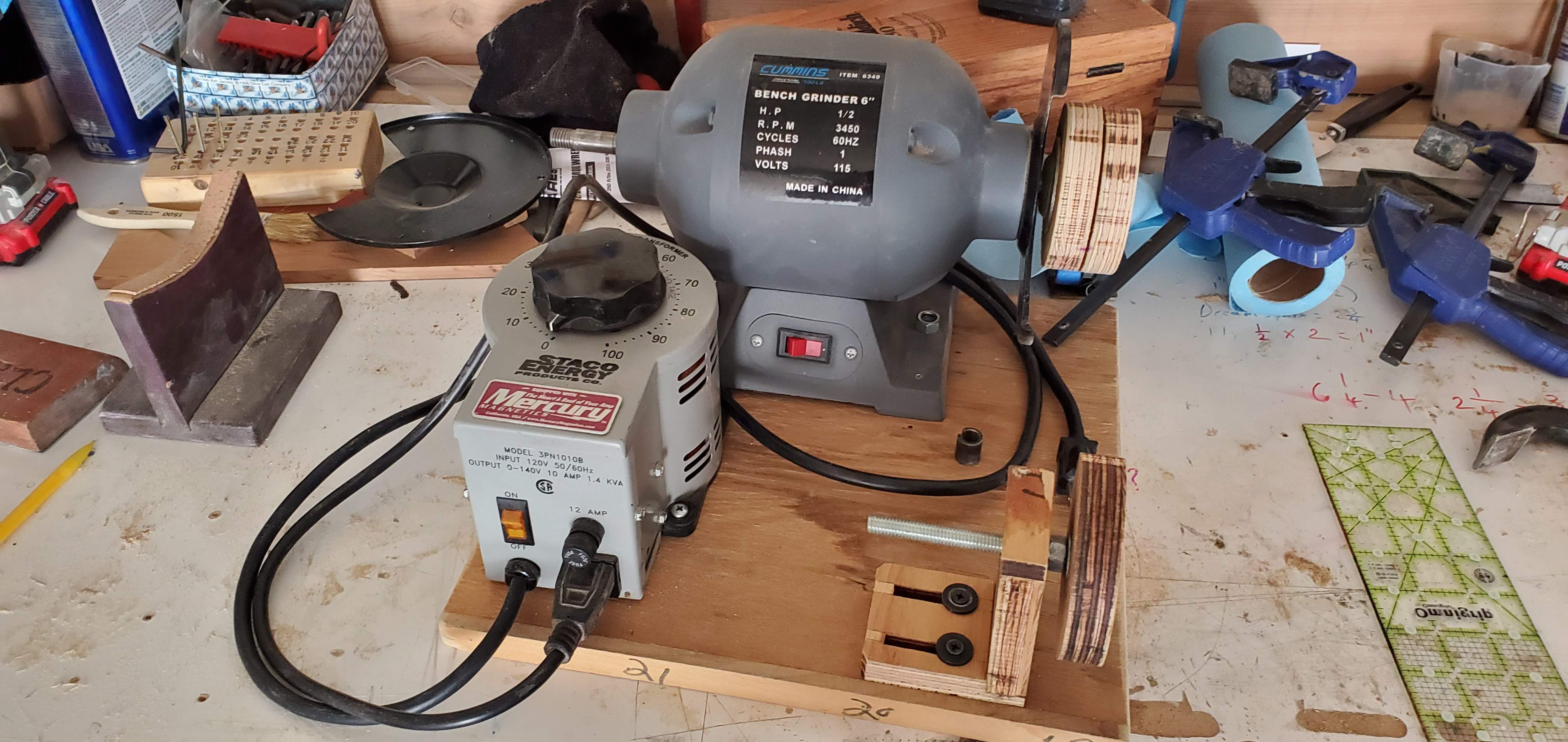
Next I made a base and a little guide thingy (technical term)
20220507_115601.jpg

The guide thingy is a little un finished atm. I want to be able to wind from one coil to another with this, but also from a spool later on so it needs to be adaptable. I'll have more on this tomorrow and hopefully get a test or two done.

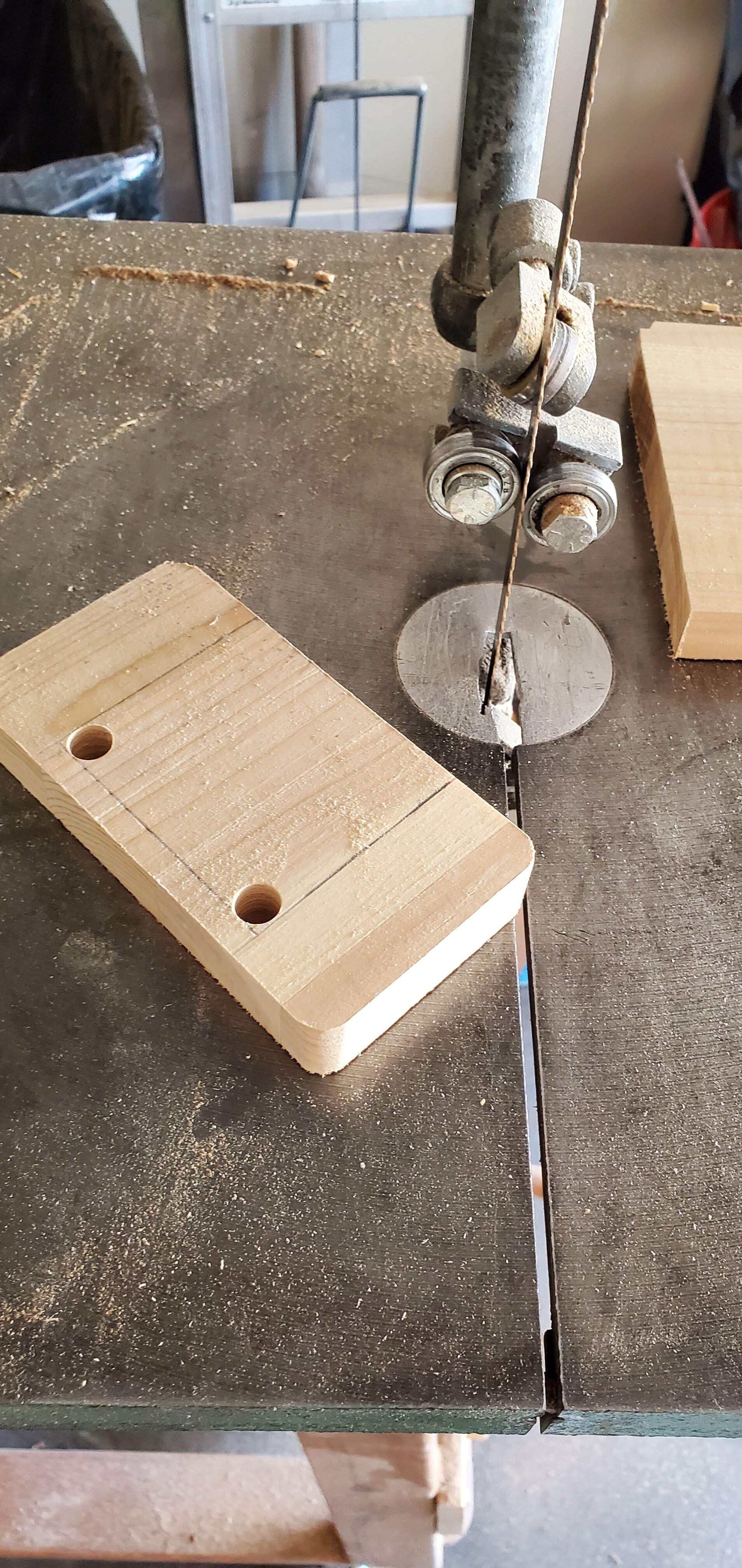
While I was waiting on glue to dry on the guide thingy I cut the plugs for the pickup rout.
20220507_112151.jpg

20220507_114811.jpg

I chose a piece of cedar for the piece that shows because I felt like it. :laugh: also because I didn't have any mahogany. The bottom piece is just a piece of pine from a box. Top piece got cut/ sanded very close while the bottom is a little looser to make fitting these two easier.

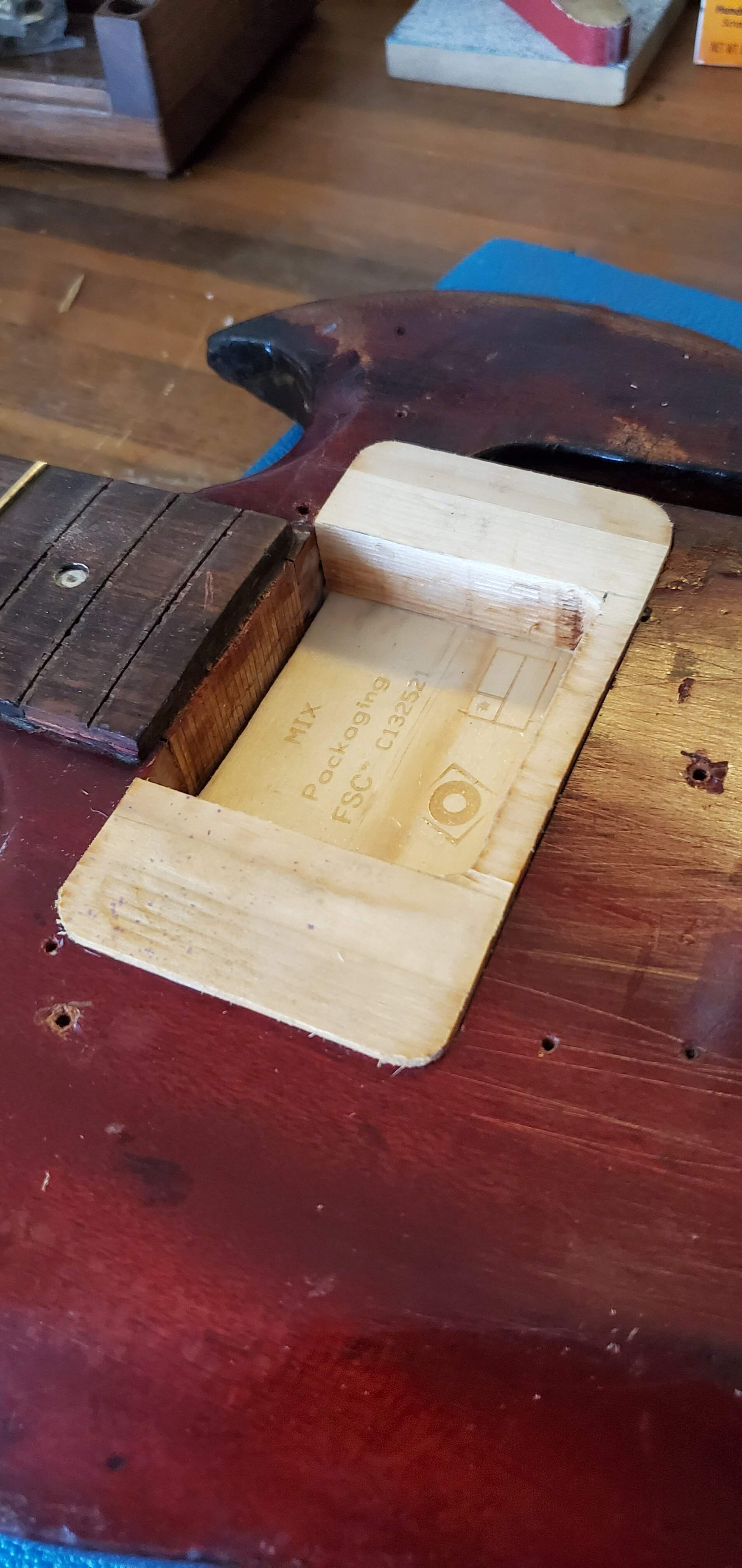
Further more I need about an inch of depth here. My initial rout being 1" 1/8th means I'll want to come back later and rout that pine using a guide bit almost all the way to the mahogany. Stoping an 1/8th shy to get the right depth and hide the ugly underneath. Sheesh what a process..
20220507_130130.jpg

Just a little proud so I can cut it down later. The top plug got hammered into place with glue and was a very (almost too) tight of a fit.

That's all for today, I'm off to do stupid family things with the rest of my afternoon. :D
 
Last edited:
Hey Samantha;

A couple of technical tips on the winder:

In my experience, the best speed to wind pickup coils is 800-1000 rpm. Faster than that, and you have real problems with centrifugal force making the coils loose. And if you try to increase the tension to reduce that, you're up in the range of breaking the wire. You can wind faster, with a lot of fussing, but it's hardly worth the trouble. At 1000 rpm, most coils can be wound in 5-8 minutes. That's a reasonable pace that gives you time to get the layering right, without getting too boring.

You definitely want a good variable speed control, that can go all the way down to zero. It's really useful to be able to start the bobbin turning at crawl speed, like 60 rpm, until you get the first few layers built up. Then gently bring it up to 1000 rpm.

Your grinder goes 3450 rpm, so to get 1000 rpm, the Variac will be less than 1/3 of the way up. It'll probably work okay, but you're going to have to be really careful not to blip the throttle and ruin a coil.

A better combination would be the smallest 120v 1725 rpm motor you can find, controlled by one of those cheap lamp dimmer rheostats.

Your Feed Nozzle (however you decide to build it) should be adjustable to place it right up next to the bobbin. As close as you can get it without hitting anything spinning. Make the position adjustable for different size bobbins.

If you are taking new wire from a spool, the wire must be pulled off the end of the spool. Going around one flange, with the spool sitting stationary. Don't try to pull the wire off the side of the spool, with the spool spinning. It won't work. The wire will quickly become twisted, kink and snap. Magnet wire is wound onto the spool at the factory with the right amount of twist in it. Pull it off the end of spool, and it comes out straight.

If you are trying to salvage the magnet wire from an old pickup bobbin, then you need to pull the wire off the side of the bobbin, with the bobbin spinning. It has to be mounted so that it spins easily, but with a small amount of friction drag. You don't want the old bobbin to build up inertia and overtake the speed of the new bobbin. Then you'll have a mess of wire tangled up between them. Transferring wire from one bobbin to another can be done, but it's fussy.

For a counter, I recommend a rotary-type mechanical counter, driven by a little XL toothed belt. Simple and reliable. When winding pickups, you need a good, accurate count of the turns. Electronic counters have many ways to fail and give you bad numbers, unless you build them well.

Edit: Maybe you could find a small 3:1 step down transformer to put between the Variac and the grinder? So, the grinder would see 0-40 VAC.
 
Last edited:
Hey Samantha;

A couple of technical tips on the winder:

In my experience, the best speed to wind pickup coils is 800-1000 rpm. Faster than that, and you have real problems with centrifugal force making the coils loose. And if you try to increase the tension to reduce that, you're up in the range of breaking the wire. You can wind faster, with a lot of fussing, but it's hardly worth the trouble. At 1000 rpm, most coils can be wound in 5-8 minutes. That's a reasonable pace that gives you time to get the layering right, without getting too boring.

You definitely want a good variable speed control, that can go all the way down to zero. It's really useful to be able to start the bobbin turning at crawl speed, like 60 rpm, until you get the first few layers built up. Then gently bring it up to 1000 rpm.

Your grinder goes 3450 rpm, so to get 1000 rpm, the Variac will be less than 1/3 of the way up. It'll probably work okay, but you're going to have to be really careful not to blip the throttle and ruin a coil.

A better combination would be the smallest 120v 1725 rpm motor you can find, controlled by one of those cheap lamp dimmer rheostats.

Your Feed Nozzle (however you decide to build it) should be adjustable to place it right up next to the bobbin. As close as you can get it without hitting anything spinning. Make the position adjustable for different size bobbins.

If you are taking new wire from a spool, the wire must be pulled off the end of the spool. Going around one flange, with the spool sitting stationary. Don't try to pull the wire off the side of the spool, with the spool spinning. It won't work. The wire will quickly become twisted, kink and snap. Magnet wire is wound onto the spool at the factory with the right amount of twist in it. Pull it off the end of spool, and it comes out straight.

If you are trying to salvage the magnet wire from an old pickup bobbin, then you need to pull the wire off the side of the bobbin, with the bobbin spinning. It has to be mounted so that it spins easily, but with a small amount of friction drag. You don't want the old bobbin to build up inertia and overtake the speed of the new bobbin. Then you'll have a mess of wire tangled up between them. Transferring wire from one bobbin to another can be done, but it's fussy.

For a counter, I recommend a rotary-type mechanical counter, driven by a little XL toothed belt. Simple and reliable. When winding pickups, you need a good, accurate count of the turns. Electronic counters have many ways to fail and give you bad numbers, unless you build them well.

Edit: Maybe you could find a small 3:1 step down transformer to put between the Variac and the grinder? So, the grinder would see 0-40 VAC.
This is good stuff! In reference to a counter it would be interesting too to see what rpm this thing is making in it's range of voltage. The step transformer in there might be a good idea as well for the extended range within the zone I want this thing to live. I think first I want a way to measure the rpm and I'll go from there. As always Bruce thank you! I've built a lot of stuff over the years but never pickups nor a winder so this is all learning for me.

I did manage to de-wind one of the epiphone coils be it I broke the wire several times finding a position that worked. I ended up just holding the feed spool buy hand as that allowed me to move it around as needed to avoid a break. This was done with might right while my left hand modulated the speed. It didn't feel difficult to control but I think I need to get a better idea of the speed in rpm before I call that good. I can also see that more adjustment there certainly wouldn't hurt.
20220507_204329.jpg

You ain't kidding with winding off a coil being tricky. This stuff even being as thick as it is was difficult. I think I could probably wind off a spool's top with this setup though, so that's promising. But I'm still going to take this further before trying. (Also would like to waste as little wire as possible)

For a counter I had the thought of steeling one from an old cassette deck?
 
My brain (belatedly) says "reducing voltage on an induction motor only lowers the torque, not the speed" and your stock 3450 (3600 with some slippage at 60 Hz) or 1725 (1800, likewise) 2-pole and 4-pole 60-Hz motors are induction motors. Voltage relating to speed requires a universal motor (like most routers and drills - with brushes) or a DC motor. Controlling speed of an induction motor requires a variable frequency drive. As far as my brain recalls, anyway.
 
  • Like
Reactions: Dec1975
If you happen to have a sewing machine lurking anywhere (or goodwill has one) that's a handy variable speed motor and controller with some other bits you can ignore, use for thier intented purpose, or rework for pickup wire control?
If you don’t have a sewing machine, you do have a hand drill. It does variable speed all the way down to zero, goes both directions for forward or reverse winds, and even has a handy three-jaw chuck for quick attachment and detachment from the shaft of your winding machine.
The whole point of this is to use junk (sans the Variac) from my stash and I'm fresh out of sewing machines. Using a drill was something I considered (I have a few) but ultimately this was much better as it is variable vis the Variac and was much easier to mount to both the base and the bobbin holder.

Fwiw I make a good salary and could buy a stwemac ect.. winder if I wanted, anything to make this easy, but it's not just about the end goal it's the journey to said goal. So yeah I'm going to roll with what's showing promise here improve it with more junk (mostly) and be proud to have made something from very little and to have learned a thing or three. :D
 
My brain (belatedly) says "reducing voltage on an induction motor only lowers the torque, not the speed" and your stock 3450 (3600 with some slippage at 60 Hz) or 1725 (1800, likewise) 2-pole and 4-pole 60-Hz motors are induction motors. Voltage relating to speed requires a universal motor (like most routers and drills - with brushes) or a DC motor. Controlling speed of an induction motor requires a variable frequency drive. As far as my brain recalls, anyway.
It definitely varies the speed, I verified that first before even starting.
 
The rotary mechanical counters aren't very expensive. The one in my big winder I bought new from McMasters for under $50. I also have a spare that I found on Ebay for $15. You just have to know what you are looking for. The counter needs to be Rotary style (turns continuously), not click style. And you want 5 digits, probably CW rotation.

Here's one on Amazon for $16, which should work:

https://www.amazon.com/Revolution-C...efix=rotary+mechanical+counter,aps,153&sr=8-7

Note that it has a long straight shaft coming out the right side. The lever on the left side resets to zero.

You do not want one of these:

https://www.amazon.com/Mechanical-0...fix=rotary+mechanical+counter,aps,153&sr=8-10

That's a click-style counter, which advances the count by reciprocating the lever on the right side. If you rigged it up with a linkage to click it, it will only get up to maybe 400 rpm before exploding. Note that the text calls it a rotary counter (because of the number wheels), but somewhere it says reciprocating or click count.
 
As an Amazon Associate, TalkBass may receive commissions from qualifying purchases made via links on this site.
I'd say the easiest and cheapest counter is electric bicycle speedometer. Mount the magnet on the wheel and sensor to the frame of the winder and you're done.

The question is whether it will count reliably at 1000 rpm. Magnetic or optical sensors can miss counts at high speeds if they aren't set up carefully. And they may do it without you knowing about it. Occasional missed pulses, and you are off by 10%. That's the worst thing.
 
The question is whether it will count reliably at 1000 rpm. Magnetic or optical sensors can miss counts at high speeds if they aren't set up carefully. And they may do it without you knowing about it. Occasional missed pulses, and you are off by 10%. That's the worst thing.
There's always the possibility of slowing down. Especially for one-offs and us hobby winders.
How much off is audible? I've had my coils inside +/- 0,05 kOhms and haven't heard any difference. I'm not saying there isn't, I just can't hear it.
 
Also just got some numbers..
20220508_100929.jpg
20220508_100951.jpg

I may or may not have a step down that'll work here to increase the accuracy of my speed control. Bruce what did you say 3:1? That sounds about right anyway. Also fwiw at a slower speed I torqued it out and the current went up to ~1a.