Factory default preset (I actually did this before doing anything else) - then I activated HP, with a 40Hz threshold. That's all.What are all of your other DSP settings?

Enjoy the benefits of a premium membership!
Upgrade Account
-
TalkBass has been independent since 1998. Add your voice.
Create a free account to reply to discussions, view embedded media, and browse with fewer display ads.
Join free Log in
Want zero display ads or expanded classifieds tools? Compare plans.
You are using an out of date browser. It may not display this or other websites correctly.
You should upgrade or use an alternative browser.
You should upgrade or use an alternative browser.
Crown XLS Drivecore 2 owners
- Thread starter 4string4ever
- Start date
More options
Who Replied?
- Apr 18, 2008
- 16,003
- 1
- 31,694
- Disclosures
- I'm highly opinionated and extremely self-assured
Got it. I just grabbed my 1502 and did the same thing - pretty hard to screw it up.
When you say "lifeless", I think of a lack of dynamics, or of output. But your description sounds more like it's a tonal change, so I'm still a bit uncertain of what you mean. Is the output healthy, with a muted tone? Or is the output weak?
What cable did you use to connect the GED to the XLS?
When you say "lifeless", I think of a lack of dynamics, or of output. But your description sounds more like it's a tonal change, so I'm still a bit uncertain of what you mean. Is the output healthy, with a muted tone? Or is the output weak?
What cable did you use to connect the GED to the XLS?

Got it. I just grabbed my 1502 and did the same thing - pretty hard to screw it up.
When you say "lifeless", I think of a lack of dynamics, or of output. But your description sounds more like it's a tonal change, so I'm still a bit uncertain of what you mean. Is the output healthy, with a muted tone? Or is the output weak?
What cable did you use to connect the GED to the XLS?
thanks ctmullins! the output is healthy alright... I cannot 'safely' turn the volume on more than 1 o'clock on the XLS - and that was enough to volume match the tube Ampeg.
Actually, the Berg cab is fine all the way to 4 o'clock with the XLS alone (channel 2 only - so 8 Ohms, 300 watt). But if I were to turn on a fuzz pedal without adjusting volume (I mostly dime the hell out of them) - I would most definitely damage the Berg cab. 1502 dimed, even on one of the channels with 8 Ohms on a single 112, is taking a risk I would say.
So 12 o'clock volume on the XLS seems to work for me; it also gives me ideal volume knob ranges on the preamp(s).
So healthy output, not muted. The difference starts from high-mids all the way to top end (there is much less of it).
Last edited:
What cable did you use to connect the GED to the XLS?
A short XLR. Just for others' reference - the GED 2112 can drive the XLS 1502 with an XLR (at 0db, not -20db) no problem - as recommended by @tech21nyc above....
I am going
 about what I can do... So the preamp and the tubes in the Ampeg PF-20T are making a BIG difference in the power output in the high end... How could the XLS 1502 match that without 'additive/noisy' EQ pedal options? Something upstream of course...
- Apr 18, 2008
- 16,003
- 1
- 31,694
- Disclosures
- I'm highly opinionated and extremely self-assured

- Feb 12, 2006
- 60,952
- 5
- 220,599
- Disclosures
- Development Engineer-Mesa Boogie, Development Engineer-Genzler (pedals), Product Support-Genz Benz
If you are going into the input of the PF20T, you are adding the voicing of the amp to your preamp, and the sensitivity is also way different. That alone may be the cause of what you are hearing.
If you are going into the input of the PF20T, you are adding the voicing of the amp to your preamp, and the sensitivity is also way different. That alone may be the cause of what you are hearing.
You are right agedhorse! That combination also happens to sound better to my ears. I mean, I can always turn down the tone on the guitar or the preamp, if I want 'no highs,' but it does not work so easy the other way around.
Since my A/B/C trial, I tried boosting high mids (semi parametric) and the highs on the GED 2112, but that does not get me close to what the Ampeg provides (plus there is more hiss that way).
I am inclined to prematurely (!) conclude at this point that the XLS needs a bright, tube like boost pedal in front to sound close to the Ampeg... Will test tomorrow!
Last edited:
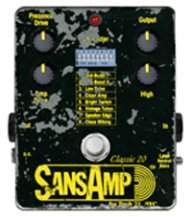
No surprise. Tube amps are not usually flat response. Plus you are stacking two preamps. There doesn't seem to be a way to bypass the Ampeg's preamp and I doubt it's flat. Have you tried running the GED into the Ampeg and taking the Ampeg's line out with the EQ engaged into the Crown? Either way the benefit of the Crown is a powerful amp for live use where as the little Ampeg is a low volume tube powered tone generator. For home use, the Ampeg makes way more sense than the Crown. Why not go the Geddy route and mic the little Ampeg and run the GED-2112 in parallel direct for recording and get a nice composite sound. That's how they did back in the old days.
No surprise. Tube amps are not usually flat response. Plus you are stacking two preamps. There doesn't seem to be a way to bypass the Ampeg's preamp and I doubt it's flat. Have you tried running the GED into the Ampeg and taking the Ampeg's line out with the EQ engaged into the Crown? Either way the benefit of the Crown is a powerful amp for live use where as the little Ampeg is a low volume tube powered tone generator. For home use, the Ampeg makes way more sense than the Crown. Why not go the Geddy route and mic the little Ampeg and run the GED-2112 in parallel direct for recording and get a nice composite sound. That's how they did back in the old days.
Thank you tech21nyc. You are absolutely right about the Ampeg, and it’s potential use vs the Crown.
I do not gig, only record and play in home studio. So the Crown’s impressive power reserves were not what interested me - it was the possibility of bi-amping the GED 2112’s two preamps. But, no offense to to Crown users, having now tested it with a a great preamp (Tech21 GED 2112), great bass (US fender Geddy Lee), and a great cab (Bergantino HDN 112), I have reached the conclusion that it sounds hollow, and it is not ‘recording grade.’ I noticed that the louder you turn the Crown, the better it sounds. I have no doubt at gig levels it does a great job. It just did not serve my purposes.
Do the Crown went back after something like 7-8 hours of testing, and I came home with a Bergantino Forte amp.
I cannot begin to tell you how satisfied I am with the Forte. It integrates fantastically good with the Tech21 GED2112, and with this combo, I have an incredible clean tone, and a suberb, Geddy Lee dialed overdriven sound. Down the road, I will add a second HDN 112, not to biamp, but basically to better make use of Forte’s reserves when I can turn up (neighbours do go on vacation!), or use octaves or heavy duty fuzz.
After having the opportunity to compare the Forte with the Ampeg PF-20T... I sold the Ampeg right away. The Forte is sooo much better sounding to MY EARS than this entry level tube amp too.
Next to be sold, my Darkglass A/O pedal.... I much much prefer the Tech21 GED-2112’s overdriven tones.
I am done chasing tone! I mean, for a while....
Thanks so much - again, no disrespect to Crown users, just providing you with an account of my experience.
Last edited:

Thank you tech21nyc. You are absolutely right about the Ampeg, and it’s potential use vs the Crown.
I do not gig, only record and play in home studio. So the Crown’s impressive power reserves were not what interested me - it was the possibility of bi-amping the GED 2112’s two preamps....
When you say bi-amping do you mean mixing the channels. That can be done by jumping the Ged 2112's Deep 1/4" output into the efx return set for 50/50 mix. You can also have this done internally by taking it to a qualified tech.
For home recording just send both outputs to different channels of your interface. While you're experience with the Crown may have not worked out for you those amps are really just flat response power amps. They are not designed to impart any tone. Just give you clean power. Any change in tone as the amp was turned up was most likely due to the Fletcher Munson curve assuming everything was set up properly or the difference between the tube amps coloration vs flat response.
When you say bi-amping do you mean mixing the channels. That can be done by jumping the Ged 2112's Deep 1/4" output into the efx return set for 50/50 mix. You can also have this done internally by taking it to a qualified tech.
For home recording just send both outputs to different channels of your interface. While you're experience with the Crown may have not worked out for you those amps are really just flat response power amps. They are not designed to impart any tone. Just give you clean power. Any change in tone as the amp was turned up was most likely due to the Fletcher Munson curve assuming everything was set up properly or the difference between the tube amps coloration vs flat response.
Yup, having bought the GED 2112 with only the Ampeg in my rig, I did the internal summing right away. The idea behind using two preamps separately was to experiment with compression - little or no compression on the overdriven preamp, and lots of good compression on the ‘deep’ preamp (very little saturation dialed in). I think when the two preamps are summed using the internal method (the 50/50 effects loop option does not work for me - I am using the loop with my effects board in a different way) the overdriven tones may end up being over compressed. This ‘bi-amping’ option (for lack of a proper term) also opens up so many other possibilities...

Stupid question but when internally "summing" the deep and drive channels (GED 2112), do both SansAmp 1/4" and both XLR outputs "see" identical signals?
Riis
Riis
You can still try it for a couple hundred US Pesos: ART SLA-1Yup, having bought the GED 2112 with only the Ampeg in my rig, I did the internal summing right away. The idea behind using two preamps separately was to experiment with compression - little or no compression on the overdriven preamp, and lots of good compression on the ‘deep’ preamp (very little saturation dialed in). I think when the two preamps are summed using the internal method (the 50/50 effects loop option does not work for me - I am using the loop with my effects board in a different way) the overdriven tones may end up being over compressed. This ‘bi-amping’ option (for lack of a proper term) also opens up so many other possibilities...
I only have one ART product and love it for the quality and performance (a phono preamp). You don't hear many bad things about ART. I expect you will still get a flat amp output from it, so it might be more of the same, so get: ART HQ-231
Then get xxx
Then get xxx
Then get xxx
I'll let others fill in the blanks

Stupid question but when internally "summing" the deep and drive channels (GED 2112), do both SansAmp 1/4" and both XLR outputs "see" identical signals?
Riis
I think it is a very good question; and the answer is yes.
Which is not the ideal, at least for me, because it would have been nice to sum the two preamps and send it to my Bergantino forte amp through 1/4” (to hear and to mic if I am recording), and to send the two preamps separately to my audio interface through xlr to record them in separate channels.
I think it is a very good question; and the answer is yes.
Which is not the ideal, at least for me, because it would have been nice to sum the two preamps and send it to my Bergantino forte amp through 1/4” (to hear and to mic if I am recording), and to send the two preamps separately to my audio interface through xlr to record them in separate channels.
Hadn't considered that as a desirable option but it makes perfect sense. Did your ever run a 1/4" T/S between the GED 2112 and the Crown's "Link/Out"?
Riis
No, I used the balanced xlr connection.Hadn't considered that as a desirable option but it makes perfect sense. Did your ever run a 1/4" T/S between the GED 2112 and the Crown's "Link/Out"?
Riis
No, I used the balanced xlr connection.
This may have issues but it's a bit late now. With the exception of the GED, I've owned / used just about every SansAmp rackmount in conjunction with the earlier 1500's & 2500's (fixed sensitivity 1.4)...still have 'em. Don't know why but the two components work better when utilizing the 1/4" affected output and Crown's "Link/Out" input as opposed to the XLR. It also works to your advantage leaving the 1502's sensitivity at 1.4, not 0.7. Sure it will get louder quicker but it really screws with your gain structure resulting in a wonky signal / noise response. Since we're dealing with a line-level interaction, you can dime the Crown's attenuators (fully CW) and use the SansAmp volume to control the works. IOW, you can boost the SansAmp volume "X" amount and the Crown will respond in a near-linear fashion.
Edit: a lot of folks don't realize the Crown's "Link/Out" is actually an input and pass-thru if desired.
Riis
Last edited:
This may have issues but it's a bit late now. With the exception of the GED, I've owned / used just about every SansAmp rackmount in conjunction with the earlier 1500's & 2500's (fixed sensitivity 1.4)...still have 'em. Don't know why but the two components work better when utilizing the 1/4" affected output and Crown's "Link/Out" input as opposed to the XLR. It also works to your advantage leaving the 1502's sensitivity at 1.4, not 0.7. Sure it will get louder quicker but it really screws with your gain structure resulting in a wonky signal / noise response. Since we're dealing with a line-level interaction, you can dime the Crown's attenuators (fully CW) and use the SansAmp volume to control the works. IOW, you can boost the SansAmp volume "X" amount and the Crown will respond in a near-linear fashion.
Riis
Indeed I used 1.4v; I never switched to the 0.7v option.
Indeed I used 1.4v; I never switched to the 0.7v option.
Excellent! The 0.7 is best suited for lower output sources. Still curious as to whether there would have been a discernible improvement with the 1/4" but its kinda moot. This has been discussed in the past (...you are not alone) and the recommendations have usually worked to the end-user's advantage. Enjoy the gear!
Riis


