• TalkBass has been independent since 1998. Add your voice.
    Create a free account to reply to discussions, view embedded media, and browse with fewer display ads.
    Join freeLog in
    Want zero display ads or expanded classifieds tools? Compare plans.

Curiosity

Which is your favorite and why.

  • Active

    Votes: 73 32.9%
  • Passive

    Votes: 148 66.7%
  • Both

    Votes: 1 0.5%

  • Total voters
    222
Absolutely no need to waste time deciding either-or when you can have both.
I use this in passive mode most of the time, but I can go active if I have to.
This was probably the best bass decision I've ever made, and that's after reading here for the past four years just how good these things are.
View attachment 3109467

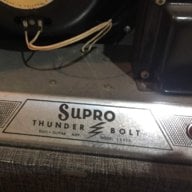
Agree 100% - the L-2000 is the most versatile bass out there in both active and passive modes.
 
I prefer "passive", because I'm allergic to hiss and noise, and I haven't found a practical way to stuff a Neve V-series EQ into a bass yet. So no onboard EQ for me, thanks! (Every bass I have bought with a "preamp" in it has ended up with the preamp unceremoniously stripped out and sold.)

**disclaimer** I personally include EMG actives as 'passives' ( in the sense that I don't use them with any EQ modules, just the pickups... ) :)
 
  • Like
Reactions: Mili
Actually both. A home build 4 stringer sound sweet and punchy fully passive, I will not mess it up by installing a re amp/EQ. I have 1 hybrid passive coupled to active pre amp and 1 fully active (full EMG setup). Each bass has its upsides and flaws but I wouldn't want to change a thing.
 
Not having ever played an active bass I am asking for advice.

It's never made a difference to me. I try a bass, and if it feels and sounds right, then I like it.

I do prefer having active EQ on the bass... but not just any preamp will do. On a lot of active basses, I'd rather they were passive as their EQ is poor and at least a passive tone controls is always useful for me.

There really isn't anything to it, besides the fact that the signal does not get degraded with an active bass using long cables like it would using a passive bass. If you think about it, a passive bass will be plugged into some sort of preamp too, so whatever the difference it happens between the bass and the amp (or pedals)... IMO a lot of people make it out to be something it's not. Just like the general assumption that active = high output, which it just is not true.

So, in short: use whatever feels and sounds good to you.
 
  • Like
Reactions: Mili
It totally depends on the gigs you play, and how you approach the instrument. Some have no love of, or use for active. Others get frustrated with a passive instrument.

I only have active basses, in part because I want to be able to tweak my sound without touching the amp (which I may or may not be able to get to, and may or may not be giving a post-eq DI feed). I've run my basses passive from time to time and there is an attraction ("purity of essence") but at the end of the day, I want an active mid and bass control, ideally along with a passive tone rolloff.
That's what my preferred controls would be: passive tone control and an active mids module with a frequency selector control.
 
Not having ever played an active bass I am asking for advice.

Both can be great if designed properly and put on an instrument that sounds good. Many experienced players tinker, it’s been that way since the beginning of music pretty much, we wouldn’t have the preponderance of electric instrument choices we do if not. I ripped the active electronics out of a very high end bass i own after the chip went bad (it’s a Schack and they went out of business for a while, couldn’t get a new board), and have never considered going back because it’s fantastic passive. I have an Ohana ukulele bass with a Fishman preamp that sounds incredible. My passive Mustang P/J sounds great but I hate the noise of the bridge pickup in the studio, so I’m thinking EMG’s are in the future for that one, mainly because I know the pickup placement is good, and I want to try something new.

There can even be very mediocre designs, and fantastic ones, from the same company. Ibanez in particular has seemed to run the gamut from fairly useless to awe inspiring with their active systems. So rather than thinking “is active as good/better than passive,” a more experienced mindset is, “how do the electronics help this bass do the best job.” As a noob, don’t buy just because of a price tag or specs in a catalog, see how it feels and let your ears decide if that’s the sound you want. If that changes over time, so be it, there are plenty of other pickup systems and other basses out there. Gotta start somewhere, just try to make the tough decisions with your hands and ears as opposed to what looks like it should work.
 
I will never forget the time I was sitting and waiting my turn to get on stage at a popular Los Angeles suburb open mic when the host and bassist stopped in the middle of a song to announce that he needs to change his battery. The entire audience waited patiently while watching him turn 4 screws and swap out his battery. I vowed to NEVER own an active bass.
Things are different now but the lesson learned remains the same:
Don't play gigs that don't pay enough to cover the cost of a new 9 volt battery or two.

Does anyone else save their half used bass batteries for your smoke detectors like I do?
 
How do you like your PB5? That is one of the ones I'm looking at.
I like my PB5 quite a bit. Ive been playing it the most since i got it in March this year. I have a fretless one
Its fairly light weight for a 5 string. The action is fantastic. The P pickup kiesel makes is killer, the soapbar in the bridge is ok. It really helps define notes in the lower register. As i mention, i like the 2 band eq without a mid control.

I think it would be pretty hard to beat the PB5 for the $$ as long as you dont go wild with options. Especially if youre looking for just a few more options than Fender has on the Precision V.
 
Passive only for me. I've had active basses, but anything that creates more to do (changing out 9V batteries) I generally avoid. If you want to have more control over your tone, than maybe it's for you. I'm not enough of a sound geek to care.
 
I had to vote for passive, but that isn't the total case for me.

Both my Yamaha (DP123 J-set) and FauxFender P (DP122 Model P) have DiMarzio PUPs in them, with nothing more than volume and a tone control (and a Gibson PUP toggle for the Yamaha). They rock as passive instruments.

I did have an 80's SB-Series Aria that I had outfitted with EMG 35P PUPs. The 6 string set happened to fit the stock cut outs perfectly, so in they went. I also used an EMG EXB tone control. Totally active, and an incredible sounding instrument.

Still have all those electronic bits stored away somewhere, but the bass is in a landfill, after taking a nasty (and un-repairable fall).

For that, I profusely apologize to all TB'rs everywhere, and hope to atone for my sins of neglect by building a custom instrument at some point to make up for the loss!
 
I own both and use both, though these days the passive gets the gig most of the time.

My only recommendation is to go out and try active basses, is that an option? I understand you're looking at a custom build, but if you've never played ANY active bass, trying some might at least give you an idea whether or not it's for you.
 
  • Like
Reactions: Atshen
I own far more actives than passives, but each has its place and specific voice for specific needs. My actives (Spectors, Warwicks, Rays, etc...) I prefer to metal and hard rock. My passives I prefer to use for classic rock or Maiden tunes, or really anything other than metal.