• TalkBass has been independent since 1998. Add your voice.
    Create a free account to reply to discussions, view embedded media, and browse with fewer display ads.
    Join freeLog in
    Want zero display ads or expanded classifieds tools? Compare plans.

Cutting Through the Mix

...I've found that playing something different (phrasing or note selection) generally gives me more satisfaction than trying to 'mow' my way through the ensemble.
big +1

arrangement is such a big part of creating a good "mix", so that the players aren't all stepping on each other's parts.

(hmm, "stepping on each other's parts" is a double entendre, but the meaning is kinda the same :p)
 
There are a lot of good tips in every post here. I especially like that "cutting through" and "sitting in" were pointed out as being two very different things. I've also never been able to take part in the front-of-house world, so information from that side of things is very useful to me. Ultimately, I personally find it humorous that every review or question pertaining to any electric bass is answered with the ubiquitous "it cuts through the mix really well."

During my formative years as a bass player (early 90's), my local shops were overflowing with 70's and 80's rigs, and they were in my price range, so that's what I used. A lot of Sunn and Peavey, a few solid state Ampegs, some Trace Elliot heads, older Kustom rigs - stuff that was considered worn out and disposable that some people seem to be tracking down now. The one thing that the majority of them had in common was a sort of generic tone that blended in well. They all had their flavors, but ultimately they were loud, somewhat gritty, and somewhat flat sounding, but in a good way. Even mid scooped, a lot of them still had mid range presence that meshed really well with everything (except the Trace's - for some reason those always sounded really scooped to me, even when they were set flat). When we would get together to jam, we all just kind of cranked up and played - I'll be the first to admit that I didn't know jack about EQ settings back then - overall, though, we'd trade gear now and then and try to get the same sound on stage that we had in our rehearsal space, which was packed full of couches, and the walls were carpeted.
Moving on to the point here - back then, everyone in the band was young and starving for attention from the fairer sex, so we all played loud and tried to make ourselves heard and a bunch of individuals, rather than a band - we'd try to "cut through the mix" as it were. Since then, my wild oats have been sown, and I like to think that I've matured as a musician. I don't bring my 8x10 to coffee house gigs anymore. Rather, I try to write bass lines that keep a heartbeat with the drums and give the guitar player something to stand on. I want to stay underneath and out of sight, but I also want the sound to seem empty without me - otherwise, what's my purpose in the band?
 
I think it's an unfortunate term. I usually think in terms of how I "sit in the mix." How my sound (whether it be guitar or bass) coexists with other instruments in the mix, neither walking on other instruments nor being walked on... having my own defined space in which to operate.

I've developed the habit over the years of preferring to hear whatever instrument I'm playing "down in the mix" a bit. I feel that it helps me play a bit more aggressively. I try to encourage younger players to also develop this habit. It takes some work but generally makes sound checks and relationships with other band members go much smoother.

I cannot fathom people who have to be the loudest thing in the mix at any given time. How the heck do you make music if you can't hear what the other players in the band are doing?

The whole huge bottom thing... years ago, I used to work at this company with several really large people. Occasionally, I'd find myself trying to walk down a narrow hallway with one of these folks coming at me from the other direction.... I noticed that the fat guy never did anything but waddle straight down the middle of the hall, while everyone else is diving out of the way, hugging the wall to let this guy pass. I never want to be that kind of inconsiderate player.
 
  • Like
Reactions: Herrick
Cool thread.

One observation: The "scooped" sound isn't always bad in a live setting. I use an MXR M-80 bass DI, and when the distortion is engaged, the "color" funtion turns out automatically to bump the lows up and the mids down, slightly.

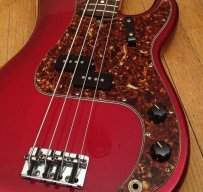
I find that in MY context, it works - I'm playing a bass with strong mids anyway (Squier P-Bass with Bill Lawrence pickup) and mostly with a pick. given that we're a punk band, this works, because now I'm no longer fighting with the vocals, guitar, and snare (midrangey instruments all).

So, there's a least one setting where a midscoop can work. Sometimes, the best way to "cut through" and/or blend in is to back off slightly.
 
I agree that arrangements are just as important (maybe moreso) than anything else. It's one of the things that set a more experienced, mature, team player apart from the masses.