• TalkBass has been independent since 1998. Add your voice.
    Create a free account to reply to discussions, view embedded media, and browse with fewer display ads.
    Join freeLog in
    Want zero display ads or expanded classifieds tools? Compare plans.

D-string not cutting through?

Hi guys,

I need some input on this one. Here's my problem :

Whenever playing in a live situation (let's say, a rehearsal, for example), I like to EQ kinda' flat. The tone I get is absolutely great out of both of my basses. Only problem is, my E and A strings sound enormous, but when I get to play on my D-string, the notes get completely lost in the mix, especially when the guitar plays heavy power chords. (No noticeable problem with the G-string.) The only way to make these notes cut through more was to boost the mids (a lot) and the "300Hz" frequency on my amp's graphic EQ (a lot). But even then, my E and A strings sound way more than the D one, and that causes unbalance in my sound/playing. Is there a "magical" solution, a frequency I should boost so to make these notes (D-D#-E-F-F#-G) more audible while not boosting too much of the lower pitches?

The issue is the same with both of my basses, so I know it's not caused by the instrument. I changed strings, same result. Could it be a problem with the amp? The cab?

(Oh, BTW, my gear is : *Basses* Warwick Streamer Stage I / Ibanez SR500 --- *Amp* Ampeg SVT-3 Pro --- *Cab* Ampeg SVT410 HLF)

Thanks for your advice!
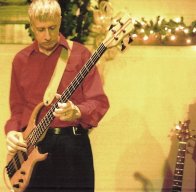
 
I don't know if this works out for you, but you could always try to rest your right hand thumb on the E-string (If you're playing a 4 string) instead of the pick-up (If you're normally playing that way.)

I had a similar problem a few years ago and I just made that change and the problem was solved.

That may not be your case, but give it a try.
 

So the problem isn’t with the whole D string, just certain notes? Do you get the same problem when you play those same notes on the A string?

Regards,
Wayne A. Pflughaupt


Hi WayneP,

in fact, it seems that the problem of not being loud enough is with the whole string, but really worse in the range I mentioned ( from about D to G). When I play the notes on the A string, it seems to be a little bit better, but still doesn't cut through as much as the lower notes.

I've also realized the problem doesn't come from the amp, since I have the same issue with my practice amp.

Maybe the guitarist has his lows boosted too much (I don't think so, but, well..)?

I'm going to test a few things at rehearsal this afternoon, I will keep you guys posted. Thanks!

try this... raise the loud string a little and lower the weak string. just a little will go a long way.
I believe, by "raising" and "lowering", you mean changing the action of these strings, don't you?
 
Tests done on both basses.

First, I've tried moving my D-string closer to my pickups by lowering the action. Slight change, but nothing to get excited about.

Then, I've raised the pickups towards the high end a bit and lowered them at the other side (E and A strings side). Again, this got the output more balanced, but not much.

I found that in order to make my D string really cut well through the mix today, I had to :
- raise my pickups
- lower the D string and raise the others
- Boost the 300Hz frequency more than the other frequencies.
- Boost the parametric EQ's midrange on my Ampeg with selected frequency : "2" (+/- 450Hz)

These changes made a HUGE difference when playing alone, but with the band, almost nothing.

I don't consider that to be normal. Either it's an amp/cab problem, or my lack of experience with EQ is playing against me. Please give any advice you can about this, even if you feel like it might not be exactly what I'm looking for.

Thanks guys!
 
Try to change where your amp is in your rehersal space.
Acoustics can be bitchy sometimes......

Certain frequencies can Null out and some other are boosted depending on where you are on a room.

Can be just that ......
 
Thanks for the replies, guys.

I'll indeed try to move my rig to another location in the rehearsal room. This is a great time to do it, we're going to studio this week so I'll have more space to work with since the amps and drums are not in the room.
Hope this works.

BTW, We moved our gear in the rehearsal space a couple of weeks ago, but I can't really tell if it was better before, because back then I was playing almost behind my amp, not really hearing myself, but playing way too loud for the rest of the band (because they had my cab right in front of them... oh well, that was... bad.)

@ PJMiDi : I am tuned most often this way : C#-G#-C#-F#
But from times to times we also use standard tuning and results are, to my ears, the same. However, your post sounded very familiar to me, because I have the exact same problem (I get lost especially when he's playing bar chords in drop D (C# in our case))
 
Hey guys,

We tried moving our rigs in the rehearsal space.

We noticed a slight change in the sound, but my problem is still there. Again, I believe the problem is really with the mix, because :

When I play alone, the notes I mentioned above are as loud as the lower and higher ones. No problem there.
When I play along with the drums, no problem either.
When I play along with the drums and guitars, no problem, as long as the guitars are playing something in the higher range or palm-muted chords/notes.
The real issue is when the guitarist plays power chords in the guitar's lowest register. Then, I can't play anything above middle C up to somewhere about G or A, or else I get lost.

Is there anything I can do without boosting too much of one frequency (that gets me a real crappy tone) ?

Thanks a lot!
 
sorry to harsh on my fellow TBers who have replied, but I can't believe all this talk of amps, eq, etc. has ocurred without first just realizing that that's the way it is, with ANY bass or stringed instrument. Larger strings = more sound and tone as compared to thinner/lighter strings. I have a book, titled (I believe) Bass Grooves that discusses this phenonmenon. If you want to groove, and keep that volume and tone, play those notes higher up the neck on the A or E string, you should notice your problems are solved

the other topic is this craziness of "cutting through" - not everyone can "cut through"; everyone should aim to fit in the mix where they should in the sonic spectrum. My .02....

Mark
 
sorry to harsh on my fellow TBers who have replied, but I can't believe all this talk of amps, eq, etc. has ocurred without first just realizing that that's the way it is, with ANY bass or stringed instrument. Larger strings = more sound and tone as compared to thinner/lighter strings. I have a book, titled (I believe) Bass Grooves that discusses this phenonmenon. If you want to groove, and keep that volume and tone, play those notes higher up the neck on the A or E string, you should notice your problems are solved

the other topic is this craziness of "cutting through" - not everyone can "cut through"; everyone should aim to fit in the mix where they should in the sonic spectrum. My .02....

Mark

Mark,

I understand what you are saying, and I know about the phenomenon of bigger strings = more power/tone/groove, whatever. But as stated before, if this was the only problem, it would be even worse on the G string, which is not the case. Actually I hear way more of my G string notes than those of my D string.

@ Everyone : thanks for your input, I'm gonna discuss that with my guitarist, I know he will understand. But will he sacrifice some of his tone for the band's sake? Is he humble enough to do that? :smug: I believe he is, so we'll see.