• TalkBass has been independent since 1998. Add your voice.
    Create a free account to reply to discussions, view embedded media, and browse with fewer display ads.
    Join freeLog in
    Want zero display ads or expanded classifieds tools? Compare plans.

Dialing in your tone

Gorilla Monsoon

Magician...Can turn a car into a driveway...
Supporting Member
Aug 27, 2022
4,703
16,346
The Swamp
Realize this is wide open, but how do you get the tone you want out of your rig? I’m currently running an Ampeg PF50T into a Bergantino CL212, and am switching between three fretless instruments. My personal preference is to start with everything flat, setting my midrange frequency switch to the highest selection- affecting the 3kh range, and slightly boosting the amp bass and midrange while slightly dropping the treble on the amp. In essence, I’m boosting the mids, cutting the treble and just slightly boosting the amp bass control. I start with all controls on the instrument set flat as well. There’s no real issue here, but of the three basses in the room, the one I’m having trouble with dialing in is a Ken Smith. I’ll get it right eventually, as this was my fav to play over phones, but this is the only instrument with a midrange knob. I’ve seen some UTube examples of this same head with some crazy different variations in amp tone controls, and I get the idea that different strokes for different folks, but how do you guys tackle a new setup in terms of what YOU boost and/or cut? I don’t feel like this is necessarily limited to any head/cabinet setup, and is purely personal preference, but am curious as to how others look at tone. I feel like the midrange is the best tone control to start with, as its effect is global.

 
The first step is to select a bass, amp, and cab that can give you the sound you want.

Before playing with others, I try to dial in a sound that will work in the mix. Keep in mind, that what sounds ideal when you play alone is different than what sounds ideal in a mix. It's even more complicated than that. What works in one mix may not be optimal in the next. So essentially every time you move the rig, it tends to be necessary dial-in your sound.

The biggest difference between my ideal bedroom tone and the tone I use in a live mix is a live sound typically has less lows, more mids, and more treble. So before sound check I try to dial in a lean sound what lots of clarity. But typically, once the group starts playing, I find it necessary to go even more extreme.

I normally use primarily my amp's tone controls to dial in my overall sound. If the amp can't get me all the way there, I will reach for the bass's controls. Then as different songs require different tones and feels, I adjust the controls on my bass. If I need more volume during the show, I turn up the amp. Also if my overall tone needs an adjustment during the show, I adjust the amp. So basically, the bass's controls are used primarily for tonal variances that occur from one song to the next.

The bass, amp, and cab work together to produce the resulting sound. If you swap any one of the three components out, you may get unacceptable results.

Ideally if you will be switching between different instruments, you will have separate channels for each instrument. For optimal results, each channel should have a mute, gain, and tone controls. My last touring rig consisted of an 8-channel Ashley MX508 rack mixer and a QSC power amp, and I frequently switched between three drastically different basses.

So apparently the Smith bass does not work effectively with your amp and cab to produce the sound you want. If the bass's controls can't get you where you want, one possible solution is to get a pedal preamp or EQ that is only used with the Smith bass. If you still can't get a good tone, then you may need a different amp or cab. Ultimately you may simply not really like the sound of the Smith bass.

IMHO trying to use a single channel amp with three different instruments is a pretty significant compromise. The best solution may simply be to switch instruments less.

For context, I switched between a fretted Yamaha TRB-6P 6-string bass guitar, an NS Design US series 6-string electric upright, and a traditional acoustic upright bass. These three instruments produce a drastically different sound and feel. I don't ever remember doing a gig where I switched between different bass guitars. I probably did a few times a long time ago, but ultimately, I did not feel it was worth the extra hassle and effort.
 
I’m just messing around in a townhouse living room, I’m not playing out, nor with anyone at this point. What you described is interesting, though. The three basses in the room are 35, 34, and 30” scale, and very different in other respects as well. The room I’m in is too small for any real first fundamentals and the volume is going to be obviously limited, but I’m havin’ fun. I’m curious as to how other people approach finding their own sweet spot. I’ve thought about throwing a preamp into the mix, but prefer to run clean and keep it simple. I should be able to get what I’m looking for with what I’ve got.
 
I'm similar to Wasnex in that first I choose the amp and cab that will get me closest to what I want right off the bat. Then yea, everything flat, bass' volume and tone wide open, then go from there. The longer I play the more I believe it's all about the mid control. And not just one mid control, but low mids (say 150 to maybe 550 hz) and high mids (like 750ish to 1.5k ish.) Many folks have different freq ranges they prefer, I just find that in the amps I have that have freq markings, this is where I am dialing in my boost/cut frequencies.

That's my only beef with the Tone Hammer heads - I wish they had two bands of semi-parametric mids!

I have quit bothering with chasing the lowest frequency response and "fundamental". In many cases that just seems to lead to excess volume and early ear fatigue, especially in a live setting. But yea.... home just grooving by myself it sure is fun to just shake the floors sometimes. Haha!

The other thing I've been toying around with lately is finding jjjuuusssttttt the right amount of drive/overdrive to thicken things up but not get "dirty." It feels like a lot of amps and pedals have drive/overdrive that starts coming on too aggressive... like kicking in at 40% or something and going up from there. I want like.... 3% to 7% or something, haha! The Tone Hammer is the best at this in its native format that I've come across so far, but dangit if that sing band of mids doesn't keep me from being able to yank out some of the boxy 400-500hz range while wanting to boost that 125-225ish range or 750-1k range. I have a GK Legacy head and its drive tones are much sharper/brighter. I can't dial the drive down enough on that one, but the clean channel with the gain up is pretty nice.
 
The reason I picked up the PF50T was to see how it would sound with a Rob Allen Mouse I picked up here. My old amp is an Eden 300 Traveller I’ve had since last century. Sure enough, the Ampeg made a really nice difference, exceeding my expectations. What really surprised me, though was how much better my GGi5 sounded with the smaller amp. The “B” sounded much better in first position, and overall, the little 50 Watt head is much more detailed than the Eden; I was pleasantly surprised with this. I’m planning on waiting until after NAMM and seeing how many Berg amps show up here so their owners can pick up whatever new stuff Bergantino puts out.
 
Realize this is wide open, but how do you get the tone you want out of your rig? I’m currently running an Ampeg PF50T into a Bergantino CL212, and am switching between three fretless instruments.
Well there's yer problem ;)

Anyway. What I'd do is get a multi-FX unit. Set the amp flat, then tweak the tone using compression and EQ. Adjust one setting at a time. While you're at it, you might as well dial in an HPF. Save that setting, then repeat for the other instruments.

Something like the Zoom B1 Four is cheap, sounds great, and is easy to program. It has almost every effect you could possibly want, including numerous preamps, amp sims and cab sims. You can also use it as a headphone amp along with a line in.
 
Well, I have a Squier Jag SS with Bartolini 8S P pickups (conventional P wiring) and GHS Precision Flats, and spent years looking for the right amp to achieve the right sound from it.

My Hartke head and Eden cab were too sterile, and my Fender Rumble 150 had too dry of a midrange, leading to a totally bland sound.

I could hear thru my studio headphone rig that the amps were at fault. So I went out and audition a bunch of different amps, some sounding ok.

Then I stumbled upon Orange, and bought their Orange Crush Bass 50. I can finally hear the full vintage P bass sound I was after.
 
I literally just spin knobs around until I find something that sounds generally ok. Then I sit there for a while and listen closely to see if there are some frequencies that I want to cut or boost. Make a little adjustment and sit there a while longer and listen. Wash and repeat as necessary until you’re settled.
 
  • Like
Reactions: InhumanResource
The short version for my process is to get most of it on the amp, fine tune from the bass, with some tone control and more hands or pick, where I'm hitting the strings. And the more I can stay away from big boosts or cuts, the better.

The other thing: Tone control (and control in general) is different on a barely-enough amp running hard to keep up and a big amp cruising in fifth gear under no strain. Apply a multiple or two to this IF you're running a five or six-string bass with the low B and the other depth charge low notes.
 
I run through a MoMark 800 watt into a RevSound 2x10. I keep everything at 12 o'clock. Then I do whatever my sound person asks me to do. He's out front, I'm not. He's been with us for nearly a year now. And he's a bass player. I like that part a lot.:roflmao:
 
Last edited:
Realize this is wide open, but how do you get the tone you want out of your rig? I’m currently running an Ampeg PF50T into a Bergantino CL212, and am switching between three fretless instruments. My personal preference is to start with everything flat, setting my midrange frequency switch to the highest selection- affecting the 3kh range, and slightly boosting the amp bass and midrange while slightly dropping the treble on the amp. In essence, I’m boosting the mids, cutting the treble and just slightly boosting the amp bass control. I start with all controls on the instrument set flat as well. There’s no real issue here, but of the three basses in the room, the one I’m having trouble with dialing in is a Ken Smith. I’ll get it right eventually, as this was my fav to play over phones, but this is the only instrument with a midrange knob. I’ve seen some UTube examples of this same head with some crazy different variations in amp tone controls, and I get the idea that different strokes for different folks, but how do you guys tackle a new setup in terms of what YOU boost and/or cut? I don’t feel like this is necessarily limited to any head/cabinet setup, and is purely personal preference, but am curious as to how others look at tone. I feel like the midrange is the best tone control to start with, as its effect is global.
Flat with a slight high-mid boost and a slight low-mid cut, then adjust the lowest knob / slider for the room.
 
  • Like
Reactions: George Dennis
My PF-50T into a Genzler BA12-3 dialed B/M/T to 6, Gain, Vol, and Mid selector at 3, Low in, High out sounded immediately terrific.

I dialed the gain down a hair.
Next, dialed the bass up to the room.
Boosted volume a hair to fit the practice room.
Adjusted treble down a notch.

From there, I asked where I didn't want my sonic footprint (e.g. overlapping the vocals) and dialed the mids appropriately (boosting mid gain to 7, and mid selector to match the music and the bass)
 
  • Like
Reactions: TonyP-
Realize this is wide open, but how do you get the tone you want out of your rig? I’m currently running an Ampeg PF50T into a Bergantino CL212, and am switching between three fretless instruments. My personal preference is to start with everything flat, setting my midrange frequency switch to the highest selection- affecting the 3kh range, and slightly boosting the amp bass and midrange while slightly dropping the treble on the amp. In essence, I’m boosting the mids, cutting the treble and just slightly boosting the amp bass control. I start with all controls on the instrument set flat as well. There’s no real issue here, but of the three basses in the room, the one I’m having trouble with dialing in is a Ken Smith. I’ll get it right eventually, as this was my fav to play over phones, but this is the only instrument with a midrange knob. I’ve seen some UTube examples of this same head with some crazy different variations in amp tone controls, and I get the idea that different strokes for different folks, but how do you guys tackle a new setup in terms of what YOU boost and/or cut? I don’t feel like this is necessarily limited to any head/cabinet setup, and is purely personal preference, but am curious as to how others look at tone. I feel like the midrange is the best tone control to start with, as its effect is global.

If I'm reading right, you're slightly boosting the very highest mids. You might want to experiment with leaving everything else as it is, but dialing down the mid frequency. That can make a big difference.
 
On the pf50t I leave the buttons out bass and treble cut slightly and mids boosted slightly at the middle switch (800).

be aware that the ultra low switch also scoops out some mids, so I don’t generally use it unless I need a scoop.

That amp does seem to breakup earlier than expected vs other small amps but apart from
The switches, the EQ is intuitive.
Does your bass boost or cut similar frequencies that you are boosting or cutting with the amp? That can cause tone problems.
 
Well there's yer problem ;)

Anyway. What I'd do is get a multi-FX unit. Set the amp flat, then tweak the tone using compression and EQ. Adjust one setting at a time. While you're at it, you might as well dial in an HPF. Save that setting, then repeat for the other instruments.

Something like the Zoom B1 Four is cheap, sounds great, and is easy to program. It has almost every effect you could possibly want, including numerous preamps, amp sims and cab sims. You can also use it as a headphone amp along with a line in.
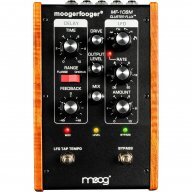
I hear what you’re saying about compression; years ago, I got a Trace Elliot compression pedal and it just darkened my sound...A lot... I’m looking at one of the Bergantino heads with compression hoping for a cleaner sound. I really want to avoid throwing anything into the signal along those lines. For years I played through a moogerfooger envelope, and I felt it just covered up poor playing and once I started playing clean through a Phil Jones Bighead headphone amp, I gave it up. For a long time, I fought the chasm in tone between the B,E, A and the D & G strings. I hated playing in first position and when I played a four string, I hated playing anything in C. Once I made the switch to a five string, that really opened up things for me. I’m only playing flats now, and I feel like that makes a bass sound like a bass rather than a guitar as far as the D & G strings are concerned, but that’s a whole new conversation. Playing over phones is a different animal than a cabinet, that’s for sure. The size of the transducer is exponentially different, and once I made the decision to start playing over a cabinet, I regretted not having done it sooner, but townhouse etiquette made that rough.
 
I have a preamp pedal I really like. I have an amp I really like, I set that pretty flat to my ears although I admit “flat” is not so flat always. I use active and passive basses so I use a Source EQ2 with “level” setting for every bass I own so no matter what I have it’s hitting amp and/or DI at the same-ish signal strength.

Then if I need to tweak it’s usually the mids I’ll monkey with to fit a room.
 
On the pf50t I leave the buttons out bass and treble cut slightly and mids boosted slightly at the middle switch (800).

be aware that the ultra low switch also scoops out some mids, so I don’t generally use it unless I need a scoop.

That amp does seem to breakup earlier than expected vs other small amps but apart from
The switches, the EQ is intuitive.
Does your bass boost or cut similar frequencies that you are boosting or cutting with the amp? That can cause tone problems.
I usually play with the low switch in after I warm up. As far as what these basses cut or boost, the one bass I bought the head for has a fixed tone control, and uses only a volume through a piezo. I’m fine with that one. The Smith bass is a different animal. I honestly don’t know what it’s doing, at least over the PF50- at times even a small adjustment seems to produce the opposite desired result, but I haven’t had a lot of time to fiddle with it. Overall, the GGi5 yields the best results, although the blend knob is backwards, and I’ve gotten used to that. My playing time is limited because my neighbors are only a foot away. I can only play between noon and about 6pm on weekdays, and I stop playing after 8pm on Friday and Saturday nights. I won’t play after dark on Sunday, and I keep the volume low regardless. I’m really looking forward to getting out of here and into a single family home.