• TalkBass has been independent since 1998. Add your voice.
    Create a free account to reply to discussions, view embedded media, and browse with fewer display ads.
    Join freeLog in
    Want zero display ads or expanded classifieds tools? Compare plans.

Dingwall Owners Club

This is an interesting observation. Now I'm wondering how much of the series sound I love is related to the perceived boost in volume alone. Almost like it's tough going 35 after youve been flying down the highway. Might be worth it to spend some time in parallel.
I know, it is kind of lame. But I never really thought about the settings being adjustable volume-wise. Your analogy is quite apt. I have often switched to parallel, and said, nah that's kind of weak and lacked phatness. I never really said, let me play with this setting and try to get a good tone from it in its own right.

Now, on a different bass, I might play it on series rather than parallel. Not trying to say that series is a bad setting. But for my ABZ, to my ear, it is the sweet spot. I never would have figured that out had I not left it in parallel, and started playing around with it as if it were in series. Really weird! Also, it took my palette a while to really get that setting. But now that I have, I LOVE it! It absolutely kills in a mix, and my band is doing lots of heavier rock. Very tight. Very controlled low end, but growly and incredibly clear and phat in the mix. And when I'm playing on the D and G, I don't cringe, I smile.
 
  • Like
Reactions: bebass
Series traditionally give a low-mid bump and rolls off the highs and the deep lows. While the parallel traditionally is a little wider and smoother in the mids, sometimes with a bit of a scoop. That's one of the main differences with the Precision and Jazz tones. Precision is traditionally two coils wired in series and Jazz basses are two coils wired in parallel.

To me, in a live setting that low mid forward tone is more important than the extension. I roll off my highs and HP my deep lows. The low mids give punch and definition to the note envelope. After moving from Jazz basses (all of the 90s and before) to an old Precision from 2000-2005, I found that I couldn't really go back to a Jazz bass sound. It comes across as too nasal for me. My live setting also has an additional 'bump' added by way of power amp DSP ~180hz in a tight Q by about 4db...
Of course, this is a different bass than yours, being an ABZ, so YMMV, but I do not find the tone in the parallel setting to be nasally at all. In fact, I find the series setting to be nasally, at least in the highs. The parallel setting is not nasally at all, just PHAT. Of course, we may be using different words to describe the same thing, who knows? LOL! I'm not an expert like some people on TB are with regard to describing what I hear.
 
  • Like
Reactions: 99Z3
I think I've been subconsciously in agreement with @BurningSkies, in that I've been valuing the more mid-forward, rolled off tones lately. I definitely go to the parallel setting on my PJ when I want a scooped, really rich and cradle-y sound, but the Z3 I keep mostly in series (I've tended to pick one or the other to put in series in the mid/bridge position). Still, it's worth exploring parallel a bit more than I have. Thanks for the insight there, Bob.
 
I think I've been subconsciously in agreement with @BurningSkies, in that I've been valuing the more mid-forward, rolled off tones lately. I definitely go to the parallel setting on my PJ when I want a scooped, really rich and cradle-y sound, but the Z3 I keep mostly in series (I've tended to pick one or the other to put in series in the mid/bridge position). Still, it's worth exploring parallel a bit more than I have. Thanks for the insight there, Bob.
Try leaving it there and playing around that setting for a week or two. Mess with the volume, tone controls etc. That's what I did, and now I crave that tone, totally flat! Of course, so much of this is based on your rig as well!! So again, YMMV!
 
  • Like
Reactions: 99Z3
Series traditionally gives a low-mid bump and rolls off the highs and the deep lows. While the parallel traditionally is a little wider and smoother in the mids, sometimes with a bit of a scoop. That's one of the main differences with the Precision and Jazz tones. Precision is traditionally two coils wired in series and Jazz basses are two coils wired in parallel.

To me, in a live setting that low mid forward tone is more important than the extension. I roll off my highs and HP my deep lows. The low mids give punch and definition to the note envelope. After moving from Jazz basses (all of the 90s and before) to an old Precision from 2000-2005, I found that I couldn't really go back to a Jazz bass sound. It comes across as too nasal for me. My live setting also has an additional 'bump' added by way of power amp DSP ~180hz in a tight Q by about 4db...
One good thing, is we play the same head, so we at least have that as an overlap. A lot of this is no doubt rig affected as well.
 
  • Like
Reactions: 99Z3
Of course, this is a different bass than yours, being an ABZ, so YMMV, but I do not find the tone in the parallel setting to be nasally at all. In fact, I find the series setting to be nasally, at least in the highs. The parallel setting is not nasally at all, just PHAT. Of course, we may be using different words to describe the same thing, who knows? LOL! I'm not an expert like some people on TB are with regard to describing what I hear.

Remember, I've had an AB as well. ;) And the 'nasal' thing is probably the most important aspect to what's traditionally a Jazz bass tone and what a lot of people want. It's more content in the upper mids if not a bit of a bump there...it works for lots of people, just not me. To the same extent that I love Telecaster tone, but like Strat tone a bit less. What's the joke? A Strat is a Tele with a cold?


 
Never heard that one but I will say a tele is something you have to be careful with. Just like you never give a kid a sharp knife, I think a guitarist should have to demonstrate some tonal responsibility before you let him loose with a tele and a deluxe. That shizz can be PAINFULLY shrill.

In the right hands, you can do the bright Tele thing and have it sound fantastic. Most of the pro guys I know do roll back the tone at the bridge a little bit. I used to have this nice pair, but now only have the ice blue metallic one.

14737240866_23fdec83e4_o.jpg
 
I guess what I have discovered is that, no doubt, the series settings provide a stronger and bigger signal, with of course some differing emphasis of the frequencies, but that I can also boost the volume while in parallel to get back to bigger and fatter, but with a different frequency response that is still useful. The volume of my ABZ (the overall amplitude of the output signal) no doubt drops when I am in parallel, but if I boost the volume up to compensate I can get back to really big and fat, but the lows remain more tight and defined, and never get boomy, and the highs tend to sound to my ear, more musical and sweet rather than snarly and nasally, which always sent me off trying to EQ that out to some extent.

BTW, I do realize that the P-tone (or just internally series) setting would help improve the tone of the neck pickup solo. I am going to try it for that reason. But I am a bit concerned what it will do to the my favorite parallel setting. If the P-tone makes the neck solo tone more P like, and also improves or at least doesn't adversely affect my parallel tone, I would be very happy about that!
The bottom end was always a little bit too tight for me, now neck solo is perfect and neck-bridge in series is big when I need to be big
 
Well, I had my last rehearsal with one of my bands tonight, before leaving on a few weeks of vacation. I don't know why, but I felt like my Afterburner "1.5" and Axe-Fx II just sounded stupid good tonight. I made a new preset that has two amps (Ampeg SVT + Diezel Herbet, ch 2) and did some slight compression and EQ changes. I have to work on it a little bit more as the low end was a bit over the top, especially in Drop-A. But man, it sure was tasty good.

I did end up shipping out my V4 Combustion today too - it sold earlier this week and payment cleared. So the bass that got me into Dingwalls is off to another owner, hopefully to get them hooked as well. Another week ticks off for my custom build as well. It's been a pretty OK week, musically speaking. I go on vacation, come back and two days later get to share a stage with Otep.
 
So I've been DASing for an SJ5 for a while now. I've been researching the net, but haven't found a lot of info comparing the various pickup options. I was wondering if any of you may have some insight?

I'm particularly interested in differences between the SF5 pickups and the FD3s. My understanding is the SFs may be more vintage leaning, but I thought I read where Sheldon preferred the FDs on this bass?

I've also been wondering about the "traditional" standard pickup location vs the 3X. It seems the 3X may be a more versatile setup, but do you lose anything vs the 2 pickups config? It looks like the outer most pups in the 3X setup are not exactly in the same location as the standard J setup. Can anyone speak to how far off the locations are, and any possible tonal effects?

I know this is all pretty subjective stuff, but I'd love to hear any thoughts some of you may have. Thanks!
 
So I've been DASing for an SJ5 for a while now. I've been researching the net, but haven't found a lot of info comparing the various pickup options. I was wondering if any of you may have some insight?

I'm particularly interested in differences between the SF5 pickups and the FD3s. My understanding is the SFs may be more vintage leaning, but I thought I read where Sheldon preferred the FDs on this bass?

I've also been wondering about the "traditional" standard pickup location vs the 3X. It seems the 3X may be a more versatile setup, but do you lose anything vs the 2 pickups config? It looks like the outer most pups in the 3X setup are not exactly in the same location as the standard J setup. Can anyone speak to how far off the locations are, and any possible tonal effects?

I know this is all pretty subjective stuff, but I'd love to hear any thoughts some of you may have. Thanks!
I remember someone said there was a fellow who posted on the facebook group that ordered with 2 pickups instead of 3 and had a specific reason. I never saw the post. 3 would have to be killer, but there may be some type of interaction or placement that makes 2 a good think.
I am in the same dilemma as I haven't decided which to order with a Super J.
 
So I've been DASing for an SJ5 for a while now. I've been researching the net, but haven't found a lot of info comparing the various pickup options. I was wondering if any of you may have some insight?

I'm particularly interested in differences between the SF5 pickups and the FD3s. My understanding is the SFs may be more vintage leaning, but I thought I read where Sheldon preferred the FDs on this bass?

I've also been wondering about the "traditional" standard pickup location vs the 3X. It seems the 3X may be a more versatile setup, but do you lose anything vs the 2 pickups config? It looks like the outer most pups in the 3X setup are not exactly in the same location as the standard J setup. Can anyone speak to how far off the locations are, and any possible tonal effects?

I know this is all pretty subjective stuff, but I'd love to hear any thoughts some of you may have. Thanks!

If I were richer in expendable income, I would have an FD3-equipped SJ and would be glad to compare and contrast them, but this is not the case. :rollno: IIRC, Sheldon was opining that the current SJ with the FD3's in the 'sixties positions' copped the vintage tone better than SJ's with fatties in the 'seventies positions'. That is the only comparison that I have heard.
 
I really just want to try a Super P and a Super J at some point! They seem pretty dang awesome and would be a good variety to have along with my ABs. Have you done the normal rounds on Youtube and SoundCloud?

I've played an SP4, SJ4, and SP5. They have all been awesome as you guessed. Then again every DW I have played has been basically perfect to me.

I'll bring a Super P if I can make it to the PNW GTG- really hoping so!

I've done a fair amount of Google research, but probably should probably spend more time digging through YT and SC. Of course I usually find the the slap-centric J bass Internet reviews of limited value.

I remember someone said there was a fellow who posted on the facebook group that ordered with 2 pickups instead of 3 and had a specific reason. I never saw the post. 3 would have to be killer, but there may be some type of interaction or placement that makes 2 a good think.
I am in the same dilemma as I haven't decided which to order with a Super J.

Been pondering the same thing :-)

If I were richer in expendable income, I would have an FD3-equipped SJ and would be glad to compare and contrast them, but this is not the case. :rollno: IIRC, Sheldon was opining that the current SJ with the FD3's in the 'sixties positions' copped the vintage tone better than SJ's with fatties in the 'seventies positions'. That is the only comparison that I have heard.

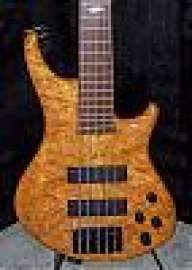
Thanks. That must be what I remembered. Are the SFs always in the 70s position, or does this vary with a given build? How is your beautiful SJ5 configured?
 
Well I've officially joined the Dingwall club. Had it just for a few hours now, but absolutely loving it so far. My other basses should be worried.

Unfortunately so should my wallet, as I now clearly see the reason these are so popular.

oPuTf4Ol.jpg
Very cool. I also like the body color. Was the 3X a special order? Didn't know that was an option for the Combustion.
 

Latest posts