

Enjoy the benefits of a premium membership!
Upgrade Account
-
TalkBass has been independent since 1998. Add your voice.
Create a free account to reply to discussions, view embedded media, and browse with fewer display ads.
Join free Log in
Want zero display ads or expanded classifieds tools? Compare plans.
You are using an out of date browser. It may not display this or other websites correctly.
You should upgrade or use an alternative browser.
You should upgrade or use an alternative browser.
DIY road case - Mesa Subway D800+
- Thread starter BaileyMan
- Start date
More options
Who Replied?
I didn't think to determine the weight before ordering. Most of the hardware is aluminum or plastic. I'm going with 1/4" plywood. I calculated about 3.5 square feet of wood for this project. Hopefully I can find some Baltic Birch or other lighter weight wood and get it in the 5lb range, effectively doubling the weight of the amp...Considering that it will be fairly small, I'm not too concerned about the extra weight. Once it's done I'll post it's weight...
With ¼” plywood, companies often use an outside laminate layer of plastic.

- Feb 12, 2006
- 61,034
- 5
- 220,931
- Disclosures
- Development Engineer-Mesa Boogie, Development Engineer-Genzler (pedals), Product Support-Genz Benz
These are the sorts of things that are encountered when reinventing the wheel.
There is a birch face, luan core plywood that's quite light.
There is a birch face, luan core plywood that's quite light.
Ok...not Baltic birch...somewhere on the internet I thought I'd seen it was a light wood. I'll plan to go to a lumber yard and get some recommendations for a light weight plywood.
Void free ply costs more but this isn’t something that you need for a case. Hardware store plywood is fine. Some ply had one good face, the knotted side can go inside.
This site has some how to case building information.
DIY Road Cases™ Store
I see it more as trying to make a smaller wheel with parts typically used for larger wheels...and I'm learning a lot in the process especially when getting helpful input from the community. Besides, reinventing doesn't always have to be a bad thing or a waste of time. It's stimulating my creativity, gives me a good hobby, is better than binge watching Netflix, and gives me the satisfaction of using things I've made.
Other things that I've reinvented for myself that I use regularly include a $4 plastic briefcase from the thrift store turned into a pedal board (because I couldn't bring myself to shell out the big bucks for a commercially available one) , a super awesome amp stand for my 1x12 that angles the cabinet up and gives me a surface for my amp, a clone of the BJFE Blueberry Bass OD that I've tweaked to meet my needs (because I'm not spending $700+ on a pedal). It's my always on pedal and sounds killer.
For me this kind of reinventing allows me to obtain items that meet my specific needs when they're not commercially available. I guess I'm a maker at heart...
Other things that I've reinvented for myself that I use regularly include a $4 plastic briefcase from the thrift store turned into a pedal board (because I couldn't bring myself to shell out the big bucks for a commercially available one) , a super awesome amp stand for my 1x12 that angles the cabinet up and gives me a surface for my amp, a clone of the BJFE Blueberry Bass OD that I've tweaked to meet my needs (because I'm not spending $700+ on a pedal). It's my always on pedal and sounds killer.
For me this kind of reinventing allows me to obtain items that meet my specific needs when they're not commercially available. I guess I'm a maker at heart...
Cool. That's where I ordered parts from. Do they have info on recommended wood? Have you made any cases with their stuff?Void free ply costs more but this isn’t something that you need for a case. Hardware store plywood is fine. Some ply had one good face, the knotted side can go inside.
This site has some how to case building information.
DIY Road Cases™ Store
Cool. That's where I ordered parts from. Do they have info on recommended wood? Have you made any cases with their stuff?
All my cases are store bought. My ATA cases are ply with rat fur on the outside. They have stood up well, the covering was a less expensive option. I had a top quality custom set built with thicker ply and plastic laminate many years ago. They were expensive then, just like they are now. Prices vary a lot based on the materials used. This allows one company to undercut another.
For a case like you are planning, hardware store ply should be fine. At DIY Road Cases, they use birch ply. What quality, I don’t know. They sell ply laminated with a plastic sheet, cut to order. That makes building easier.
This birch isn’t the same as baltic birch or other plys with birch on the outside. A characteristic of baltic birch is the number of thin plys that give it strength. The pro baltic birch comments below apply more to cabinet workers, but the information is valuable.
Invalid Link Removed
Hardware store building ply typically has less layers, the plys are thicker.
My local big box home improvement store only had pine and maple in 1/4" ply. Maybe there would have been more variety in the 4'x8' size, but that's way more than i need for this project.
I went with the pine, which was not my first choice, but the maple had super thin outer veneer that was peeling away from almost every single piece I looked at. And it was more like 0.20". The pine is much rougher, but felt more solid and was 0.24". It's a snug fit in the extrusions. The folks at DIYRoadCasesStore.com suggest that the type of wood used isn't critical in this application. I'll prime it, paint it and it should be good.
I went with the pine, which was not my first choice, but the maple had super thin outer veneer that was peeling away from almost every single piece I looked at. And it was more like 0.20". The pine is much rougher, but felt more solid and was 0.24". It's a snug fit in the extrusions. The folks at DIYRoadCasesStore.com suggest that the type of wood used isn't critical in this application. I'll prime it, paint it and it should be good.

I don't know what you have in the U.S., but up here in Canada, this is the major supplier for case hardware and materials.
[Invalid or Expired Link Removed]
[Invalid or Expired Link Removed]
That's good to know about. They seem to serve the US too. The place I went with had a good enough selection of products, but the website itself and the customer service have room for improvement...I don't know what you have in the U.S., but up here in Canada, this is the major supplier for case hardware and materials.
[Invalid or Expired Link Removed]

I see the hardware as a walk in the park.
Building a lightweight box, out of thin material, that will not rack, will require some metal working skills
IMO, the biggest issues will be fabricating the lids.
I suppose if the 19" width is that bad making one is OK but crude.
If you can deal with 19", a used rack will be of much higher quality, stronger, and probably lighter.
OTOH, I applaud amyone that still builds things; a dying art in this country.
Building a lightweight box, out of thin material, that will not rack, will require some metal working skills
IMO, the biggest issues will be fabricating the lids.
I suppose if the 19" width is that bad making one is OK but crude.
If you can deal with 19", a used rack will be of much higher quality, stronger, and probably lighter.
OTOH, I applaud amyone that still builds things; a dying art in this country.
I see the hardware as a walk in the park.
Building a lightweight box, out of thin material, that will not rack, will require some metal working skills
IMO, the biggest issues will be fabricating the lids.
I suppose if the 19" width is that bad making one is OK but crude.
If you can deal with 19", a used rack will be of much higher quality, stronger, and probably lighter.
OTOH, I applaud amyone that still builds things; a dying art in this country.
Yeah...I'm really not wanting a 19" rack. I have high hopes and think it's going to work out quite well. Even if it has some crude aspects.

Just to correct a couple of misconceptions expressed in the thread:
The species of wood your 1/4" plywood is made of would make a negligible difference in the overall weight of the finished product, given the small size of it.
Birch IS lighter than most other hardwoods...it has the same virtue that made aluminum the choice for the Festivus Pole, an 'excellent strength-to-weight ratio'. High-grade, all-veneer-core birch plywood is heavy because of it's construction...a larger number of thinner plys and a lot more glue. Veneer-core birch ply is lighter (if only marginally) than other species like oak when you compare products of the exact same construction.
The birch, oak, maple, etc. "cabinet" plywood that they sell at big box stores, referred to as 'lumber-core', has that species only on the faces of the panels...they are laminated onto a core of an inferior, cheaper wood, like pine or luan. On 1/4" plywood, that interior core is typically only one layer of wood, so the only structural benefit of cross-lamination is between that relatively un-sound substrate and the very thin face veneers. These products are all about appearance, and not so much about structural strength. There would be no structural advantage to using one of these species over another. That might be one reason the DIY folks said it doesn't matter. The pine plywood you selected probably has better interior plys and better structural properties, which you could detect just by handling it.
On the other hand, if you really want something to be strong, or stiff, you can get veneer-core plywood, in which all the interior plys are the same species as the face, in 1/4" thickness. And you can even order small panels over the internet from Rockler or Woodcraft (the also have stores), but it's really not worth the extra expense for a case. But it's this type of product that cabinet builders are typically referring to when they talk about 'birch ply'. I can remember a time when the big-box stores stocked some of this kind of thing in smaller, 'project' panels, but not any more, AFAIK.
The species of wood your 1/4" plywood is made of would make a negligible difference in the overall weight of the finished product, given the small size of it.
Birch IS lighter than most other hardwoods...it has the same virtue that made aluminum the choice for the Festivus Pole, an 'excellent strength-to-weight ratio'. High-grade, all-veneer-core birch plywood is heavy because of it's construction...a larger number of thinner plys and a lot more glue. Veneer-core birch ply is lighter (if only marginally) than other species like oak when you compare products of the exact same construction.
The birch, oak, maple, etc. "cabinet" plywood that they sell at big box stores, referred to as 'lumber-core', has that species only on the faces of the panels...they are laminated onto a core of an inferior, cheaper wood, like pine or luan. On 1/4" plywood, that interior core is typically only one layer of wood, so the only structural benefit of cross-lamination is between that relatively un-sound substrate and the very thin face veneers. These products are all about appearance, and not so much about structural strength. There would be no structural advantage to using one of these species over another. That might be one reason the DIY folks said it doesn't matter. The pine plywood you selected probably has better interior plys and better structural properties, which you could detect just by handling it.
On the other hand, if you really want something to be strong, or stiff, you can get veneer-core plywood, in which all the interior plys are the same species as the face, in 1/4" thickness. And you can even order small panels over the internet from Rockler or Woodcraft (the also have stores), but it's really not worth the extra expense for a case. But it's this type of product that cabinet builders are typically referring to when they talk about 'birch ply'. I can remember a time when the big-box stores stocked some of this kind of thing in smaller, 'project' panels, but not any more, AFAIK.
- Feb 12, 2006
- 61,034
- 5
- 220,931
- Disclosures
- Development Engineer-Mesa Boogie, Development Engineer-Genzler (pedals), Product Support-Genz Benz
Thank you for this!Just to correct a couple of misconceptions expressed in the thread:
The species of wood your 1/4" plywood is made of would make a negligible difference in the overall weight of the finished product, given the small size of it.
Birch IS lighter than most other hardwoods...it has the same virtue that made aluminum the choice for the Festivus Pole, an 'excellent strength-to-weight ratio'. High-grade, all-veneer-core birch plywood is heavy because of it's construction...a larger number of thinner plys and a lot more glue. Veneer-core birch ply is lighter (if only marginally) than other species like oak when you compare products of the exact same construction.
The birch, oak, maple, etc. "cabinet" plywood that they sell at big box stores, referred to as 'lumber-core', has that species only on the faces of the panels...they are laminated onto a core of an inferior, cheaper wood, like pine or luan. On 1/4" plywood, that interior core is typically only one layer of wood, so the only structural benefit of cross-lamination is between that relatively un-sound substrate and the very thin face veneers. These products are all about appearance, and not so much about structural strength. There would be no structural advantage to using one of these species over another. That might be one reason the DIY folks said it doesn't matter. The pine plywood you selected probably has better interior plys and better structural properties, which you could detect just by handling it.
On the other hand, if you really want something to be strong, or stiff, you can get veneer-core plywood, in which all the interior plys are the same species as the face, in 1/4" thickness. And you can even order small panels over the internet from Rockler or Woodcraft (the also have stores), but it's really not worth the extra expense for a case. But it's this type of product that cabinet builders are typically referring to when they talk about 'birch ply'. I can remember a time when the big-box stores stocked some of this kind of thing in smaller, 'project' panels, but not any more, AFAIK.

Just want to give you another direction to think about since you seem to be into saving money. Here is a link to my sale thread for my old Shuttlemax 9.2, it has pictures of the road case I built for it. SOLD - Shuttlemax 9.2. This case cost me a grand total of 4 dollars for the handle and feet. I had the 1/2" plywood scraps laying around. ( I am a cabinet maker by trade). When I had the unit up for sale, I had a member PM me for plans so I drew a set up: https://www.talkbass.com/attachments/shuttlemax-case-pdf.3319680/. Now the Shuttlemax and the D800+ are not exactly the same size, so you'd have to make some adjustments, but in theory, something like this may work for you.
A plastic laminate on top of the 1/4” plywood add both protection and strength. It also looks good. Is a laminate necessary with a small case? It depends on how much you bounce it around.
One of my older cases has an Ozite (good quality rat fur) covering. It has stood up well. Even been painted with a band logo, when that was no longer wanted, it cleaned up with acetone.
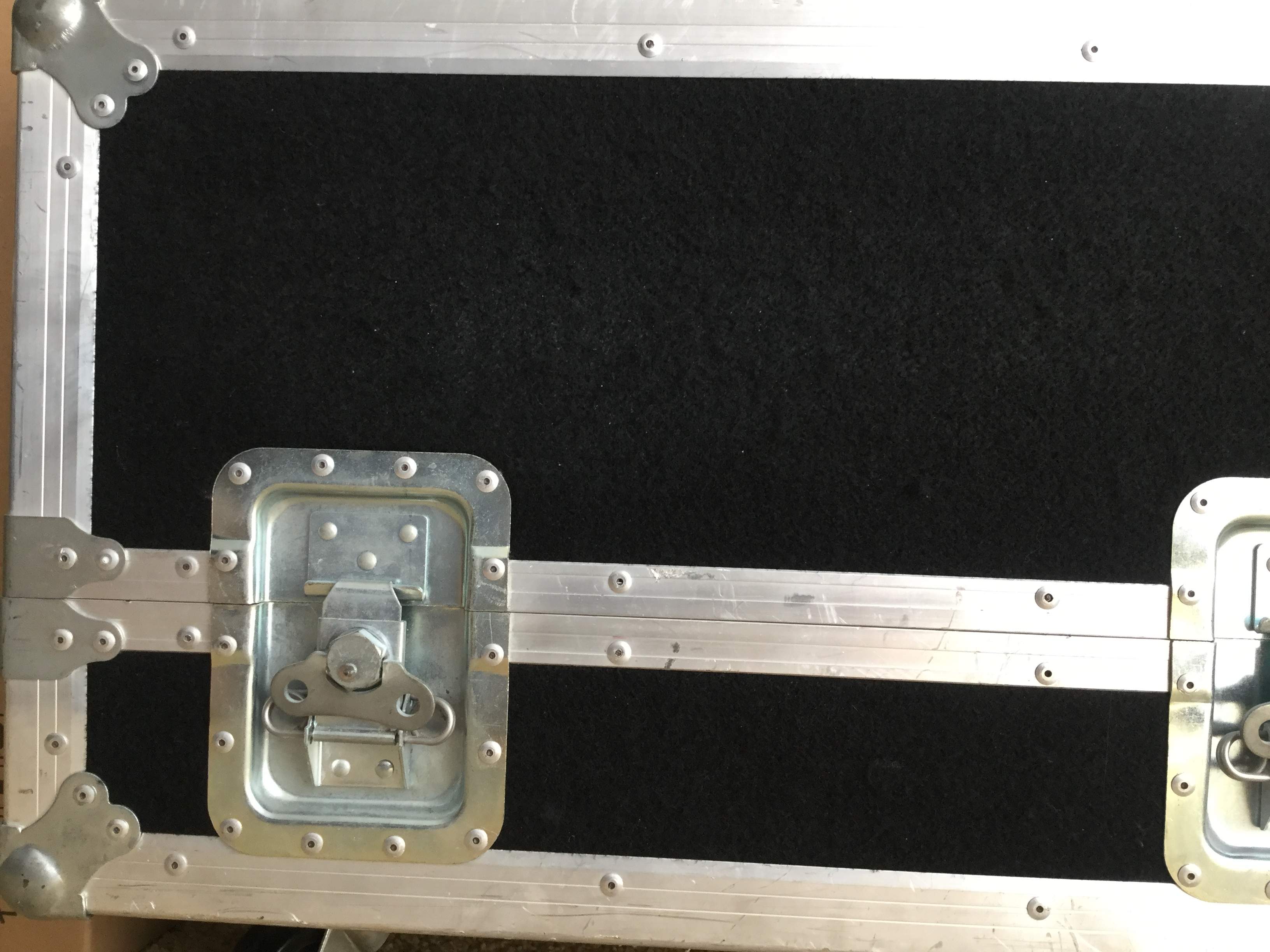
One of my older cases has an Ozite (good quality rat fur) covering. It has stood up well. Even been painted with a band logo, when that was no longer wanted, it cleaned up with acetone.
Ok, I'm at the arena
I'll alert the media.
(Sorry Andy...couldn't resist. I thought you'd be basking in your glory over in another thread.
 )
)
- Feb 12, 2006
- 61,034
- 5
- 220,931
- Disclosures
- Development Engineer-Mesa Boogie, Development Engineer-Genzler (pedals), Product Support-Genz Benz
That's weird, I'm advancing an arena load-in today. Maybe voice detection translated this into a post???
Creepy
Creepy


