

Enjoy the benefits of a premium membership!
Upgrade Account
-
TalkBass has been independent since 1998. Add your voice.
Create a free account to reply to discussions, view embedded media, and browse with fewer display ads.
Join free Log in
Want zero display ads or expanded classifieds tools? Compare plans.
You are using an out of date browser. It may not display this or other websites correctly.
You should upgrade or use an alternative browser.
You should upgrade or use an alternative browser.
Do all tapewound strings cause hum?
- Thread starter PyschRockLover
- Start date
More options
Who Replied?

Understood, poor phrasing on my part.A common misconception. You don't complete the circuit to ground that is provided by your body, you ground yourself to the instrument by touching the strings which are grounded. You don't provide the ground, the instrument does.
The reason there may be noise with tapewound strings is that your body is insulated from ground by the tape.

The info below posted by Roger Sadowsky on TB May 5th, 2017.
Roger Sadowsky bio Roger Sadowsky Profile – Sadowsky Guitars
I am constantly amazed at how people are stuck in their belief systems (alternative facts) here. Here are the facts based on 45 years experience with the issue:
1) the string does not act as an antenna to attract noise, the string does not cause hum in any way.
2) The string connects the players hand to the parts of the guitar that are connected to ground (bridge, output jack, control plate).
3) Contrary to what EMG recommends, I have always had to shield and install bridge ground wires for hum control for musicians playing in noisy environments, especially stage lighting (vari-lights) and old building wiring.
4) The risk of shock with having a bridge ground is so low, it is a non issue. If it happens, it is in when the player has his hands on the strings and simultaneously touches a powered microphone with his lips or hands. Dealing with pros for 45 years, I can tell you it is a non issue.
5) For those who say I never get hum, it is only because you have not had to play in environments that produce it.
6) Shielding can reduce the hum by 90% but a string ground is still needed in noisy environments.
7) Shielding and proper grounding cannot eliminate 60 cycle (single coil) hum.
8) The single most important part of the equation regarding shunting "noise" to ground is the human body. When you touch the strings, your body completes the ground and shunts the hum. This would also happen if you touched the bridge, the control plate or the output jack.
9) Given #8, in order for you to complete the ground while touching the string, the string MUST be electrically conductive, otherwise, no connection is made the the string ground via the bridge.
10) Most coated strings are NON Conductive, defeating the connection to the bridge ground. As a result, there is no hum reduction when touching the strings.
Roger Sadowsky bio Roger Sadowsky Profile – Sadowsky Guitars
I am constantly amazed at how people are stuck in their belief systems (alternative facts) here. Here are the facts based on 45 years experience with the issue:
1) the string does not act as an antenna to attract noise, the string does not cause hum in any way.
2) The string connects the players hand to the parts of the guitar that are connected to ground (bridge, output jack, control plate).
3) Contrary to what EMG recommends, I have always had to shield and install bridge ground wires for hum control for musicians playing in noisy environments, especially stage lighting (vari-lights) and old building wiring.
4) The risk of shock with having a bridge ground is so low, it is a non issue. If it happens, it is in when the player has his hands on the strings and simultaneously touches a powered microphone with his lips or hands. Dealing with pros for 45 years, I can tell you it is a non issue.
5) For those who say I never get hum, it is only because you have not had to play in environments that produce it.
6) Shielding can reduce the hum by 90% but a string ground is still needed in noisy environments.
7) Shielding and proper grounding cannot eliminate 60 cycle (single coil) hum.
8) The single most important part of the equation regarding shunting "noise" to ground is the human body. When you touch the strings, your body completes the ground and shunts the hum. This would also happen if you touched the bridge, the control plate or the output jack.
9) Given #8, in order for you to complete the ground while touching the string, the string MUST be electrically conductive, otherwise, no connection is made the the string ground via the bridge.
10) Most coated strings are NON Conductive, defeating the connection to the bridge ground. As a result, there is no hum reduction when touching the strings.

They don't "cause hum' they are unable to complete the circuit to ground that is normally provided by your body, through fingers contacting the string.
Coated strings suffer from the same side effect.
Other way round. Your body doesn't provide a pathway to ground. Your body attracts interference which is then passed to ground by the strings.
A well shielded instrument makes the need for grounded strings pretty negligible. I bet Gibson skimp on shielding from the factory.

I have La Bella Black tapes on a American Deluxe Jazz 5 (with active preamp), a Epiphone Goth (passive), a 2015 Gibson Thunderbird (passive) and Roto Tapes on a Squire Jazz 5 (passive). Zero hum on any of them, regardless of single coil or humbucker or active or passive. In each case the brass ball ends are seated in the bridge (or the string through ferrules) I assume making an adequate ground.



Turnaround
Commercial User
8) The single most important part of the equation regarding shunting "noise" to ground is the human body. When you touch the strings, your body completes the ground and shunts the hum. This would also happen if you touched the bridge, the control plate or the output jack.
I agree with Roger, but I think he was a bit unclear on item 8. The way he expressed it, it sounds like touching the strings grounds the bass. But no, touching the strings grounds you. The bass is already connected to electrical ground, but you are not until you touch the strings or any other part of the bass that is electrically grounded.
Turnaround
Commercial User
The one thing that sheilding cannot do is prevent injection of your body's electrical noise into the pickups. That is done by your contact with the strings if they are grounded.A well shielded instrument makes the need for grounded strings pretty negligible.
The one thing that sheilding cannot do is prevent injection of your body's electrical noise into the pickups. That is done by your contact with the strings if they are grounded.
Is that like a hot beef injection?

Pickups might have something to do with it but, don’t quote me on that because, I don’t know for certain. In response to the question, no, tapewounds don’t always cause humming. I have a set of LaBella black tapewounds over a GZR PJ set and they’re dead quiet.Ahh shucks... I really love the feel of tapewounds but I can't stand the hum... guess im going back to roundwounds
Seems to me in reading about all this hum stuff is that the body has a capacitive coupling to ground that effectively dissipates the induced noise when the human touches bridge, jack, etc. Sadowsky used the terms shunted / shunts which seemed to indicate the noise is “bled off” through the body to somewhere. If that’s not what’s happening, I can’t articulate what is going on. I agree the human is not adding a directly connected ground to the already grounded bass hardware, unless the player is standing barefooted in a mud puddle (not recommended!!!).I agree with Roger, but I think he was a bit unclear on item 8. The way he expressed it, it sounds like touching the strings grounds the bass. But no, touching the strings grounds you. The bass is already connected to electrical ground, but you are not until you touch the strings or any other part of the bass that is electrically grounded.
It also appears this thread is going to reach the same number of posts as another thread on the same topic “coated strings and grounding” that began May 9, 2010. That’s the thread where Sadowsky’s comments came from…seven years after the thread started. I figure his #5 comment will generate further discussion on this thread.
Last edited:

It depends on the bridge. I have a fretless viola bass that has a tailpiece. The metal ball on the end of the string makes contact with the tailpiece and that grounds it. I also have a Jazz Bass that loads the strings from the rear of the bridge and the ball makes contact there and grounds it. No hum on either of those. On my old Epiphone Accu-Bass, it loads the strings through the back of the body and thus, the ball end doesn't come in contact with the bridge. The electronic buzz on that one was terrible and I had to switch to flatwounds on it.

Cave Puppy
"Humph Bo, he's wond!" - John Lennon
I’ve had to shield my EMG equipped instruments once or twice and have had to connect the bridge ground to the electronics with the supplied squeeze connector that EMG gives you.3) Contrary to what EMG recommends, I have always had to shield and install bridge ground wires for hum control for musicians playing in noisy environments, especially stage lighting (vari-lights) and old building wiring.

I did that too, though they sounded really cool. Somehow the great Herbie Flowers got along OK, playing all those famous sessions with a Jazzbass with the front pickup soloed and tapewoundsI took the tapewounds off for that very reason
 A noisy bass double-whammy!
If I take a humbucker and clip lead it to my amp just with it sitting there, with no shielding or anything around it, it will have a very low to a not even perceivable noise floor.
Hum humbucker (bucks hum). If the bass wiring isn't messed up it should not hum regardless of human contact shielding or otherwise. Thats assuming the amp doesn't hum, and there aren't any stronger than normal rf floating around, or perhaps a faulty ground in the wall circuit, or a polarity swap... Why think it's the bass first in that all of that?
Op take your bass to a reputable music store and plug it into a new amp. That'll be a start, if it doesn't hum at the store stop off at a hardware store on the way home and pick up a simple outlet tester. The outlet tester will narrow down if it's the amp or the outlet.
This is called trouble shooting and it's how people used to figure things out before we had strangers on the internet to consult. As an engineer (we're a weird lot) I still do this everyday lol, so trust me, find the problem first, than look for a solution.
Hum humbucker (bucks hum). If the bass wiring isn't messed up it should not hum regardless of human contact shielding or otherwise. Thats assuming the amp doesn't hum, and there aren't any stronger than normal rf floating around, or perhaps a faulty ground in the wall circuit, or a polarity swap... Why think it's the bass first in that all of that?
Op take your bass to a reputable music store and plug it into a new amp. That'll be a start, if it doesn't hum at the store stop off at a hardware store on the way home and pick up a simple outlet tester. The outlet tester will narrow down if it's the amp or the outlet.
This is called trouble shooting and it's how people used to figure things out before we had strangers on the internet to consult.
As an engineer (we're a weird lot) I still do this everyday lol, so trust me, find the problem first, than look for a solution.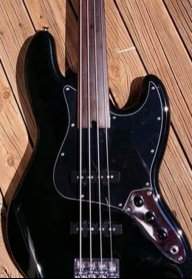
If the noise goes away when you touch the bridge, your shielding isn’t grounded properly, either in the instrument or the path along the cable / amp / outlet. You’re showing that the shielding works by essentially giving it a ground when you touch the bridge.
Sorry, that is incorrect. If the noise goes away when you touch the bridge or other grounded part of the bass then that just confirms that those parts are grounded properly. All of my basses are shielded and all the shielding is grounded as confirmed by multimeter continuity testing. If I get too close to the computer, a phone or other electronic device it will induce some RF noise. I touch any part of the bass that is grounded (which can be the strings on all but my fretless with tapes) and the noise reduces or ceases.
You already did check the bridge ground. If the noise gets better when you touch the bridge then the bridge is properly grounded.
Turnaround
Commercial User
It's not that the strings aren't grounded, it's that the player isn't grounded.It depends on the bridge. I have a fretless viola bass that has a tailpiece. The metal ball on the end of the string makes contact with the tailpiece and that grounds it. I also have a Jazz Bass that loads the strings from the rear of the bridge and the ball makes contact there and grounds it. No hum on either of those. On my old Epiphone Accu-Bass, it loads the strings through the back of the body and thus, the ball end doesn't come in contact with the bridge. The electronic buzz on that one was terrible and I had to switch to flatwounds on it.

If I take a humbucker and clip lead it to my amp just with it sitting there, with no shielding or anything around it, it will have a very low to a not even perceivable noise floor.
Hum humbucker (bucks hum). If the bass wiring isn't messed up it should not hum regardless of human contact shielding or otherwise. Thats assuming the amp doesn't hum, and there aren't any stronger than normal rf floating around, or perhaps a faulty ground in the wall circuit, or a polarity swap... Why think it's the bass first in that all of that?
Op take your bass to a reputable music store and plug it into a new amp. That'll be a start, if it doesn't hum at the store stop off at a hardware store on the way home and pick up a simple outlet tester. The outlet tester will narrow down if it's the amp or the outlet.
This is called trouble shooting and it's how people used to figure things out before we had strangers on the internet to consult.
/grabs collar, shakes user

Seems to me in reading about all this hum stuff is that the body has a capacitive coupling to ground that effectively dissipates the induced noise when the human touches bridge, jack, etc. Sadowsky used the terms shunted / shunts which seemed to indicate the noise is “bled off” through the body to somewhere. If that’s not what’s happening, I can’t articulate what is going on. I agree the human is not adding a directly connected ground to the already grounded bass hardware, unless the player is standing barefooted in a mud puddle (not recommended!!!).
Perhaps think of it in terms of the human body as an antenna that picks up interfering electromagnetic energy from all around, and then couples that energy to the pickups on your bass. When you touch the grounded strings, they along with the rest of the ground system act as a shunt for your body, virtually short circuiting the antenna to ground. The strings are shunting the body, not the other way around.
A shunt in electrical terms can be thought of as a bypass. It is usually a lower resistance (or impedance) placed in parallel with a higher resistance (or impedance) device to bleed off unwanted energy.
This is often done in metering, where if you connected a current directly to a meter without a shunt, the current may exceed the capacity of the meter. So we add an appropriate shunt (resistance) across the meter terminals. The shunt resistance and meter resistance form a voltage divider. Most of the current goes through the shunt, with just a little going through the meter. So that's what we mean when we use the word shunt in this context.
While standing in mud puddle is not recommended for a number of reasons, I wouldn't expect it to make much difference for reducing noise, and may actually increase it. Recall that I said to think of our body as an antenna. It just so happens that the average height of a full grown person is pretty close to being resonant at the frequencies used in the FM broadcast band. But any size antenna can pick up any frequency of electromagnetic signal. It's just a matter of how efficient it is and how strong is the signal. Mostly the offending signals are generated within a few feet or yards of where you stand.
Antennas are often constructed as a vertical element above a conducting plane. We call it a ground plane. The more conductive the ground plane, the more efficient the antenna. If you are the vertical element, standing in muddy water, you might make a better antenna than if standing on a dry floor.
All of this is much more complicated than presented here, but hopefully you get the idea.
Last edited:
Perhaps think of it in terms of the human body as an antenna that picks up interfering electromagnetic energy from all around, and then couples that energy to the pickups on your bass. When you touch the grounded strings, they along with the rest of the ground system act as a shunt for your body, virtually short circuiting the antenna to ground. The strings are shunting the body, not the other way around.
A shunt in electrical terms can be thought of somewhat as a bypass. It is usually a lower resistance (or impedance) placed in parallel with a higher resistance (or impedance) device to bleed off unwanted energy.
This is often done in metering, where if you connected a current directly to a meter without a shunt, the current may exceed the capacity of the meter. So we add an appropriate shunt (resistance) across the meter terminals. The shunt and meter coil resistance form a voltage divider. Most of the current goes through the shunt, with just a little going through the meter. So that's what we mean when we use the word shunt in this context.
Argh...
Explain why the noise reduction by touching the strings still works when you have rubber boots on. It has nothing to do with anything flowing into the ground through the user's feet. You simply become a partial shield, that's all.
This thread is wild. Shielding is simple. Just have a shield (a grounded conductor) around exposed hot wires. That's all.
Very good question. I think I covered that but only after some additional editing. Might need a re-read, or better yet a beer. Thanks for asking.Argh...
Explain why the noise reduction by touching the strings still works when you have rubber boots on. It has nothing to do with anything flowing into the ground through the user's feet. You simply become a partial shield, that's all.
This thread is wild. Shielding is simple. Just have a shield (a grounded conductor) around exposed hot wires. That's all.
Last edited:


