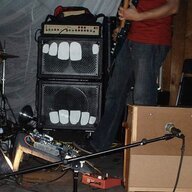
I don't have the technical vocabulary so I hope I can ask this correctly. I have an Eden with an Output Power of the 600 Watts RMS @ 2 Ohms, 400 Watts RMS @ 4 Ohms, and 240 Watts @ 8 Ohms output at full power. But when I look at all-tube amps they just say 100 watts. Do all-tube amps put out the full power no matter the load so long as you are connecting it the the correct Ohm output on the back? Is my Fender Bassman 100 Silverface 100 watts at 4 Ohms and 100 watts at 8 Ohms? Thanks!

Enjoy the benefits of a premium membership!
Upgrade Account
-
TalkBass has been independent since 1998. Add your voice.
Create a free account to reply to discussions, view embedded media, and browse with fewer display ads.
Join free Log in
Want zero display ads or expanded classifieds tools? Compare plans.
You are using an out of date browser. It may not display this or other websites correctly.
You should upgrade or use an alternative browser.
You should upgrade or use an alternative browser.
Do All-Tube amps push full power across any Ohm load?
- Thread starter edot3021
- Start date
More options
Who Replied?
Tube amps are capable of working this way, if they have an output transformer with multiple "taps." But I looked up the Bassman 100, and there's a schematic posted here. This schematic shows only a single 4-Ohm output. With Fender, there may be "re-issue" or newer versions under the same model name, so it may come down to researching that specific amp.
Prowess Amplifiers - Fender - Schematics - Bassman 100
Prowess Amplifiers - Fender - Schematics - Bassman 100

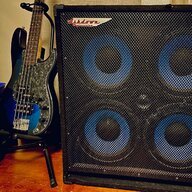
I can't confirm for "ALL" but surely all the ones I've seen or looked into do. Some have lower wattage options such as the Fender Bassman 100t, which can be switched to 25W, but as far as output, it's the same for each supported impedance (I think that's the term ).
Just make sure you're plugged into the correct one for your cab.
Just make sure you're plugged into the correct one for your cab.

- Feb 12, 2006
- 61,086
- 5
- 221,204
- Disclosures
- Development Engineer-Mesa Boogie, Development Engineer-Genzler (pedals), Product Support-Genz Benz
In general, yes but this assumes that the amp has the taps for the loads you need.
Just the man I was hoping would reply. Does not have dedicated Ohm taps; One Speaker. One EXT. SPKR. And says Total Load 4 Ohms, 100 watt RMS. I added a photo.
The TT-800 I am eyeing has the ohms toggle switch which I assume is like the modern dedicated Ohm taps.
The TT-800 I am eyeing has the ohms toggle switch which I assume is like the modern dedicated Ohm taps.
In general, yes but this assumes that the amp has the taps for the loads you need.
Attachments

It's a mid or late 70s model. I added a photo of the back.
Tube amps are capable of working this way, if they have an output transformer with multiple "taps." But I looked up the Bassman 100, and there's a schematic posted here. This schematic shows only a single 4-Ohm output. With Fender, there may be "re-issue" or newer versions under the same model name, so it may come down to researching that specific amp.
Prowess Amplifiers - Fender - Schematics - Bassman 100
Attachments


One 8 ohm speaker out of each output = 4 ohms.It's a mid or late 70s model. I added a photo of the back.
I'm assuming if you just had one 4 ohm speaker you'd use the primary out not the EXT out but absolutely refer to the manual and NOT my guess.
That is the way I have used it - 2 x 8ohm Boogies. I have never had the original cabinet so maybe I can look to see what that is rated at. If I have ever looked for a copy of the manual I have forgotten, so I'll try that too. Thanks.
One 8 ohm speaker out of each output = 4 ohms.
I'm assuming if you just had one 4 ohm speaker you'd use the primary out not the EXT out but absolutely refer to the manual and NOT my guess.
What I find perplexing (before an FMIC genius sets us straight) is IF the original intended cab was 4 ohms, why even bother with an EXT output? Because it's pretty much labeled to not be 2 ohm stable.That is the way I have used it - 2 x 8ohm Boogies. I have never had the original cabinet so maybe I can look to see what that is rated at. If I have ever looked for a copy of the manual I have forgotten, so I'll try that too. Thanks.
I really need sleep...
From my very quick internet search it does seem like the 4x12 cabinet is rated at 4 Ohm.
What I find perplexing (before an FMIC genius sets us straight) is IF the original intended cab was 4 ohms, why even bother with an EXT output? Because it's pretty much labeled to not be 2 ohm stable.
I really need sleep...

I will say it another way. NO. A tube amp can only develop full power when it sees the expected load.
If a tube amp has a 4 ohm output, it will only make it's rated power at 4 ohms. However, if it also has an 8 ohm output, it will make rated power at 4 and 8 ohms.
Some tube amps can handle a minor impedance mismatch (and some cannot).
For example you may be able to run 2 ohms on a 4 ohm output and/or you may be able to run 8 ohms on a 4 ohm output. An impedance mismatch will reduce how much power the amp can make and it increase stress/wear on the tubes, tube sockets, and output transformer. Some amps are prone to major damage running into an impedance mismatch.
Some amps are safe with one type of mismatch but not the other. For example the general rules is tube amps are safe if the load is one order lower than expected. However, some amps consider this an unacceptable mismatch, and they are safer if the load is one order higher than expected.
IMHO the best thing to do is to simply show a tube amp the expected load. In other words, don't run an impedance mismatch.
If a tube amp has a 4 ohm output, it will only make it's rated power at 4 ohms. However, if it also has an 8 ohm output, it will make rated power at 4 and 8 ohms.
Some tube amps can handle a minor impedance mismatch (and some cannot).
For example you may be able to run 2 ohms on a 4 ohm output and/or you may be able to run 8 ohms on a 4 ohm output. An impedance mismatch will reduce how much power the amp can make and it increase stress/wear on the tubes, tube sockets, and output transformer. Some amps are prone to major damage running into an impedance mismatch.
Some amps are safe with one type of mismatch but not the other. For example the general rules is tube amps are safe if the load is one order lower than expected. However, some amps consider this an unacceptable mismatch, and they are safer if the load is one order higher than expected.
IMHO the best thing to do is to simply show a tube amp the expected load. In other words, don't run an impedance mismatch.
Another angle.
In general solid state amp try to hold the voltage constant as the load changes.
This formula wheel shows derivations of Ohm's Law and Watt's Law.
 click for larger image.
So if a solid state amp holds the Voltage constant, the power will double if the impedance is cut in half.
For example assume the voltage is 2V and figure the power at 4 ohms and 8 ohms using P = (V^2)/Z
(2^2) = 4
At 4 ohms we get P = 4/4 = 1W
At 8 ohms we get P = 4/8 = 1/2W
This shows the power at 4 ohms is double the power at 8 ohms.
The limiting factor with solid state is the minimum impedance the amp is rated for.
So if our amp is rated for 2 ohms and can hold the voltage constant at 2V we get.
P=4/2 = 2W
If the amp is not rated for 2 ohms it will either go into protect mode, or it may incur damage.
Tube amps don't work this way. The transformer uses a ratio to match the high output impedance of the tubes to the low impedance of the speakers. A consequence of this is the voltage and current are varied so the power remains constant.
Let's say your amp is rated for 100W at 4 and 8 ohms. We will figure the Voltage and Current (I) for each impedance. To do this we need to solve for I or V first. You can do it either way.
I will solve for V first using V = sq rt(PZ)
For 8 ohm V = sq rt(100x8) = ~28.28V
For 4 ohms V = sq rt(100x4) = 20V
Now we can use I = P/V to solve for the current.
For 8 ohms I = 100/~28.28 =~3.54A
For 4 ohms I = 100/20 = 5A
Now inserting the values back into P = VI
At 8 ohms 100W = ~28.28V x ~3.54A
At 4 ohms 100W = 20V x 5A
In this example you get 100W at either 4 or 8 ohms. At 8ohms the voltage is higher and the current is lower.
In the event of an impedance mismatch, not all of the power is transferred from the tubes to the speakers. So available power is decreased.
In general solid state amp try to hold the voltage constant as the load changes.
This formula wheel shows derivations of Ohm's Law and Watt's Law.
click for larger image.So if a solid state amp holds the Voltage constant, the power will double if the impedance is cut in half.
For example assume the voltage is 2V and figure the power at 4 ohms and 8 ohms using P = (V^2)/Z
(2^2) = 4
At 4 ohms we get P = 4/4 = 1W
At 8 ohms we get P = 4/8 = 1/2W
This shows the power at 4 ohms is double the power at 8 ohms.
The limiting factor with solid state is the minimum impedance the amp is rated for.
So if our amp is rated for 2 ohms and can hold the voltage constant at 2V we get.
P=4/2 = 2W
If the amp is not rated for 2 ohms it will either go into protect mode, or it may incur damage.
Tube amps don't work this way. The transformer uses a ratio to match the high output impedance of the tubes to the low impedance of the speakers. A consequence of this is the voltage and current are varied so the power remains constant.
Let's say your amp is rated for 100W at 4 and 8 ohms. We will figure the Voltage and Current (I) for each impedance. To do this we need to solve for I or V first. You can do it either way.
I will solve for V first using V = sq rt(PZ)
For 8 ohm V = sq rt(100x8) = ~28.28V
For 4 ohms V = sq rt(100x4) = 20V
Now we can use I = P/V to solve for the current.
For 8 ohms I = 100/~28.28 =~3.54A
For 4 ohms I = 100/20 = 5A
Now inserting the values back into P = VI
At 8 ohms 100W = ~28.28V x ~3.54A
At 4 ohms 100W = 20V x 5A
In this example you get 100W at either 4 or 8 ohms. At 8ohms the voltage is higher and the current is lower.
In the event of an impedance mismatch, not all of the power is transferred from the tubes to the speakers. So available power is decreased.
I don't have the technical vocabulary so I hope I can ask this correctly. I have an Eden with an Output Power of the 600 Watts RMS @ 2 Ohms, 400 Watts RMS @ 4 Ohms, and 240 Watts @ 8 Ohms output at full power. But when I look at all-tube amps they just say 100 watts. Do all-tube amps put out the full power no matter the load so long as you are connecting it the the correct Ohm output on the back? Is my Fender Bassman 100 Silverface 100 watts at 4 Ohms and 100 watts at 8 Ohms? Thanks!
The vintage 100W Bassman is 100W at 4 ohms. The schematic shows the output transformer is 021657.
Ref: Fender Output Transformer Chart (bustedgear.com)
Fender designed many of their vintage amps and speakers so that the first speaker provides the expected load; in this case 4 ohms. If you connect the matching extension speaker the amp sees 1/2 of the expected load (2 ohms). The amp is considered safe with the impedance mismatch, but power will be reduced and the output tubes will experience increased wear.
With Mesa amps, the safe impedance mismatch is one order too high. So with a 4 ohm output, 8 ohms is considered a safe mismatch, but 2 ohms is not.
Ref: Speaker Impedance Matching and Hookup.pdf (imgix.net)
Before running an impedance mismatch on a tube amp, you need to determine what is recommended for the amp.
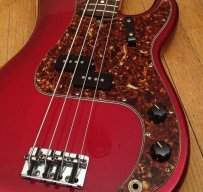
aha!Fender designed many of their vintage amps and speakers so that the first speaker provides the expected load; in this case 4 ohms. If you connect the matching extension speaker the amp sees 1/2 of the expected load (2 ohms). The amp is considered safe with the impedance mismatch, but power will be reduced and the output tubes will experience increased wear.
With Mesa amps, the safe impedance mismatch is one order too high. So with a 4 ohm output, 8 ohms is considered a safe mismatch, but 2 ohms is not.
i've always gone under the assumption that old fenders can take mismatch abuse in general while other tube amps especially marshalls cannot, and i always lumped boogies in with marshalls that way to be safe
yes, as long as you can in fact switch the amp to match the speaker impedanceDo all-tube amps put out the full power no matter the load so long as you are connecting it the the correct Ohm output on the back?
no, because those old silverface fenders didn't have different outputs; it's just 100w at 4Ω, anything else and it's actually mismatched and has less power.Is my Fender Bassman 100 Silverface 100 watts at 4 Ohms and 100 watts at 8 Ohms?
that's kind of why even though those old fender combos most all had the second speaker jack few people ever used it, adding a cabinet made the amps less powerful and kind of lost the loudness advantage of more speakers
adding a cabinet made the amps less powerful and kind of lost the loudness advantage of more speakers
I tried it with my Fender Twin Reverb. It seemed weak and extremely mushy with a 2 ohm load.
Thanks for all the info.
I tried it with my Fender Twin Reverb. It seemed weak and extremely mushy with a 2 ohm load.
- Feb 12, 2006
- 61,086
- 5
- 221,204
- Disclosures
- Development Engineer-Mesa Boogie, Development Engineer-Genzler (pedals), Product Support-Genz Benz
Just the man I was hoping would reply. Does not have dedicated Ohm taps; One Speaker. One EXT. SPKR. And says Total Load 4 Ohms, 100 watt RMS. I added a photo.
The TT-800 I am eyeing has the ohms toggle switch which I assume is like the modern dedicated Ohm taps.
It depends on the amp, but 100 watts would be at 4 ohms, less at 8 0hms presuming the amp is safe driving 8 ohms.
What amp is it?
It depends on the amp, but 100 watts would be at 4 ohms, less at 8 0hms presuming the amp is safe driving 8 ohms.
What amp is it?
70s Fender Bassman 100 Silverface.
- Feb 12, 2006
- 61,086
- 5
- 221,204
- Disclosures
- Development Engineer-Mesa Boogie, Development Engineer-Genzler (pedals), Product Support-Genz Benz
So "roughly" 90 watts into 4 ohms and about 65 watts into 8 ohms (these are loose numbers).70s Fender Bassman 100 Silverface.
The output transformer was kind of split between 4 and 8 ohms at that particular plate voltage. There was some leeway in those transformers.


