• TalkBass has been independent since 1998. Add your voice.
    Create a free account to reply to discussions, view embedded media, and browse with fewer display ads.
    Join freeLog in
    Want zero display ads or expanded classifieds tools? Compare plans.

Do graphite rods make a difference?

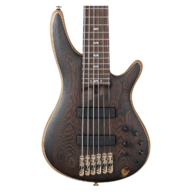
My ltd bass has a quite thin 5-piece (I think) neck. It is very bendy. If I set it straight with no strings, the string tension will pull it to a HUGE bend. So normally when I take the strings off it has a huge backbow...

Do you guys think it would be possible to install graphite rods to it? It's a neck thru instrument btw.
 
  • Like
Reactions: Zooberwerx
My ltd bass has a quite thin 5-piece (I think) neck. It is very bendy. If I set it straight with no strings, the string tension will pull it to a HUGE bend. So normally when I take the strings off it has a huge backbow...

Do you guys think it would be possible to install graphite rods to it? It's a neck thru instrument btw.


Yeah, it's possible but I wouldn't drop the coin on an LTD. Use lighter gauge strings and be done with it. BTW, what you described is NOT that unusual. If the stripped of all strings, I'll force a neck into a back bow, re-install the strings, tune to pitch, and back-off the TR until the desired relief falls into place.

Riis
 
Yeah, it's possible but I wouldn't drop the coin on an LTD. Use lighter gauge strings and be done with it. BTW, what you described is NOT that unusual. If the stripped of all strings, I'll force a neck into a back bow, re-install the strings, tune to pitch, and back-off the TR until the desired relief falls into place.

Riis
The bass is very valuable to me, I wouldn't sell it for 4000€ :smug:
But if I did sell it I would propably get like get 400€ for it.
When I get some extra cash I think I might hire a guy to install those rods.
 
  • Like
Reactions: Zooberwerx
Zombie Thread! I guess the unfortunate truth is that the time scale required to come to any coherent conclusion makes this the Typical TB Discussion, ie: BLANK BLANKS are Great! /BLANK BLANKS Suck! With lots of anecdotal (and no scientific) evidence to suport each side, reminds me of the Tonewood Debate. I was hoping to learn if I had been either a sucker or a prescient genius for using pultruded CF bars in my last three builds, alas, I can only say "so far, so good".
 
  • Like
Reactions: Zooberwerx
Zombie Thread! I guess the unfortunate truth is that the time scale required to come to any coherent conclusion makes this the Typical TB Discussion, ie: BLANK BLANKS are Great! /BLANK BLANKS Suck! With lots of anecdotal (and no scientific) evidence to suport each side, reminds me of the Tonewood Debate. I was hoping to learn if I had been either a sucker or a prescient genius for using pultruded CF bars in my last three builds, alas, I can only say "so far, so good".

I love Ken Parker and if you want some very useful information on necks, neck wood, carbon fibre and the like, I'd suggest his video series on youtube called Archtoppery. The latest series, which isn't done yet, is on his neck construction and he runs through the history of how he arrived at the construction method he uses and discusses contemporary neck construction. He hasn't discussed neck reinforcement bars per se, but I think that you could extrapolate what he's saying to understand them.

The neck construction on his current Archtop guitars, which sell in the 30K+ USD range from what seen, are a core of softwood, typically douglas fir with a wrapping of carbon fibre around the bottom that is covered in a wood veneer that is typically matched to the back and side woods that he uses. Unlike the Fly guitar, the fretboard is a conventional wood fretboard and not carbon fibre. It also uses a non-adjustable truss rod. He hasn't gotten far enough in the series, but I understand that it is adjusted and locked into a configuration during construction.

I'd agree with you that this thread delivers what the tonewood debate delivers. Lots of anecdote with people making extrapolations from one particular spec of an instrument causing the problem they are having with it when the problem is likely far more complex. I tend to trust that the builder or company has appropriately designed the instrument either to have or not have some sort of reinforcement and that they at least have a history or experience with the product that supports the design they are using working how they wish it to. I think that extrapolating a carbon fibre bar or bars to causing or fixing dead spots, giving "good tone", etc is silly. It's part of a system and all of the parts of it are important in the final product.
 

Latest posts