• TalkBass has been independent since 1998. Add your voice.
    Create a free account to reply to discussions, view embedded media, and browse with fewer display ads.
    Join freeLog in
    Want zero display ads or expanded classifieds tools? Compare plans.

Do I need a refret?

Hi all. I'm in new terrain here but I'm sure many have been here before me. This is a 1970 P bass neck. No frets buzz but they do seem quite flat against the fretboard, requiring me to press down pretty hard in the upper 10 frets in particular. Based on these photos, do folks think I need a refret...

a) now
b) someday, but not now
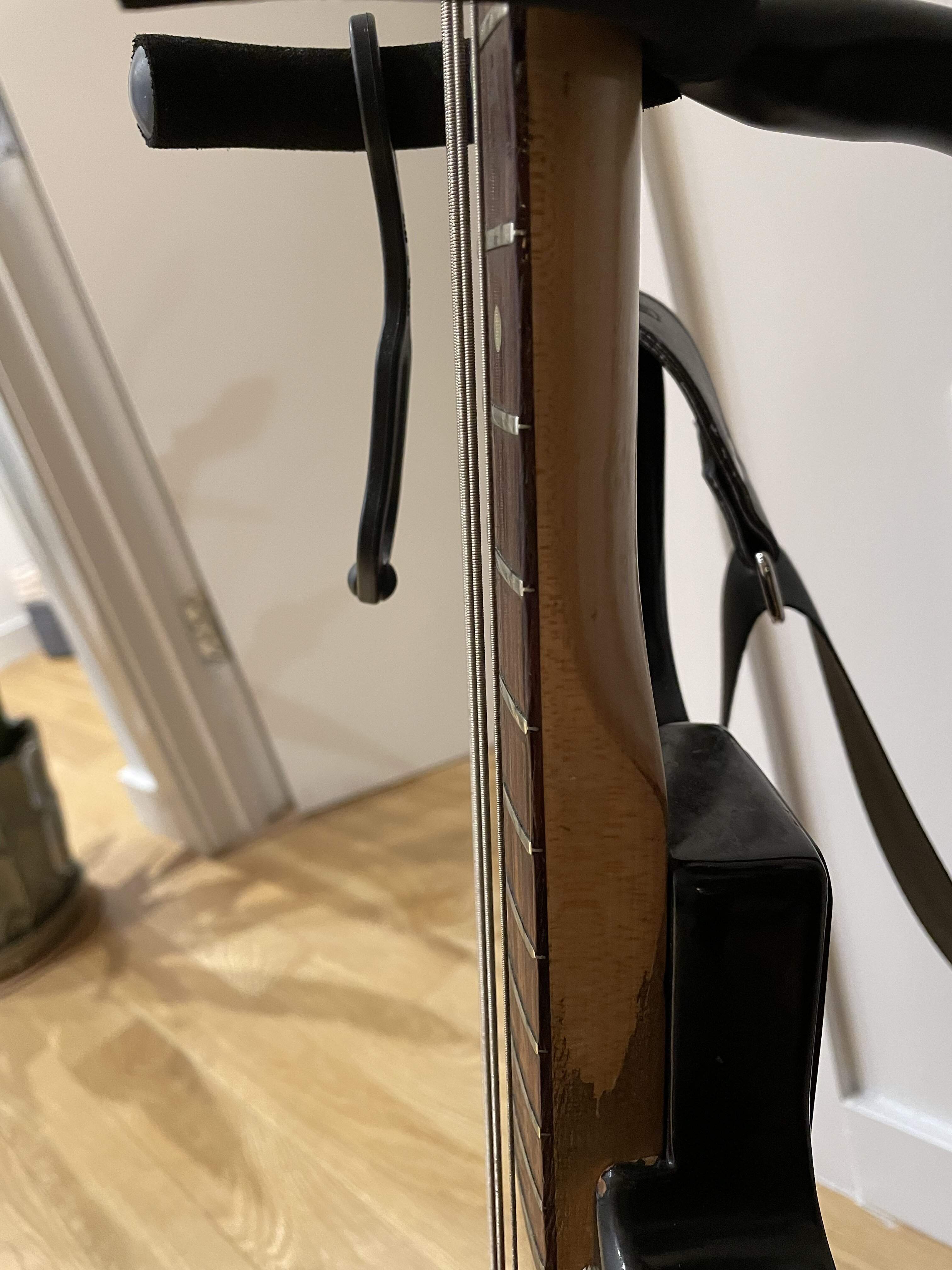
AA324FD4-DA45-4AB5-A680-680E2B7EA19D.jpeg
8A5B9B1B-C997-40E6-8C87-DC2DC5DDDE56.jpeg
 
Wow! That reminds me of Mosrite guitar frets.

IF, playing the bass as-is is becoming more difficult for you, and you're not getting as much enjoyment out of it, consider having a very good luthier refret it for you with proper era frets, or maybe you have an idea of what you want to replace them with.

It's a wash (I think) affecting value. If you wanted to sell it, a buyer(s) may try & ding you for flat frets, the same way some purists would scoff at "altering" a classic. A playable vintage era Fender is valued more than one with an issue.

Personally, I'd consider refretting it. Especially if you plan on keeping it, playing and/or gigging it for a long time.
 
  • Like
Reactions: Michael Jewels
It is hard to tell from pictures but it doesn’t look like there’s much left to those frets. If you do decide to refret it I believe 1970 would have been 1: a veneer fretboard (although I could be wrong on that) and, more importantly, 2: fretted from the side instead of the face of the board. If the frets were pushed in from the side make sure whoever is doing the work understands what that means for removing the existing frets with minimal damage to the board.
 
Looks like someone got the bright idea to grind those frets down in the instrument’s past. They really don’t count as frets anymore - they’re more like decorative metal inlays at this point.

I’d personally have an experienced luthier handle a refret for this bass sooner that later. A really good refret won’t be inexpensive, but it will have a night and day effect on the sound and playability on this axe. If you don’t live in an area that has a first-class luthier or tech within reasonable driving distance, sending a bass out for work is not unusual.
 
It is hard to tell from pictures but it doesn’t look like there’s much left to those frets. If you do decide to refret it I believe 1970 would have been 1: a veneer fretboard (although I could be wrong on that) and, more importantly, 2: fretted from the side instead of the face of the board. If the frets were pushed in from the side make sure whoever is doing the work understands what that means for removing the existing frets with minimal damage to the board.
^^^^^This right here X a million. The frets want to go out like they came in. You want the repair to be done by someone who knows this and has done work on vintage Fenders many times before.
 
Hi all. I'm in new terrain here but I'm sure many have been here before me. This is a 1970 P bass neck. No frets buzz but they do seem quite flat against the fretboard, requiring me to press down pretty hard in the upper 10 frets in particular. Based on these photos, do folks think I need a refret...

a) now
b) someday, but not now
View attachment 4506717 View attachment 4506718
Would lowering the action help in the short term
 
  • Like
Reactions: Freightshaker
It’s possible to keep playing a bass with frets that low, depends on the neck relief, setup, etc. Flats make this easier/possible. I’ve had basses with frets (almost)this low and they worked well with a thoughtful setup and low tension strings. At some point you realize that things aren’t intonating quite as well as they should/could be, especially up high…but if you’re laying down meat n potatoes it may not be that much of an issue.
 
  • Like
Reactions: Ric Vice