I have an active bass, but also a number of passive ones and various external preamps. I find I can easily dial in a tone I like with the passive instruments, but find it more of a faff with the active. My first bass was active, so it's not like I'm that much of an old fogey, although IIRC that just had a simple passive tone. I've also owned a couple of Westone Thunders (IA and III) and a Fender Cowpoke that I was fine with. Have I just BECOME and old fogey (don't answer that..).

Enjoy the benefits of a premium membership!
Upgrade Account
-
TalkBass has been independent since 1998. Add your voice.
Create a free account to reply to discussions, view embedded media, and browse with fewer display ads.
Join free Log in
Want zero display ads or expanded classifieds tools? Compare plans.
You are using an out of date browser. It may not display this or other websites correctly.
You should upgrade or use an alternative browser.
You should upgrade or use an alternative browser.
Do I simply prefer passive?
- Thread starter -Asdfgh-
- Start date
More options
Who Replied?


I play my Sandberg basses in passive mode. It sounds great to me and no battery worries on gigs.
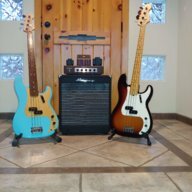
I have had a few active basses, usually played them in passive mode. It’s much easier for me to dial in a usable tone. A good J or P/J have more than enough tonal variation for me. Even a P-bass gets the job done nicely.
Cheers J.S.
Cheers J.S.

I don't see, feel or hear any difference between my active and passive basses, except for the replacing the battery bit.
I get a sound I like and whether that's with battery help or not isn't something that I notice.
I get a sound I like and whether that's with battery help or not isn't something that I notice.
I don't see, feel or hear any difference between my active and passive basses, except for the replacing the battery bit.
I get a sound I like and whether that's with battery help or not isn't something that I notice.
PS
They do sound different, due to one being a passive P bass with flats and the other being an active jazz bass with rounds, but being active/passive isn't a thing when getting a good tone.


I find the passive tone knob is the most relevant sound shaping control for me.
Some active basses incorporate one and I applaud that. Then you get the best of both worlds! (Active treble boost/cut just isn't quite the same thing IME.)
Some active basses incorporate one and I applaud that. Then you get the best of both worlds! (Active treble boost/cut just isn't quite the same thing IME.)
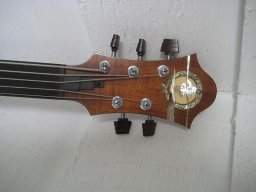
There’s such a wide variety of sounds available from both active and passive basses that I find it impossible to make any blanket statement about active vs. passive. A pre-EB Stingray and an Alembic Series I are both active basses but they don’t sound at all similar. A Fender Precision and a Gibson EB 0 are both passive basses that sound nothing alike.
Over the years I’ve owned a lot (probably a few too many) of each, passive and active, and can honestly say I don’t have any general preference. I do, however have specific preferences that are formed on a bass-to-bass bassis.* I make each assessment in the context of the instrument involved. Resultingly, I’ve pulled preamps from basses that didn’t benefit from them and added them to basses that did - subjectively speaking, of course. For example, I recently added an MEC preamp to my (previously passive) Warwick Corvette and I felt it was an improvement but I would never consider doing that to my old Guild 201 or one of my Rickenbackers.
*I really like that I got to say bass-to-bass bassis. It was worth the whole post, really.
Over the years I’ve owned a lot (probably a few too many) of each, passive and active, and can honestly say I don’t have any general preference. I do, however have specific preferences that are formed on a bass-to-bass bassis.* I make each assessment in the context of the instrument involved. Resultingly, I’ve pulled preamps from basses that didn’t benefit from them and added them to basses that did - subjectively speaking, of course. For example, I recently added an MEC preamp to my (previously passive) Warwick Corvette and I felt it was an improvement but I would never consider doing that to my old Guild 201 or one of my Rickenbackers.
*I really like that I got to say bass-to-bass bassis. It was worth the whole post, really.
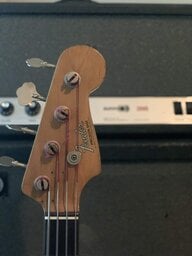
Nothing wrong with preferring passive, nothing wrong with preferring active. For me personally, I prefer passive especially in a gigging scenario. I like to be able to plug in at any gig and start playing away without having to worry about batteries. I have however played some really really cool active basses. A Stingray classic with dead flats is a tone machine.

I love my passive basses and how they sound. but when I take an active/passive instrument, I somehow usually end up using it in active mode. so for me answer is both.
if you feel that passive is your thing -- just accept it and don't think twice. to my ears, passive basses do sound somewhat more rich and complex, but active ones are capable for that extra bit of defined hi-end twang when I need it (and yeah, EQing down the road doesn't produce exactly same results).
if you feel that passive is your thing -- just accept it and don't think twice. to my ears, passive basses do sound somewhat more rich and complex, but active ones are capable for that extra bit of defined hi-end twang when I need it (and yeah, EQing down the road doesn't produce exactly same results).


I like the no-muss, no-fuss, set-it-and-forget-it simplicity of passive basses. Not having to worry about batteries is nice too. I've had batteries die on me mid-gig and I either didn't have a spare battery or a screwdriver for the control cavity or battery compartment door. Even now in 2022, not all active basses come with easy access battery compartments.
However, there is something to be said about the hot-rodded power of active electronics. There are many who say that you need some sort of active electronic system to properly reproduce the tones of low B or other bone-rattlingly low drop tunings used in a lot of modern metal, like a low G or something (two whole steps below a low B).
I've seen plenty of passive 5-strings hold their own quite well, like the discontinued Schecter Apocalypse
I've had basses de-active-ated in the past (4-strings) and they sounded more open and free than they did when shackled to preamps.
My two main basses are a pair of LTD 5-strings that feature passive soapbars (an F-205 with EMG-HZs, and a D-5 with ESP Designed pups) coupled to 3-band active preamps. Next summer I plan to have a respected luthier rewire the EMG-HZ equipped F-205 passive. I currently plan to keep the D-5 stock/active save for replacing the strap pins with Dunlop Straplocks. But we'll see.
EDIT: On the other hand, you have basses like the ESP/LTD [Invalid or Expired Link Removed] that have active pickups (that need a battery) but simple vol/bal/tone "passive" controls so you get active power with passive simplicity. This setup is not something seen every day.
However, there is something to be said about the hot-rodded power of active electronics. There are many who say that you need some sort of active electronic system to properly reproduce the tones of low B or other bone-rattlingly low drop tunings used in a lot of modern metal, like a low G or something (two whole steps below a low B).
I've seen plenty of passive 5-strings hold their own quite well, like the discontinued Schecter Apocalypse
I've had basses de-active-ated in the past (4-strings) and they sounded more open and free than they did when shackled to preamps.
My two main basses are a pair of LTD 5-strings that feature passive soapbars (an F-205 with EMG-HZs, and a D-5 with ESP Designed pups) coupled to 3-band active preamps. Next summer I plan to have a respected luthier rewire the EMG-HZ equipped F-205 passive. I currently plan to keep the D-5 stock/active save for replacing the strap pins with Dunlop Straplocks. But we'll see.
EDIT: On the other hand, you have basses like the ESP/LTD [Invalid or Expired Link Removed] that have active pickups (that need a battery) but simple vol/bal/tone "passive" controls so you get active power with passive simplicity. This setup is not something seen every day.
Last edited:

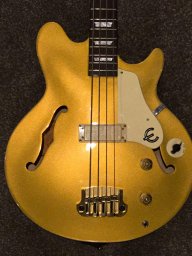

I like both, but I prefer passive, especially since I got my Maruszczyk Elwood 5L. So glad I got it passive, because I can dial in any sound I want, and all I hear is how good it sounds. Makes me happy!

What's the point? If you like active you can just put a superior preamp in your signal chain. In any decent studio, the engineer will likely plug you into an Avalon or a Millennium without even asking.
Last edited:

I had a Jazz bass with EMG active pickups, allowing uneven volumes without noise, but had passive controls. I replaced the battery every few years. Never failed on me. I just figured I oughtta

I must prefer active since all mine have preamps (PJ5). I don't like to fiddle with amp or pedal settings and have come to rely on having the ease of tweaking things on the fly from on the bass. Even if that means having to change a battery every year or 2 whether it needs it or not. My PJ5 with a preamp and flats is among the most versatile and flexible tone monsters I've ever had. Doesn't mean I'm right or wrong, it's all just a preference. To each his/her own.
I don't think preferring passive basses is an "old fogey" thing at all, in fact rather the opposite these days. The sound of passive P's, Mustangs, retro shortscale hollowbodies, etc are far more prevalent in the trendy kid's music today than any kind of active bass sound(I mean music that actually uses bass guitar and not synth). Producers far prefer it too. You'll often see people using active fivers live when they're covering for music that used synth, but not so much in the studio.


