

Enjoy the benefits of a premium membership!
Upgrade Account
-
TalkBass has been independent since 1998. Add your voice.
Create a free account to reply to discussions, view embedded media, and browse with fewer display ads.
Join free Log in
Want zero display ads or expanded classifieds tools? Compare plans.
You are using an out of date browser. It may not display this or other websites correctly.
You should upgrade or use an alternative browser.
You should upgrade or use an alternative browser.
Do older basses sound significantly better?
- Thread starter Peter - Oregon
- Start date
More options
Who Replied?

I am wondering if the aging of the wood on solid body bass guitars over decades makes.them sound noticeably better than new ones. For example a new Fender P vs one that is 20 or 40 years old?
All of those great sounding old records, were made with new basses.

buldog5151bass
Kibble, milkbones, and P Basses. And redheads.
I think it is more that fewer basses were made in the past, and especially fewer cheap basses. Back in the 60s, if you bought a Fender, you were buying the top line Fender, since that is all there was.

There are several differences between these two instruments that affects the tone CONSIDERABLY more than the rather subtle differences between old/new solid bodies. These two basses don't even share the same specs to begin with! Any old/new comparison is utterly pointless in this case. The '79 is significantly thinner in the lows/low mids and more aggressive in the high mids, as expected from 70s P-bass specs when compared to "modern", current production P-bass specs. And yes, 70s P-basses sounded like that when they were new as well. There's a reason why hardly anyone wanted them until they were suddenly considered "vintage".A good, early 60s P-bass would be closer to most "modern" P-basses.
Or to put it another way: These two instruments would sound very different even if the '79 came straight off the assembly line.
I'm not saying age doesn't influence the tone. But unless you can compare the SAME instrument, or at the very least instruments with the EXACT same specs, any old vs new comparisons are totally worthless.
I made this comparison (without any conclusions in the video), and I agree with you 100%. I just can hope that I will be able to test one of my basses in about 30 years from now on the same recording equipment, strings and other conditionss. That would probably just prove that You are right, and that sound will be the same as it was now.

Agree. The aural nuances of a vintage instrument are mostly gone as soon as the drummer kicks in.
All nuances are mostly gone when the drummer kicks in...

This is an interesting read:
What Really Happened in that Double-Blind Violin Sound Test
Conclusion is, old and new can sound equally as good. what matters is quality of build, quality of materials, and quality of set up. You can make a great instrument sound poor with a bad set up.
True lots of great modern violins, especially since the 80s. Liked the link, another forum I belong to
The old Cremonese instruments were fantastic when new too, a point that is often overlooked. They're not good because they're old. They had great wood, varnish, and makers. A lot of the top pros prefer modern fiddles now, less temperamental and easier to maintain on the road. Audiences have no idea. That said, blind tests are silly. Pros can make a decent instrument sound great even if it takes more effort. Sometimes jokingy referred to as the "selling" sound... And the test quoted was about preference not identification.
Can someone explain how wood “dries out” when it’s covered in layers of paint? Especially polyurethane?
I think it's more about cellular decay over time than moisture content as such?
Well, there's "old" and then there's "worn out".
I also think it's worth pointing out that the instrument most violinists picked was around 30 years old at the time of this blind test so very much "broken in" and more or less the same age as we refer to as "old" in the context of this thread. I doubt if any professional violinist would have picked a brand new violin in a double blind test. I might be wrong of course. I'm not a violinist.
Yep, played in makes a big difference on fiddles. My old teacher reckoned she could tell whether a violin had been recently played. Maybe she was scaring me into practice

The reason I like old instruments are the looks, the authenticity, the worn in feel, the scars and relicing from being played. Just to think this particular bass was build before certain records existed…
Don’t need no myths about the good old times to justify my love. Same goes for vinyl. I simply love it: the covers, the record player, the procedure to take a record out of the sleeve and put it on the player. I would never get into a discussion about the audio quality of vinyl. I don’t need to. I would never recommend a 5-figure vintage instrument to a younger player because of any advantages it offers AS an instrument.
Don’t need no myths about the good old times to justify my love. Same goes for vinyl. I simply love it: the covers, the record player, the procedure to take a record out of the sleeve and put it on the player. I would never get into a discussion about the audio quality of vinyl. I don’t need to. I would never recommend a 5-figure vintage instrument to a younger player because of any advantages it offers AS an instrument.

JeezyMcNuggles
Inactive
- Feb 23, 2018
- 14,723
- 20,970
- Disclosures
- I suck, but nobody really notices
NoI am wondering if the aging of the wood on solid body bass guitars over decades makes.them sound noticeably better than new ones. For example a new Fender P vs one that is 20 or 40 years old?

Where's the part of the AI cake recipe that reads, 'Add 1/2 oz arsenic'? This looks like a reasonable cake but your AI still cannot render human hands and fingers- like grotesque tentacles, often 6 or 7 digits per hand, on all 3 hands. Creepy. All polychrome and glossy like a seriously twisted Maxfield Parrish world.YOU: can you create a carrot cake recipe i can bake to keep my mind off of redundant topics related to bass guitars and whether or not the age of the wood is noticeable changing the tone?
ChatGPT
Certainly! Baking can be a wonderful way to take a break from repetitive thoughts. Here's a delicious carrot cake recipe for you:
Carrot Cake Recipe
Ingredients:
Cream Cheese Frosting:
- 2 cups all-purpose flour
- 2 cups granulated sugar
- 1 teaspoon baking powder
- 1/2 teaspoon baking soda
- 1/2 teaspoon salt
- 1 teaspoon ground cinnamon
- 1/2 teaspoon ground nutmeg
- 1/2 cup vegetable oil
- 4 large eggs
- 2 teaspoons vanilla extract
- 2 cups grated carrots (about 4 medium carrots)
- 1 cup crushed pineapple, drained
- 1/2 cup shredded coconut
- 1/2 cup chopped walnuts or pecans (optional)
Instructions:
- 8 oz cream cheese, softened
- 1/2 cup unsalted butter, softened
- 4 cups powdered sugar
- 1 teaspoon vanilla extract
Enjoy your homemade carrot cake and take some time to savor the delicious flavors while taking a break from those repetitive thoughts!
- Preheat your oven to 350°F (175°C). Grease and flour two 9-inch round cake pans.
- In a large bowl, whisk together the flour, sugar, baking powder, baking soda, salt, cinnamon, and nutmeg.
- In a separate bowl, beat together the oil, eggs, and vanilla until well combined.
- Add the wet ingredients to the dry ingredients and mix until just combined.
- Fold in the grated carrots, crushed pineapple, shredded coconut, and chopped nuts (if using).
- Divide the batter evenly between the prepared pans and smooth the tops.
- Bake in the preheated oven for 25-30 minutes or until a toothpick inserted into the center comes out clean.
- Allow the cakes to cool in the pans for 10 minutes, then transfer them to a wire rack to cool completely.
- For the cream cheese frosting, beat together the cream cheese, butter, powdered sugar, and vanilla until smooth and creamy.
- Once the cakes are completely cooled, spread a layer of cream cheese frosting on top of one cake layer. Place the second layer on top and frost the entire cake.
- Optional: Garnish with additional chopped nuts or shredded coconut.

It does seem counterintuitive that something as thick and hard as polyurethane would allow the transfer of water vapor but I have no empirical proof either way.
Here's an article (that most of us can't actually completely understand), but you can appreciate that they are talking about factors that increase or decrease the vapor transmission rate. If it's something that increases or decreases with various factors, it's....not zero:
Water Vapor Transport Properties of Polyurethane Films for Packaging of Respiring Foods - Food Engineering Reviews
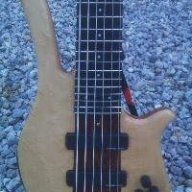

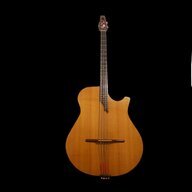
My taylor ab1 born in 1996 .sound much better then most of acoustic bass that i try.I don't know if it is because the years . I want to believe that yes.

D
From Invalid Link Removed:
"A pool of 15 new and 9 Old Italian violins was assembled by the authors. The new violins were built by professional makers in Europe and North America and were between several days and two decades old."
According to my reading of the Results section, anyway, there was no reliable pattern with respect to correct or incorrect identification of any of the violins as new or old.
Maybe some bass players with exquisitely attuned senses can tell older basses from newer purely on the basis of the age of the wood. But there are too many counterexamples in other areas to take the idea entirely seriously. (There's the Invalid Link Removed.)
Personally, I think we're just one double-blind study away from burying the claim about old wood sounding different from new wood in basses. And solid-body basses at that! (Not that the study would convince the believers. Science is unpleasant.)
I get what you're saying but this test isn't really relevant to the OPs question at all as it's (obviously) not comparing a brand new Stradivarius to the same Stradivarius hundreds of years later. That would of course be impossible. This is not a new wood vs aged wood blind test. It's a test between completely different violins.
The problem with these types of tests is also that "better" will always be highly subjective, although I think most of us will agree that that the tone of a good quality ACOUSTIC guitar changes over time and practically always for the better.
Still, in my opinion a better question would be whether solid body basses sound DIFFERENT when the wood ages, rather than "better". But even when we're talking about just 40 years of aging (rather than hundreds of years in the case of the violins) this will be an almost impossible test to perform. There are too many other variables. Simply comparing an old instrument with a similar new instrument will tell us NOTHING about whether the tone changes when the wood gets older.
I can SWEAR that some of my solid body basses sounded thinner and had "stiffer" dynamics when they were brand new, so I'm leaning heavily towards YES, the tone changes as the wood gets older. But even though I have recordings of these basses when they were brand new I can't be 100% sure because I can't remember the exact signal chain, strings, etc. that I used on a studio session 30-40 years ago. All I know is that my older basses generally sound fuller/fatter/warmer and have more "bloom" to the notes and "bouncier" dynamics than my newest basses. And I'm not talking about Höfner vs Dingwall but old P-bass vs new P-bass (and similar comparisons). Just a coincidence? Maybe, I can't know for certain, but I sure see a clear pattern with the 40+ basses I currently own (many of which I've owned for decades).

No.
I am wondering if the aging of the wood on solid body bass guitars over decades makes.them sound noticeably better than new ones. For example a new Fender P vs one that is 20 or 40 years old?
I get what you're saying but this test isn't really relevant to the OPs question at all as it's (obviously) not comparing a brand new Stradivarius to the same Stradivarius hundreds of years later. That would of course be impossible. This is not a new wood vs aged wood blind test. It's a test between completely different violins.
The problem with these types of tests is also that "better" will always be highly subjective, although I think most of us will agree that that the tone of a good quality ACOUSTIC guitar changes over time and practically always for the better.
Still, in my opinion a better question would be whether solid body basses sound DIFFERENT when the wood ages, rather than "better". But even when we're talking about just 40 years of aging (rather than hundreds of years in the case of the violins) this will be an almost impossible test to perform. There are too many other variables. Simply comparing an old instrument with a similar new instrument will tell us NOTHING about whether the tone changes when the wood gets older.
I can SWEAR that some of my solid body basses sounded thinner and had "stiffer" dynamics when they were brand new, so I'm leaning heavily towards YES, the tone changes as the wood gets older. But even though I have recordings of these basses when they were brand new I can't be 100% sure because I can't remember the exact signal chain, strings, etc. that I used on a studio session 30-40 years ago. All I know is that my older basses generally sound fuller/fatter/warmer and have more "bloom" to the notes and "bouncier" dynamics than my newest basses. And I'm not talking about Höfner vs Dingwall but old P-bass vs new P-bass (and similar comparisons). Just a coincidence? Maybe, I can't know for certain, but I sure see a clear pattern with the 40+ basses I currently own (many of which I've owned for decades).
If this is the same test that I indirectly quoted earlier than it is very relevant. The task was not to identify old instruments, the players were asked which ones they preferred.
There was no pattern established hence the conclusion old instruments don't sound any better. you and many others correctly said it's a matter of personal preference.


