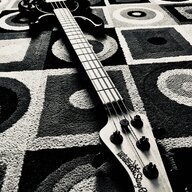
I’ve been able to play some older basses, 20-30 years old, but nothing that’s 60s vintage. For me it isn’t so much older basses sound better but it’s more that they’ve been setup and tweaked so many times that some of them are so finely tuned they just play better. And maybe that somehow equals sounding better, which again is just my opinion or experience. Also, again personally, but basses that have been around a while I feel I can trust them more. Which leads to me playing more freely and not worrying about something going wrong with the instrument as much. It’s almost like I can let my guard down more on an older broken in bass and just have fun instead of worrying about keeping my brand new bass mint for as long as possible.

Enjoy the benefits of a premium membership!
Upgrade Account
-
TalkBass has been independent since 1998. Add your voice.
Create a free account to reply to discussions, view embedded media, and browse with fewer display ads.
Join free Log in
Want zero display ads or expanded classifieds tools? Compare plans.
You are using an out of date browser. It may not display this or other websites correctly.
You should upgrade or use an alternative browser.
You should upgrade or use an alternative browser.
Do older basses sound significantly better?
- Thread starter Peter - Oregon
- Start date
More options
Who Replied?
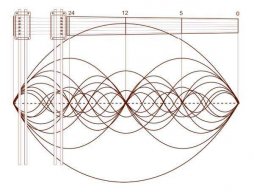
It is well known that playing the instrument improves the sound. There are even small vibrating units that attach to guitars that maintain a vibration through it when you are not playing it.I am wondering if the aging of the wood on solid body bass guitars over decades makes.them sound noticeably better than new ones. For example a new Fender P vs one that is 20 or 40 years old?

drumvsbass
Commercial User
- Aug 20, 2011
- 1,981
- 4,324
- Disclosures
- I work for Long and McQuade Musical Instruments Canada in Sales.
My advice. Start young, buy a new FSO, make your own vintage heavy relic (mine has authentic boot chain marks from kicking it across the stage when I though I was cool, and a slice in the headstock from a Wu-Han China cymbal).
Then you'll know whether they sound better or not.
I'd be lying to say that this bass 'sounds' any particular way due to it's age (maybe a bit darker).
But feel wise this thing rattles my chest in ways it never did when it was new.


Then you'll know whether they sound better or not.
I'd be lying to say that this bass 'sounds' any particular way due to it's age (maybe a bit darker).
But feel wise this thing rattles my chest in ways it never did when it was new.
INHO. NoI am wondering if the aging of the wood on solid body bass guitars over decades makes.them sound noticeably better than new ones. For example a new Fender P vs one that is 20 or 40 years old?

Some do some don't, it's an individual case. It's very much like old wines, at that point there are no good vintages, only good bottles!
What I generally do not like is brand new instruments fresh from the factory. Every time I try a new Fender that was just produced, the fresh wood and perhaps fresh finish, whatever it is, does not appeal to me. Maybe it's in my head but they sound stiff and choked down to my ears.
What I generally do not like is brand new instruments fresh from the factory. Every time I try a new Fender that was just produced, the fresh wood and perhaps fresh finish, whatever it is, does not appeal to me. Maybe it's in my head but they sound stiff and choked down to my ears.
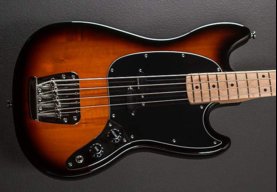

Well of course they do. You pay that kind of five-figure Stoopid money for some old Fender, you GOT to swear it's just the best ever! It's absolutely mojo-matical!
Last edited:
Often these discussions presume that older wood provides (or might provide) for better tone.
Wood slowly changes with age, so understandably we have some reason to propose that an instrument can sound or behave differently with age. But why better? Isn’t a change just as likely to be for the worse?
If you do a magnificent job selecting a perfect new instrument, it can’t get any better with age. It’s perfect and sounds exactly the way that you desire. Any change with age means that it no longer makes the sound that you originally wanted. What a pain! Guess you new a new one at that point.
Wood slowly changes with age, so understandably we have some reason to propose that an instrument can sound or behave differently with age. But why better? Isn’t a change just as likely to be for the worse?
If you do a magnificent job selecting a perfect new instrument, it can’t get any better with age. It’s perfect and sounds exactly the way that you desire. Any change with age means that it no longer makes the sound that you originally wanted. What a pain! Guess you new a new one at that point.
However!many rotten tones from the ancient POSs can be modified with modern effects and amplification to where they can sound powerfully wonderful . Ive proved that with my own stuff.If it was a POS back in the 60's/70's, it's a POS today!
Yes, to some it seems the older it is, and the worse the finish wear and how dead the flats are- you know it has to be better )Well of course they do. You pay that kind of five-figure Stoopid money for some old Fender, you GOT to swear it's just the best ever! It's absolutely mojo-matical!
(And more valuable) than anything new.

Lowendtech
Happily trending in my own peculiar direction.
I dunno about the wood but I can guarantee that I sound better now than I ever did when I was younger.
But I love the tone of my ‘73 P.
But I love the tone of my ‘73 P.

No.I am wondering if the aging of the wood on solid body bass guitars over decades makes.them sound noticeably better than new ones. For example a new Fender P vs one that is 20 or 40 years old?

Only if one listens with their eyes.I am wondering if the aging of the wood on solid body bass guitars over decades makes.them sound noticeably better than new ones. For example a new Fender P vs one that is 20 or 40 years old?

Just want to add my experiences to this, if relevant. I have a ‘76 Ric 4001 and an ‘18 Ric 4003, and to me, they very different instruments. Not just in their physical construction, but tonally as well. When playing them acoustically (not plugged in), strung with the same NPS 45-100 rounds, the 4001 is noticeably brighter with emphasis in the higher mids, while the 4003 has a much deeper/low-mid tone. I’ll say right off the bat that I don’t believe wood aging has anything to do with it in this case. The 4001 was built with a smaller headstock and a much slimmer neck profile. Less wood contributes to these tonal differences? Maybe… no clue. Also, the 4001 CV finish isn’t the same as what they are using now, but again, I have no idea how much of an effect this has on tone. Anyway, they are both Ric 4000’s, and while I wouldn’t say that one sounds “better” then the other, they most certainly are different.

AND PLAYED!! The vibrations find their paths over years of playing. They help the bass to be more resonant.I have 1952 precision bass and a couple other old basses from the 70s, 90s and early 2000s.
That 52 the wood is basically petrified and it is certifiably the most resonant bass i own. When you hit a note you can really feel it and hear it.
I think it comes down to good wood that's aged well and PLAYED. I think instruments that have been vibrating for decades develop that wonderful tone

i used to hear a lot that older acoustic guitars sound better than new, but i actually prefer the sound of newer acoustics most of the time.
that being said, there are both older and newer basses that i love the sound of. i love the sound of older rics - newer rics, not so much. i think stingrays sound great, and one of my favorites was a '70s model they had at hollywood GCs for VIPs to play.
that being said, there are both older and newer basses that i love the sound of. i love the sound of older rics - newer rics, not so much. i think stingrays sound great, and one of my favorites was a '70s model they had at hollywood GCs for VIPs to play.
Old dry wood (seems to me) slightly more resonant than young wood. But you can replicate this with roasting or just using old wood.
The old basses that have survived this long are probably the good sounding ones of the batch, the bad sounding ones would have been weeded out, trashed, modded etc... So the old ones that exist now probably do have a higher than average sound quality.
I don't ascribe to tonewood but from a physics sense, resonant is not what you want. Resonance is what gives you dead spots. Drier wood is possibly very slightly stiffer and is likely to mean less resonance in the audible range which means greater audible volume direct from the strings. The body itself will contribute about zero to the audible sound. You can check that by attaching a stick-on acoustic guitar transducer to an acoustic bass guitar - plenty of signal - and a solid body - next to nothing in comparison.
AND PLAYED!! The vibrations find their paths over years of playing. They help the bass to be more resonant.
That's not how it works
edwinhurwitz
Supporting Member
New poll: Does old carrot cake taste better than new carrot cake?
I prefer flat wound carrot cake.

This is a distinct possibility. But it ain't necessarily so. Emphasis placed perhaps upon older, more seasoned wood, opened-up over long, living, musical years.
All you need is a good piece of wood. But what makes a good piece of wood? I don't know, but it has a ring to it.


