
Enjoy the benefits of a premium membership!
Upgrade Account
-
TalkBass has been independent since 1998. Add your voice.
Create a free account to reply to discussions, view embedded media, and browse with fewer display ads.
Join free Log in
Want zero display ads or expanded classifieds tools? Compare plans.
You are using an out of date browser. It may not display this or other websites correctly.
You should upgrade or use an alternative browser.
You should upgrade or use an alternative browser.
Do older basses sound significantly better?
- Thread starter Peter - Oregon
- Start date
More options
Who Replied?


After going through many vintage guitars and basses, I've come to lean towards new every time. I have friends that also have vintage instruments that they swear by and God Love 'em but, as a gigging musician, it's about a proper tool to get the job done. That didn't mean I just grabbed the first one but, I did run the rack for the best I could find that worked for me.
All I have now is a Precision V (2010) and a Dimension Deluxe 5 (2014) that work just fine. Great tone vibe and they are even across their respective boards. One can experience revelations at bass GTG's and learn something new, or search far & wide for that one instrument but, those things take time.
I think QC is better now and the makers do A LOT more with even lesser woods than in the past. Thankfully, player demand has been the main thing that's made basses and gear better.
Word on the board here is Leo Fender was a penny-pincher and a good Fender was as more about luck then than it is now. It is true, the great playing instruments tend to survive longer as they are.
[/horse severely beaten]
All I have now is a Precision V (2010) and a Dimension Deluxe 5 (2014) that work just fine. Great tone vibe and they are even across their respective boards. One can experience revelations at bass GTG's and learn something new, or search far & wide for that one instrument but, those things take time.
I think QC is better now and the makers do A LOT more with even lesser woods than in the past. Thankfully, player demand has been the main thing that's made basses and gear better.
Word on the board here is Leo Fender was a penny-pincher and a good Fender was as more about luck then than it is now. It is true, the great playing instruments tend to survive longer as they are.
[/horse severely beaten]
Being the owner of a 1960 Fender Jazz Bass, I say no, older basses don't sound better. It sounds like a Jazz bass should, but no better (or worse) than a new Jazz bass. All subjective anyway.

I have limited data, but my ‘74 Fender Jazz was a piece of junk compared to my ‘20 Am Pro 2 jazz. The ‘20 sounds better, plays better, is lighter and - I think - looks better.
I am sure some old ones are great. Mine wasnt
Regards
Mark
I am sure some old ones are great. Mine wasnt
Regards
Mark
D
If this is the same test that I indirectly quoted earlier than it is very relevant. The task was not to identify old instruments, the players were asked which ones they preferred.
There was no pattern established hence the conclusion old instruments don't sound any better. you and many others correctly said it's a matter of personal preference.
Sure, but this thread is about whether aging of the wood affects the tone, isn't it? Not whether old or new instruments are "better". Comparing an old Stradivarius with a modern violin won't tell us anything whatsoever about the effect of aging. We would need a time machine and compare a BRAND NEW Stradivarius with the exact same Stradivarius hundreds of years later to make any useful observations about the effect of aging. And no Stradivarius in existence today would even be usable for such a comparison because (as far as I know) they've all been heavily modified with longer necks/fingerboards as well as other modifications compared to when they were new.
The same applies for basses. Comparing a vintage P-bass with a brand new P-bass will tell us absolutely NOTHING about the effect of aging. We can't do a double blind test about the effect of aging unless we invent a time machine and somehow manage to have the brand new and 40 year old version of the EXACT same instrument in the same room at the same time. And even then the instrument in question would have to be in perfect and 100% original condition after 40 years or the test would be flawed.
The best we can do is to rely on science and there is no doubt that the properties of wood changes as it ages. So I guess it really boils down to whether you think tonewoods matter or not with solid body instruments.

We could do it by sound maybe. Old recording of Fender basses that were new then, compared to a new one today might reveal something. But unless it's the same basses being compared to an old recording that won't prove the aging thing. But it could reveal how a new bass in the 50s-60s recorded sounded to a new one today. Although the recording technology has changed a lot since then...Sure, but this thread is about whether aging of the wood affects the tone, isn't it? Not whether old or new instruments are "better". Comparing an old Stradivarius with a modern violin won't tell us anything whatsoever about the effect of aging. We would need a time machine and compare a BRAND NEW Stradivarius with the exact same Stradivarius hundreds of years later to make any useful observations about the effect of aging. And no Stradivarius in existence today would even be usable for such a comparison because (as far as I know) they've all been heavily modified with longer necks/fingerboards as well as other modifications compared to when they were new.
The same applies for basses. Comparing a vintage P-bass with a brand new P-bass will tell us absolutely NOTHING about the effect of aging. We can't do a double blind test about the effect of aging unless we invent a time machine and somehow manage to have the brand new and 40 year old version of the EXACT same instrument in the same room at the same time. And even then the instrument in question would have to be in perfect and 100% original condition after 40 years or the test would be flawed.
The best we can do is to rely on science and there is no doubt that the properties of wood changes as it ages. So I guess it really boils down to whether you think tonewoods matter or not with solid body instruments.

Last edited:
Yes and no but... I like old things and the stories they could tell.
D
Here is a subject worthy of discussion. Just say NO to nuts!
Carrot Cake Recipe
Ingredients:
- 1 cup crushed pineapple, drained
- 1/2 cup shredded coconut
- 1/2 cup chopped walnuts or pecans!

It's like when you hear the discussion about those old classic recordings of the 60's and 70's and people saying those vintage instruments sounded so much better. They weren't vintage at the time! They were new! Jimi Hendrix didn't play on vintage Strats, he just had new Fenders!
I think in modern days it is more about the feel of an aged instrument over the sound. That is likely part of the reason why road worn or pre-aged instruments have gained in popularity (as well as for the aesthetics).
It shouldn't be hard and isn't hard to get a good sounding new instrument these days.
I think in modern days it is more about the feel of an aged instrument over the sound. That is likely part of the reason why road worn or pre-aged instruments have gained in popularity (as well as for the aesthetics).
It shouldn't be hard and isn't hard to get a good sounding new instrument these days.

It's part of the inevitable lore. Vintage basses have been around the block a few times and exude a sort of charisma. But I don't think there's any measurable difference in sound quality because of it.
Last edited:

I thought the OP asked... Do older bass players sound significantly better?
As a 66 yo bassist, I would argue, yes.
As a 66 yo bassist, I would argue, yes.
Exactly my point.It's like when you hear the discussion about those old classic recordings of the 60's and 70's and people saying those vintage instruments sounded so much better. They weren't vintage at the time! They were new! Jimi Hendrix didn't play on vintage Strats, he just had new Fenders!
I think in modern days it is more about the feel of an aged instrument over the sound. That is likely part of the reason why road worn or pre-aged instruments have gained in popularity (as well as for the aesthetics).
It shouldn't be hard and isn't hard to get a good-sounding new instrument these days.
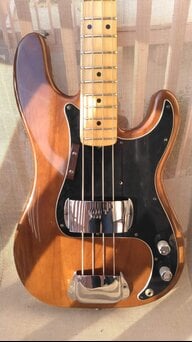
This vintage P bass today looks pretty new then. Yes over time as the wood further dries out, their finish weathers, and the pick up loose its magnetic field pull. They do and will sound and feel different.
Thanks Duck for all your service.
Last edited:


Tone wood though.It’s difficult to generalize or to make a definitive data-driven statement about whether older or newer wood sounds better.


I do not disagree with what you're saying but you're going a bit off topic IMO. Whether a vintage Fender is a superb instrument is a case by case thing, sure I agree 100% with that. But whether aging matters with solid body instruments is NOT a case by case thing. That's a more universal yes/no scenario. In my opinions it's a yes, but I find the overall differences VERY subtle compared to old vs new acoustic instruments, and even then it's hard to say for sure unless it's an instrument you've owned for decades and RECORDED the exact same instrument many years ago as a reference.
I apologize for going off topic.
I very much believe a solid bodied instrument’s sound will improve over time, provided that it gets played regularly. How much better will it sound? I have no idea.
Possibly that’s why I’ve encountered a few Pre-CBS Fenders that sounded rather ordinary. Maybe they were closet-queens for many years, but I can’t say for certain.
Possibly as the body and neck woods are being played, and vibrating, it does “something” to the woods(?)
That’s my guess, I’m by no means an expert.
Ou need to read the OP post again.Sure, but this thread is about whether aging of the wood affects the tone, isn't it? Not whether old or new instruments are "better". Comparing an old Stradivarius with a modern violin won't tell us anything whatsoever about the effect of aging. We would need a time machine and compare a BRAND NEW Stradivarius with the exact same Stradivarius hundreds of years later to make any useful observations about the effect of aging. And no Stradivarius in existence today would even be usable for such a comparison because (as far as I know) they've all been heavily modified with longer necks/fingerboards as well as other modifications compared to when they were new.
The same applies for basses. Comparing a vintage P-bass with a brand new P-bass will tell us absolutely NOTHING about the effect of aging. We can't do a double blind test about the effect of aging unless we invent a time machine and somehow manage to have the brand new and 40 year old version of the EXACT same instrument in the same room at the same time. And even then the instrument in question would have to be in perfect and 100% original condition after 40 years or the test would be flawed.
The best we can do is to rely on science and there is no doubt that the properties of wood changes as it ages. So I guess it really boils down to whether you think tonewoods matter or not with solid body instruments.


And old squire isn’t gonna sound as good as a new custom shop


