
Enjoy the benefits of a premium membership!
Upgrade Account
-
TalkBass has been independent since 1998. Add your voice.
Create a free account to reply to discussions, view embedded media, and browse with fewer display ads.
Join free Log in
Want zero display ads or expanded classifieds tools? Compare plans.
You are using an out of date browser. It may not display this or other websites correctly.
You should upgrade or use an alternative browser.
You should upgrade or use an alternative browser.
do tubes need break in time?
- Thread starter xshawnxearthx
- Start date
More options
Who Replied?
haha gitardrumblethump said:I've never heard that from my tube guru, but some gitard might say something like that.

I have some experience with large power amplifier tubes, such as the intermediate and final pa sections of large transmitters. These tubes (mfd by ITT) required several hours of burn-in and monitoring of filament currents. The 'break-in' period, as explained to me, was mainly for filament stabilzation. Filament output will vary initially, then reach an equilibrium after time. In push-pull output stages, it is important that each tube be "matched", in terms of output,with it's partner for proper waveform shape, and balanced transmission to the antenna.
That said, I don't know that amplifier tube manufacturers recommend a burn in period and if it is just a single tube stage there is no matching to do. OTOH, it certainly wouldn't hurt to leave it on filament only (standby) awhile. It used to be that you waited a bit after turning the amp on in standby to let the filaments warm up, come to operating temperature, then apply the bias. Might make your tubes last longer. Also waiting a bit with the amp in standby lets it come down in temp a little before shutting the power off. I have an amp with a single tube pre and it doesn't have a standby switch, so bias is applied with the preamp volume control. I turn this down to zero before turning the amp off.
The filaments in a tube are somewhat like whats in a light bulb, though physically stronger. The longer they're used the more brittle they become. A slow warm up and warm down will get the most life out of them.
That said, I don't know that amplifier tube manufacturers recommend a burn in period and if it is just a single tube stage there is no matching to do. OTOH, it certainly wouldn't hurt to leave it on filament only (standby) awhile. It used to be that you waited a bit after turning the amp on in standby to let the filaments warm up, come to operating temperature, then apply the bias. Might make your tubes last longer. Also waiting a bit with the amp in standby lets it come down in temp a little before shutting the power off. I have an amp with a single tube pre and it doesn't have a standby switch, so bias is applied with the preamp volume control. I turn this down to zero before turning the amp off.
The filaments in a tube are somewhat like whats in a light bulb, though physically stronger. The longer they're used the more brittle they become. A slow warm up and warm down will get the most life out of them.
i get the whole shutting down and powering up with the standby switch and all, just didnt know if i had to play the tubes for a certain number of hours before i really push them.Blueszilla said:I have some experience with large power amplifier tubes, such as the intermediate and final pa sections of large transmitters. These tubes (mfd by ITT) required several hours of burn-in and monitoring of filament currents. The 'break-in' period, as explained to me, was mainly for filament stabilzation. Filament output will vary initially, then reach an equilibrium after time. In push-pull output stages, it is important that each tube be "matched", in terms of output,with it's partner for proper waveform shape, and balanced transmission to the antenna.
That said, I don't know that amplifier tube manufacturers recommend a burn in period and if it is just a single tube stage there is no matching to do. OTOH, it certainly wouldn't hurt to leave it on filament only (standby) awhile. It used to be that you waited a bit after turning the amp on in standby to let the filaments warm up, come to operating temperature, then apply the bias. Might make your tubes last longer. Also waiting a bit with the amp in standby lets it come down in temp a little before shutting the power off. I have an amp with a single tube pre and it doesn't have a standby switch, so bias is applied with the preamp volume control. I turn this down to zero before turning the amp off.
The filaments in a tube are somewhat like whats in a light bulb, though physically stronger. The longer they're used the more brittle they become. A slow warm up and warm down will get the most life out of them.
like they suggest on speakers(so i was told) or brakes on a car or other stuff like that.
In that case, once the tubes are warmed up, I say floor it! If it/they fail, they might have been injured already and you just made them fail sooner rather than later.
I must respectfully disagree about the standby being used in the turn off and turn on of an amp. Here again, my tube guru
(Gary Donovan) who has custom built several tube amps for Robert Cray has told me that the standby only needs to be used for breaks (so you don't have to wait for the tubes to heatup, turning tubes on and off causes more wear) and that using the standby switch on startup or turning off does not have any effect on tube life or performance. Having the amp biased properly, and having a matched set of output tubes has the most effect on tube life and performance.
(Gary Donovan) who has custom built several tube amps for Robert Cray has told me that the standby only needs to be used for breaks (so you don't have to wait for the tubes to heatup, turning tubes on and off causes more wear) and that using the standby switch on startup or turning off does not have any effect on tube life or performance. Having the amp biased properly, and having a matched set of output tubes has the most effect on tube life and performance.
rumblethump said:I must respectfully disagree about the standby being used in the turn off and turn on of an amp. Here again, my tube guru
(Gary Donovan) who has custom built several tube amps for Robert Cray has told me that the standby only needs to be used for breaks (so you don't have to wait for the tubes to heatup, turning tubes on and off causes more wear) and that using the standby switch on startup or turning off does not have any effect on tube life or performance. Having the amp biased properly, and having a matched set of output tubes has the most effect on tube life and performance.
Uh. Yeah. I think I'll listen to the manufacturer's that say to use the power on and let the tubes warm up first then hit the standby. The amps he builds might be different, or he might be blowing smoke, but I know that if you just flick the amp on and off you'll only get a good month out of your tubes with regular use.
IME, well used tubes, but not worn, sound better than brand new tubes, especially using the cheaper tubes (Sovtek). My guitarist's Blue Voodoo takes about 30 minutes or so of play for the tubes to really get hot and sound awesome, same for my little studio tube amp. That's not the same as breaking in though.
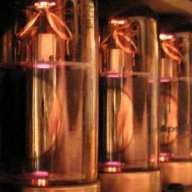
As i believe it, the stanby should be used when first switched on to heat the filaments to bring to tubes up to temperature, and standby should be used during breaks and changing instruments etc
But it is fine to turn the amp off completelly without going to standby first, as this will make the filter caps last a bit longer, i think thats right anyway
But it is fine to turn the amp off completelly without going to standby first, as this will make the filter caps last a bit longer, i think thats right anyway

oh dear, not the standby thing again 
switch on amp in standby mode (i.e. muted)
switch off amp in standby mode("")
i dont tihnk you need to run in tubes that are off the shelf - aren't they worn in in the factory? (matched?)
switch on amp in standby mode (i.e. muted)
switch off amp in standby mode("")
i dont tihnk you need to run in tubes that are off the shelf - aren't they worn in in the factory? (matched?)
why do you need to turn it off in stanby mode?
so that you keep the filaments at a constant temperature
so that you keep the filaments at a constant temperature

Lord Valves tube FAQ states you SHOULD NOT use standby on breaks. It causes the tubes to heat up/cool down each time you use it. He said its better to leave it on (obviously after the intial warmup), and then cool down using standbye at the end of the night.

- Feb 27, 2005
- 3,218
- 125
- Disclosures
- Full disclosure, I'm a certified Fender technician working in a music store that carries Fender, Yamaha, and Ibanez products among others.
Unless you're getting your tubes from a company which specifies that it matches and burns your tubes, they're not burned in. Whether they require them or not is a different matter, but the factories in China, Russia, Yugoslavia, and the Czech Republic do NOT do this. They simply make tubes up to a given company's specs and standards, which may or may not be high, and sell them. Aspen Pittman's American factory matches and burns their GE reproductions, but only because Groove Tubes matches and burns all their tubes anyway for consistancy.
The best way to find out is ask the company involved where they get their tubes, and what they do with them before assembling the product.
The best way to find out is ask the company involved where they get their tubes, and what they do with them before assembling the product.
This is pretty silly. Like MOST of what GT says to sell "their" tubes, this is totally false:
ANY "matched set" of tubes HAS to be burned in!!!! As mentioned earlier, brand new tubes have varying amounts of current draw. This is do to imperfections in construction and the windings in the cathode literally moving from heat expansion. Once the windings (and the rest of the assembly for that matter) flex enough to have established 'paths' they don't exhibit changes in impedance/ and the consequential fluctautions in voltage/current caused by movement. If the tubes aren't burned in, they'll all vary so wildly in current draw that matching will be impossible.
I just explained why they most certainly do.
And it's not their job; they MAKE tubes, not sell them to consumers. Any claims of matching or performance tests are the responsibility of the reseller who DOES sell them to consumers.
First, there is NO "American factory." That's an outright lie. The tubes GT sells as "US made" are made in China. Second, ANY dealer whether it be New Sensor, Ruby, Eurotubes, Mesa, etc HAVE to 'burn-in' the tubes to match them. I have seen examples that bring in to question the degree to which some of them actually do this(cough...Mesa...cough) , but GT is NO 'innovator' in this regard. Matching tubes has been going on since hi-fi enthusiasts first discovered assymetrical output in the 1950's.
Sure, but as this post gleaned from ads for Groove Tubes shows, it doesn't do much good if they're not going to be honest.
BTW, use standby for turning on an amp. It's not necessary for turning them off, and it IS a good idea to use it for short breaks. Anything over a few hours without use, and it's a better idea to just turn the amp off.
jabberwock777 said:Unless you're getting your tubes from a company which specifies that it matches and burns your tubes, they're not burned in.
ANY "matched set" of tubes HAS to be burned in!!!! As mentioned earlier, brand new tubes have varying amounts of current draw. This is do to imperfections in construction and the windings in the cathode literally moving from heat expansion. Once the windings (and the rest of the assembly for that matter) flex enough to have established 'paths' they don't exhibit changes in impedance/ and the consequential fluctautions in voltage/current caused by movement. If the tubes aren't burned in, they'll all vary so wildly in current draw that matching will be impossible.
Whether they require them or not is a different matter,
I just explained why they most certainly do.
but the factories in China, Russia, Yugoslavia, and the Czech Republic do NOT do this. They simply make tubes up to a given company's specs and standards, which may or may not be high, and sell them.
And it's not their job; they MAKE tubes, not sell them to consumers. Any claims of matching or performance tests are the responsibility of the reseller who DOES sell them to consumers.
Aspen Pittman's American factory matches and burns their GE reproductions, but only because Groove Tubes matches and burns all their tubes anyway for consistancy.
First, there is NO "American factory." That's an outright lie. The tubes GT sells as "US made" are made in China. Second, ANY dealer whether it be New Sensor, Ruby, Eurotubes, Mesa, etc HAVE to 'burn-in' the tubes to match them. I have seen examples that bring in to question the degree to which some of them actually do this(cough...Mesa...cough) , but GT is NO 'innovator' in this regard. Matching tubes has been going on since hi-fi enthusiasts first discovered assymetrical output in the 1950's.
The best way to find out is ask the company involved where they get their tubes, and what they do with them before assembling the product.
Sure, but as this post gleaned from ads for Groove Tubes shows, it doesn't do much good if they're not going to be honest.
BTW, use standby for turning on an amp. It's not necessary for turning them off, and it IS a good idea to use it for short breaks. Anything over a few hours without use, and it's a better idea to just turn the amp off.

So.. say I play a 1-2 hour set.
I switch the amp on in standy and after waiting a little bit, start playing the gig.
Halfway through, we have a break for 15-20 minutes. Do I leave the amp on with the volume down, or in standby?
We start playing again, then I turn it straigh off, and afterwards flick the standby switch so it's ready for the next time I play.
Right?
I switch the amp on in standy and after waiting a little bit, start playing the gig.
Halfway through, we have a break for 15-20 minutes. Do I leave the amp on with the volume down, or in standby?
We start playing again, then I turn it straigh off, and afterwards flick the standby switch so it's ready for the next time I play.
Right?
popinfresh said:So.. say I play a 1-2 hour set.
I switch the amp on in standy and after waiting a little bit, start playing the gig.
Halfway through, we have a break for 15-20 minutes. Do I leave the amp on with the volume down, or in standby?
Standby: this removes the high voltage from the tubes in most designs and keeps your amps from wasting its output amplifying noise. Yes, you can always just turn the amp's volume down and it won't really make much difference, but the output tubes are still emitting until you put the amp in standby, they just don't have enough drive voltage to make audible sound.
We start playing again, then I turn it straigh off, and afterwards flick the standby switch so it's ready for the next time I play.
Right?
Yep.
Stanby wont cool down the tubes, it will just keep them at temperaturecheezewiz said:Lord Valves tube FAQ states you SHOULD NOT use standby on breaks. It causes the tubes to heat up/cool down each time you use it. He said its better to leave it on (obviously after the intial warmup), and then cool down using standbye at the end of the night.
The reason they included a standby switch in the first place was to be able to apply filament voltage without plate voltage. As someone posted earlier, they heat up and their output stabilizes. I'm sure this doesn't take long, considering the size of the tube. What I posted earlier was perhaps misleading, as I was talking about tubes in general, and what is required for large, water cooled (yes water), transmission power tubes, is probably not necessary for guitar/bass amp tubes. Sorry for the confusion. I just figured what was good for a large application certainly couldn't hurt for a smaller one.
The temp will rise from a 'filaments only' temp to a higher temp with the plate voltage and higher still with higher volume settings. If you push the amp hard, it's arguable whether or not leaving it in standby upon shutdown is of any benefit or not. I was taught to do this as a matter of normal shutdown, but of course this was regarding the large tubes, not amp tubes. Perhaps they've improved the manufacturing process, new materials and designs have allowed them to not be concerned with such minor details.
As to the original question, if the manufacturer doesn't provide specific instructions about a 'break in' period, then I would have to assume none is needed.
The temp will rise from a 'filaments only' temp to a higher temp with the plate voltage and higher still with higher volume settings. If you push the amp hard, it's arguable whether or not leaving it in standby upon shutdown is of any benefit or not. I was taught to do this as a matter of normal shutdown, but of course this was regarding the large tubes, not amp tubes. Perhaps they've improved the manufacturing process, new materials and designs have allowed them to not be concerned with such minor details.
As to the original question, if the manufacturer doesn't provide specific instructions about a 'break in' period, then I would have to assume none is needed.
this is all i wanted to hear.Blueszilla said:As to the original question, if the manufacturer doesn't provide specific instructions about a 'break in' period, then I would have to assume none is needed.
thanks.


