I was looking at getting a veritone switch for my Jazz Bass and I was wondering if it had any actual affect on the tone/sound of the bass. Or would it just be a waste of my money?

Enjoy the benefits of a premium membership!
Upgrade Account
-
TalkBass has been independent since 1998. Add your voice.
Create a free account to reply to discussions, view embedded media, and browse with fewer display ads.
Join free Log in
Want zero display ads or expanded classifieds tools? Compare plans.
You are using an out of date browser. It may not display this or other websites correctly.
You should upgrade or use an alternative browser.
You should upgrade or use an alternative browser.
Do veritone switches actually work?
- Thread starter Da_Bass_Man
- Start date
-
- Tags
- mods tone tone controls
More options
Who Replied?
"Vari-Tone wasba specific circuit Gibson usedbon guitars, primarily the ES-345 and ES-355. It was a nidrange choke where the different switch positions selected who the choke 2ork3d. I don't know of it being used on their bases . They used a similar switch on the EB-3mqhd the Ripper, but those were simply different pickup combinations, not 5he choke of the Vari-Tone.
So do you have a certain model or brand for what you refer to as a "veritone "?
So do you have a certain model or brand for what you refer to as a "veritone "?


"Vari-Tone wasba specific circuit Gibson usedbon guitars, primarily the ES-345 and ES-355. It was a nidrange choke where the different switch positions selected who the choke 2ork3d. I don't know of it being used on their bases . They used a similar switch on the EB-3mqhd the Ripper, but those were simply different pickup combinations, not 5he choke of the Vari-Tone.
So do you have a certain model or brand for what you refer to as a "veritone "?
If I had to guess I would say he's talking about one of these.
HOME - Stellartone

The original BC Rich basses (Mockingbird & Eagle) had a varitone as part of their electronics package.
I have an original Stellartone Micro Pedal with 16 positions. It was designed for passive basses as well. To be honest, most of the positions don't work for me, but there are a couple that do work out. I find it works best on my P. It is fun to play around with!
I'm sure the new ones have distilled the optimum configurations of tonal variety. They may be just the ticket for you.
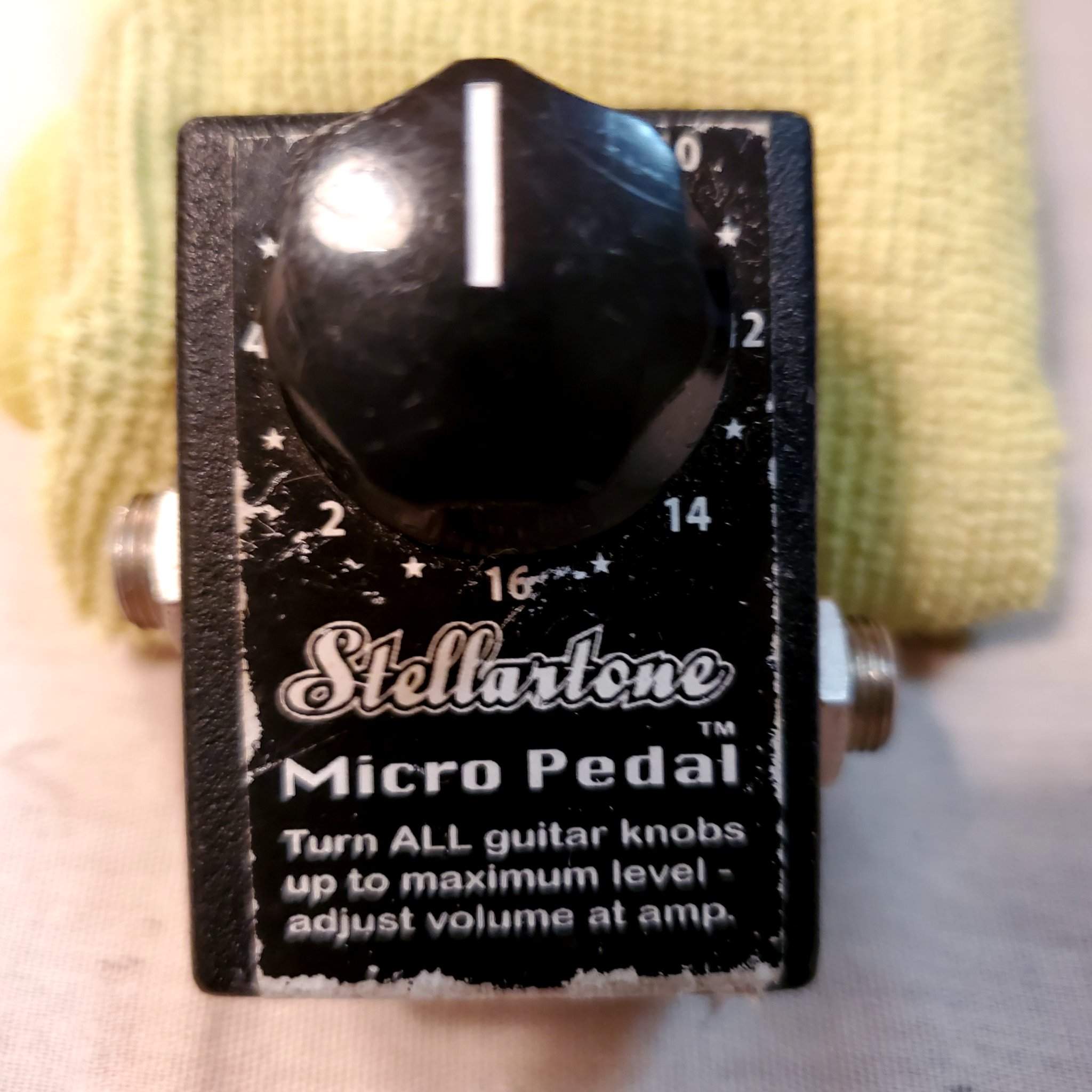
I have an original Stellartone Micro Pedal with 16 positions. It was designed for passive basses as well. To be honest, most of the positions don't work for me, but there are a couple that do work out. I find it works best on my P. It is fun to play around with!
I'm sure the new ones have distilled the optimum configurations of tonal variety. They may be just the ticket for you.

I put a varitone (I can't remember the maker, it's been so long) in my Peavey Patriot and yes, it works. I usually leave mine in the 'open' position, but I have a few tunes where I mix it up. The biggest quirk of it is that I need to set up some sort of boost to make up the volume losses that come from eating all that sonic info.
If you decide it's a waste of money, it won't be because it doesn't do anything.
If you decide it's a waste of money, it won't be because it doesn't do anything.

I have a Stellartone on one of my guitars. It adds some interesting stuff. I'd consider it a decent alternative to active electronics for tone shaping.
In my experience yes and no. I had a Ripper and a Warlock that each came with a varitone knob. It definitely changed the sound of the bass, but really only one setting was usable (to me). There were a few settings that sounded hollow, thinner, or thicker for sure but only one sounded good for the type of music I was playing.

The varitone 3 position switch on the Epiphone Jack Casady signature bass definitely affects the sound by changing the impedance from 50 to 250 to 500 ohms.I was looking at getting a veritone switch for my Jazz Bass and I was wondering if it had any actual affect on the tone/sound of the bass. Or would it just be a waste of my money?
Not sure you could pick this up separately though or if it would even work with a Fender.
In my experience yes and no. I had a Ripper and a Warlock that each came with a varitone knob. It definitely changed the sound of the bass, but really only one setting was usable (to me). There were a few settings that sounded hollow, thinner, or thicker for sure but only one sounded good for the type of music I was playing.
I don't know about the Warlock, but the Ripper switch is a pickup selector (different combinations of series/parellel, phase, and pickups), so not at all like either a Gibson Vari-Tone or the Tone Styler which are controls independent of the pickup switching.
The varitone 3 position switch on the Epiphone Jack Casady signature bass definitely affects the sound by changing the impedance from 50 to 250 to 500 ohms.
Not sure you could pick this up separately though or if it would even work with a Fender.
And the switch on the Cassaday changes the impedance of the pickup so it closes integrated with that pickup design.
It’ll change the impedance on any pickup. It just might not be as well matched with the Casady pup.And the switch on the Cassaday changes the impedance of the pickup so it closes integrated with that pickup design.

It definitely changed the sound of the bass, but really only one setting was usable (to me).
I've owned three different instruments that came with a stock Varitone or similar -- a Gibson ES-345TD guitar, a Gibson L-9S Ripper bass (which as someone already mentioned, isn't really a "Varitone" in the selects-a-different-passive-LC-network-per-switch-position sense), and an Ibanez ST-980 bass -- and your observation was true for all of them: The instrument only sounds "good" in one position, and every other position sounds less good...specifically because by definition every other position has a narrower bandwidth.
Certainbass sells varitones that work very well, they have 5 positions plus bypass and most positions sound useful. I havent used one on a jazz bass before

- Apr 18, 2008
- 16,007
- 1
- 31,705
- Disclosures
- I'm highly opinionated and extremely self-assured
Do they work? On a passive pickup, yes, absolutely.
Will you like and use all of the available settings? Probably not.
Will you like and use all of the available settings? Probably not.

I have a switch box that I use for circuit tuning on bass builds - it's literally a varitone in a large box. Yes, they do make the bass have different sounds, that are NOT the same as what you get with a conventional tone control. You will find you like some (maybe only one) of the settings more than the others. If that is the case, you can wire up a single switch and capacitor (or just hard wire it in), and get that sound, without the complication of the varitone.

In my experience yes and no. I had a Ripper and a Warlock that each came with a varitone knob. It definitely changed the sound of the bass, but really only one setting was usable (to me). There were a few settings that sounded hollow, thinner, or thicker for sure but only one sounded good for the type of music I was playing.
The Ripper doesn’t have a varitone circuit in it. The rotary switch is a pickup selector. Positions are:
- Neck and Bridge in series
- Bridge only
- Neck and Bridge in parallel
- Neck and Bridge out of phase

A varitone is basically a capacitor selector switch. A traditional Gibson varitone also included a choke coil. It’s a totally different circuit, as can be seen in the schematic below:

Most examples of what gets called a ‘varitone’ these days keeps the multiple capacitor switching but eliminates the coil. I’ve wired up both versions and discovered leaving out the coil didn’t seem to make much difference to the tone selections either way. At least with the different pickups I tried them with.


I have a Jack Casady and whatever the dial is on the front is called definitely has an impact, although not so much of one that in an ideal world it wouldn't be there and then you wouldn't have to worry about what to do when it malfunctions. P basses have taught me the value of simple set ups.


I have a Stellartone Tonestyler on one of my P basses, which is a notched pot/same basic idea. Yes, it works, but in practice I tend to have it at "80%" or so, just like I would with a regular tone knob.
I like that I can get an exact setting with the Stellartone. In theory, it would make overdubs identical, but there are other factors in play that make it really not matter.

Ya, was going to recommend a Tonestyler. I had one, don't need it with my Geezers but it worked very well to bring a little mid response out of the mid-shy Original 62 pickup I used to have in my 09 AmStd Precision. Only thing original about it was its piercing highs and lack of upper mids. But the Tonestyler helped a bit, even though it wasn't perfect.


