• TalkBass has been independent since 1998. Add your voice.
    Create a free account to reply to discussions, view embedded media, and browse with fewer display ads.
    Join freeLog in
    Want zero display ads or expanded classifieds tools? Compare plans.

Do we really need high-end basses with intricate active electronics?

IMO, it all has to do with the type of music you play and where you want your role in the band to sit. I use an active Ibanez ATK in my band. Ive tried my Squier P, my J and PJ, all sound great, but they dont suit my bands sound. I tend to settle into the mix, Im not as prominent as I would like/need to be. So my active bass is my primary for my band. I filled in for a bassist in a buddies band last winter and I used my P the whole time, sounded great with them. They were more bluesy/folky.
 
I also believe that the “lower-end” models of major bass manufacturers can (given the chance) out-perform basses that cost 4 times as much. (in the right pair of hands)

You seem to be ignoring what the bass that costs four times as much would do in that same "right pair of hands."

For starters, very few basses have active pickups. This kind of drives me crazy a little- people see "active bass" and think it means active pickups- it almost always means passive pickups with an active preamp, which is no more groundbreaking than plugging into a 50-year-old amplifier that has a three band EQ.

Your fingers don't have EQ knobs on them. You can adjust the tone quite a bit depending on technique variations, but you will never achieve the wide array of tones you get from boosting and cutting different EQ points. There's a reason you hear bass tones today that you didn't hear in 1961. This is the same logical fallacy proposed by people who say you shouldn't use effect pedals because tone is in the fingers, so if you're using effects you're clearly compensating for some missing aspect in your playing. One does not equal the other.

Your argument is basically the same as saying if we can't get all the nutrition we need from plain mashed spinach and boiled meat shavings, then we're doing something wrong- after all, millions of people throughout time got all their nutrition from that same meal.

Some of us just like a little more flavor than that.
 
Please give me your feedback……..thanks…
Since you asked :D

First, quit worrying about what the other guy is doing/playing. Second, quit thinking that everyone has the same needs as you, or that we all have the same needs. Third, don't ever, under any circumstances say that lower end basses can outperform higher end basses in the right hands. Most of us are not Victor Wooten, Steve Bailey, or whoever and we can use as much help as we can get. Last, when you ask for feedback you might not get the answer you want. ;)
 
  • Like
Reactions: theduke1
I like both. While top shelf, full bore, electronics like you can find in some Alembic packages are waaaaay beyond my ability to make use of, I am really glad companies like Audere are around to give me some basic tonal flexibility and expand what my otherwise meat-and-potatoes Jazz basses can do.

I'm a curious cat named Fritz, too, so gear nerdism comes to me fairly naturally. 'Oooo... new shiney!' is something that frequently runs through my head.
 
what “truly” is the relevance of active pick-ups and multiple tone, balance & volume knobs on today’s modern basses?

I pick up a bass and play it...do I like the feel and sound? Then I like the bass.

Does it have active electronics? Maybe, maybe not but that doesn't influence my decision at all.

I've owned many basses with active electronics (still own three) but only one of them had more than a single passive tone control...that was a Godin Acoustibass with a piezo pickup and Baggs preamp, a different kind of animal altogether.

Active does not mean tons of knobs and switches nor does passive mean the opposite.

As far as relevance: I own a Steinberger L2 with active EMG pickups and a passive tone control. The strings are not grounded to the bridge, so there's no shock hazard but never hum or buzz of any kind. It sounds the same no matter what kind/length of cable I use to the amp. I like all that. Oh yeah, it sounds freaking incredible :smug: which is why I own it.

As you can see in my avatar I also own vintage P basses. I love 'em all.

My advice: use your ears, not your eyes.
 
Should everyone out there, amateur and especially pro, simply put their active basses in the closet just because some people prefer passive basses?
Seriously, I have no problem whatsoever with what people play. I wouldn't buy something like a BC Rich bass or any of those wild looking basses, I wouldn't buy a 5-string, 6-string etc, I wouldn't buy a botique bass for $2,000 and up, and I wouldn't buy a fretless...but why should I care if someone else would?
I have a passive bass and two active basses, I have tapewounds on one active and flatwounds on the other and DR Red Devils on my passive bass...and I play with a rubber pick!
I've never heard anything but positive comments about my tone.
Very simply, need and want might have two different definitions in the dictionary, but a lot of the time they amount to the same thing.
 
You seem to be ignoring what the bass that costs four times as much would do in that same "right pair of hands."

For starters, very few basses have active pickups. This kind of drives me crazy a little- people see "active bass" and think it means active pickups- it almost always means passive pickups with an active preamp, which is no more groundbreaking than plugging into a 50-year-old amplifier that has a three band EQ.

Your fingers don't have EQ knobs on them. You can adjust the tone quite a bit depending on technique variations, but you will never achieve the wide array of tones you get from boosting and cutting different EQ points. There's a reason you hear bass tones today that you didn't hear in 1961. This is the same logical fallacy proposed by people who say you shouldn't use effect pedals because tone is in the fingers, so if you're using effects you're clearly compensating for some missing aspect in your playing. One does not equal the other.

Your argument is basically the same as saying if we can't get all the nutrition we need from plain mashed spinach and boiled meat shavings, then we're doing something wrong- after all, millions of people throughout time got all their nutrition from that same meal.

Some of us just like a little more flavor than that.
Good points - more importantly - as a rule if they are the SAME hands the "better" bass will almost always perform better.
 
Do we really need Electric Bass, when we have the DB?
Do we really need Double Bass when we have the tried and true cello?
Do we really need drummers when we have a monkey with a rock?........wait erm, skip that one.

I guess the question is not need, but want. I don't really want any of the pedalboard stuff a lot of guys use. Not my style of music, but I don't bash them for using it. I also have a lot more knobs on my bass than a P. I easily get a lot more tone difference out of mine than I could a P bass. Reality is, I could just tell the sound guy to turn up the lo mic on the piano up and walk away, but thats not something I want either ;)
 
  • Like
Reactions: Fuzmaster
The question seems to be "if you can get a good tone out of just a specific instrument and amp combo, why would anyone need all those knobs?"

If you can get that magic tone (and other magic tones) by twiddling the knobs on a different instrument and amp combo, why would we ignore that capability, and limit ourselves to only one tone?
 
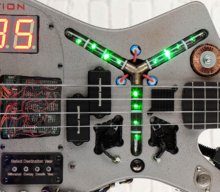
I'm an electrical engineer by trade. Where are these basses with "intricate" active electronics?? I'd love to buy one! The vast majority of active basses have a preamp much like the one you find in your stage amp, hardly ground breaking as someone observed above, and certainly not intricate. This was first done way back when I was in college and is only a half step beyond a passive volume/tone setup. A truly intricate electronics package for a bass with a killer user interface would be mindblowing but I don't think anyone has done that yet. And if they did would I want it in the bass or in an external "pedal" so I could use it with any of my basses? Probably the latter so maybe what I want is a phone ap with a killer user interface with Bluetooth control over an external electronics box....

So back to the original question. Do I want intricate electronics on the bass? Not really. Do I want on bass control over an intricate electronics box? Most definitely!!
 
I've got both kinds. Love the passive a lot, but sometimes when I'm playing with a band I need a little bit more control over my tone to sit well in the mix. It's nice to set the amp flat and have those options on my bass to fine tune. It's more about sitting in the mix and how I sound relative to other players than my overall tone, though.
 
Active basses generally don't have active pickups unless it has EMG's. Guitars are a different matter. Normally an active bass just means it has boost/cut tone controls like your amp and the pickups themselves are passive (not battery powered). The preamp, like a pickup selector switch, allows you to change the tone when standing a distance from your amp and on the fly as you play. Every bass I own has a preamp, mostly because I'm a control freak I guess. Usually they run flat. Certainly not a need but is something I tend to want in every bass.

As to priority I would agree about physical fit (including a high quality neck) being most important. You can always change pickups or add a preamp to a bass that's a keeper. I am a gear geek, but my son is a true musician and he tends to poo-poo most of the bells and whistles except on our theme projects where overkill complexity is part of the style. I have been trying to give him an old Bartolini preamp I'm not using and he looks at me and says: Why would I want to bother with that???
 

Latest posts