
It’s the dumbest question I’ve ever read on this blog. But, I hope it encourages young players to get a better understanding of what they’re playing and why they’re playing it. But out of all the people who drive a car 99-percent have no idea how they work. Stupidity, there’ll never be a shortage

Enjoy the benefits of a premium membership!
Upgrade Account
-
TalkBass has been independent since 1998. Add your voice.
Create a free account to reply to discussions, view embedded media, and browse with fewer display ads.
Join free Log in
Want zero display ads or expanded classifieds tools? Compare plans.
You are using an out of date browser. It may not display this or other websites correctly.
You should upgrade or use an alternative browser.
You should upgrade or use an alternative browser.
Do you need music theory?
- Thread starter IamGroot
- Start date
More options
Who Replied?

I never understand these “do I need theory” threads.
In the time it takes to read 9 pages of responses, anyone could learn basic fundamentals.
In the time it takes to read 9 pages of responses, anyone could learn basic fundamentals.
Groove Master
Commercial User
- Apr 22, 2011
- 1,808
- 1,291
- Disclosures
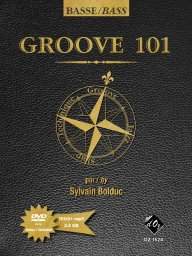
- Author of Groove 101, Slap 101 and Technique 101
Haha True and funny ;-)I never understand these “do I need theory” threads.
In the time it takes to read 9 pages of responses, anyone could learn basic fundamentals.

I never understand these “do I need theory” threads.
In the time it takes to read 9 pages of responses, anyone could learn basic fundamentals.
Or spend 6 months and $1500...
I know. That's ridiculously pricey; especially considering you can find the same material free on the Internet.But a coffee's-worth of change from $1500? Just to get off the starting block. Really?
I think the $1500 buys you the privilege of saying, "I studied at Berklee.”

I know. That's ridiculously pricey; especially considering you can find the same material free on the Internet.
I think the $1500 buys you the privilege of saying, "I studied at Berklee.”
Realistically, the purpose of any 101 course is to rehash information students are expected to mostly already know to fill in any blanks and make sure everyone is using the same terminology and such.
Realistically, paying $1500 to rehash what one going to music school should already know seems a waste of money that could buy a fine bass or excellent, powerful rig.Realistically, the purpose of any 101 course is to rehash information students are expected to mostly already know to fill in any blanks and make sure everyone is using the same terminology and such.

...and thats why I didn’t go to music school.Realistically, paying $1500 to rehash what one going to music school should already know seems a waste of money that could buy a fine bass or excellent, powerful rig.

Realistically, the purpose of any 101 course is to rehash information students are expected to mostly already know to fill in any blanks and make sure everyone is using the same terminology and such.
Realistically, paying $1500 to rehash what one going to music school should already know...
...just makes it even more expensive, in my book.
I know. That's ridiculously pricey; especially considering you can find the same material free on the Internet.
I think the $1500 buys you the privilege of saying, "I studied at Berklee.”
There is a lot to be said for doing this stuff with a qualified tutor, analogous to the "measure twice, cut once" mantra, but it need not cost the ranch.
The internet wasn't even a state secret when I did the equivalent through the Royal School back in 1985. Cost me £48 plus the exam fee, which is £150 in today's money.
Everyone that plays any kind of instrument needs to know the basics, the fundaments of music theory. Without it you are basically dead in the water and can't really play. Well, unless you are an autistic genius perhaps. Thats an interesting but different story though.

Since we are making distinctions about what theory means.....
1) I took a few DB lessons from a top notch recent Conservatory grad about 4 years ago. Fantastic player, auditioning for the symphony position. I innocently asked how he would finger a passage with ii V I and got a blank look. Eventually, he understood what I was asking about was "Supertonic, Dominant , Tonic." We chatted about this this and that and found we were totally different in how we perceived "theory". He had no idea how to construct a walking bass line. His closing point was that he didn't use theory much as he wasn't a composer. I am not knocking the dude - he was a fantastic player of classical DB, but a very different player than me.
2) When I was in a music program, the 4 semesters of "Music Theory" were taught by the "Classical" (or "Recreationist") side of the musical family. The text in my more recent school foray was "Tonal Harmony", a pretty easy read. Jazz Theory did not appear as a course offering, but it was there if you knew the right people and the code words. It was taught by the "Jazz" or "Improvisationalist" side of the family. There was a lot of bad blood between the two groups and they were located in different parts of the building.
3) So, when I re-enrolled in Music School, I asked to place out of Music Theory as I had a strong working knowledge and had even read their text book for grins. Nope.
OK, how about, I enroll in the course and lab, but only show up to take the tests and hand in the homework. Nope. Attendance in both classes was a requirement and roll was taken.
It was at that point, that decided I didn't need a music degree. I took as many one-on one instructor courses in piano, sax and improvisation as I could handle. And it worked out very well.
1) I took a few DB lessons from a top notch recent Conservatory grad about 4 years ago. Fantastic player, auditioning for the symphony position. I innocently asked how he would finger a passage with ii V I and got a blank look. Eventually, he understood what I was asking about was "Supertonic, Dominant , Tonic." We chatted about this this and that and found we were totally different in how we perceived "theory". He had no idea how to construct a walking bass line. His closing point was that he didn't use theory much as he wasn't a composer. I am not knocking the dude - he was a fantastic player of classical DB, but a very different player than me.
2) When I was in a music program, the 4 semesters of "Music Theory" were taught by the "Classical" (or "Recreationist") side of the musical family. The text in my more recent school foray was "Tonal Harmony", a pretty easy read. Jazz Theory did not appear as a course offering, but it was there if you knew the right people and the code words. It was taught by the "Jazz" or "Improvisationalist" side of the family. There was a lot of bad blood between the two groups and they were located in different parts of the building.
3) So, when I re-enrolled in Music School, I asked to place out of Music Theory as I had a strong working knowledge and had even read their text book for grins. Nope.
OK, how about, I enroll in the course and lab, but only show up to take the tests and hand in the homework. Nope. Attendance in both classes was a requirement and roll was taken.
It was at that point, that decided I didn't need a music degree. I took as many one-on one instructor courses in piano, sax and improvisation as I could handle. And it worked out very well.
In its truest definition, "Music Theory" is the study of how tones relate to each other to establish different results; IOW, knowing how to voice your harmonies and what rhythms to use to achieve a specific goal for the feeling, genre, or emotion you are trying to convey. For example, a master pianist could bang out Happy Birthday in everything from Jazzy to Classical to Rock to Metal to Souzaesque, just by altering the rhythm and chord voices chosen to play behind the common melody that we all recognize.
For most of us, that study starts with understanding what octaves are, what 5ths are, then the chromatic scale and the 7 tones of the Major scale and degrees. Then the concept of stacking thirds to create harmony. etc...
Its all "Music Theory"
For most of us, that study starts with understanding what octaves are, what 5ths are, then the chromatic scale and the 7 tones of the Major scale and degrees. Then the concept of stacking thirds to create harmony. etc...
Its all "Music Theory"
I guess I am a bit dim- what makes what more expensive?...just makes it even more expensive, in my book.
If one has already learned music theory to the level of a 101 class, even at Berklee then there might be better uses of that money- that was my point.
Certainly most coming out of HS jazz bands at an All-State or all-regional level should already have that 101 knowledge- if not more. If one has taken private lessons at least once weekly for six or more years on their chosen instrument, one would think theory would have been a part of that education
I went to "music school" post HS until I thought dropping out to become a rockstar, giving up grants and scholarships was a good idea

Music theory and its applications always gave me a leg up when a band needed harmonies or segues- alternative parts-
If I had no formal theory, tuition for 101 would be worthwhile.

Jazz musicians utilised the names of different scale modes; Ionian, Dorian, mixolydian, etc. These terms originated a long time ago, Heinrich Loris 1488 - His treatise Dodecachordon expanded the medieval system of eight modes—i.e., scales with different sequences of half tones and whole tones—by adding the Ionian (major) and Aeolian (minor) modes.
And so on. But I only heard of these modes through Jazz, not Classical music. So, best to get some Classical and Jazz theory on board.
And so on. But I only heard of these modes through Jazz, not Classical music. So, best to get some Classical and Jazz theory on board.
I guess I am a bit dim- what makes what more expensive?
If one has already learned music theory to the level of a 101 class, even at Berklee then there might be better uses of that money- that was my point.
...
If I had no formal theory, tuition for 101 would be worthwhile.
Even for someone starting from nothing, $1500 is, IMHO, many times what those basics should cost. If it's just there to fill a few holes, then each bit of new information becomes proportionately more expensive as you still have to pay the full price.
Ok, gotcha-Even for someone starting from nothing, $1500 is, IMHO, many times what those basics should cost. If it's just there to fill a few holes, then each bit of new information becomes proportionately more expensive as you still have to pay the full price.
I was trying to read it as possibly ironic, and overthinking- which is in itself ironic, as one who has been accused of not thinking enough. ( Hey, Dad!
 )
)The checkerboard plan for music theory may be an option to Berklee.
I give you a one hour music theory lesson every day for 64 days, the same number as squares on a checkerboard.
The first day, you pay me one penny, the 2nd day you pay me two pennies, etc. You get 64 lessons.
Isn't this a great idea!!*
*Check your math theory.
I give you a one hour music theory lesson every day for 64 days, the same number as squares on a checkerboard.
The first day, you pay me one penny, the 2nd day you pay me two pennies, etc. You get 64 lessons.
Isn't this a great idea!!*
*Check your math theory.

I did go to a music college. I learned a lot of stuff that I wouldn't know otherwise.
Playing bass in a cover band ? not that useful since rock music was invented by people who wanted to sepparate from classical musicians.
There is a lot of info to get from going to school. Music analysis is quite something to learn. Music history. I went there in early 2003.
Knowing your scale, knowing your instrument, reading in Bass and Treble is expected. You'll learn to read in Tenor too.
Then you learn solfege, reading more complex music, analysing music, harmonize, history, choral classical or jazz, orchestra or jazz combo.
Of course you'll discovers some crazy stuff especially in history class. If you think rock music is original you'll be surprized
Playing bass in a cover band ? not that useful since rock music was invented by people who wanted to sepparate from classical musicians.
There is a lot of info to get from going to school. Music analysis is quite something to learn. Music history. I went there in early 2003.
Knowing your scale, knowing your instrument, reading in Bass and Treble is expected. You'll learn to read in Tenor too.
Then you learn solfege, reading more complex music, analysing music, harmonize, history, choral classical or jazz, orchestra or jazz combo.
Of course you'll discovers some crazy stuff especially in history class. If you think rock music is original you'll be surprized
I did go to a music college. I learned a lot of stuff that I wouldn't know otherwise.
Playing bass in a cover band ? not that useful since rock music was invented by people who wanted to sepparate from classical musicians.
There is a lot of info to get from going to school. Music analysis is quite something to learn. Music history. I went there in early 2003.
Knowing your scale, knowing your instrument, reading in Bass and Treble is expected. You'll learn to read in Tenor too.
Then you learn solfege, reading more complex music, analysing music, harmonize, history, choral classical or jazz, orchestra or jazz combo.
Of course you'll discovers some crazy stuff especially in history class. If you think rock music is original you'll be surprized
Theory is VERY useful in a cover band- but perhaps, if you are really good and have a great ear not as needed as in some other musical situations.


