• TalkBass has been independent since 1998. Add your voice.
    Create a free account to reply to discussions, view embedded media, and browse with fewer display ads.
    Join freeLog in
    Want zero display ads or expanded classifieds tools? Compare plans.

Do you need music theory?

Do you use music theory?

  • I don't care

    Votes: 3 0.6%
  • I don't know

    Votes: 9 1.8%
  • No

    Votes: 20 4.0%
  • Maybe, but not for the stuff I play

    Votes: 20 4.0%
  • I use a little bit sometimes

    Votes: 59 11.7%
  • Yes, i use it

    Votes: 194 38.3%
  • I use it a lot

    Votes: 192 37.9%
  • I use carotene suppositories instead

    Votes: 3 0.6%
  • Carrots

    Votes: 6 1.2%

  • Total voters
    506
If I had George Martin in my corner I wouldnt read music either. Who knows what the course of their musical career would have been without GM there.

On a separate subject fwiw imo the real talent was JOHN. (Hows that for a grenade in a conversation)
With George Martin:
p056fxzs.jpg


Without George Martin:
p01l98zp.jpg
 
It's pretty easy to dismiss self-taught people as only being capable of reaching certain basic levels, but this is not that.

You can reach an abnormally high level of playing without any theory. But without some theory you will never be able to play other people's complex, charted music on the fly. And you will never learn to communicate your ideas to other musicians with peak efficiency.

If you were never taught the basics of building a home, you can still learn to build a functional home through trial and error. You can even get other people to work on your home with you. But, that home would be built a lot more efficiently if you understood home mechanics beforehand.

Would you build a house without understand how a home functions? Would you build a car without understanding how a car functions? Would you build a rocket without knowing rocket science? Maybe you would. But, it would be much harder to create these things without having a basic understanding of them,...and you would be limited in what you can do.
 
  • Like
Reactions: Russell L
On the flip side of this is my drummer. He is in his late 20s, good looking, tall, skinny, charismatic, and he can play the hell out of some drums. People just love him and people just love the way he plays. He just has that “it” factor, he really does. He’s even easy to work with and is just a sweet person. But he doesn’t know the first thing about technique or music theory. He legit learned to play drums by playing those Rock Band games until one day he could play drums. He doesn’t know how to count off a song (I count off most of them), he doesn’t know what it means to play on the “and of 3”, he doesn’t know much about meter or tempo, etc. But he can somehow play so well and I wouldn’t replace him with anyone else because for the music I write, I don’t need him to play anything overly crazy anyway, and everything he brings to the music is just special. And when he nails it, he makes me happy so it’s all worth it.

I always tell him, and I fully believe it, that if he learned a tiny bit of theory and fundamentals, he could be tearing it up professionally. I get gigs all the time because I can learn things and understand other musicians instantly. That, plus I don’t make a scene, is why I get gigs. I tell him that he could understand and visualize so much more if he himself had a way of seeing music in a structured manner. I would start a band with him in a heartbeat even if I started over again. But to recommend him to someone else for the kind of gigs I get, I think he needs a little bit of study. It doesn’t have to be classical style formal education. It just has to be some way of grasping structure in some form. Without that, it’s hard to be more than just a musician in the context of a band.

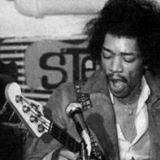
Sounds like we have the same drummer....... ;)
 
You can reach an abnormally high level of playing without any theory. But without some theory you will never be able to play other people's complex, charted music on the fly. And you will never learn to communicate your ideas to other musicians with peak efficiency.

If you were never taught the basics of building a home, you can still learn to build a functional home through trial and error. You can even get other people to work on your home with you. But, that home would be built a lot more efficiently if you understood home mechanics beforehand.

Would you build a house without understand how a home functions? Would you build a car without understanding how a car functions? Would you build a rocket without knowing rocket science? Maybe you would. But, it would be much harder to create these things without having a basic understanding of them,...and you would be limited in what you can do.
I agree, which goes back to my thoughts about defining what we mean when we talk about theory. My friend has an understanding of how these complex things work. He doesn't have the ability to write them down in a traditional way or name them, but he can hear and create complicated music in his head and can do that well enough to also play along with music he knows but has never played before, even if the changes are not predictable, and to play with others who have a lot more training. So I would argue that he knows quite a lot of something, and that's it's way more than most people know, but he doesn't have formal education about it.

Where this breaks down if you're comparing this to building a home, I think, is that my friend appears to have a gift. I don't know if there's a commensurate gift for people who want to be carpenters or builders. Maybe there is. Maybe those are the people who become architects. Maybe they have the ability to conceptualize a blueprint in their mind without ever going to school. But for those people, building something in their back yard may be doable without any education but doing it on any large scale in a corporate setting would require advanced training. I think my friend is fortunate he's been able to do what he does as a pro; not many people question his abilities or even realize he has so little training.

Edited to add that, as I think about my friend, I realize he's the exception that proves the rule. If he's a unicorn, then maybe unicorns exist, but most of us aren't unicorns. So most of us need what, for whatever reason, he intrinsically has. We could try to understand his gift but we would never actually have his gift, so we need to go about learning these things in a more structured way.
 
Last edited:
I agree, which goes back to my thoughts about defining what we mean when we talk about theory. My friend has an understanding of how these complex things work. He doesn't have the ability to write them down in a traditional way or name them, but he can hear and create complicated music in his head and can do that well enough to also play along with music he knows but has never played before, even if the changes are not predictable, and to play with others who have a lot more training. So I would argue that he knows quite a lot of something, and that's it's way more than most people know, but he doesn't have formal education about it.

Theory goes far beyond reading/writing sheet music. If your friend has an understanding of how these complex things work, then he isn't even close to being musically illiterate, or devoid of theory. He just can't read/write charted music.

But reading does have it's place. I don't care how good anyone's ears are, or how talented they are. You aren't going to play something, like Frank Zappa's "Black Page", unless you can read music (or you know the tune really really well in your head). Reading is the ONLY way to play complicated music that you've never heard before. And it is the only way to get other people to accurately play your complicated music, if they have never heard it before.

Where this breaks down if you're comparing this to building a home, I think, is that my friend appears to have a gift. I don't know if there's a commensurate gift for people who want to be carpenters or builders. Maybe there is. Maybe those are the people who become architects. Maybe they have the ability to conceptualize a blueprint in their mind without ever going to school. But for those people, building something in their back yard may be doable without any education but doing it on any large scale in a corporate setting would require advanced training. I think my friend is fortunate he's been able to do what he does as a pro; not many people question his abilities or even realize he has so little training.

But without "home building theory" your friend couldn't read a well written Blueprint. Nor could your friend create a formal blueprint, so that others can efficiently join him on his home build. Therefore your friend does what he does his own way, and I am sure he does his own thing very well. But, without detailed theory, he is still limited. He can't read the blueprint, and he can't write the blueprint.
 
Last edited:
So I would argue that he knows quite a lot of something, and that's it's way more than most people know, but he doesn't have formal education about it.
He knows how to play, he doesn't know theory.

Just a general comment about TB, not directed at a specific individual. You can't redefine music theory because you don't like what it means. It doesn't matter if you can play every Ray Brown bass line every recorded, if you don't know theory, you don't know theory.

Over the years I've written a lot of documents at work; presentations, proposals, white papers, etc. Everything is peer reviewed by someone that knows all of the rules of grammar. I couldn't tell you what a preposition is without looking it up, but my writing is almost always grammatically correct.

I can write, but I don't know the rules of grammar. Some people can play their instruments, but they don't know music theory. I don't know why that isn't enough for some people.
 
Which is also a reason I always make the point to students that music theory isn't supposed to be studied while sitting in front of a fire with your feet propped up and sipping on a glass of wine. It should be studied at your instrument, digging in, getting your hands dirty, and hearing what you're learning. (I can't take credit for that. It's from one of my teachers, Dan Haerle.)

I hope that when I take lessons sometime this year I'll have a teacher with your approach. I play by ear and theory has been difficult to grasp. I've read some of the helpful stickies here and some of it gets absorbed and a flickering light comes on, but generally it hasn't stuck. Of course not having lessons hasn't helped. I would love to be able to know what a song is communicating theoretically.

I would love to know theory because I love music and I know it will help me exponentially!
 
Last edited:
Um. Yep. I am.

Bmaj6 is it, then.

Don't give up so fast!

Let's check the piano chord voicings from here:
Voicings.PNG


For C Major - Cmaj7, our one-handed voicing looks like this:
1-hand voicing.PNG


2-hand-Voicing.PNG


Now, let's take your provided example, and try to apply the above recommended piano chord voicings
as Emaj7.

Chord.PNG


We can easily voice Emaj7 chord with your provided notes. :roflmao: :hyper:

Your chord notes correspond to the following E major scale degrees
- 5, 7, 9, and 3, where 2 (F#) is equal to 9.

e.PNG
 
Last edited:
  • Like
Reactions: DJ Bebop