• TalkBass has been independent since 1998. Add your voice.
    Create a free account to reply to discussions, view embedded media, and browse with fewer display ads.
    Join freeLog in
    Want zero display ads or expanded classifieds tools? Compare plans.

Do you prefer simple or complex controls on your bass(es)?

Ideal onboard electronics setup

  • Simple Active

    Votes: 92 17.9%
  • Simple Passive

    Votes: 341 66.5%
  • Complex Active

    Votes: 60 11.7%
  • Complex Passive

    Votes: 20 3.9%

  • Total voters
    513
A simple as possible to the point of nonexistence. Volume and tone all the way up all the time. If I had my druthers pickups would just be wired straight to the jack. In lieu of that, I have this bad boy. One volume, one tone, both inside the rear cavity.

53555543-D708-4F76-B5A5-F6B31F3E6A82.jpeg
9C29E5D3-3420-4023-BE00-11313BDA7093.jpeg
 
  • Like
Reactions: scuzzy and Tommy V

clint_eastwood.gif


I prefer simple.

My first "real" bass was a L-2500 (still own it). It's actually not as complex as some people say it is, but it can be a distraction. When I use it, I typically choose a voicing that works for the stuff we play and leave it there - no in-between-song control fidgeting other than the occasional volume tweak.


I then got a LB-100, and I immediately preferred that over the L-2500.


My most recent bass is a custom headless PJ, with 3-way switch / master volume / master tone. I tried the volume / volume / tone thing for a bit but didn't like it. I found that the two independent volume controls did not translate in an infinity of distinguishable (and/or usable) tones...there's only two that I use anyway (100% split coil, or 50/50 split coil / J), and I solo the split coil 95% of the time.

20190707_094457.jpg


It's funny that this thread came up today. I have one of these Squier "Custom Telecaster deluxe" guitars that has Les Paul-like controls, and my project for the weekend is to convert it to '50s wiring (3-way switch, master volume, master tone). I never liked the Les Paul layout - I find it cumbersome.
 
  • Like
Reactions: Tommy V
...I know, I know, “why spend the money on a preamp if you don’t use the tone controls?” Well, don’t let that worry anyone. That’s my cross to bear, as it were.

what i’ve found after a rather exhaustive search for a drop in preamp for a J bass is simpler is always better, at least for me. I wanted a pre on a standard J because my J plus has a killer preamp and it’s just two stacked knobs and a four way rotary switch. It’s volume/blend, high/low boost and cut, and the four way switch which gives me two preset midrange adjustments via a trim pot on the board. It basically a hard wired mid in the first setting and adjustable mid on the second. The original intent was regular playing on one and a slap tone on two. The advertising for the Plus when it was new actually listed the switch functions as off, active, slap, and passive and it works really well and is super quick and easy to zero in on a good tone.
i found when i’ve got three or four double stacked pots and a toggle switch or two, it’s more trouble than it’s worth to me, mostly because i will wind up being that guy everyone else in the band is beaming stinkeye at if i attempt to adjust all those knobs on the fly. :D
 
Last edited:
  • Like
Reactions: Geri O
disclaimer: This thread is a great excuse to post a pic of my favorite basses.

I believe that the majority of the folks on this forum will likely say simple, ala Precision bass with a volume and tone, or simply a volume, or perhaps straight to the jack. I have one p-type bass, and I do love to play it on occasion due to it's simplicity and versatility within that simplicity. But although I own and enjoy playing several passive basses, I still default to basses that are primarily active, with the ability to go passive.

I think that I now have my primary 4 basses. They are all 4 active with passive options. I would group them into "boutique" -style 4 and 5 string, and more "traditional" (non-coffee table) -style 4 and 5 string.

View attachment 3801052

Between these 4 basses, there are....
  • 10 pickups
  • 23 knobs
  • 14 switches
  • 8 batteries
  • 38 pickup combinations
All can go from active to passive. 3 out of the 4 have a passive tone control, which has proven to be a very useful thing. One of them, the passive tone control works in active or passive mode.

It has taken quite a bit of exploration and tweaking to learn each up to this point, and how I can utilize their potential. I certainly have more learning to do. I primarily play at church and at home. Playing at church is comparable to playing in a cover band (but with less booze) so you never know what bass or amp might show up on a recording. Versatility has been good for my mental state, as I like to sound as close to the recording as possible, although I'm sure most people don't know or care.

So what do most of you prefer?

Simple Active - no switches, simple 2 band EQ or similar
Simple Passive - no switches, tone control
Complex Active - Lot's of knobs and switches
Complex Passive - Lot's of knobs and switches


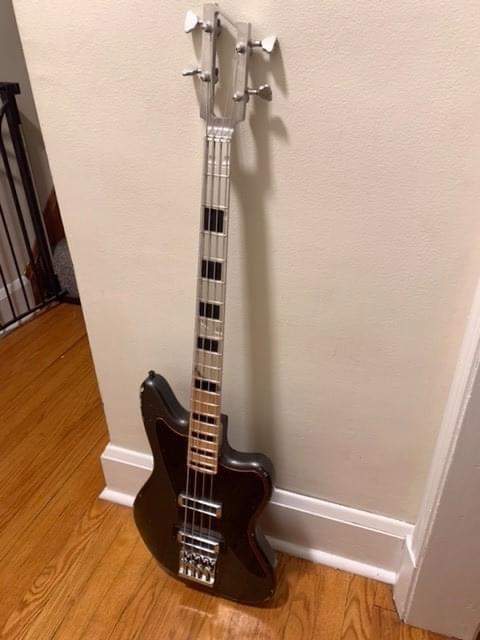
I voted simple: I have just a volume knob. I like one sound and it works for me. Not everybody’s cup ‘o tea..

I set my front J pickup lower in the body, as if simulating slight roll off of a front volume (if I had one). If using a traditional J bass setup, the sound I use is akin to 75% neck and 100% bridge.
 
View attachment 3801276

I prefer simple.

My first "real" bass was a L-2500 (still own it). It's actually not as complex as some people say it is, but it can be a distraction. When I use it, I typically choose a voicing that works for the stuff we play and leave it there - no in-between-song control fidgeting other than the occasional volume tweak.


I then got a LB-100, and I immediately preferred that over the L-2500.


My most recent bass is a custom headless PJ, with 3-way switch / master volume / master tone. I tried the volume / volume / tone thing for a bit but didn't like it. I found that the two independent volume controls did not translate in an infinity of distinguishable (and/or usable) tones...there's only two that I use anyway (100% split coil, or 50/50 split coil / J), and I solo the split coil 95% of the time.

View attachment 3801300

It's funny that this thread came up today. I have one of these Squier "Custom Telecaster deluxe" guitars that has Les Paul-like controls, and my project for the weekend is to convert it to '50s wiring (3-way switch, master volume, master tone). I never liked the Les Paul layout - I find it cumbersome.
LOVE this bass! Very cool!
 
  • Like
Reactions: Frank77
image.jpg
I have a Modulus Genesis 5. It has single coil barts with the three band pre and TWO 9 volt batteries. I took the pre out and now it is just passive. much better in my opinion. And sounds GREAT!!!! With no worries.
I just use the amp for tone control. When you are live on stage it is one less thing to tinker with. So it is v/v/t. Which is perfect. The bass already sounds wonderful no need for anything to mess that up. It has a much clearer fuller mid sound now and a good passive tone control.
 
Last edited:
disclaimer: This thread is a great excuse to post a pic of my favorite basses.

I believe that the majority of the folks on this forum will likely say simple, ala Precision bass with a volume and tone, or simply a volume, or perhaps straight to the jack. I have one p-type bass, and I do love to play it on occasion due to it's simplicity and versatility within that simplicity. But although I own and enjoy playing several passive basses, I still default to basses that are primarily active, with the ability to go passive.

I think that I now have my primary 4 basses. They are all 4 active with passive options. I would group them into "boutique" -style 4 and 5 string, and more "traditional" (non-coffee table) -style 4 and 5 string.

View attachment 3801052

Between these 4 basses, there are....
  • 10 pickups
  • 23 knobs
  • 14 switches
  • 8 batteries
  • 38 pickup combinations
All can go from active to passive. 3 out of the 4 have a passive tone control, which has proven to be a very useful thing. One of them, the passive tone control works in active or passive mode.

It has taken quite a bit of exploration and tweaking to learn each up to this point, and how I can utilize their potential. I certainly have more learning to do. I primarily play at church and at home. Playing at church is comparable to playing in a cover band (but with less booze) so you never know what bass or amp might show up on a recording. Versatility has been good for my mental state, as I like to sound as close to the recording as possible, although I'm sure most people don't know or care.

So what do most of you prefer?

Simple Active - no switches, simple 2 band EQ or similar
Simple Passive - no switches, tone control
Complex Active - Lot's of knobs and switches
Complex Passive - Lot's of knobs and switches
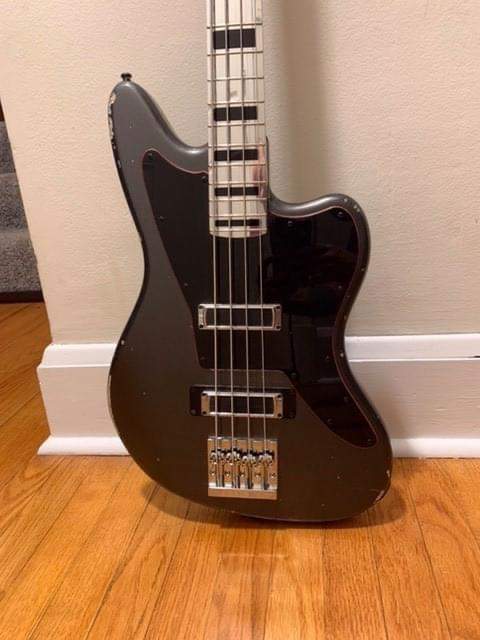
Why?

I've got 2 knobs, and 1 pickup switch that turns my bridge on. P volume, tone, 2 way toggle for my bridge pick up. AKA "Mid Scoop Switch"

Perfection
 
For me "simple" isn't about the number of controls but whether they make sense. A two knob passive control system like a P Bass makes sense. The five knobs and the switch on my Laklands make sense. The rhythm/lead circuit on Jazzmaster guitar makes sense.

The weirdness of the Fender Jazz Bass Special is complicated to me because the volume controls are wired like a regular J bass but they put a three way toggle switch to do the same thing.
 
Passive, with maybe an extra knob for a coil tap or series/parallel switch. You can always mold your EQ on your amp or with a preamp, anyways. I'm always wary of actives. Too many electrical components means too many things that can go wrong and when you run out of juice well good luck.
 
for a single pickup, all i want is a volume control with a push/pull kill switch.
for 2 pickups, a three way toggle, feeding a master volume with a push/pull kill switch.
unused controls aren't connected, but remain in the instrument.