If you have physical issues you may enjoy the fact that you can play most everything from the middle of the neck without moving much - if you're holding a 5 or 6 string. I'd also say that watching/learning fingerboard patterns is easier (for me) when I have the larger view of 5 or 6 strings. Otherwise.... No, ya don't need any of dat.

Enjoy the benefits of a premium membership!
Upgrade Account
-
TalkBass has been independent since 1998. Add your voice.
Create a free account to reply to discussions, view embedded media, and browse with fewer display ads.
Join free Log in
Want zero display ads or expanded classifieds tools? Compare plans.
You are using an out of date browser. It may not display this or other websites correctly.
You should upgrade or use an alternative browser.
You should upgrade or use an alternative browser.
Do you really need more than 4 strings on a bass?
- Thread starter SoulReflection
- Start date
- Status
- Not open for further replies.
More options
Who Replied?
@SoulReflection why do you feel to make this an issue? Lots of reasons it was not done back in the day, simply because they were not available. Time was we didn't have air conditioning or central heat, the internet or Netflix would you be such a luddite as to prefer those days? I certainly do not.
I am not making this an issue, you and others are. A luddite I am not and have embraced a lot of the technology over the years.
I am done with this post and am disgusted and disappointed with some of the responses. When one can not ask a simple question and get reasonable answers on TB there is a problem.
To those who have answered reasonably, I thank you and have learned a lot.
To those who have taken issue, have at it and enjoy your day.

Sorry I am late on this one...had to run out and get popcorn...
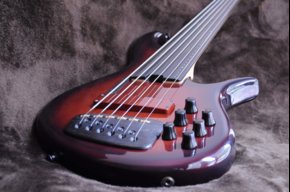
Seriously, I am not sure you NEED more than 4 strings. That said, 20 years ago when I made the jump, I was playing a lot in Praise and Worship bands in which that low D or low C was handy. I also had a desire to emulate Jeff Ament from Pearl Jam and he was playing a fretless 6 at the time...so I put together a Warmoth fretless 6. It was actually my main (and only instrument) for almost 10 years (I sold my EBMM 4 string to help pay bills at home).
Fast forward to now and I do not own any 4 strings. Only 5s and 6s. They work for me and I like the extended range. Do I NEED that fifth string...arguably not. Tony Levin did it with 3 strings as I recall and he made out ok.
Seriously, I am not sure you NEED more than 4 strings. That said, 20 years ago when I made the jump, I was playing a lot in Praise and Worship bands in which that low D or low C was handy. I also had a desire to emulate Jeff Ament from Pearl Jam and he was playing a fretless 6 at the time...so I put together a Warmoth fretless 6. It was actually my main (and only instrument) for almost 10 years (I sold my EBMM 4 string to help pay bills at home).
Fast forward to now and I do not own any 4 strings. Only 5s and 6s. They work for me and I like the extended range. Do I NEED that fifth string...arguably not. Tony Levin did it with 3 strings as I recall and he made out ok.
I never felt the need for more than 4 until I was in a band that played a lot of dropped D songs, and I discovered I hate playing in dropped D.
I bought a 5 string so I would not have to play in dropped D. Once you get used to being able to play in the middle the neck without having change positions, its kind of hard to go back to 4 strings. The extended low range is nice too.
I have 6 string basses, but dont play them often. I find I have to change my muting technique on the 6. I do not find the extended high range useful enough to justify having to change my technique.
So Im a 5 string guy and have been for 15 years. I like practicing on a 4 string as I find it easier to understand scales/chords etc on a 4 string. But on a gig, its 5 string all the way.
I wish you luck!
I bought a 5 string so I would not have to play in dropped D. Once you get used to being able to play in the middle the neck without having change positions, its kind of hard to go back to 4 strings. The extended low range is nice too.
I have 6 string basses, but dont play them often. I find I have to change my muting technique on the 6. I do not find the extended high range useful enough to justify having to change my technique.
So Im a 5 string guy and have been for 15 years. I like practicing on a 4 string as I find it easier to understand scales/chords etc on a 4 string. But on a gig, its 5 string all the way.
I wish you luck!

For me, a 5 string is simply a better tool.
I have a couple of 4 string basses that I love but they never leave the house. Every gig I play has a few songs in Eb or D. I need to be able to transcribe at a moment’s notice if the singer calls out a lower key. Playing an octave higher is not an option. De-tuners are a compromise and make it impossible to maintain efficient fingerings and positions.
Not to mention how cool it is to play leading notes or scales that are lower than E.
The B string is absolutely necessary for me. I never leave home without it. I’m not the only one.
This is the correct answer

What does “old school” have to do with it? 5 string double basses have been around for centuries, and 5 (and 6) string electric basses have been around since the 1960s.
It’s all about utility.
It’s all about utility.

I am "old school" and have never considered having more that 4 strings on a bass. I am, however, curious and open to opinions.
Why would you want and/or need more? What, if anything, am I missing? Is there a reason it wasn't common back in the day and if so, what changed?
Thoughts?
For me it's not worth the comparatively wide neck and I don't like the sound of anything below low D anyway, most speakers aren't real good at putting out a big fundamental B or C note, you get mostly harmonics which I don't like unless the fundamental is louder than the harmonics, but each to his own. I did own one years ago. I've been switching the E to D for years for certain stuff, very easy to do, an octave below the D string, just eliminate the beats.
What does “old school” have to do with it? 5 string double basses have been around for centuries, and 5 (and 6) string electric basses have been around since the 1960s.
It’s all about utility.
The first common 5 string electric bass was made for Jimmy Johnson sometime in the mid 70's, that with a low B, Fender V's had a high C. 5 string uprights are still relatively rare.

I have both. Use the 5 in 3 songs. Problem with 5s are they are heavier, bigger, clumsily. Not meant to jump with it on stage.

I have both. Use the 5 in 3 songs. Problem with 5s are they are heavier, bigger, clumsily. Not meant to jump with it on stage.
That’s not always the case. The heaviest bass I’ve ever owned was a fender mim jazz bass at just over 10 lbs. My current three 5 stringers all weigh less than 9 lbs.

5 strings? Some folks decide a song needs 7 strings.
While another song needs 5.
And Miyu pulls out a 4 sometimes too.
While another song needs 5.
And Miyu pulls out a 4 sometimes too.

I am primarily a 4 string player, but there are times the lower notes come in handy and BEAD tuning may be confusing for me (the high C on a 6 string would certainly throw me off).
Of my 24 basses, 3 are 5 string. At some point, I would like a 5 string fretless.
Of my 24 basses, 3 are 5 string. At some point, I would like a 5 string fretless.

Sooo... Lets say someone requests "Song for my Father" and the KB player has a LOT of low end pounding on that protracted 'Ricki Don't Lose That Number' riff of it so YOU, as bassist, decide (just for fun) to go high play the entire song in inversions, never touching the tonic. Having all those notes available under your fretting hand has nothing to do with "Low Notes" but a LOT to do with having a Low B String. And it's fun. Not boring. For fun. Bass is fun.
When you ask a provocative question, you should expect a provocative answer.I am not making this an issue, you and others are. A luddite I am not and have embraced a lot of the technology over the years.
I am done with this post and am disgusted and disappointed with some of the responses. When one can not ask a simple question and get reasonable answers on TB there is a problem.
To those who have answered reasonably, I thank you and have learned a lot.
To those who have taken issue, have at it and enjoy your day.

Even if you do not go below E, a fretted E on a thicker string on the 5th fret has more heft than an open E. This is probably what you can get from a 5 that you won't get on a 4
One thing you can do is for around $80-90 or so you can get a Hipshot extender de-tuner so you can go to low D or even to C if you get the double stop lever. My gigging pair of PJ and J passive 4's (one fretted and one fretless ) have extender's. Even though I have a pair of fretless and fretted 5's, the 2 passive 4's are all I need for most of the projects and bands I play in. Thanks to the extenders. Honestly even with 5, D is the powest I go and rarely need a C# to B and even with the so called great low B string Stingray or zero-frets, only my 36 inch scale 6 - has a great open B or fretted low C for me anyway.
I used to accompany someone with a E-C single cut 5 string bass - but this was chordal work - there was definitely a need in my situation. MY 6 was a little unwieldy and there was no need for a low B in the person's set list. I also added an extender to this bass.
I also tuned a bass like a cello but an octave lower tuned CGDA. If you really want to stick to 4 strings but have extended range, this is the way to do it. The learning curve is pretty steep though
One thing you can do is for around $80-90 or so you can get a Hipshot extender de-tuner so you can go to low D or even to C if you get the double stop lever. My gigging pair of PJ and J passive 4's (one fretted and one fretless ) have extender's. Even though I have a pair of fretless and fretted 5's, the 2 passive 4's are all I need for most of the projects and bands I play in. Thanks to the extenders. Honestly even with 5, D is the powest I go and rarely need a C# to B and even with the so called great low B string Stingray or zero-frets, only my 36 inch scale 6 - has a great open B or fretted low C for me anyway.
I used to accompany someone with a E-C single cut 5 string bass - but this was chordal work - there was definitely a need in my situation. MY 6 was a little unwieldy and there was no need for a low B in the person's set list. I also added an extender to this bass.
I also tuned a bass like a cello but an octave lower tuned CGDA. If you really want to stick to 4 strings but have extended range, this is the way to do it. The learning curve is pretty steep though
Last edited:

A 5-string allows you to minimize movement as well as play notes lower than a 4-string. Playing E, F, F# & G on the low string is thicker and sounds so much better in certain circumstances.
Oh and 5 is more than 4 so it's obviously better. But 6 is just weird.
Oh and 5 is more than 4 so it's obviously better. But 6 is just weird.
- Status
- Not open for further replies.


