I am someone who started off playing 4strings, moved to 5strings and now play a combination of both. Both are tools and all tools have their benefits and shortcomings. I aim to try and utilize as many of the tools of the trade as I feel are appropriate to perform my role in the music.
4strings are typically more comfortable to play due to them being more lightweight and the narrower neck sizes. This makes them generally better for beginners and easier for some styles of playing (slap, etc.).
5strings have an extended range which facilitates easier transpositions so you can drop the key of that song in E to Eb more effortlessly. I find the extra strings make playing chords up high easier, as you have an extra string of options to root your chords off of.
What I bring to a gig depends on what ranges I need to cover. Some music styles are helped by the extended range of a 5string (metal, modern country, dance, pop for example). If I'm not sure what I'm going to run into, I'll generally bring a 5string to have the extra range if I find myself needing it. If I'm certain I'm not going to play anything needing the extra range, then I've found the 4string is generally more comfortable to play (on both my hands and my back).
If you personally prefer a 4string but find yourself needing or wanting a bit of extended range in a few spots, try using a drop-tuner like a Hipshot (excellent brand IMHO). Typically you put one on the E on your 4string and set it to drop to a D, however it can be set to drop to just about any note the string can handle. I got a low B out of one before but it was pretty floppy-sounding.
All said, it should come down to what you are comfortable with. I was a bit surprised to hear that in this interview Ethan Farmer mentions that he only plays 4strings:

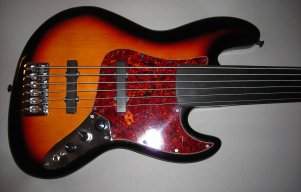
 )
)