I only care about weight because i blew out my back a few years ago. It always hurts. but the heavier the bass, the heavier the extra hurt after a gig...

TalkBass has been independent since 1998. Add your voice.
Create a free account to reply to discussions, view embedded media, and browse with fewer display ads.
Join free Log in
Want zero display ads or expanded classifieds tools? Compare plans.
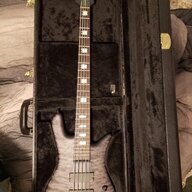
I had the Dingwall NG3 in this picture. It was awesome and very easy to play all over the neck. But I traded in for this Spector Euro and put the pickups and Preamp in and I have never had a better playing and sounding bass than the Spector. I do miss the Dingwall though. Should of kept it and bought the Spector outrightThis was my first fanned fret foray (say that 3 times fast as u can lol) and in all honesty, it felt completely natural when I first picked it up & played it. Maybe 5 minutes & I was good to go! One amazing thing about Dingwall , & I’m paraphrasing something I read here,” they have the unique ability to sing & sound like a harp up in the high register , while simultaneously roaring on the low end, & somehow sounding completely balanced across the strings” I’m absolutely loving the fanned frets! Dingwalls are really checking all the boxes for me- light weight (mine is 8.2lbs). Monster tone.. killer aesthetics.. go for it, life is short !
Edit: Lee sklar is playing a Dingwall here & sounds absolutely superb !
I don’t care what anyone thinks…I want a light bass.


You can make a case for either (or neither). I’m not sussed about it.Again, a production decision. Not an engineering decision


True enough. I like my Mustang, but if Fender (or Squier) had any sense at all of what a short scale bass guitar should ideally be they wouldn't have put a large in-line-4 P-bass style head on it! An Ibanez style 2+2 smaller, lighter head would've made this bass ever so much better! (And the same holds true for their smaller Jaguar basses also...) Designing smaller basses just so they look like larger ones instead of putting ergonomics first is ridiculous!Neck dive is tipical of headed bass with small/light body
 -But there you have it; that's Fender....
Exactly! Design and engineering counts!True enough. I like my Mustang, but if Fender (or Squier) had any sense at all of what a short scale bass guitar should ideally be they wouldn't have put a large in-line-4 P-bass style head on it! An Ibanez style 2+2 smaller, lighter head would've made this bass ever so much better! (And the same holds true for their smaller Jaguar basses also...) Designing smaller basses just so they look like larger ones instead of putting ergonomics first is ridiculous!
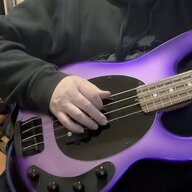
I have wondered if you could get a short scale replacement neck with paddle headstock from Warmoth to address this issue on what is an otherwise wonderful bass. I stopped thinking about it when I figured out the cost and realized getting an entirely different bass was more cost effective. I really can’t abide neck dive, especially on a short scale instrument. It just introduces a host of other annoying issues.True enough. I like my Mustang, but if Fender (or Squier) had any sense at all of what a short scale bass guitar should ideally be they wouldn't have put a large in-line-4 P-bass style head on it! An Ibanez style 2+2 smaller, lighter head would've made this bass ever so much better! (And the same holds true for their smaller Jaguar basses also...) Designing smaller basses just so they look like larger ones instead of putting ergonomics first is ridiculous!
Perhaps something custom is the solution.I have wondered if you could get a short scale replacement neck with paddle headstock from Warmoth to address this issue on what is an otherwise wonderful bass. I stopped thinking about it when I figured out the cost and realized getting an entirely different bass was more cost effective. I really can’t abide neck dive, especially on a short scale instrument. It just introduces a host of other annoying issues.

Very nice Dingwall & Spector! Killer bassesI had the Dingwall NG3 in this picture. It was awesome and very easy to play all over the neck. But I traded in for this Spector Euro and put the pickups and Preamp in and I have never had a better playing and sounding bass than the Spector. I do miss the Dingwall though. Should of kept it and bought the Spector outrightView attachment 4431543 View attachment 4431544 View attachment 4431545 View attachment 4431546
Thanks. EMG modded the mid board on my BQC I put in and put a toggle switch on in place of the mini switches. I put a Delano Sonar preamp in and ended up not happy w it. So I had a hole to fill and EMG did that mod for free! Very awesome. I also put in the EMG DCX pickups in place of the EMG TW's (which are still great photos l pickups.) But the x pickups are amazing! I am selling the tw pickups on Reverb at a very good price if anyone wants them...Very nice Dingwall & Spector! Killer basses


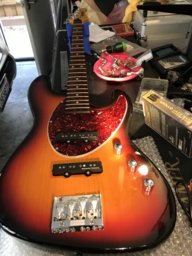
Heavey basses are cooler than ever. But they are no longer the only game in town.It used to be a negative - way back in the day, when light was usually considered synonymous with "cheap & crappy". Those days have been over for a decade or five, now. Just depends what you want, these days...
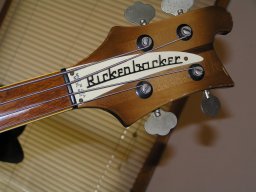

Might work for you but I have wide straps, and though it does ease things up a little, the only thing that truly works for me is to use a lighter bass.I don't think light weight and lightweight are the same. The former means it doesn't break the scale you use to weigh it, the latter means it has been castrated sonically. A 12 lb. beast can sound either good or bad as can a 6 lb. bass. If you position most basses comfortably and use a wide enough strap that distributes the weight evenly the shoulder stress problem can be reduced. The older we get the more issues crop up that never bothered us before. I'm not knocking anyone who has an issue with weight but it doesn't matter to me. I do think some of the cause is the focus of the weight in one spot on your shoulder. Wide straps spread the load over a greater area and really help. Wrist pain can be reduced by holding the bass in more of an upright position. When held horizontally you must curl your wrists into a claw just to wrap your fingers around the neck. Let your elbows do the bending instead.
Back to the question. Hofner basses are featherweights but the tone is huge. So, no.
(edited) People write about tone and people write about weight. We can all be clear that these are not the same thing. They may be associated in various ways at various times, but they are independent. Lower vs. high weight is clearly better and objective--we can control for weight and compare other things. Timbre/Tone is subjective and not as easily controlled. We can't take two basses with an identical timbre and then pick the lightest one (unless we are looking at units of the same model at Sweetwater!). So the whole discussion is apples to oranges at some level. For a good sound, we want the least weight--an optimality problem. But there are so many varieties of 'good sound' that we are all looking for the lightest bass that has certain timbres/tones we are going after. So we will have to settle for optimal solutions within these subjective categories, and there will always be multiple solutions (i.e. local optima). What is the lightest bass that produces a great P-bass tone? Or, what is the lightest bass for metal? Most of us can't systematically try enough basses to answer that kind of question with much confidence, so we end up triangulating based on the few we can try. I gravitate without trying too hard toward the lighter basses I have that produce sounds I like--that's just a good compromise at best and everyone needs to make their own. (apologies if the previous unedited post seemed combative).Might work for you but I have wide straps, and though it does ease things up a little, the only thing that truly works for me is to use a lighter bass.
Certainly an extra five pounds slung over your shoulder for hours feels like a ton. I haven't fallen victim to that yet. Maybe someday (soon).Might work for you but I have wide straps, and though it does ease things up a little, the only thing that truly works for me is to use a lighter bass.