
What I want in a bass guitar tends to cost 1-2 thousand. I believe without a doubt that I play and sound better than I would with a starter bass or most less expensive bass guitars.

TalkBass has been independent since 1998. Add your voice.
Create a free account to reply to discussions, view embedded media, and browse with fewer display ads.
Join free Log in
Want zero display ads or expanded classifieds tools? Compare plans.

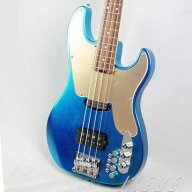
Jeez - does that come with Jaco?




I dig what you and others are saying, just don't forget your ability is your ability, not the bass's. If you can play an expensive bass well you can do the same on a least expensive bass. Conversely, if your ability needs work, no amount of money spent on a bass is going to improve that. That always comes from work, woodshedding not, buying basses...What I want in a bass guitar tends to cost 1-2 thousand. I believe without a doubt that I play and sound better than I would with a starter bass or most less expensive bass guitars.
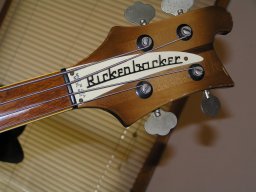
At the same time, he didn't stop playing because he didn't have one before that. Telecaster bass anyone?(I didn't read most of the nine pages preceding this...)
I was listening to an interview with Verdine White (Earth Wind & Fire). His view about Sadowsky basses was that they articulate so well that you are required to play better. A higher quality instrument may force you to play with more accuracy. My P Bass with flats -on the other hand- thumps hard enough to smooth over flubs. JUST INCASE I were to flub...
I'd go along with you here. Beyond 2k you're deep into the land of diminishing returns. Yeah, you'll get more complex electronics. Fancy woods/finishes and more custom options. Better playability? Not likely. Better sound? I've not heard a sound I like better than that made by a decent P, J, HH or Ray and they can all be had for under 2k.What I want in a bass guitar tends to cost 1-2 thousand. I believe without a doubt that I play and sound better than I would with a starter bass or most less expensive bass guitars.
Yep, furniture bassesI'd go along with you here. Beyond 2k you're deep into the land of diminishing returns. Yeah, you'll get more complex electronics. Fancy woods/finishes and more custom options. Better playability? Not likely. Better sound? I've not heard a sound I like better than that made by a decent P, J, HH or Ray and they can all be had for under 2k.

(I didn't read most of the nine pages preceding this...)
I was listening to an interview with Verdine White (Earth Wind & Fire). His view about Sadowsky basses was that they articulate so well that you are required to play better. A higher quality instrument may force you to play with more accuracy. My P Bass with flats -on the other hand- thumps hard enough to smooth over flubs. JUST INCASE I were to flub...
This interview...(I didn't read most of the nine pages preceding this...)
I was listening to an interview with Verdine White (Earth Wind & Fire). His view about Sadowsky basses was that they articulate so well that you are required to play better. A higher quality instrument may force you to play with more accuracy. My P Bass with flats -on the other hand- thumps hard enough to smooth over flubs. JUST INCASE I were to flub...
AKA 'hippie sandwich.'Yep, furniture basses
The interesting point is how many boutique basses are high end Jazz Bass copies. The Fender Jazz Bass isn't exactly an unknown quantity in bass circles. Were the specimens from the 1970's so bad that other companies had to step in to make proper examples of how the model should be manufactured? Surely the Fenders of today have regained their reputation from a bad period in the industry overall. Remember, Norlin Gibsons from that time weren't exactly perfect, either. That's how lawsuit instruments came to be. Fascinating history, but forty years later there are at least a dozen companies making Jazz Bass copies and some are charging upwards of $2500 for one. Unless the materials are the absolute top grade, how would you justify the price? By top grade, there's no proof that highly figured curly maple will sound any better than a piece of maple with a bland grain pattern. Pickups? Bobbins, wire, magnets... not that much of an expense. Bridge, tuners, pots (many use the same suppliers of products: Switchcraft and CTS). The amount of time and care given to each instrument must be where this extra cost comes from. Fit and finish. If you don't mind a mass produced bass with average components for a decent price, a Squier may be your choice. If you wish to upgrade it you'll be able to do so with plenty of universally sized parts available. The fit and finish will not rival a Lakland, Lull or Sadowsky. If you require the level of attention to detail those companies offer, don't bother looking for a Squier. Fender may be in the middle ground somewhere. It does make you wonder how many versions of this basic model are really necessary.