
Enjoy the benefits of a premium membership!
Upgrade Account
-
TalkBass has been independent since 1998. Add your voice.
Create a free account to reply to discussions, view embedded media, and browse with fewer display ads.
Join free Log in
Want zero display ads or expanded classifieds tools? Compare plans.
You are using an out of date browser. It may not display this or other websites correctly.
You should upgrade or use an alternative browser.
You should upgrade or use an alternative browser.
Does anybody here actually OWN a fodera?
- Thread starter dave-chaulk
- Start date
More options
Who Replied?
Bryan R. Tyler
TalkBass: Usurping My Practice Time Since 2002
Staff member
Administrator
Gold Supporting Member
Supporting Member
- May 3, 2002
- 28,948
- 20,932
- Disclosures
- Reviewer: Bass Player Magazine
if you're dropping that kind of cash why not get a real fender
I'm guessing that's a joke, right?
- Apr 24, 2004
- 1,359
- 53
- Disclosures
- Designer Fodera Guitars/Michael Pope Design, Inc., Trickfish Amplification
Good lord. No matter how innocent the OP, the directions these threads take sometimes.....
Foderas are AWESOME basses, and Vinny has a talent and skill set that is as unique in it's genre as Jaco did in his.
They are worth every penny and more. You can take the same tack in deciding what bass to buy as you do in deciding what car to buy. But it misses the point entirely. Foderas are fantastic, unparalleled basses IMO.
Foderas are AWESOME basses, and Vinny has a talent and skill set that is as unique in it's genre as Jaco did in his.
They are worth every penny and more. You can take the same tack in deciding what bass to buy as you do in deciding what car to buy. But it misses the point entirely. Foderas are fantastic, unparalleled basses IMO.

i know two guys who own foderas. the bassist for johnny maestro's (rip) brooklyn bridge, and the musical director for the tokens both have monarchs. the tokens dude got his in exchange for a strat worth about $700. the bridge's bassist, i believe, bought his new in the 80's. wasn't $7000 back then.
but they are now, and people are buying them. they're fantastic basses, no doubt. not my thing to pay $7000 for a bass when i can buy great basses that are my thing for $500 all day long but you can't argue about the quality. all you can argue is if it's worth it to you. but if it is worth it to you, then that's the cost of admission.
but they are now, and people are buying them. they're fantastic basses, no doubt. not my thing to pay $7000 for a bass when i can buy great basses that are my thing for $500 all day long
but you can't argue about the quality. all you can argue is if it's worth it to you. but if it is worth it to you, then that's the cost of admission.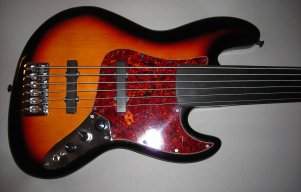
but they are now, and people are buying them. they're fantastic basses, no doubt. not my thing to pay $7000 for a bass when i can buy great basses that are my thing for $500 all day long
Exactly. I wouldn't pay $7000 for a bass, but then I'm not in love either. People do crazy things when they are in love. I fell in love with my Alembic and had to have it!
But there are lots of reasons you might spend some serious cash for a certain bass. It might be the materials: Exotic expensive wood or maybe you are Bootsy and you want the star-shaped bass covered with real diamonds. Expensive, but not much to do with tone I presume.
Or it might have to do with the maker. If the luthier is a true artist and there is demand, prices rise accordingly. Ever notice the price some paintings go for? Same deal. It may be some old cigarette packs glued to a piece of wallboard, but it it's by a certain artist, then it's "worth it".
Or it actually might be the tone, playability, looks whatever. Hey if top pianos go for 50k or a Strad go in the megs why is a 12K bass "impossible"?
I think the fact that so many great basses are dirt cheap taints one viewpoint. In reality, 12k isn't huge bucks even for ordinary people. Just count all the SUVs on the highway. The new price dwarfs a Fedora yet, gobs of people want to own one. Look at all the people who own houses in the 100 to 200 grand range. Sure they have to pay for it over many years, but they still buy it because they want it.
So the bottom line is just +1. If you want to have one, and it's worth it to you. So you get one.

Let's not let this discussion go in the direction of discussing worth. We all know that's, well, worthless. People spend real valuable modern money buying old obsolete money because of its collectible value. Do we need to keep barking up that tree?
A more useful direction to take with this thread would be asking the question, what makes a Fodera stand out amongst its peers in its market niche? Why buy a Fodera as opposed to another boutique bass? The owner has already tactfully alluded to some of his opinions on what his company offers, while avoiding shameless self-promotion. So, for those of you that *do* own Foderas, what made them stand out from the competition?
A more useful direction to take with this thread would be asking the question, what makes a Fodera stand out amongst its peers in its market niche? Why buy a Fodera as opposed to another boutique bass? The owner has already tactfully alluded to some of his opinions on what his company offers, while avoiding shameless self-promotion. So, for those of you that *do* own Foderas, what made them stand out from the competition?

So, for those of you that *do* own Foderas, what made them stand out from the competition?
The price tag?

I kid, I kid...


For me, Fodera represents an ideal. Although I'm not a professional bassist by any means, I am extremely serious about music on the whole and finicky about musical instruments in particular. At this point in my musical quest, I no longer feel as strong a pull to own a high number of instruments (which I have in the past), but where I do want the instruments I own to be awesome, singular instruments. Over the past few years, I've probably owned about 25 basses from all different makers and luthiers; just check my profile and you'll see. Most of them have really been great instruments, and I would say that it's remarkable how many beautiful instruments are available today. I have really been struck by both the classic Fenders and high-end Fender-type basses, but also the individual and unique innovations of other designers (e.g. Sukop, who I just think makes exceptional instruments). As I have gone through an extensive collection of high-end instruments, I find myself returning again and again, both mentally and physically, to Fodera.
Why Fodera? Again, it's not that there aren't other basses that are beautiful, sound great, and play great at a fraction of the cost. There are those basses in spades, and I'm really glad about it. But to me, there's something about Foderas that places them in the category of art in and of themselves. When I hold a Fodera, I feel and believe that I'm holding a piece of invaluable musical history. Although I will not be around to witness it, I believe that these instruments will go down in history (along with Fender) as the instruments that really defined the evolution of the bass guitar. While it's hard to compare electric basses and acoustic string instruments, it's certainly not hard to accept that the craftsmanship of Foderas is in a highly select class usually reserved for acoustic string luthiers of the past. When I have a Fodera in my hands, somehow I can feel the hours of work and care that went into the building of the instrument. Also, I feel how the instrument I am holding represents the refinement of a design and building process that has been decades in the making. The neck seems to me almost alive, although I know it's just wood.
For years, I never felt that it was reasonable for me to own a Fodera, since my 'needs' don't demand it. Yet, I would constantly turn over other high end instruments through what I attributed to GAS--but in reality, I think it was a desire for something more. Now, after owning seven (at various points), I now realize that Fodera represents for me the end of the sense of always searching for something more, something better. Yes, this means I also turned over some Foderas. In truth, I regret selling or trading all of the Foderas that I have, although the decisions made sense at the time--I'm curious about instruments in general, and I'm sure I always will be. I don't really have this regret with any other instruments, though. I'm going through another process now--so far, all of my Foderas have been bought second hand, with none designed for me. Now that I know exactly what I like, I'm going to go ahead hopefully in the near future and put in a custom order. Is it expensive? Definitely. But at this point in my life, time matters more for me than dollars. And in this regard, I think I'll finally be satisfied with an instrument that sounds, feels, plays and looks exactly how I want it to, with no compromises or concerns. Then I can spend the rest of my life learning to just play the damn thing.
Why Fodera? Again, it's not that there aren't other basses that are beautiful, sound great, and play great at a fraction of the cost. There are those basses in spades, and I'm really glad about it. But to me, there's something about Foderas that places them in the category of art in and of themselves. When I hold a Fodera, I feel and believe that I'm holding a piece of invaluable musical history. Although I will not be around to witness it, I believe that these instruments will go down in history (along with Fender) as the instruments that really defined the evolution of the bass guitar. While it's hard to compare electric basses and acoustic string instruments, it's certainly not hard to accept that the craftsmanship of Foderas is in a highly select class usually reserved for acoustic string luthiers of the past. When I have a Fodera in my hands, somehow I can feel the hours of work and care that went into the building of the instrument. Also, I feel how the instrument I am holding represents the refinement of a design and building process that has been decades in the making. The neck seems to me almost alive, although I know it's just wood.
For years, I never felt that it was reasonable for me to own a Fodera, since my 'needs' don't demand it. Yet, I would constantly turn over other high end instruments through what I attributed to GAS--but in reality, I think it was a desire for something more. Now, after owning seven (at various points), I now realize that Fodera represents for me the end of the sense of always searching for something more, something better. Yes, this means I also turned over some Foderas. In truth, I regret selling or trading all of the Foderas that I have, although the decisions made sense at the time--I'm curious about instruments in general, and I'm sure I always will be. I don't really have this regret with any other instruments, though. I'm going through another process now--so far, all of my Foderas have been bought second hand, with none designed for me. Now that I know exactly what I like, I'm going to go ahead hopefully in the near future and put in a custom order. Is it expensive? Definitely. But at this point in my life, time matters more for me than dollars. And in this regard, I think I'll finally be satisfied with an instrument that sounds, feels, plays and looks exactly how I want it to, with no compromises or concerns. Then I can spend the rest of my life learning to just play the damn thing.
Let's not let this discussion go in the direction of discussing worth. We all know that's, well, worthless. People spend real valuable modern money buying old obsolete money because of its collectible value. Do we need to keep barking up that tree?
A more useful direction to take with this thread would be asking the question, what makes a Fodera stand out amongst its peers in its market niche? Why buy a Fodera as opposed to another boutique bass? The owner has already tactfully alluded to some of his opinions on what his company offers, while avoiding shameless self-promotion. So, for those of you that *do* own Foderas, what made them stand out from the competition?
The reason for buying a Fodera? I'd gotten to the point where I wanted to step up and own something that would best respond to what I wanted to express.
Now I got mine 18 years ago. At the time, the only "ultra high end" basses were Alembics, KenSmiths and Foderas. Alembics and Smiths always felt unbalanced to me. Fodera's were made to my specifications. No contest.
Now, I'm at a different place in life, career and my musical journey. I'm a more confident player, have a better understanding of different instruments and consequently I no longer feel I "need" an elite instrument to express myself. I can make my musical statement , and actually prefer to make it, on a more traditional instrument.
Even though, I would never sell my Fodera. I love it. It's a special instrument. It represents the finest craftsmanship. And I'd miss it (and probably not be able to afford a new one).
I'm not sure if that helps anybody, but that's my story.

The quality and appeal for many is obvious! Picking up this 'instrument' at home and/or recording would seem like the thing. Rocking out with one on a stage, or night club? That's where an armed music manager, or bodyguard for the bass would appear to be a necessity...

For me, Fodera represents an ideal. Although I'm not a professional bassist by any means, I am extremely serious about music on the whole and finicky about musical instruments in particular. At this point in my musical quest, I no longer feel as strong a pull to own a high number of instruments (which I have in the past), but where I do want the instruments I own to be awesome, singular instruments. Over the past few years, I've probably owned about 25 basses from all different makers and luthiers; just check my profile and you'll see. Most of them have really been great instruments, and I would say that it's remarkable how many beautiful instruments are available today. I have really been struck by both the classic Fenders and high-end Fender-type basses, but also the individual and unique innovations of other designers (e.g. Sukop, who I just think makes exceptional instruments). As I have gone through an extensive collection of high-end instruments, I find myself returning again and again, both mentally and physically, to Fodera.
Why Fodera? Again, it's not that there aren't other basses that are beautiful, sound great, and play great at a fraction of the cost. There are those basses in spades, and I'm really glad about it. But to me, there's something about Foderas that places them in the category of art in and of themselves. When I hold a Fodera, I feel and believe that I'm holding a piece of invaluable musical history. Although I will not be around to witness it, I believe that these instruments will go down in history (along with Fender) as the instruments that really defined the evolution of the bass guitar. While it's hard to compare electric basses and acoustic string instruments, it's certainly not hard to accept that the craftsmanship of Foderas is in a highly select class usually reserved for acoustic string luthiers of the past. When I have a Fodera in my hands, somehow I can feel the hours of work and care that went into the building of the instrument. Also, I feel how the instrument I am holding represents the refinement of a design and building process that has been decades in the making. The neck seems to me almost alive, although I know it's just wood.
For years, I never felt that it was reasonable for me to own a Fodera, since my 'needs' don't demand it. Yet, I would constantly turn over other high end instruments through what I attributed to GAS--but in reality, I think it was a desire for something more. Now, after owning seven (at various points), I now realize that Fodera represents for me the end of the sense of always searching for something more, something better. Yes, this means I also turned over some Foderas. In truth, I regret selling or trading all of the Foderas that I have, although the decisions made sense at the time--I'm curious about instruments in general, and I'm sure I always will be. I don't really have this regret with any other instruments, though. I'm going through another process now--so far, all of my Foderas have been bought second hand, with none designed for me. Now that I know exactly what I like, I'm going to go ahead hopefully in the near future and put in a custom order. Is it expensive? Definitely. But at this point in my life, time matters more for me than dollars. And in this regard, I think I'll finally be satisfied with an instrument that sounds, feels, plays and looks exactly how I want it to, with no compromises or concerns. Then I can spend the rest of my life learning to just play the damn thing.
Interesting points. It puts thing in perspective when you think about the modern boutique bass when you think how many were introduced/ pioneered by Fodera. They coud lay claim to:
being the first 'usable' (yes and I know about Anthony Jackson's Carl Thompson, and maybe even some Ken Smith 5s built by Vinny before he set up Fodera) 5 and 6 string basses.
solid tops on neck through basses - is that one of theirs?
single cut body shapes
Anything else?
Simply put my 4 string Monarch is the easiest playing, best sounding bass I have ever played. I fell in love with it 26 years ago when Vinnie and Joey brought it into the music shop on Long Island where I was teaching. As soon as I picked it up... I knew... the neck, the body.. everything was perfect. It was an instant bond. I've played it almost every day since then. Jason helped me design a custom spec Matt Garrison 5 that will be done in a month or so and it will be spectacular. Switching over from 4 to 5 has been difficult for me after 43 years of playing and I have to say Vinny, Joey and Jason are some of the most understanding and caring people I have ever met. Not only do they make amazing instruments they are all about making the instrument which is right for you. I have a life long bond with them and for me they are worth every penny. Not much more I can say... 

Interesting points. It puts thing in perspective when you think about the modern boutique bass when you think how many were introduced/ pioneered by Fodera. They coud lay claim to:
being the first 'usable' (yes and I know about Anthony Jackson's Carl Thompson, and maybe even some Ken Smith 5s built by Vinny before he set up Fodera) 5 and 6 string basses.
solid tops on neck through basses - is that one of theirs?
single cut body shapes
Anything else?
Wasn't the first 5 an alembic?
I seem to remember solid tops on neck thgrought on instruments from the 70's.
okcrum
in your chest
It's true. Upright bassists wouldn't bat an eye in dropping $15k+ for a professional instrument.
To compare EB prices to DB prices, you have to multiply by about 10x. Thus a $1,500 EB is very roughly equivalent to a $15,000 DB. Both are mid-range instruments. Good, but mid-range.


