• TalkBass has been independent since 1998. Add your voice.
    Create a free account to reply to discussions, view embedded media, and browse with fewer display ads.
    Join freeLog in
    Want zero display ads or expanded classifieds tools? Compare plans.

Double Bass Does bridge quality really matter?

krfoss

Supporting Member
Nov 29, 2007
3,041
4,505
Orange County, CA
The title is click bait for luthiers... I know...

My '55 American Standard needs a new bridge (the one on there is the original, but its astronomically high, and I dont want to destroy it), so I'm looking around and need some advice.

I'm looking for an adjustable bridge, but does the quality really matter that much? Ebay has Chinese adjustable bridges for 30 bucks, and I see some other bridges going for upwards of $200. I dont want to be cheap, but whats the law of diminishing returns for a bridge on a laminate bass?
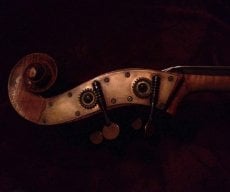
 
There are also a range of other bridges, and online retailers claim they are all "quality."

I suppose the question should be, what is the significant difference between a student bridge and a professional bridge? If they are fitted correctly by a luthier, will someone be able to tell the difference between a $60 vs a $200 bridge?
 
I don't see much difference in the bridge really. It's how the instrument is set up that matters, and particularly, how well the truss rod works and the flexibility of the neck. There was a youtube video where a scientist measured the sustain of a high mass bridge compared to an economy bridge (the $15 kind on old Squier Musicmasters). There was almost no difference.

So for me, I would pay more for the quick release feature than for mass. And of course, the set screws need to have enough travel to raise or lower the bridge to match the kind of relief you want to achieve.
 
  • Like
Reactions: 4StringTheorist
I don't see much difference in the bridge really. It's how the instrument is set up that matters, and particularly, how well the truss rod works and the flexibility of the neck. There was a youtube video where a scientist measured the sustain of a high mass bridge compared to an economy bridge (the $15 kind on old Squier Musicmasters). There was almost no difference.

So for me, I would pay more for the quick release feature than for mass. And of course, the set screws need to have enough travel to raise or lower the bridge to match the kind of relief you want to achieve.

I think you might be on the wrong side of the forum.
 
  • Like
Reactions: KUNGfuSHERIFF
There are also a range of other bridges, and online retailers claim they are all "quality."

I suppose the question should be, what is the significant difference between a student bridge and a professional bridge? If they are fitted correctly by a luthier, will someone be able to tell the difference between a $60 vs a $200 bridge?
Yeah. The $200 bridge fitted by a pro will be straight 30 years from now.
 
James Condino provided the best answer to this question a few months back.
I will take a stab:
Firstly, Do not try to fit a bridge yourself, unless you are extremely skilled with hand tools and have watched it done by a pro. It will take you orders of magnitude longer, and the result will be poor.
2. Don't bring a luthier a bridge and ask him to fit it.
3. There are bridge blanks with adjusters pre-installed, but this is kind of back-asswards. Almost all luthiers prefer to fit a bridge first and then add the adjusters.

"Quality only hurts once. Pay up, and smile while you do it." Quote for the day:)
 
I don't see much difference in the bridge really. It's how the instrument is set up that matters, and particularly, how well the truss rod works and the flexibility of the neck. There was a youtube video where a scientist measured the sustain of a high mass bridge compared to an economy bridge (the $15 kind on old Squier Musicmasters). There was almost no difference.

So for me, I would pay more for the quick release feature than for mass. And of course, the set screws need to have enough travel to raise or lower the bridge to match the kind of relief you want to achieve.

DBs don't have truss rods or high mass bridges :)
 
I just put a new bridge on my '50s Juzek laminate and used the house-branded (and, I assume, Asian-sourced) blank from a well-known DB retailer. The wood appeared maple-ish, but was quite soft (fingernails will leave dents). It was much easier to work than typical hard maple, but I have doubts whether it'll hold up. The extra hour I spent sanding to clean up the factory roughness more than erased the cost advantage over a quality bridge, and, of course, installation labor would have been the same in either case.

Lesson learned.
 
sorry.

back on subject. if you have a great luthier that you trust, like i do, you just say, "fit me a new bridge"

if they know what they are doing, they will choose a blank made of quality wood and shape it to you bass. done.

it's totally worth it. and thanks to Upton, i have the little jig to check my bridge. keeps it from slowly bending over time.

i made one for my 1950s karl meisel. i'll post a pic of what it am talking about.

is there a thread or mention of that jig on any upton threads? i love mine!
 
thanks to Upton, i have the little jig to check my bridge. keeps it from slowly bending over time.

i made one for my 1950s karl meisel. i'll post a pic of what it am talking about.

is there a thread or mention of that jig on any upton threads? i love mine!
It's certainly in one of their videos on adjusting/installing the bridge, and easy enough to make one for any bass once you have it set right once, as it's just a "end of fingerboard to face of bridge" stick, in essence.