Maybe it's just a punk thing, but I save technical proficiency for the studio. When I play live, it is a performance and I am a performer. People payed to be entertained. Now that isn't to say I play badly live, quite the opposite, I just play simpler versions of everything. Let's face it, most people in you typical audience aren't musicians, they don't care about how technically proficient what you're doing is; the only thing they want to see is if you put on one hell of a live show.

Enjoy the benefits of a premium membership!
Upgrade Account
-
TalkBass has been independent since 1998. Add your voice.
Create a free account to reply to discussions, view embedded media, and browse with fewer display ads.
Join free Log in
Want zero display ads or expanded classifieds tools? Compare plans.
You are using an out of date browser. It may not display this or other websites correctly.
You should upgrade or use an alternative browser.
You should upgrade or use an alternative browser.
Don't just stand there!
- Thread starter Axtman
- Start date
More options
Who Replied?
I have been told that I have a problem. I just stand still while playing and I scowl my face. Hey I am having fun but I guess just not showing it. Others in the band want me to move more. I always feel a little self-conscious when I do move around.
Any ideas on how I can improve my stage performance?
Oh, and the leader always turns around and gives me an exaggerated smile to convey that I need to smile. Well I am concentrating!
The soul function of a live band is to entertain. Moving around a bit is part of the gig...which is something I don't do a whole lot of LOL.

I choose to take a more holistic approach to things. The idea that you need to be 'one musician' here and 'another musician' there only adds complexity to what is a very simple thing - being a musician.
While I understand the idea that "people pay to be entertained" - and agree with it in spirit, it's the question "what is it that people respond to" that needs to be addressed. Superficially and disregarding all else, it can appear to be the fact that the people on stage are jumping around and being physically exciting. But if that's all it took, you could put any idiot on stage and as long as he jumped around a lot, people would be entertained - and we know that's simply not true.
OK - What if a technically proficient band took the stage and just sat on chairs and played the most technically correct show, musically, but did so entirely motionless. After a while, people would stop watching them. There would be nothing to see and they might as well be listening to a recording.
To simplify the whole thing, as a musician, you need to practice your craft regularly and become proficient, technically and musically. Part of that includes experiencing your craft emotionally - the art of it. If the music is not impacting you emotionally, how can you expect it to impact the listener/watcher?
So that means along with keeping your technical and musical chops honed, you need to transcend the mechanics of playing music and experience the music on an emotional level as well. If you are doing all of that, you will end up reflecting that in your demeanor when you perform.
If you are genuinely enjoying and experiencing your art and craft when you perform, people will respond to the vibe you put out - the energy you transmit. Sounds like hokum, but it's true. Animals detect your energy - so do people. If you put out energy that's wishy-washy, scared, shy, any version that says, "I'd prefer you not look at me" - that's what people will pick up on - even if you are playing really well.
ON the flip side - if you haven't practiced your craft and feel you need to supplement your inadequacy by faking it - putting on a false representation of energy - people will pick up on that too. Now you could put more energy into faking it and become a great actor and successfully pull of an energetic display based on your refined acting skills, but I'd argue that's not the goal of most of us here as bass players.
In a live show, moving is a good way to engage the audience, superficially. Moving in a way that honestly projects the energy you feel when you play will engage them on a deeper level.
People want to see people on stage having the best time and who are genuinely into what they're doing. People live vicariously through performers and the more honest and genuine the performer, the better the experience becomes.
So the "secret" is no secret at all. Hard work in the woodshed toward the honest goal of being the best musician you can be will result in you being very confident on stage. Being confident on stage will allow you to enjoy the experience of being on stage to it's fullest. You enjoying the experience of being on stage to it's fullest and playing well and with confidence will translate into a great energy exchange between you and your audience. Your confidence and demonstration of how you experience your music will inspire people to respond to your energy. Their energy will, in turn, inspire and energize you.
That's the goal.
How you move will be determined in the moment and by that energy exchange. So you should optimize your ability to experience the thrill and enjoyment of playing in front of an audience in order to maximize your ability to participate in that energy exchange.
While I understand the idea that "people pay to be entertained" - and agree with it in spirit, it's the question "what is it that people respond to" that needs to be addressed. Superficially and disregarding all else, it can appear to be the fact that the people on stage are jumping around and being physically exciting. But if that's all it took, you could put any idiot on stage and as long as he jumped around a lot, people would be entertained - and we know that's simply not true.
OK - What if a technically proficient band took the stage and just sat on chairs and played the most technically correct show, musically, but did so entirely motionless. After a while, people would stop watching them. There would be nothing to see and they might as well be listening to a recording.
To simplify the whole thing, as a musician, you need to practice your craft regularly and become proficient, technically and musically. Part of that includes experiencing your craft emotionally - the art of it. If the music is not impacting you emotionally, how can you expect it to impact the listener/watcher?
So that means along with keeping your technical and musical chops honed, you need to transcend the mechanics of playing music and experience the music on an emotional level as well. If you are doing all of that, you will end up reflecting that in your demeanor when you perform.
If you are genuinely enjoying and experiencing your art and craft when you perform, people will respond to the vibe you put out - the energy you transmit. Sounds like hokum, but it's true. Animals detect your energy - so do people. If you put out energy that's wishy-washy, scared, shy, any version that says, "I'd prefer you not look at me" - that's what people will pick up on - even if you are playing really well.
ON the flip side - if you haven't practiced your craft and feel you need to supplement your inadequacy by faking it - putting on a false representation of energy - people will pick up on that too. Now you could put more energy into faking it and become a great actor and successfully pull of an energetic display based on your refined acting skills, but I'd argue that's not the goal of most of us here as bass players.
In a live show, moving is a good way to engage the audience, superficially. Moving in a way that honestly projects the energy you feel when you play will engage them on a deeper level.
People want to see people on stage having the best time and who are genuinely into what they're doing. People live vicariously through performers and the more honest and genuine the performer, the better the experience becomes.
So the "secret" is no secret at all. Hard work in the woodshed toward the honest goal of being the best musician you can be will result in you being very confident on stage. Being confident on stage will allow you to enjoy the experience of being on stage to it's fullest. You enjoying the experience of being on stage to it's fullest and playing well and with confidence will translate into a great energy exchange between you and your audience. Your confidence and demonstration of how you experience your music will inspire people to respond to your energy. Their energy will, in turn, inspire and energize you.
That's the goal.
How you move will be determined in the moment and by that energy exchange. So you should optimize your ability to experience the thrill and enjoyment of playing in front of an audience in order to maximize your ability to participate in that energy exchange.
I'll say this about Gene Simmons: while watching his reality show, i saw him come into a room where his daughter was playing piano, and not only did he recognize the chord she was playing in, but that it was an inversion! I'm lucky if I can tell major from minor! ok, not really, but that was still pretty damn impressive!
I know the exact episode you're talking about!
I'm like you, I can barely tell major from minor, let alone ear trained ability and recognition like that.
If I recall, he said that she took something and changed it from an A minor to an F.
i do paid gigs for young pop singers and stage presence is important BUT
that doesn't meen moving and jumping around; it's all about looking like you're having fun. SMILE!! make eye contact with the other musicians and smile at them, smile at the singer, smile at the audience, don't jump around like a punk idiot!
that doesn't meen moving and jumping around; it's all about looking like you're having fun. SMILE!! make eye contact with the other musicians and smile at them, smile at the singer, smile at the audience, don't jump around like a punk idiot!

your close, the scale is based off a D minor(F MAJOR RELATIVE), with the B flat being natural and an added C# accidental but the decending scale in the measure is a D minor scale then restarting the run on C# to a B flat and jumping up and ending on E played in 32 second notes.
The first two beats are a textbook example of a D melodic minor scale.
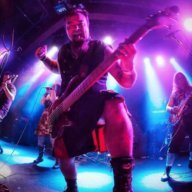
By no means was I saying that there are, or should be, specific ways to move for specific genres of music. I was just saying that there are norms (but not limits) that accompany the different genres. You probably won't find a rock or metal band doing large choreographed dances while you probably won't find rap or R&B head banging and you won't find jazz or classical doing either. You should absolutely move as the music moves you or it won't be natural, I just choose to take my movement slightly overboard on stage for the sake of the show.
There is one more point that I think needs to be made. You play as you practice. The reason I took the "crazy monkey" persona for my band is because I jump around and bang my head in practice too (maybe not to the same extreme I do on stage but...). When you move a lot it's harder to play detailed parts and I learned which parts of songs move me to, well, move and I have worked on simplifying my bass lines during those parts of the songs to allow me to be crazy. At the same time, if you practice by staring at our hands the whole time then your body will fall back to what it knows, without you even thinking about it, when you are nervous.
There is one more point that I think needs to be made. You play as you practice. The reason I took the "crazy monkey" persona for my band is because I jump around and bang my head in practice too (maybe not to the same extreme I do on stage but...). When you move a lot it's harder to play detailed parts and I learned which parts of songs move me to, well, move and I have worked on simplifying my bass lines during those parts of the songs to allow me to be crazy. At the same time, if you practice by staring at our hands the whole time then your body will fall back to what it knows, without you even thinking about it, when you are nervous.
I know the exact episode you're talking about!
I'm like you, I can barely tell major from minor, let alone ear trained ability and recognition like that.
If I recall, he said that she took something and changed it from an A minor to an F.
Yeah, he did give her a suggestion on a chord progression change, i think!
i know my basic triad sounds, but when you start throwing 7ths and 9ths, etc, in there, I check out!
Example: After hot guitar solo, make eye contact with somebody in the audience, smile, let your eyes get big, & mouth "Wow!"
are you serious? sorry, but that made me laugh. if I did that in my band, they would think I'm a complete nutcase, but if you're in a KISS or motley crue cover band or whatever, then yeah, that would work

hey OP, you can also practice in front of a mirror (c'mon, dancers do it). it also forces you to look up so you can see yourself. or, you can watch videotapes of yourself as you try different moves. also, I agree with the others who say know your songs well. If you can play them on autopilot, then you can focus more on your surroundings and presence. for me personally, if I learn my songs to the point where I can play them drunk and not mess up, then I'm doing pretty well - ha ha

are you serious? sorry, but that made me laugh. if I did that in my band, they would think I'm a complete nutcase, but if you're in a KISS or motley crue cover band or whatever, then yeah, that would work
...
That was an example to illustrate the point. It may or may not be appropriate in all circumstances.
In all seriousness, though, the fact that it made you laugh means that it was effective (just the thought of it). Get, keep, & direct attention is the name of the "stage presence" game.

The first two beats are a textbook example of a D melodic minor scale.
Congtrats! you got it right!
The first phrase is a D minor "Melodic" scale. The melodic scale has the 6th and 7th tones raised a half step ascending, but the scale is reverted back to a natural minor descending.
This scale is not to be confused with the "Jazz" melodic minor which has a flat third plus the scale is played the same ascending and descending.This is really played as a major scale played with a flat third.


